
Close Menu
    Facebook X (Twitter) Instagram
    TRENDING :
    • How to Make Money on Social Media Without a Huge Following
    • 28-Year-Old’s Side Hustle Hit $125K in Year 1: More Than Matcha
    • How to Speak Honestly at Work Without Derailing Your Career
    • Silicon Valley Doesn’t Have a Monopoly on Startup Wisdom
    • The EU Will Block Peace Between Russia & Ukraine
    • Laid-Off Marketer’s Apartment-Made Pizzas Sell Out in 30 Seconds
    • 4 Questions That Separate Real Founders From Performers
    • $14 Billion Company Is Giving 7,000 Employees a Day Off to Game
    Compatriot Chronicle
    • Home
    • US Politics
    • World Politics
    • Economy
    • Business
    • Headline News
    Compatriot Chronicle
    Home»Economy»Thailand – A Case Study For Biometric Data Control
    Economy

    Thailand – A Case Study For Biometric Data Control

    September 11, 20253 Mins Read
    Share Facebook Twitter Pinterest LinkedIn Tumblr Telegram Email Copy Link
    Follow Us
    Google News Flipboard
    Share
    Facebook Twitter LinkedIn Pinterest Email


    Thailand has become a test case for the use of biometric data in every facet of life. Facial recognition data is required for any single transfer above 50,000 baht (around $1,580), daily transfers above 200,000 baht, and any international transfers from personal accounts.  All major Thai banks, such as Bangkok Bank, Kasikorn (KBank), SCB, Krungthai, and Krungsri, require customers to submit biometric data, and the Bank of Thailand (BOT) provides the general guidelines that these banks must follow.

    It may begin with banking and documentation, but the ultimate goal is to develop digital IDs that are stored on a centralized database. The board of Thailand’s National Broadcasting and Telecommunications Commission (NBTC) proposed that users must submit biometric data to register SIM cards. The rule went into effect in August and applies to everyone in Thailand, including tourists.
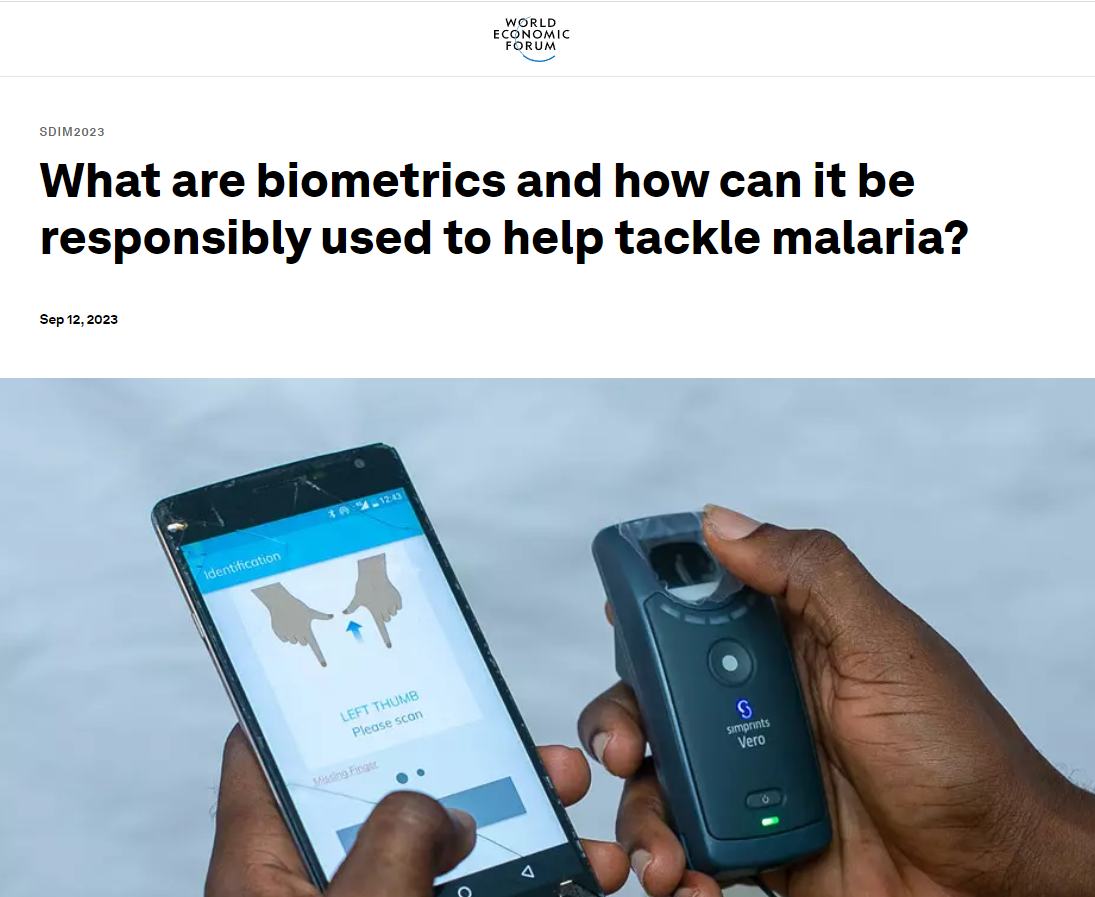
    WEF_biometrics_tracking

    The Thai Ministry of Public Health (MOPH), the Thai Red Cross Society, and the National Science and Technology Development Agency (NSTDA) has implemented the use of biometric data to track undocumented persons. Health agencies claim the technology can identify the spread of disease and assist in providing humanitarian aid and medical services. The MOPH claims the technology is 99.75% accurate. According to the Department of Labour’s Bureau of Alien Workers Administration, over 1 million undocumented migrants were in the nation as of July 2025.

    “The application of biometric technology not only improves healthcare, disease prevention and control, medical services, and humanitarian aid with accuracy and inclusivity, but also reflects the protection of human rights and dignity of undocumented people in Thailand. It also creates opportunities for education and research by Thai public health professionals to develop further benefits for the general population,” Health Minister Somsak Thepsuthin stated.

    The Thai Red Cross Society is a branch of the global Red Cross agency. Thailand’s Personal Data Protection Act (PDPA) claims all personal data will be securely protected, but they have already begun sharing with international agencies.

    Thailand adopted digital IDs back in 2023, but they were primarily mandatory for business at the time. Now, Thailand’s National Digital ID system (NDID) is now held by a private-public consortium that holds the identities of over 40 million people. The Thailand Digital Arrival Card (TDAC) became mandatory for all travelers on May 1, 2025. Citizens are technically not required to obtain a digital ID but it certainly makes life easier if one wants to access digital wallets, online banking, claim government benefits, and so forth.

    The Thai government plans to expand Thailand’s digital ID policy to 1,000 public services within the next two years. All restrictive measures begin with a promise to guarantee safety. It appears optional, then convenient, before the measures are enforced through mandates. I know many people who have fled Thailand in recent years due to increased regulations and massive changes in taxation. Thailand is becoming a case study for the widespread use of biometric software, as government surveillance is becoming the new norm.


    Source link

    Share. Facebook Twitter Pinterest LinkedIn Tumblr Email

    Related Posts

    The EU Will Block Peace Between Russia & Ukraine

    November 12, 2026

    Palantir’s Political Repositioning | Armstrong Economics

    November 11, 2026

    October Inflation | Armstrong Economics

    November 11, 2026
    Top News

    Sundance 2026 lineup will feature Charli XCX, Olivia Wilde, and more

    By Staff WriterDecember 10, 2025

    Charli XCX is making a trip to the Sundance Film Festival in January. The pop singer-songwriter appears in…

    Don’t eat these peaches or peach products: Listeria contamination fears spark nationwide recalls

    November 4, 2025

    JUST IN: Mueller Family Statement on Robert Mueller’s Health Decline Comes Into Question After Insiders Refute Claims | The Gateway Pundit

    September 1, 2025

    The world’s best talent has stopped dreaming of America. Where will it go next?

    January 29, 2026
    Top Trending

    How to Make Money on Social Media Without a Huge Following

    By Staff WriterNovember 12, 2026

    Key Takeaways Follower count is a vanity metric. Trust and engagement are…

    28-Year-Old’s Side Hustle Hit $125K in Year 1: More Than Matcha

    By Staff WriterNovember 12, 2026

    Key Takeaways Goldwasser leveraged her marketing and consulting experience to build More…

    How to Speak Honestly at Work Without Derailing Your Career

    By Staff WriterNovember 12, 2026

    Key Takeaways There’s such a thing as being too honest in the…

    Categories
    • Business
    • Economy
    • Headline News
    • Top News
    • US Politics
    • World Politics
    About us

    The Populist Bulletin serves as a beacon for the populist movement, which champions the interests of ordinary citizens over the agendas of the powerful and entrenched elitists. Rooted in the belief that the voices of everyday workers, families, and communities are often drowned out by powerful people and institutions, it delivers straightforward, unfiltered, compelling, relatable stories that resonate with the values of the American public.

    The Populist Bulletin was founded with a fervent commitment to inform, inspire, empower and spark meaningful conversations about the economy, business, politics, inequality, government accountability and overreach, globalization, and the preservation of American cultural heritage.

    The site offers a dynamic mix of investigative journalism, opinion editorials, and viral content that amplify populist sentiments and deliver stories that echo the concerns of everyday Americans while boldly challenging mainstream narratives that serve the privileged few.

    Top Picks

    How to Make Money on Social Media Without a Huge Following

    November 12, 2026

    28-Year-Old’s Side Hustle Hit $125K in Year 1: More Than Matcha

    November 12, 2026

    How to Speak Honestly at Work Without Derailing Your Career

    November 12, 2026
    Categories
    • Business
    • Economy
    • Headline News
    • Top News
    • US Politics
    • World Politics
    Copyright © 2025 Populist Bulletin. All Rights Reserved.

    Type above and press Enter to search. Press Esc to cancel.