
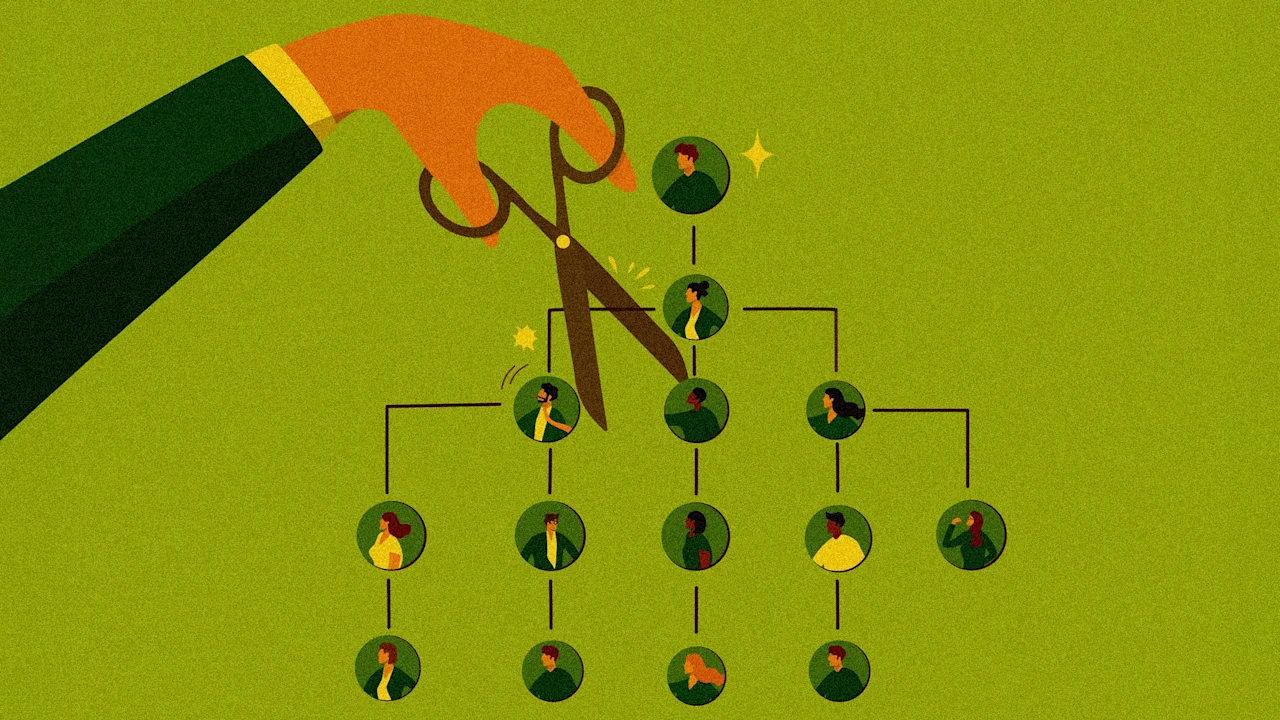
Seeking a flatter management structure is a leadership trend you could compare to fashion’s craze for skinny jeans—trendy yesterday, forgotten tomorrow, then back in fashion again before you know it. Recently, big tech firms like Meta, Microsoft, and Google made headlines for cutting management positions to lower costs and increase productivity—turning some of their workloads over to AI tools.
But a new survey from San Francisco-based workplace communications outfit Firstup shows that eliminating too many management jobs can have some unexpected effects on the way your teams work, sometimes damaging employee engagement, which undermines productivity. This is definitely something to bear in mind if you’re considering restructuring your own company’s management ranks.
The survey’s top results show that employees think middle management layers are crucial to the company success. More than half the people surveyed said their direct manager was their “most trusted source” for up-to-date workplace news—compared to just 10% who think that senior leadership is their best source for this information.
Interestingly, the Firstup survey, which quizzed 1,000 U.S.-based, full-time non-managerial employees at companies that carried out layoffs in the last year, shows that junior staff think that their middle management layers are critical to their well-being at work. Fully 75% of respondents said they rely on managers for recognition and appreciation, 63% said they relied on them for helping tackle workplace challenges, while 50% said they seek coaching and development advice from managers. Meanwhile, 86% of people said they relied on managers to “translate” company updates into meaningful advice about what changes mean for individual workers.
This paints a picture of junior staff relying on their layers of middle management as a trust and information barrier between themselves and senior leadership—perhaps hinting at an “ivory tower” syndrome surrounding senior management.
Other survey details offer a deeper view of what happens when layoffs hit the management structure of a company.
Fully 38% of survey respondents said that since their company experienced layoffs, their manager had become less accessible. This has had consequences: 30% of people said they’d felt less support when things were disrupted or changed, 34% expected they’ll lose a sense of connection and 30% expected decreased or zero access for mentorship and career development options.
Employees also don’t trust senior leaders, with nearly 40% saying they can’t get mentorship or guidance from upper management, 37% saying they feel unheard by the top leaders, and only 47% agreeing that their company leadership is “somewhat” transparent.
This paints an interesting picture of how the average U.S. worker views their management, relying on their direct supervisors while apparently distrusting upper layers of company leadership. The report quotes Firstup CEO Bill Schuh, who explained that the data show workers see middle managers as critical for “translating organizational priorities into action, clarity, and connection for their direct report.”
As companies shed middle managers, they risk losing this vital link, which can leave frontline workers feeling lost and unsupported. That discontent will likely diminish their engagement with their work, and could reduce their productivity. Meanwhile Schuh also noted that stripping managers out adds strain on their remaining colleagues. That means companies are “asking fewer managers to do more, and that simply is not sustainable,” he said. While AI is useful for handling some mundane managerial tasks, it “won’t replace the human connection and leadership that great managers provide.”
What does this mean for your company?
In smaller organizations, there may be more of a direct line of communication between senior leaders and frontline workers: but these data are still important. If you’re considering trimming your intermediate management structure, you should consider how this will impact employee trust and expectations for career advancement. Open and frank conversations may improve levels of trust among your employees and help support their engagement and productivity during times of upheaval.
—Kit Eaton
This article originally appeared on Fast Company‘s sister publication, Inc.
Inc. is the voice of the American entrepreneur. We inspire, inform, and document the most fascinating people in business: the risk-takers, the innovators, and the ultra-driven go-getters that represent the most dynamic force in the American economy.