
It doesn’t look like a Rivian truck, but a new electric bike took shape at the EV company.
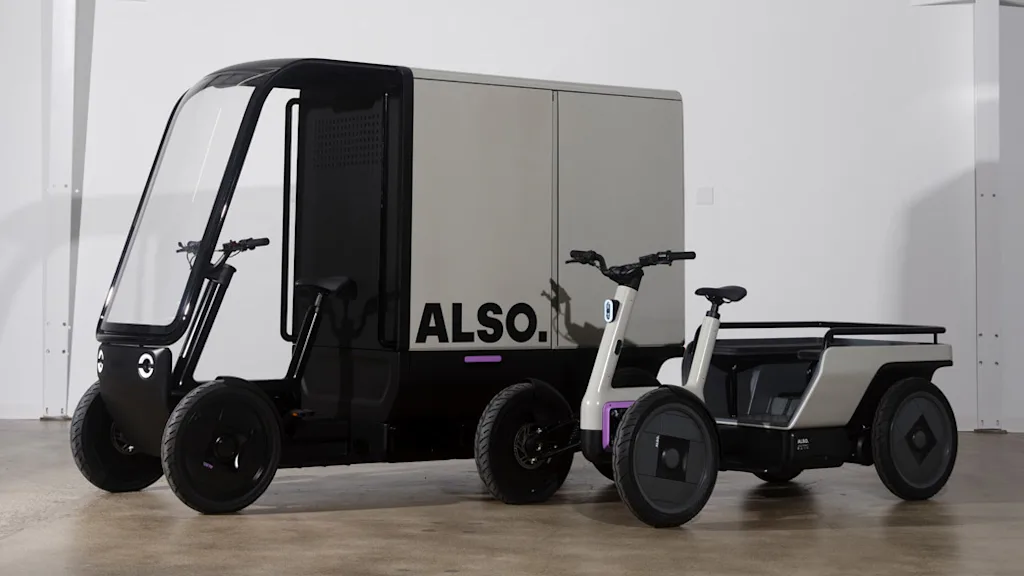
A startup called Also, which spun out from the EV maker earlier this year and raised $105 million, launched the $4,500 e-bike today, along with a delivery quad for logistics companies and another four-wheeler that consumers could use instead of a typical cargo bike.
The idea sparked three years ago, after Rivian founder RJ Scaringe met with Chris Yu, head of product and innovation at the bike brand Specialized. “We connected over a really basic question, which is: why doesn’t that magical experience that you get out of a Rivian exist in anything smaller than a car?” says Yu.
Scaringe had long believed that the EV company’s approach—designing its own software and hardware and building a vehicle from scratch—would also make sense for e-bikes and other forms of micromobility.
“We saw this huge transformation that had happened in the electric car space,” Yu says. Early electric cars were mostly conversions that replaced a gas motor with an electric motor and batteries, so the driving experience didn’t change much. Then came companies like Tesla and Rivian.
“These pure play, vertically integrated, ground-up EV companies took the approach of, well, if we have the ability to craft the software, the electronics, the hardware from a clean slate, you can design an ownership and user experience that is just fundamentally different in almost every way,” he says.
In 2022, Yu helped start a skunkworks inside Rivian to explore how smaller EVs could follow the same clean-slate approach—an idea that would eventually lead to a new kind of e-bike.
An interchangeable design
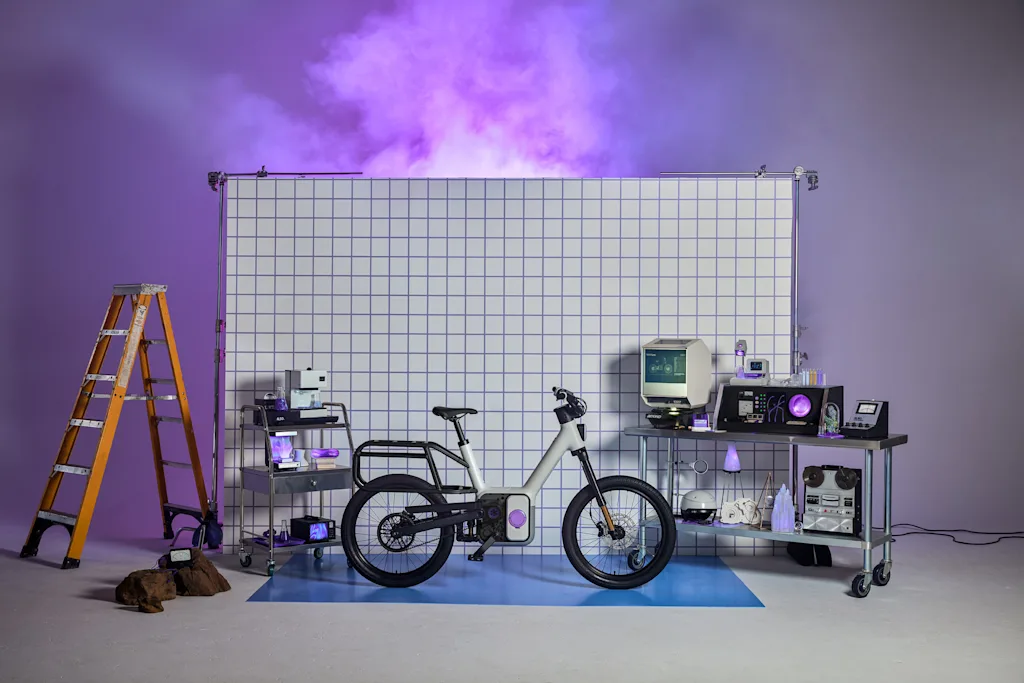
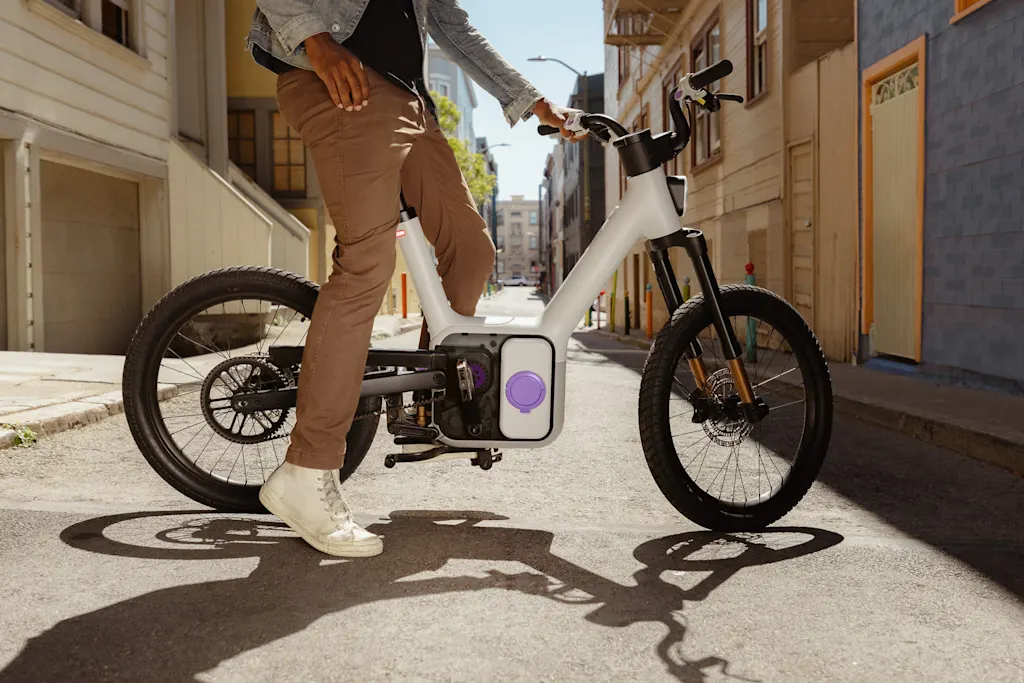
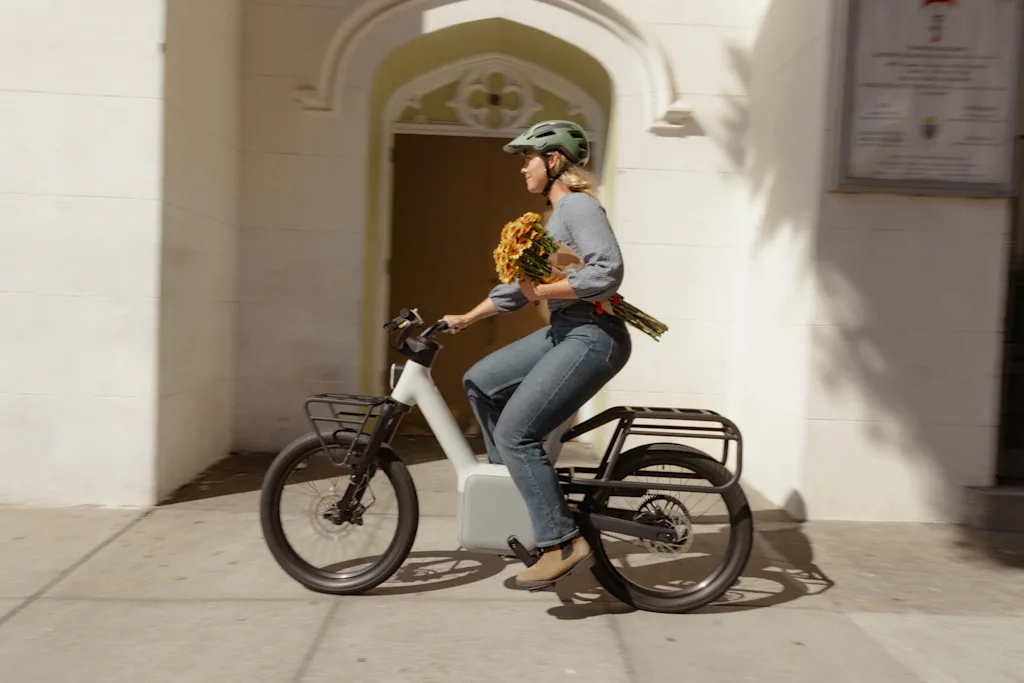
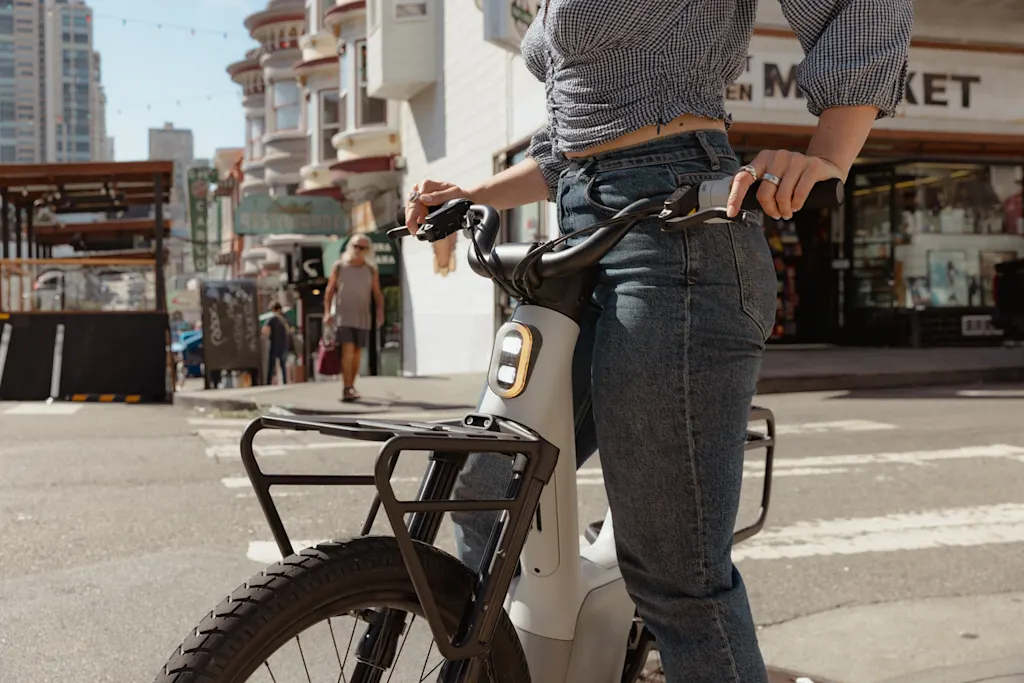
The first difference with the new bike, called the TM-B (or “transcendent mobility” bike), is that it can convert to different forms. At the push of a button, the top frame can be unlocked and swapped with a cargo bike seat with a sturdy rack for carrying groceries or children. It can also be swapped for a different size, so more than one rider can easily share the same bike. Another attachment makes the bike more like a scooter, with a low bench seat.
The designers wanted to tackle a common pain point for anyone considering an electric bike: there are so many different options on the market that it can be difficult to choose. “I was just talking to my neighbor about this—they were thinking about buying a utility bike for carrying their kid to school, but they looked at all these utility bikes and thought they don’t look that fun to ride,” Yu says.
Buyers can get stuck trying to decide between a utility bike and a fun weekend bike and not end up getting anything. “Or end up like me, with 10 bikes in their garage,” he says. Instead of buying multiple bikes, Also’s system allows them to get less-expensive attachments. If a couple wants to have an e-bike as an extra vehicle for running errands, they can get two sizes to fit each person.
Like a car, you can use your phone to unlock the bike as you approach it. If the bike has multiple riders, it automatically recognizes who you are and your preferences, from whether you want to manually shift to your destinations in the navigation system.
Pedal by wire
Like electric cars and trucks, which use a “drive by wire” design—meaning that the accelerator pedal isn’t mechanically connected to the wheels, but is just a sensor—the bike uses a “pedal by wire” approach. “It’s fully software defined,” says Yu. “What that means is there is zero mechanical connection between you pedaling the cranks and what the motor is telling the wheel to do.”
When you pedal, the pedals feel like an ordinary bike, but the ride is much smoother, he says. The default mode is automatic, so a rider doesn’t have to figure out how to shift and adjust the amount of pedal assist that they’re getting, though that option exists. (When you shift, the bike gives haptic feedback so it feels like a gear is shifting.) The bike has roughly twice as much torque as most other e-bikes, so it’s easier to quickly accelerate to join traffic or change lanes.
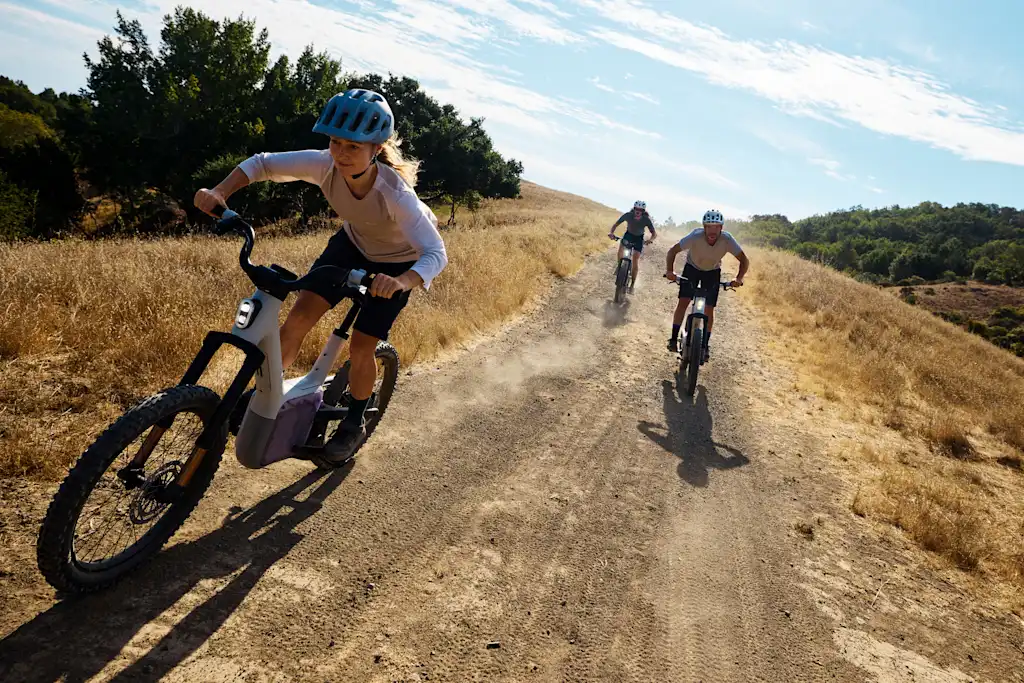
On a hill, the bike offers “hill flattening,” meaning that it automatically feels like riding on a road that’s less steep, or even completely flat. Going downhill, the bike can also automatically flatten the ride so you can keep pedaling and regenerate the battery. Unlike most e-bikes, 90% of the time that you’re braking, that happens through regenerative braking.
“It’s much more akin to a modern electric car experience, where the braking experience is much more consistent, much more reliable, and importantly, the brake pad service life is dramatically longer than otherwise would be,” Yu says.
An approachable design
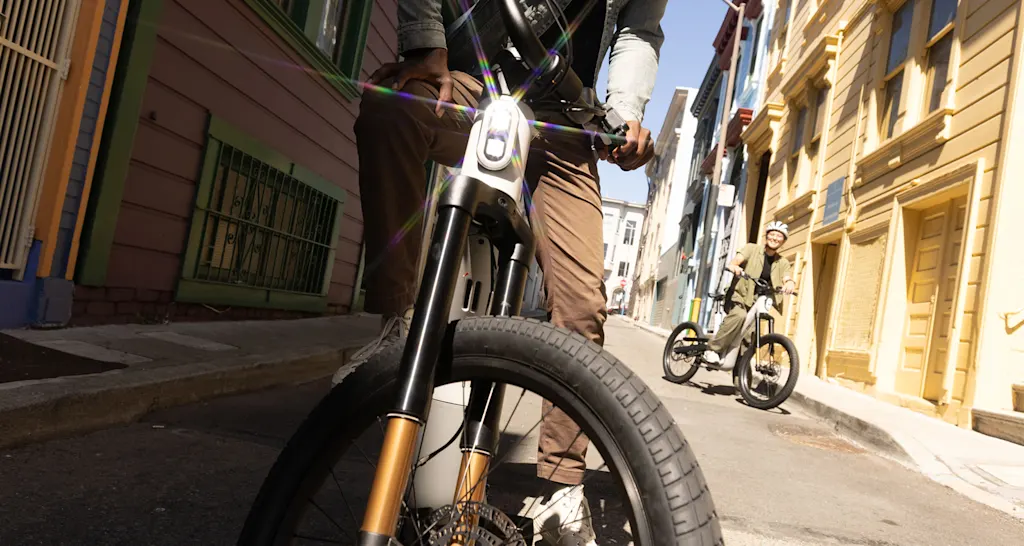
The bike doesn’t look like a Rivian truck, apart from a similarly shaped light. But “the underlying principles are very shared,” says Yu. “We’re sibling brands that have a common fabric.” The design team tried to balance performance and approachability, he says. “We wanted something that was very welcoming, very simple, geometrically . . . As capable and high-performance as it is, we don’t want it to be precious, either. We want it to be easy and part of your family’s life.”
The team carefully considered each detail of the bike, from integrated turn signals in the frame to a security system that locks everything, including the wheels, when you walk away. (If the bike is stolen, you can track it on an app and remotely disable the whole thing until you get it back.) A custom navigation system, shown in a small touchscreen on the handlebars, shows bike-specific directions and how much range you have left on the battery.
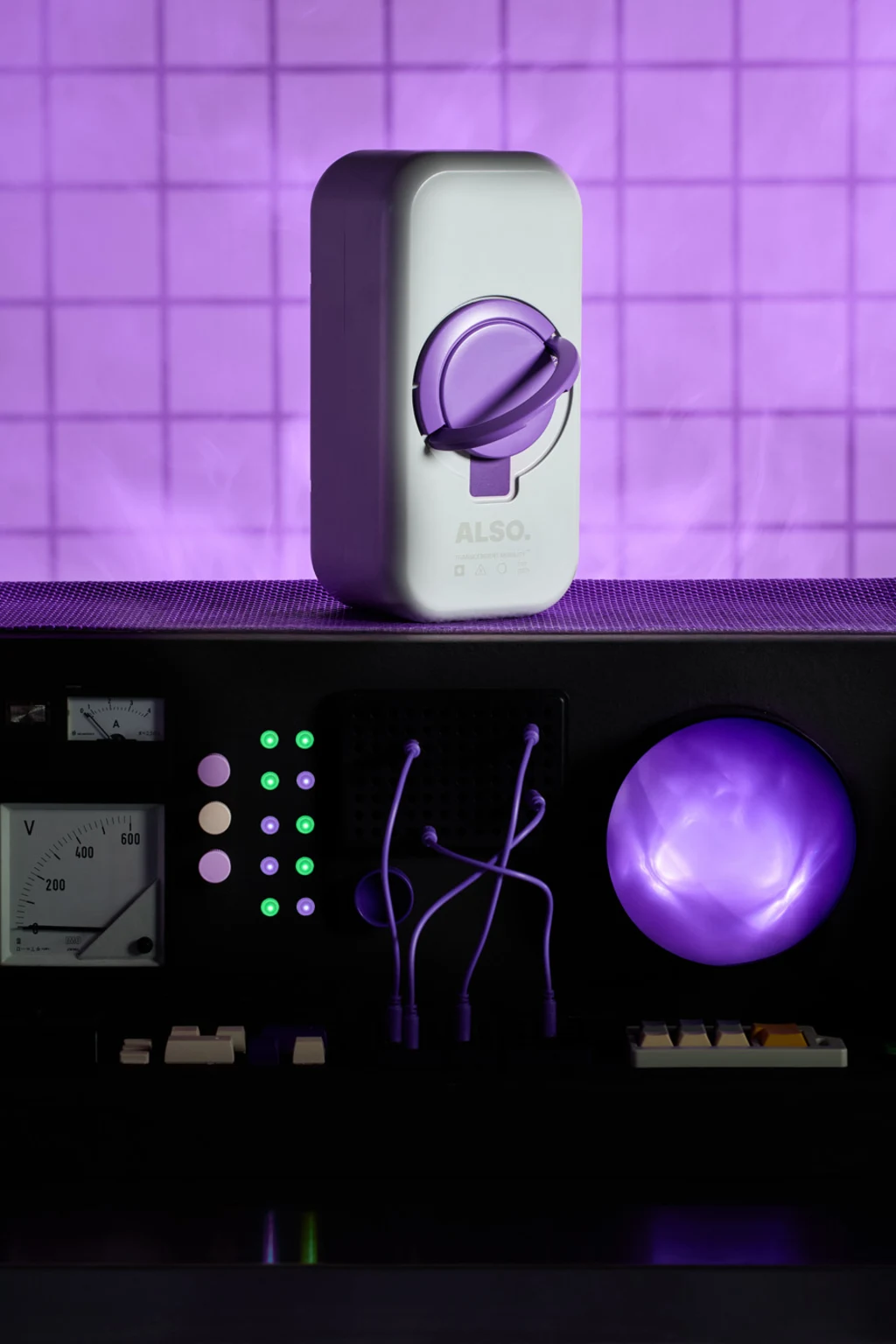
The bike has two options for power banks—one that can give you up to 100 miles of range, depending on how much you’re using pedal assist, and a smaller option with up to 60 miles of range. The power bank can also be pulled out of the bike and used to quickly charge a laptop or anything else that plugs into USB-C.
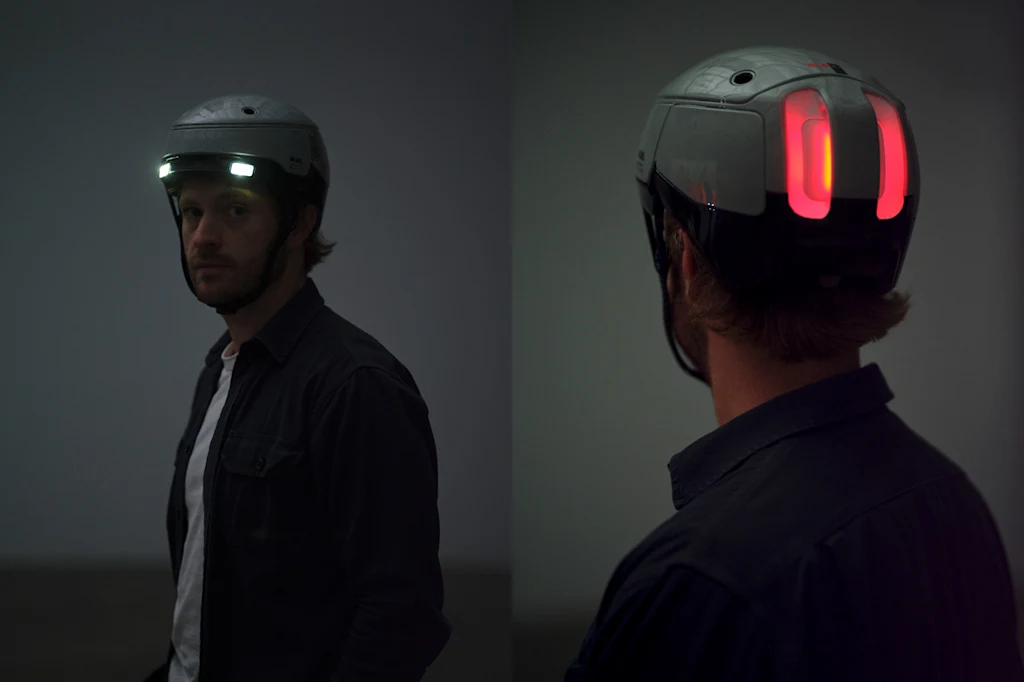
The startup also designed a few accessories, including a helmet that has noise-cancelling microphones so you can take a phone call as you ride. “We tuned the audio experience such that you can be riding at 25 miles an hour, take a phone call, and the other person will not know, will not have any idea that you’re riding on a bike with wind noise,” says Yu. A custom pannier is precisely sized to fit a grocery bag from Trader Joe’s.
All of this comes at a price. The TM-B Performance, the premium version of the bike, will be $4,500 when it launches next spring. The company hasn’t yet announced the price of the basic version of the bike, but says that it will be less than $4,000. Accessories and additional top frames add to the cost. By contrast, a budget e-bike might cost less than $1,000. But Also’s models are well within the range of other high-end bikes, some of which can cost more than $10,000.
Beyond the bike
Like Rivian EVs, which have a “skateboard” under the vehicle with the battery and other tech that can be used across multiple trucks or cars, the bike’s basic technology can be used in other vehicles. The startup also designed a four-wheeled cargo bike, or quad, that can be used for deliveries in dense cities.
From the outside, it looks similar to the pedal-assist EVs that UPS, Amazon, DHL, and other companies are already using in some areas. But Yu says that Also’s vertical integration makes it easier to connect with the software that logistics companies use for features like route optimization. The vehicle is also designed from the ground up for durability, so it can last far longer than typical delivery quads.
The design will launch later in 2026, along with a simplified consumer version of the same vehicle. The company also announced today that it’s partnering with Amazon on a custom version of the delivery vehicle that the retail giant could use in its dozens of micromobility hubs across Europe and the U.S.
The same basic technology that went into the bike and quads could also be used in other vehicles. It could eventually help electrify other small vehicles, like mopeds or motorcycles, that are more common than cars in countries outside the U.S. The transition to electric “can really be accelerated if we can deliver experiences that aren’t just electric, but they’re just fundamentally better product experiences that happen to be electric,” Yu says.