
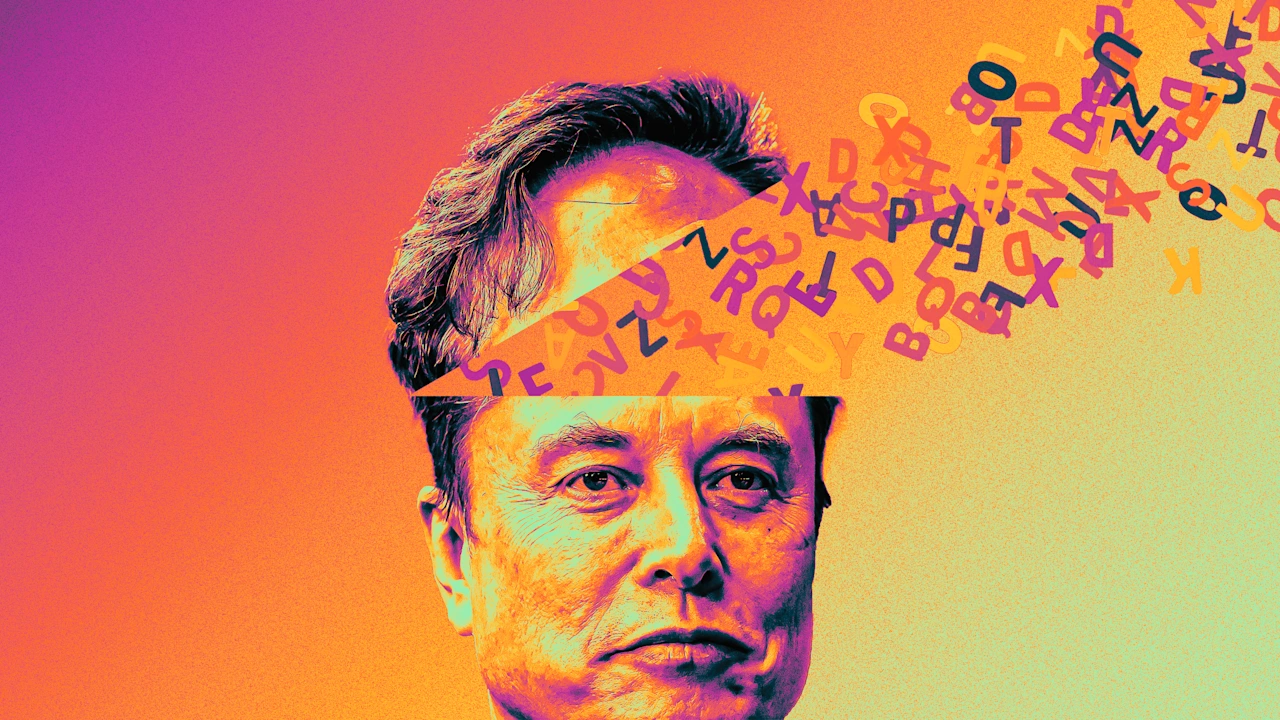
When Elon Musk launched Grokipedia, his AI-generated encyclopedia intended to rival Wikipedia, it was not just another experiment in artificial intelligence. It was a case study in everything that can go wrong when technological power, ideological bias, and unaccountable automation converge in the same hands.
Grokipedia copies vast sections of Wikipedia almost verbatim, while rewriting and “reinterpreting” others to reflect Musk’s personal worldview. It could genuinely be conceived as the antithesis of everything that makes Wikipedia good, useful, and human. Grokipedia’s edits aggressively editorialize topics ranging from climate change, to immigration, to (of course) the billionaire’s own companies and bio.
The result is less an encyclopedia than an algorithmic mirror of one man’s ideology. A digital monument to self-confidence so unbounded that it might make a Bond villain blush.
From collaboration to colonization
Wikipedia remains one of humanity’s most extraordinary collective achievements: a global, volunteer-driven repository of knowledge, constantly refined through debate and consensus. Its imperfections are human, visible, and correctable. You can see who edited what, when, and why.
Grokipedia is its antithesis. It replaces deliberation with automation, transparency with opacity, and pluralism with personality. Its “editors” are algorithms trained under Musk’s direction, generating rewritten entries that emphasize his favorite narratives and downplay those he disputes. It is a masterclass in how not to make an encyclopedia, a warning against confusing speed with wisdom.
In Grokipedia, Musk has done what AI enables too easily: colonize collective knowledge. He has taken a shared human effort, open, transparent, and collaborative, and automated it into something centralized, curated, and unaccountable. And he has done so doing the absolute minimum that the Wikipedia copyleft license requires, in extremely small print, in a place where nobody can see it.
The black box meets the bullhorn
This is not Musk’s first experiment with truth engineering. His social network, X, routinely modifies visibility and prioritization algorithms to favor narratives that align with his worldview. Now Grokipedia extends that project into the realm of structured knowledge. It uses the language of authority, such as entries, citations, summaries, to give bias the texture of objectivity.
This is precisely the danger I warned about in an earlier Fast Company article: the black-box problem. When AI systems are opaque and centralized, we can no longer tell whether an output reflects evidence or intention. With Grokipedia, Musk has fused the two: a black box with a bullhorn.
It is not that the platform is wrong on every fact. It is that we cannot know which facts have been filtered, reweighted, or rewritten, or according to what criteria. Or worse, we can have the intuition that the whole thing starts with a set of commands that completely editorialize everything. The line between knowledge and narrative dissolves.
The ideological automation problem
The Grokipedia project exposes a deeper issue with the current trajectory of AI: the industrialization of ideology.
Most people worry about AI misinformation as an emergent property: something that happens accidentally when models hallucinate or remix unreliable data. Grokipedia reminds us that misinformation can also be intentional. It can be programmed, curated, and systematized by design.
Grokipedia is positioned as “a factual, bias-free alternative to Wikipedia.” That framing is itself a rhetorical sleight of hand: to present personal bias as neutrality, and neutrality as bias. It is the oldest trick in propaganda, only now automated at planetary scale.
This is the dark side of generative AI’s efficiency. The same tools that can summarize scientific papers or translate ancient texts can also rewrite history, adjust emphasis, and polish ideology into something that sounds balanced. The danger is not that Grokipedia lies, but that it lies fluently.
Musk, the Bond villain of knowledge
There’s a reason Musk’s projects evoke comparisons to fiction: the persona he has cultivated, the disruptor, the visionary, the self-styled truth-teller, has now evolved into something closer to Bond villain megalomania.
In the films, the villain always seeks to control the world’s energy, communication, or information. Musk now dabbles in all three. He builds rockets, satellites, social networks, and AI models. Each new venture expands his control over a layer of global infrastructure. Grokipedia is just the latest addition: the narrative layer.
If you control the story, you control how people interpret reality.
What AI should never be
Grokipedia is a perfect negative example of what AI should never become: a machine for amplifying one person’s convictions under the pretense of collective truth.
It is tempting to dismiss the project as eccentric or unserious. But that would be a mistake. Grokipedia crystallizes a pattern already spreading across the AI landscape: many emerging AI systems, whether from OpenAI, Meta, or Anthropic, are proprietary, opaque, and centrally managed. The difference is that Musk has made his biases explicit, while others keep theirs hidden behind corporate PR.
By appropriating a public commons like Wikipedia, Grokipedia shows what happens when AI governance and ethics are absent: intellectual resources built for everyone can be re-colonized by anyone powerful enough to scrape, repackage, and automate them.
The Wikipedia contrast
Wikipedia’s success comes from something AI still lacks: accountability through transparency. Anyone can view the edit history of a page, argue about it, and restore balance through consensus. It is messy, but it is democratic.
AI systems, by contrast, are autocratic. They encode choices made by their creators, yet present their answers as universal truth. Grokipedia takes this opacity to its logical conclusion: a single, unchallengeable version of knowledge generated by an unaccountable machine.
It’s a sobering reminder that the problem with AI is not that it’s too creative or too powerful, but that it’s too easy to use power without oversight.
Lessons for the AI era
Grokipedia should force a reckoning within the AI community and beyond. The lesson is not that AI must be banned from knowledge production, but that it must be governed like knowledge, not like software.
That means:
- Transparency about data sources and editorial processes.
- Pluralism — allowing multiple voices and perspectives rather than central control.
- Accountability, where outputs can be audited, disputed, and corrected.
- And above all, humility: the recognition that no single person, however brilliant, has the right to define what counts as truth.
AI has the potential to amplify human understanding. But when it becomes a tool of ideological projection, it erodes the very idea of knowledge.
The moral of the story
In the end, Grokipedia will not replace Wikipedia: it will stand as a cautionary artifact of the early AI age, the moment when one individual mistook computational capacity for moral authority.
Elon Musk has built many remarkable things. But with Grokipedia, he has crossed into the realm of dystopian parody: the digital embodiment of the Bond villain who, having conquered space and social media, now seeks to rewrite the encyclopedia itself.
The true danger of AI is not the black box. It’s the person who owns the box and decides what the rest of us are allowed to read inside it.