
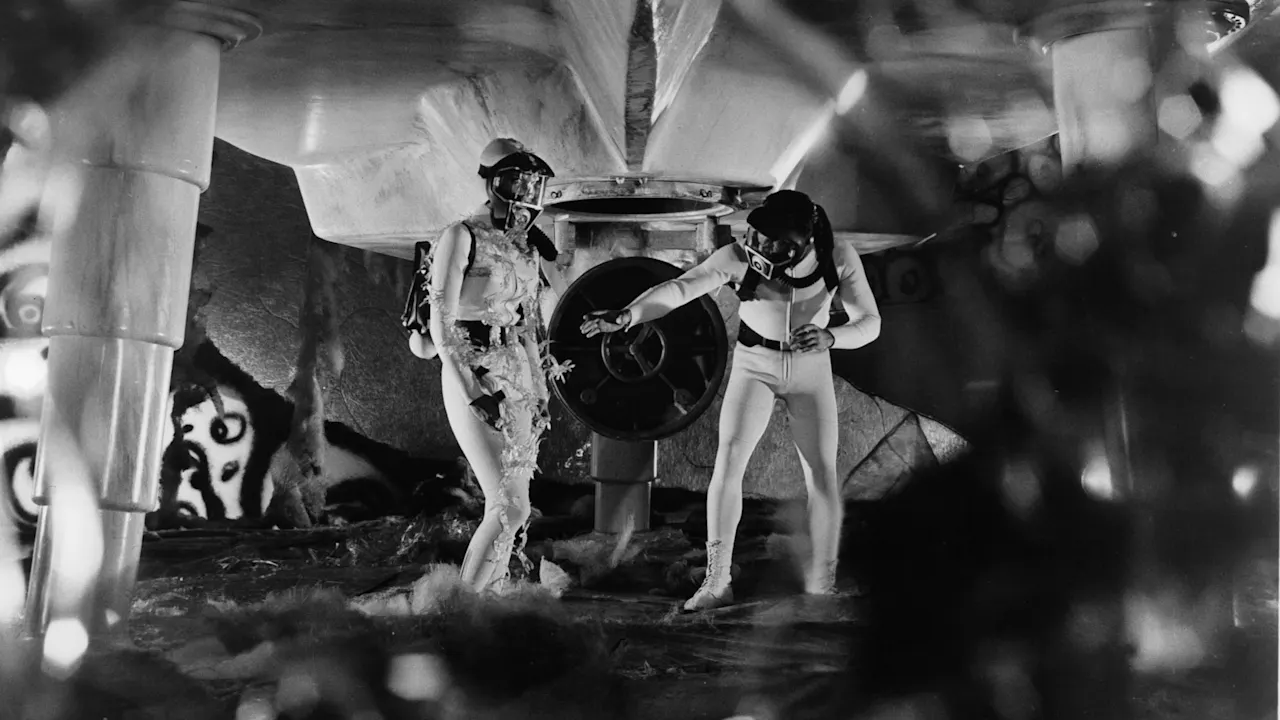
In the 1966 film Fantastic Voyage, a spacecraft and its crew are shrunk to microscopic size and injected into the body of an injured astronaut to remove a life-threatening blood clot from his brain. The Academy Award-winning movie—later developed into a novel by Isaac Asimov—seemed like pure fantasy at the time. However, it anticipated what could be the next revolution in medicine: the idea that ever-smaller and more sophisticated sensors are about to enter our bodies, connecting human beings to the internet.
This “internet of beings” could be the third and ultimate phase of the internet’s evolution. After linking computers in the first phase and everyday objects in the second, global information systems would now connect directly to our organs. According to natural scientists, who recently met in Dubai for a conference titled Prototypes for Humanity, this scenario is becoming technically feasible. The impact on individuals, industries, and societies will be enormous.
The idea of digitising human bodies inspires both dreams and nightmares. Some Silicon Valley billionaires fantasise about living forever, while security experts worry that the risks of hacking bodies dwarf current cybersecurity concerns. As I discuss in my forthcoming book, Internet of Beings, this technology will have at least three radical consequences.
First, permanent monitoring of health conditions will make it far easier to detect diseases before they develop. Treatment costs much more than prevention, but sophisticated tracking could replace many drugs with less invasive measures—changes in diet or more personalised exercise routines.
Millions of deaths could be prevented simply by sending alerts in time. In the US alone, 170,000 of the 805,000 heart attacks each year are “silent” because people don’t recognise the symptoms.
Second, the sensors—better called biorobots, since they’ll probably be made of gel—are becoming capable of not just monitoring the body but actively healing it. They could release doses of aspirin when detecting a blood clot, or activate vaccines when viruses attack.
The mRNA vaccines developed for COVID may have opened this frontier. Advances in gene editing technologies may even lead to biorobots that can perform microsurgery with minuscule protein-made “scissors” that repair damaged DNA.
Third, and most importantly, medical research and drug discovery will be turned on its head. Today, scientists propose hypotheses about substances that might work against certain conditions, then test them through expensive, time-consuming trials. In the internet of beings era, the process reverses: huge databases generate patterns showing what works for a problem, and scientists work backwards to understand why. Solutions will be developed much more quickly, cheaply, and precisely.
Radical transformations
The era of one-size-fits-all medicine is already ending, but the internet of beings will go much further. Each person could receive daily advice on medication doses tailored to micro-changes such as body temperature or sleep quality.
The organisation of medical research itself will transform radically. Enormous amounts of data from bodies living natural lives might reveal that some headaches are caused by how we walk, or that brains and feet influence each other in unexpected ways.
Research currently focuses on specific diseases and organs. In the future, this could shift to the use of increasingly sophisticated “digital twins”—virtual models of a person’s biology that update in real time using their health data. These simulations can be used to test treatments, predict how the body will respond and explore disease before it appears. Such a shift would fundamentally change what we mean by life science.
The dream here isn’t to defeat ageing, as some transhumanists claim. It’s more concrete: making healthcare accessible to all Americans, saving the UK’s NHS, defeating cancers, reaching poorer countries and helping everyone live longer without disease.
The nightmare, however, is about losing our humanity while digitising our bodies. The internet of beings is one of the most fascinating possibilities that technology is opening up—but we need to explore it carefully. We’re resuming the voyage that humankind was travelling in those optimistic years of the 1960s, when we landed on an alien planet for the first time. Only now, the alien territory we’re exploring is ourselves.
This article was commissioned in conjunction with the Professors’ Programme, part of Prototypes for Humanity, a global initiative that showcases and accelerates academic innovation to solve social and environmental challenges. The Conversation is the media partner of Prototypes for Humanity 2025.
Francesco Grillo is an academic fellow at the Department of Social and Political Sciences at Bocconi University.
This article is republished from The Conversation under a Creative Commons license. Read the original article.