
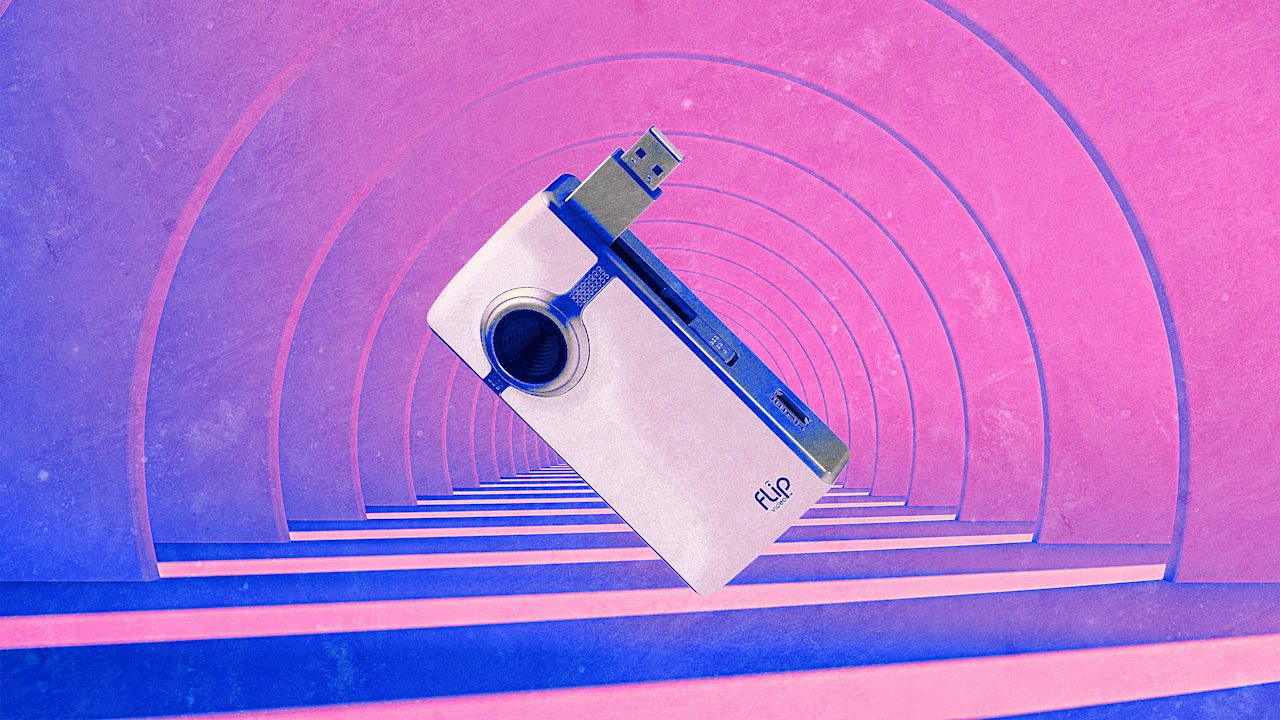
Remember the Flip video recorder? In 2009, it was a sensation—a dead-simple, pocket-size recorder that let ordinary people capture and share moments without lugging around a camcorder or figuring out complicated settings. Cisco acquired Flip’s maker, Pure Digital Technologies, for $590 million in stock. Two years later, Cisco shut Flip down entirely.
The Flip wasn’t a failure. It solved a real problem elegantly. But it was what I call a “gateway product”—an innovation that reveals what customers want but that gets supplanted by something that delivers the same outcome more simply, cheaply, or conveniently. In this case, the rise of smartphones made a dedicated device obsolete.
The history of innovation suggests that most game changers proceed through a series of gateways. We had fax machines before email, PalmPilots before BlackBerrys before iPhones, TiVo before streaming, MapQuest and GPS units before Google Maps. Each one mattered. Each one made money. And each one was eventually swept aside.
The strategic challenge is to figure out what the shelf life of your gateway offering is.
Gateways solve real jobs—with inherited constraints
Gateway products genuinely solve customer problems. That’s what makes them successful, and that’s what makes them dangerous. Their success validates the desire of customers to achieve given outcomes while obscuring the fact that the method of doing so may be temporary.
The fax machine eliminated the delay of postal mail. But it still required paper, a dedicated phone line, and a compatible machine on the receiving end. It imported friction from the old system even as it improved upon it. Email didn’t just do the fax’s job faster—it eliminated the infrastructure entirely.
When your product requires customers to maintain scaffolding from a previous era, you’re building on borrowed time.
The dedicated device trap
One of the clearest gateway signals is a stand-alone device built for a job that could eventually migrate to a general-purpose platform. GPS units, point-and-shoot cameras, MP3 players, handheld translators, portable DVD players—all were gateways. The job each one performed was real and enduring. The form factor was not.
This doesn’t mean dedicated devices always lose. Sometimes they win on performance or experience—professional cameras, high-end gaming consoles, studio monitors. But the burden of proof is on the dedicated device to justify its separate existence. If a product’s primary advantage is that nothing else can do the job yet, leadership needs to plan for “yet” becoming “now.”
When your moat is mastery, you’re vulnerable
Gateway products often develop loyal followings among people who’ve invested time in learning them. PalmPilot users mastered Graffiti. BlackBerry devotees became virtuosos of the physical keyboard. TiVo owners learned the interface and programming logic.
The learning curve feels like a moat—customers have sunk costs, and they’re reluctant to switch. But mastery-based loyalty evaporates the moment a competitor makes it unnecessary. Smartphones didn’t require users to learn a new input language; they just worked. Streaming didn’t demand programming skills; it just played.
If your customer retention depends on what people have learned rather than what they love, you’re more vulnerable than your churn numbers suggest.
5 questions to ask about your product
- What frictions or complexities does our product require that customers would prefer to eliminate entirely? Every negative is an opening for a competitor who does away with it.
- Are we competing on getting to an outcome or on the current method of doing it? If your differentiation is about how rather than what, you’re racing against obsolescence.
- If someone started fresh today with current technology, would they build this the same way? This is the greenfield test. If the answer is no—if they’d build something that makes your product unnecessary—you have a gateway.
- What temporary technological gap are we exploiting? Flip cameras existed because smartphone cameras weren’t good enough yet. GPS units existed because phones lacked sensors and software. Identify your gap, and monitor it relentlessly.
- What’s our plan for when the gap closes? This is the question most leaders avoid. Acknowledging that your hit product has an expiration date feels like disloyalty. But the alternative is being caught flat-footed.
The right strategic stance
None of this means gateway products are bad businesses. Nokia and Blackberry built hugely profitable business empires on technology that would eventually be supplanted.
The strategic error is being lured into believing that it will be a permanent franchise. That can lead, in turn, to overinvesting in extending the product’s life, building organizations optimized for a form factor that’s becoming obsolete, and missing the chance to be the company that makes its own product unnecessary. Apple famously undermined its own hugely profitable iPod to launch the modern smartphone revolution, leading to enormous value creation.
The smart play is to harvest margins while they last, watch for substitution signals, avoid the trap of defending your method, and position your firm to ride the next wave rather than getting swamped by it.
Gateway products can be supremely valuable. They are like paying tuition to learn about the future.