
Hello again, and welcome back to Fast Company’s Plugged In.
Apple may have perfected splashy product-launch keynote events, but it’s never been wed to them. In terms of sheer quantity of new stuff, this week was about as eventful as it gets. And yet the company chose to dispense its announcements via press release over three days.
Monday brought the iPhone 17e and a new iPad Air. Tuesday offered new MacBook Airs and MacBook Pros, plus a couple of displays. In each instance, the advances were incremental: faster chips, beefier specs, and other updates that are welcome, but not exactly memorable.
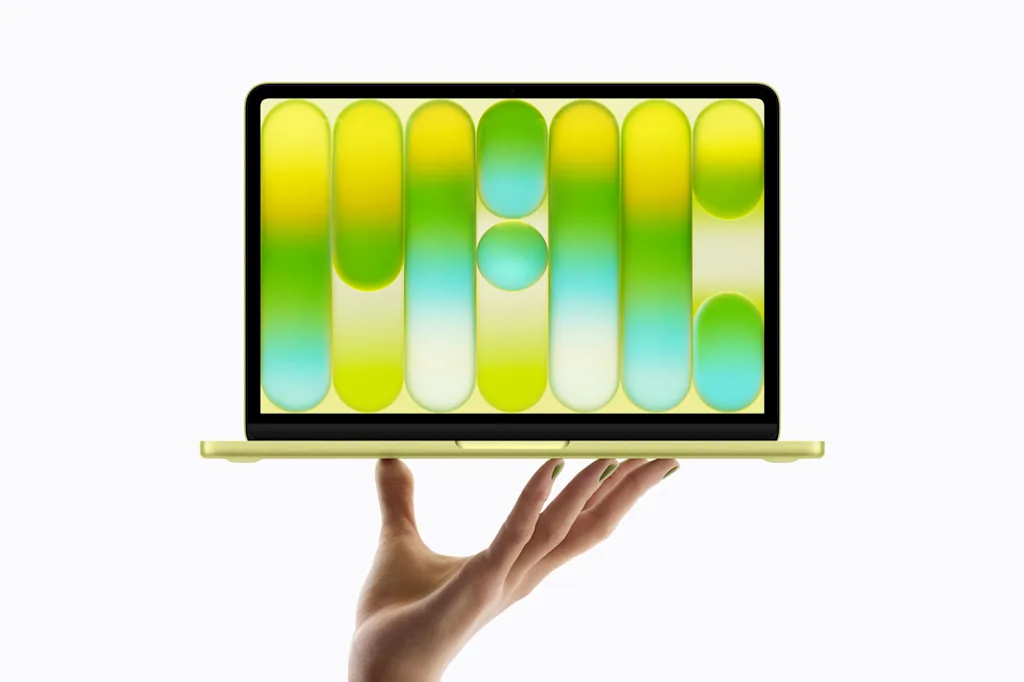
But on Wednesday, Apple concluded its slow-roll product-fest with something genuinely new—a “one more thing” in the tradition of its events of yore. That was the MacBook Neo, the mythical cheap Mac portable that Apple watchers—including me—have been fantasizing about for literally decades.
The MacBook Neo’s press release calls its $599 starting price a breakthrough, and it is. Or at least it’s a landmark in the history of cheap Apple stuff. In the past, MacBooks have often dipped below $1,000, but this one will be accessible to Windows users who might never have even considered buying a Mac until now. For schools, the Neo starts at $499, giving Apple a shot at chipping away at the Google Chromebook’s huge market share in education. (Until now, the iPad has borne the brunt of that effort.)
Apple’s association with premium experiences at premium prices is so enduring that it’s easy to lose track of the fact that it’s not the whole story. The company has often introduced products whose low price, like the Neo’s, helps define them. But what’s happened once they’re out in the wild has varied quite a bit.
The Neo reminds me most of the Mac Mini, the pint-size desktop that Steve Jobs revealed at 2005’s Macworld Expo conference in San Francisco. Initially selling for $499 at a time when the next-cheapest Mac was the now-obscure $799 eMac, the Mini’s minimalism extended to shipping sans accessories. Jobs called it a BYODKM computer—as in “bring your own display, keyboard, and mouse.”
Twenty-one years later, it’s safe to say the Mini found its audience. The computer now starts at $599, the same price as the MacBook Neo, and remains an economical BYODKM entry point for Mac computing. But Mini aficionados, who in my experience really love the diminutive machine, aren’t necessarily all that bargain-minded. It can be decked out in configurations costing up to an eye-watering $4,699.
The Mac Mini was announced on the same day as the iPod Shuffle, an MP3 player obviously designed to take on the many such devices that cost way less than an iPod. To reach sub-$100 pricing, the gum-pack-like gizmo threw out almost everything that made an iPod an iPod, from the display to the “1,000 songs in your pocket” dream. (The Shuffle could hold only 240 at a time.) It did not scream quality. Still, it worked with iTunes and the iTunes Music Store—at the time, a big whoop that no non-Apple music player could match. In various forms—including a bizarre voice-controlled model—the Shuffle survived until 2017, which was longer than the classic full-size iPod did.
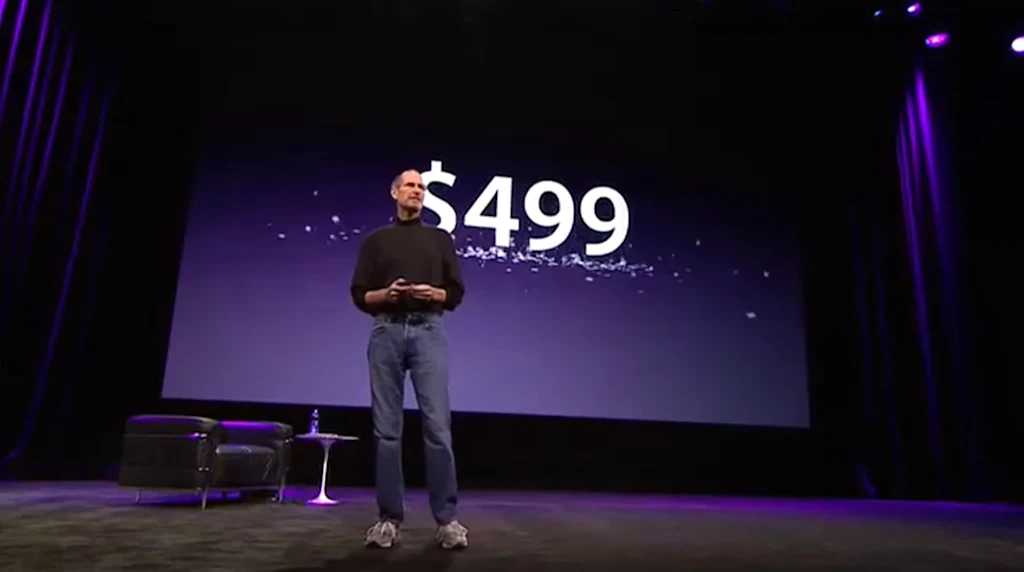
Whether the world considers a product to be unusually cheap is, of course, in part a matter of perception. Before Apple unveiled the first iPad in 2009, plenty of outsiders thought it might cost around $1,000—not just to cover Apple’s costs and allow for a profit, but also to discourage it from cannibalizing MacBook sales. That conventional wisdom became so pervasive that I did a spit take in the audience when Jobs revealed the $499 price at the launch event, even though I’d mused that it might cost as little as that the previous July.
At first, Apple leaned into the first iPad’s surprisingly reasonable cost as much as its capabilities, calling it “a magical and revolutionary device at an unbelievable price.” Over time, however, cheapness ceased to be core to the iPad brand promise. Today, Apple’s strategy is to offer an iPad for everyone, at prices from $349 to $2,599. As someone whose primary computer is a 13-inch iPad Pro—a tablet that Apple would never have offered for anything like $499—I’m glad it loosened up.
Most of Apple’s forays into cheaper-than-you’d-expect technology succeeded well enough to lead to additional generations. All of them involved a delicate balancing act between hitting a price point and building something a critical mass of people want—certainly more so than its pricier products. The mere fact that something is affordable and carries an Apple logo is not enough.
Back in 2013, I was pretty excited about the iPhone 5c. Selling for a carrier-subsidized $99—half the price of the iPhone 5s—it came in a variety of colorful shells that then-Apple design chief Jony Ive touted as being “beautifully, unapologetically plastic.” Consumers, it seems, weren’t seduced by the proposition: A year later, there was no iPhone 6c. And Apple has never made another plastic iPhone since—beautiful and unapologetic or otherwise.
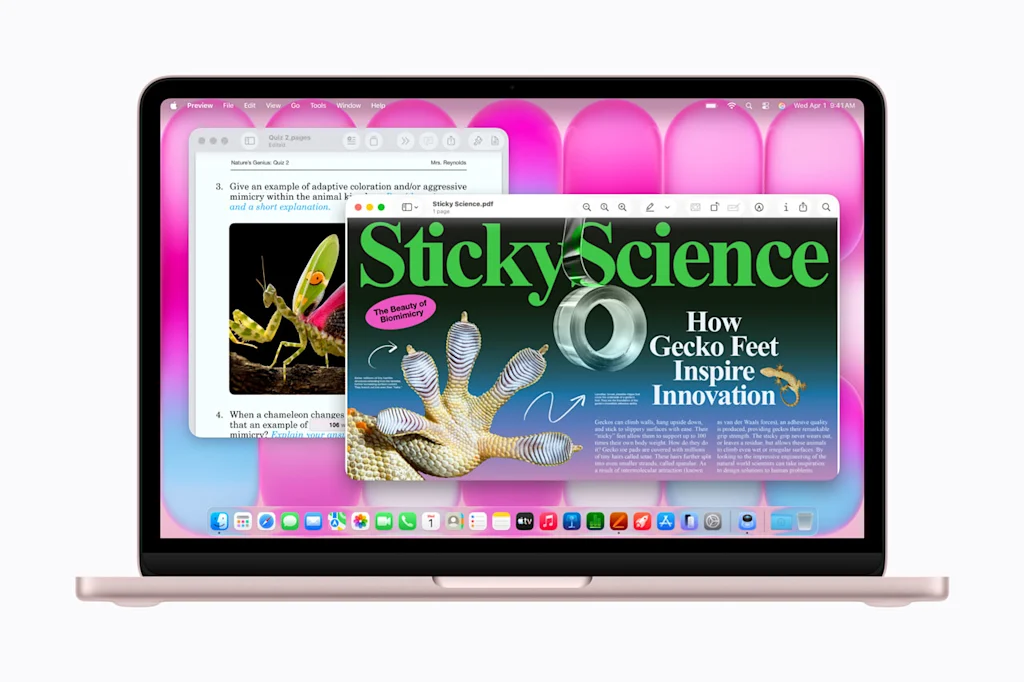
The MacBook Neo isn’t a MacBook Air at almost half the price. It’s the first MacBook powered by a smartphone-class chip—the iPhone 16 Pro’s A18 Pro chip—rather than one originally designed for a laptop. It does without niceties such as MagSafe and a backlit keyboard, and Touch ID is available only on the $699 version, which also doubles the storage to 512 GB. 512 Pixels’ Stephen Hackett put together a helpful, quite lengthy list of other ways Apple cost-reduced the Neo, such as equipping it with an older version of Wi-Fi.
At first blush, Apple appears to have made sensible decisions about what to put in the Neo, and what to leave out. That doesn’t guarantee it’s pulled off an Apple-level experience on a budget. But like any creative person or institution, the company does some of its most interesting work when it’s thinking its way through self-imposed limitations—and I’m glad that the mythical cheap Mac portable, at long last, is more than a myth.
You’ve been reading Plugged In, Fast Company’s weekly tech newsletter from me, global technology editor Harry McCracken. If a friend or colleague forwarded this edition to you—or if you’re reading it on fastcompany.com—you can check out previous issues and sign up to get it yourself every Friday morning. I love hearing from you: Ping me at hmccracken@fastcompany.com with your feedback and ideas for future newsletters. I’m also on Bluesky, Mastodon, and Threads, and you can follow Plugged In on Flipboard.
More top tech stories from Fast Company
Netflix buys Ben Affleck’s AI startup
The streamer has acquired InterPositive, a company specializing in AI tools for filmmakers. Read More →
How Iran built such a formidable cyberwar machine
Even as bombs fall across the Middle East, Iranian-linked hackers are launching digital attacks across the region. Decades of investment made that possible. Read More →
The new Galaxy S26 Ultra isn’t much to shout about
The company is losing the technological edge it built its reputation upon. Read More →
AI is changing how people use AT&T home internet—and helping stabilize the network
Customers are sending far more data back into the network as they interact with AI tools. AT&T says it’s using AI of its own to predict outages, model traffic, and keep its service running smoothly. Read More →
AI ‘vibe-coded’ war dashboards are flooding social media
Developers are vibe-coding tools to track the Iran conflict in real time, though some question whether the dashboards offer insight or just spectacle. Read More →
The agent boom is splitting the workforce in twoAgentic AI is creating a divide between builders who shape how work happens and users who must adapt to it. Read More →