
On a recent trip to my husband’s hometown in India, I was stopped in my tracks by a thousand-year-old banyan tree, tall and regal, standing in the middle of an ancient temple. A vast canopy was supported by roots that had taken centuries to reach the ground. The temple had been built around it, not the other way around, in quiet acknowledgment that some things cannot—and should not—be hurried.
The tree’s beauty and strength came not from efficiency or design, but from patience. It had grown by using time as a gift rather than a constraint, expanding slowly, deliberately, without urgency. Standing there, it became difficult not to reflect on how rarely modern work allows for that kind of growth and patience.
The Cult of “Unexamined Speed”
In the corporate world, time is often seen as the enemy. We’re constantly trying to compress it, optimize it, or even race against it. But we are reaching a breaking point. Not only are companies paying a “burnout tax” for this race against time (according to a 2024 Aflac WorkForces Report, nearly three out of five American workers are affected by burnout), but studies show that firms prioritizing “strategic speed” (reducing time for critical decisions) actually had higher operational friction and lower long-term growth than those embracing “deliberate pace.”
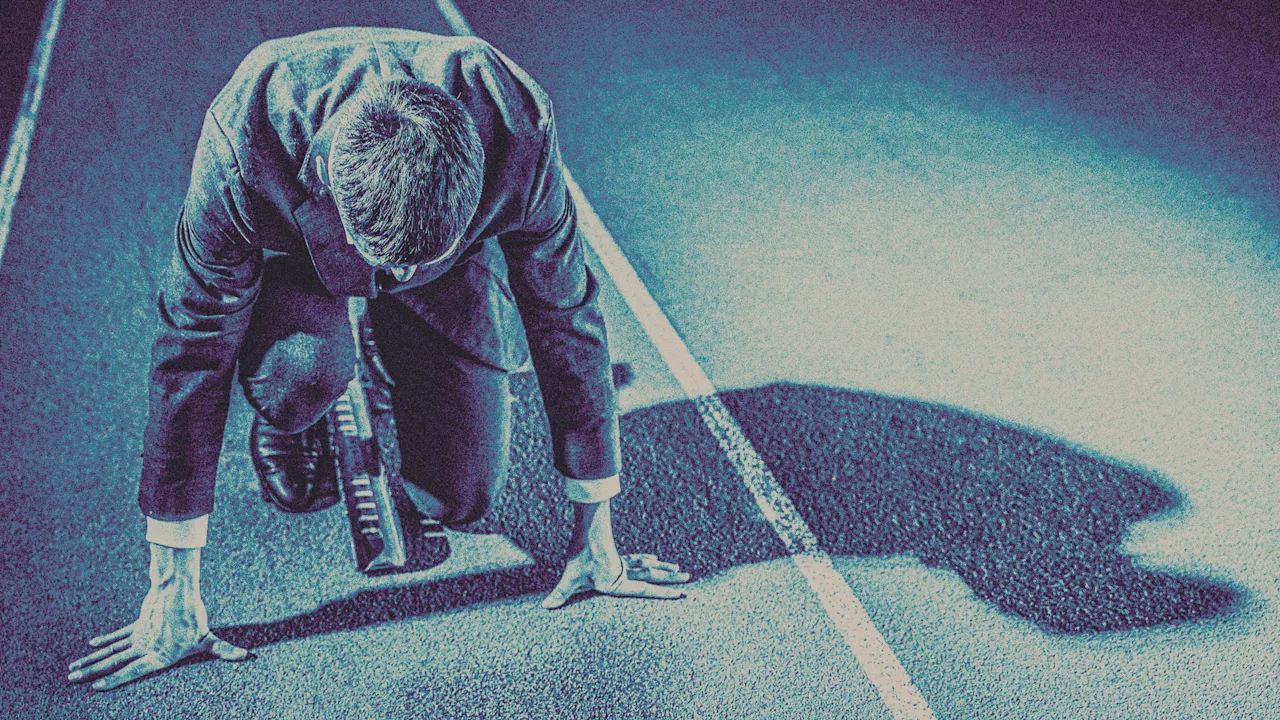
We’ve confused motion with progress. In many organizations, thinking is treated as a luxury, while reactivity masquerades as decisiveness. When everything is urgent, nothing is important. We’ve built a culture in which thinking is treated as a luxury rather than a responsibility, and reflection is something we promise ourselves we’ll get to once the “real work” is done. Pausing, especially in leadership roles, can feel risky, even irresponsible.
Speed, of course, isn’t inherently bad. The problem is unexamined speed—the assumption that faster is always better, that hesitation signals weakness rather than discernment.
The VC Secret: Active Procrastination
The sharpest counterexample to this frenzy comes from the high-stakes arena of venture capital. Experienced investors often conduct a practice called “active procrastination,” in which they will deliberately delay an investment decision in order to optimize for more information, such as another month of revenue data, a key hire, or a market shift.
This isn’t laziness; it’s strategic restraint. By delaying a “yes” or “no,” an investor not only creates time for further signals to appear, but they create space for further insights to emerge that might influence their thinking—insights that rarely emerge under pressure. By giving themselves more time to think, they also reduce the number of emotionally driven decisions that are often fueled by the fear of missing out.
As the psychiatrist and philosopher Viktor Frankl once said, “Between stimulus and response there is a space. In that space is our power to choose our response. In our response lies our growth and our freedom.”
Winter is Not a Failure
The same principle applies far beyond investing. Creativity, wisdom, and ethical clarity all require incubation. Some problems do not respond to force or urgency. They respond to space.
I was reminded of this recently at the Sundance Film Festival, where I attended a mindfulness session led by filmmaker Chloé Zhao. She spoke about the mind as moving through seasons. Everyone experiences winter, she said, and winter is not a failure. It is a necessary period of recuperation, recovery, and quiet preparation for what comes next.
Her warning stayed with me: don’t rush to build a greenhouse simply to avoid winter.
During the session with Zhao, our group sat together in silence. Something subtle but powerful emerged: a sense of connection—not through conversation or collaboration, but through shared stillness. It was a reminder that reflection does not have to be solitary; it can also be communal, creating alignment without a single word being spoken.
The AI Factor: Why we need to Slow Down
At Sundance, Zhao offered a phrase that has stayed with me: we have forgotten the original AI—Ancestral Intelligence. The accumulated wisdom of human experience. The practices that helped societies endure long before optimization became the dominant goal. Many traditions built structured pauses into daily life—not as inefficiencies, but as necessities.
In the Bhagavad Gita, the mind is described as either our greatest ally or our greatest obstacle. A disciplined mind becomes a bridge to clarity and insight; an undisciplined one traps us in reaction and identification with fleeting thoughts. The practice is not about suppressing thinking, but about observing it—cultivating the capacity to witness rather than immediately react.
This skill is becoming increasingly critical in the age of AI.
Machines are extraordinarily good at optimization. They execute instantly, process vast amounts of data, and surface patterns at a scale no human can match. What they do not do is pause. They do not ask whether something should be built, or how it might reshape human experience over time.
That responsibility still belongs to us.
Three Pillars of the “Banyan” Leader
As technology accelerates, the uniquely human contribution shifts. Leadership becomes less about moving faster and more about knowing when not to move yet. Reflection is no longer a personal wellness practice; it is a strategic capability.
For leaders navigating complexity today, this does not require a retreat from technology or a rejection of progress. It requires intentional design and re-design.
Three practices can help. First, apply deliberate procrastination to high-stakes decisions. Ask what might become clearer if you waited a little longer, and whether urgency is real or merely habitual. Second, build stillness into creative and leadership processes—through scheduled thinking time, device-free moments, or quiet reflection before major decisions. Insight rarely arrives on command. Third, normalize winter seasons, both personally and organizationally. Not every phase is for output. Some are for recovery, integration, and learning.
When I think back to that temple in India, I see this idea of “deliberate pace” made physical. The banyan tree didn’t grow deep roots by rushing. It grew deep roots through patience, composure, and persistence. Nature, ritual, and time were woven together to remind us that not everything meaningful can—or should—be rushed.