
In 2020, Waymo began offering fully driverless rides to the public in Phoenix, turning the city into the closest thing the U.S. has to a real-world laboratory for autonomous vehicles (AVs). What began as a cautious pilot program has since grown into a sprawling robotaxi network that now includes freeway travel and service to Phoenix Sky Harbor International Airport.
Since then, Waymo has expanded to cities including San Francisco and Austin, while rivals like Tesla and Zoox are racing to deploy their own autonomous fleets. But the technology’s spread has come with a steady stream of logistical and political questions for the cities hosting it (especially since Phoenix, with its wide roads and relatively simple grid, represents one of the easier environments for autonomous vehicles to navigate).
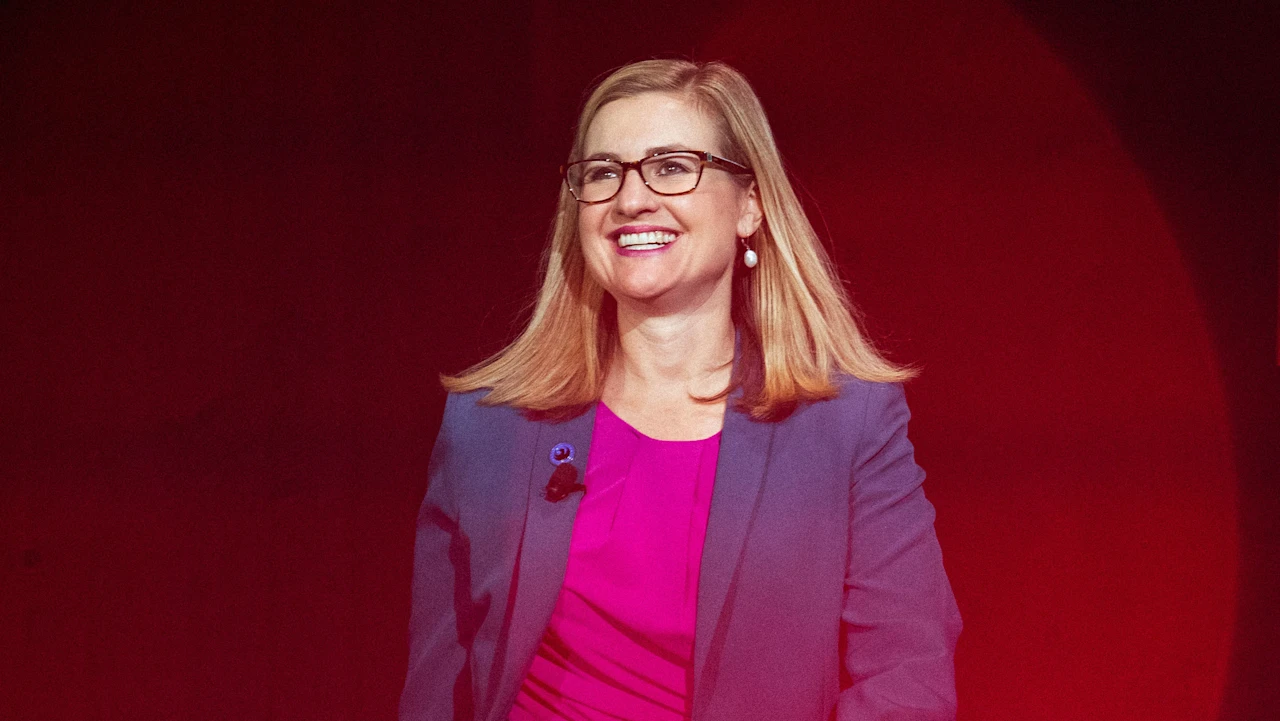
Fast Company spoke with Phoenix Mayor Kate Gallego this week at Austin’s South by Southwest Festival about what it’s actually like to govern a city where driverless cars are more fully integrated into the transportation system. The conversation has been edited for length and clarity.
You’ve overseen Phoenix during the whole arc of Waymo’s rollout. What’s changed in the city once AVs moved from a pilot to something residents can actually use?
People have really appreciated Waymo’s expansion onto the freeways, because they can get where they’re going more quickly if it’s a longer distance. When we started, we were the first airport to have autonomous service in the world, which is a point of pride for Phoenix. We originally started pickups at our Sky Train, and now we’ve moved to the curb. We tried to be very safety-focused and make sure we tested and piloted before we did full deployment. It’s a point of pride for us that we were the first in the world to have autonomous vehicle service at the airport. We think it really shows we’re a technology-forward city and that we’re willing to embrace innovation.
What’s been the biggest benefit of having those Waymos on the streets in Phoenix?
We had a real shortage of drivers, so more people have the ability to get where they’re going, particularly during hours like overnight when it’s harder to find people who want to be working. So it’s really improved quality of life for riders. We’ve also seen some traffic-calming impacts. The Waymos go the speed limit. Phoenix has above-average traffic speeds for big cities in the United States, so speeding and red-light running are challenges for us. Waymos follow traffic rules, so that’s helped have a traffic-calming effect.
Have you seen any evidence in Phoenix—crash data, traffic incidents—that verifies Waymos are making the roads safer? Are there other metrics you look at?
We look at Waymo’s crash data, and the Waymos crash less than traditional human drivers. I don’t know that we’ve done a full analysis, but we could—we probably should. You’re the second person to ask me that today, so maybe I’ll take the hint and do that analysis.
Based on the Phoenix experience, what’s something cities tend to underestimate when they first start integrating AVs into the roads? What adjustments do they have to make?
It’s really important to have good communication. If there are issues with the programming, you want to make sure Waymo knows and can fix them. When we’ve reported issues to Waymo, they’ve been great about adapting the programming.
What does the communication pipeline between your office and Waymo look like?
Our first responders work directly with Waymo. If we’re going to have an unusual event or an emergency we’re responding to, they have the ability to work directly with the company. We also work directly with Waymo to report any incidents or opportunities, or if we want to partner on anything.
Fast Company has reported on incidents in San Francisco where robotaxis can stall and take time to clear off the roads, partly because there’s no human driver to communicate with. Have there been incidents like that in Phoenix?
Early on, we had a street closure for an arts festival, and a bunch of Waymos got very confused by it. We shared the incident, and Waymo updated the programming. We haven’t had a repeat of the issue. Generally, when we’ve had challenges, they’ve been fixable. We don’t have the same problem repeatedly. We’ve trained our first responders, and it’s important to me that as new entrants come into the autonomous vehicle market, first responders can communicate with vehicles from outside the car. That’s worked fine with Waymo.
In Arizona, the state regulates autonomous vehicles. The city does not. But it’s been a partnership. For example, we had an issue where a Waymo drove into a pole in an alley. We shared the issue, and they updated the programming. I think they reported it to the federal government, but we weren’t their regulator. We were more like their partner.
When you say they update the programming, what does that mean?
I think they go out, look at what happened, and make sure the system understands how to react to that type of object or situation.
There was an issue in another community where there was a stop sign in the bed of a pickup truck. The Waymo saw the stop sign and stopped, because it was programmed to stop when it sees one. But it wasn’t aware of a moving stop sign driving down the street. Once they programmed it to understand that situation, it was fixed.
Are other AV companies coming to Phoenix?
Right now we have Waymo and Tesla. Zoox announced last week that it plans to come, but it hasn’t arrived yet.
Is there a point where there could be too many AV companies operating in a city?
I chaired the U.S. Department of Transportation’s Transforming Transportation Advisory Committee, and one of our recommendations was that certain safety standards should be common across companies—for example, first responders should be able to communicate with vehicles from outside the car.
In Phoenix, we’re also starting to think about how to design cities for more autonomous vehicles. Do we need more drop-off and queuing space in front of buildings? Should we adjust parking ratios? Some people in Phoenix imagine having their own autonomous vehicle that drops them off at work, then goes and makes money as a robotaxi, and comes back later. I think we’re a ways away from that.
But we do think about whether traffic might move differently if there are more AVs. That could have environmental benefits and reduce the need for pavement. I care a lot about climate action and emissions. Waymos are lower-emission compared to our average vehicle fleet, and reducing tailpipe emissions helps us with our air-quality challenges. I grew up with asthma, so that’s something I’ve cared about for a long time.
Have there been actual changes to urban design yet, or is that still theoretical?
We’re really looking at our parking minimums. I’d love to see Phoenix devote less space to pavement and more to active uses. That could help enable better mass transit as well.
There are ongoing discussions about bringing Waymo to New York. Do you think the calculus changes in a much denser city?
In some ways, there could be benefits. A Waymo can see many things at once, whereas a human driver has a limited field of vision. But cities should be ready to train first responders and make sure all stakeholders understand how to work with the technology.
What does transportation look like five or 10 years from now in Phoenix?
We recently went to voters with a 10-year plan. As part of that, we talked about advanced transportation technologies. I’m really interested in how these technologies can help Phoenix grow up rather than out—encouraging more density and more sustainable land use.
And voters approved that plan?
Yes, with 78% approval. It was our general plan for the city. We also passed a regional transportation sales tax and set aside $250 million for advanced technology.
Are other cities asking you about Phoenix’s experience with Waymo?
Yes. We’ve had people from all over the world come visit. Delegations from the European Union, officials from Prague, and others have come to see how our regulatory system evolved and how the safety systems work. I’ve taken visiting officials on Waymo rides when they’re interested in bringing the technology to their own cities.
The first head of government to ever ride in an autonomous vehicle was the Dutch Prime Minister, in Phoenix, in a Waymo. The Secret Service was very nervous about protecting him, so they did a lot of test runs. We had this bizarre parade through downtown Phoenix, where there was a relatively small Jaguar with the prime minister surrounded by large armored Secret Service vehicles.
Have you taken Waymos yourself?
Yes. I was the first customer when we expanded service to Sky Harbor Airport. It was a good experience, except there were a bunch of cameras watching as we drove up, and I unbuckled early so I could get out quickly. The Waymo stopped because I had unbuckled. So it was my fault. As mayor, I’m glad they’re responsive to safety issues. As a human, it was a little embarrassing.