
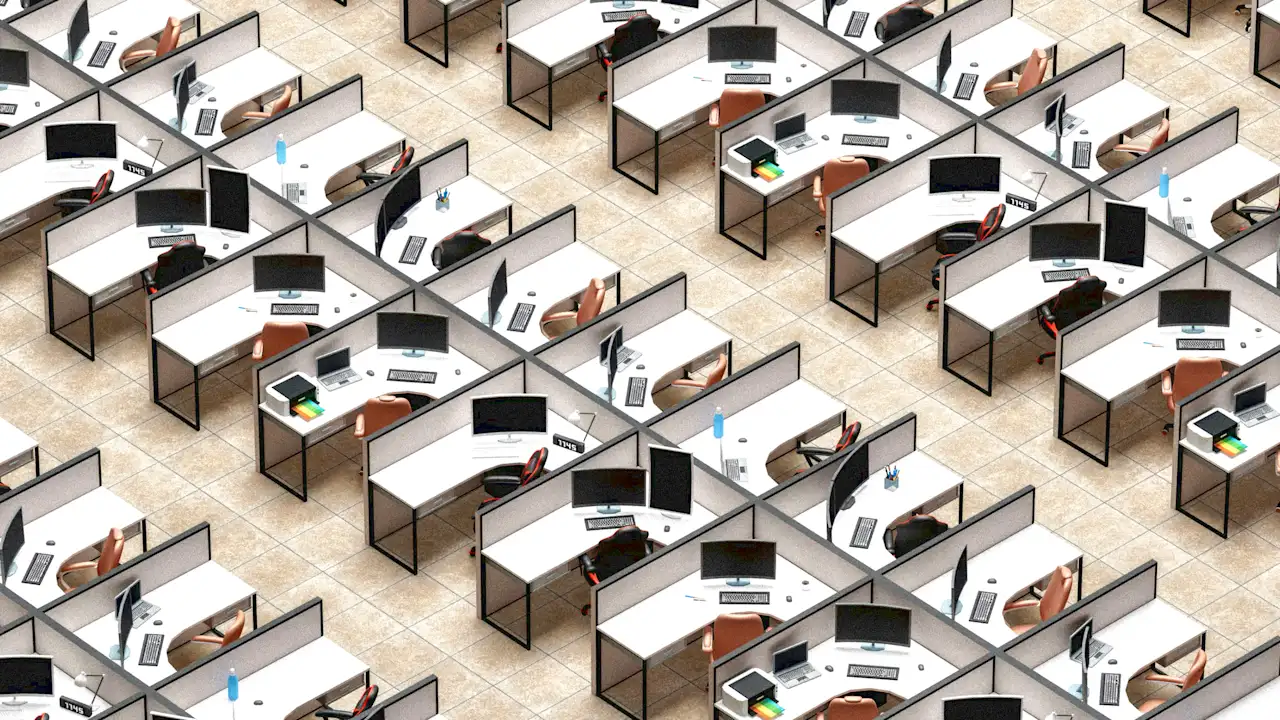
Michael, a 42-year-old tax accountant, came to my office complaining of chronic anxiety, chest pressure, and what he called tunnel vision. “It’s like I’m stuck inside my screen,” he told me. “Even when I’m not working, I’m holding my phone and my brain won’t shut off.”
Is that you? Americans spend 93% of their time indoors. Insomnia, depression, metabolic disease, cognitive decline, chronic inflammation, burnout, insulin resistance, sedentariness, loneliness. We engineered the human animal into a box and spend billions managing the symptoms the box causes.
Here is what I want leaders reading this to understand: your people are not burned out. They are indoors too much. In 30 years of internal medicine, I have found that the most underestimated factor in health and longevity is where people spend their time.
Indoor work is cognitively rich but biologically poor and screen-intense. I call this Digital Obesity: so overloaded on screen input that the baseline of the American knowledge worker has become brain fog, exhaustion, and an undercurrent of anxiety.
The pattern is recognizable: tired even when you slept. You’re drinking coffee within a few minutes of waking, just to feel normal. You’re hitting the break-room leftovers and the vending machines for sugar by 2:30, and if not, you’re scrolling for dopamine. You’re exhausted most of the day and you’re wired at night.
What’s unrecognized: this is predictable physiology, not a character flaw. What comes with it medically is chronic low-grade inflammation from indoor confinement. Inflammation underlies cardiovascular disease, diabetes, dementia, and depression. We treat these as separate diseases, but they have an unrecognized root cause. Together, they are an indoor epidemic.
Our biology did not evolve to handle the constant monitors, artificial light, stale air and circadian disruption we now experience. The environment is not a background for work, professional practice or study. It is the platform on which your body and brain run. And right now, the environment is suppressing the performance of every person confined within it.
The productivity data are clear. In a controlled office study, cognitive function dropped 15% at elevated CO2 levels, which come about with normal exhalation. A Cornell ergonomics study found that optimizing natural light produces a productivity gain worth $100,000 per 100 workers annually. Researchers at Stanford found that walking outside increases creative output by 60%. Presenteeism is costing you more than absenteeism.
The longevity data is emerging and becoming clearer. Each cell in your body has a copy of your DNA, on your chromosomes, and those have protective caps at their ends called telomeres. Every time a cell divides, those tips get shorter. When they get too short, the cell dies.
A National Health and Nutrition Examination Survey (NHANES) study of nearly 8,000 Americans found that people in greener neighborhoods had significantly longer telomeres, equivalent to nearly two fewer years of biological aging. A second NHANES study of 5,823 adults found that the highly active had a biological aging advantage of nine years over sedentary adults. You are not just preventing disease when you move your body deliberately in a green or blue environment. You are slowing the rate at which your body ages.
Americans average nearly 7 hours a week outside, but most of that time is incidental: walking from parking lot to parking lot, or stepping outside to pick up a delivery. But time like this does not move the chronic disease or longevity levers.
The prescription is short. The minimum effective dose is just 17 minutes/day– the threshold at which nature time measurably improves health and wellbeing and may improve longevity. A 30-year Harvard study of 111,000 people found that those who moved naturally (e.g., walking, gardening, tennis) had 19% lower all-cause mortality. The longevity curve peaks between 200 and 300 minutes weekly. I call it the 7% Solution: 7% of your waking hours in the environment your biology actually requires.
What does that look like? Coffee outside instead of in the break room. Reading on the balcony rather than in your bedroom. Suggesting a walking meeting over a conference room. Lunch on a park bench instead of at your desk. You are not adding time. You are repurposing it.
Specific, intentional time in a green or blue space measurably lowers your blood pressure, your cortisol, your risk of dementia. The evidence has been there for years. Until now, the prescription has not.