
Microsoft PowerToys feels like something that shouldn’t exist in Windows today.
What started in 2019 as a couple of utilities for things like window and shortcut management has gradually expanded to nearly 30 useful tools, including a keyboard shortcut creator, an image-to-text extractor, and a better search bar than the one that’s built into Windows proper. PowerToys has become wildly popular among Windows power users, with more than 70 million downloads to date, but it’s also completely free, with no ads, Office upsells, or ham-fisted Copilot integrations.
Instead of directly monetizing PowerToys, Microsoft sees it as a way to build goodwill among software developers and Windows enthusiasts while also incubating ideas for the future of Windows. It’s like a hippie commune within the Microsoft empire, building cool software mostly for its own sake. When I ask Principal Product Manager Clint Rutkas if a business model might ever emerge from all this, he seems almost taken aback by the question.
“Nope,” he says. “Our goal is to empower power users to do more.”
PowerToys 1.0
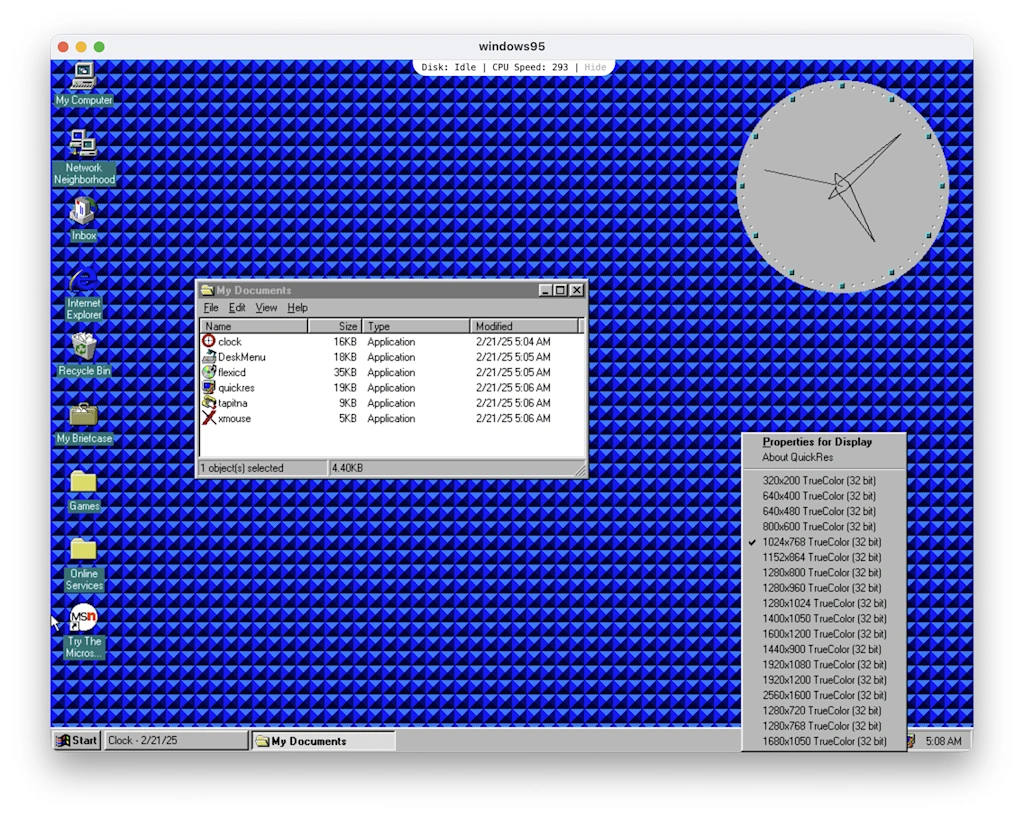
The history of PowerToys goes back a lot further than 2019, launching first as a free collection of utilities for Windows 95.
Raymond Chen, an early Microsoft employee who is now a principal software engineer at the company, says those tools started out as a way for Microsoft’s engineers to experiment with new features. Windows 95 applications, for instance, could display their own options in File Explorer’s right-click menu, so Microsoft’s developers tested an option for viewing .CAB files. They also built a circular desktop clock to play with Windows 95’s non-rectangular window support and a way to switch display resolutions directly from the system tray.
“They were ways of verifying the features that we were adding (to Windows 95) by actually using them,” Chen says.
While PowerToys started off as just an internal experiment, Microsoft soon decided to throw the utilities on its website for download. The software came with no documentation and no tech support, but it quickly gained word of mouth through online user groups and became a hit with the PC press.
“The important thing about the PowerToys is that they set you free to use Windows 95 the way you want to,” Paul Bonner wrote in the September 1996 issue of PC Magazine.
After the initial release, PowerToys became less about releasing internal experiments and more about showcasing neat side projects, Chen says. Even if Microsoft didn’t deem a feature appropriate for Windows proper, a developer could still build it on their own and potentially get it into PowerToys. The bar for acceptance was low; Chen doesn’t remember ever rejecting anything that a developer submitted.

“Somebody would email me and say, ‘Hey, I got a cool PowerToy. Can you add it?’ And I’d be like, ‘Sure,’” he says.
Over time, the PowerToys concept expanded within Microsoft. Chen himself spearheaded a set of PowerToys for the Windows Kernel, and Microsoft included a new set of PowerToys for Windows XP in 2001. Microsoft’s OneNote and Windows Media Player teams came up with their own PowerToys, and there was even a batch of PowerToys for Windows XP’s Tablet PC Edition.
But in the early 2000s, a series of Windows security vulnerabilities brought the PowerToys party to an end. In response to computer worms such as SQL Slammer and Blaster, Microsoft decreed that it would no longer put unsupported software on its website. Chen recalls that any downloadable program needed a dedicated support person, an escalation path, and all sorts of burdensome onboarding. He couldn’t just round up a collection of .EXE files and slap them on Microsoft’s website as-is. PowerToys was effectively dead, and would stay that way for the next 15 years.
“At that point, it’s just not fun anymore,” Chen says. “It didn’t discourage people from writing random side projects—everybody loves writing random side projects—it’s just that you lost a publishing model for them.”
The comeback
PowerToys went dormant until 2019, when Microsoft was looking to improve Windows’ credibility with software developers through things like Windows Subsystem for Linux and a modern command line terminal. Mike Harsh, Microsoft’s director of Windows developer experiences, had the idea to bring PowerToys back as part of that effort.
“The mission statement was creating a bunch of really cool, super-powerful utilities and experiences for developers,” Rutkas says, the idea being that developers and power users would have overlapping needs.
But this time around, Microsoft didn’t just solicit side projects from within. After announcing some potential ideas at its Build conference, it launched an open-source project on GitHub and began asking its community for feedback. Rutkas recalls an overwhelming response, both at Build and online.
“We had no source code, and in under 24 hours, it had, I think 5,000 stars, which at the time was unheard of for a [GitHub] repository,” he says.

Rutkas briefly left Microsoft in early 2019 for a job at Meta, but returned in the fall to spearhead PowerToys, just after its initial release for Windows 10. The first version included just a couple of utilities: One for arranging windows into preset layouts, and another for looking up keyboard shortcuts. Then it started piling on more, including a bulk file renaming tool, a batch image resizer, a keystroke remapper (for instance, to make caps lock do something else), and a way to search for open windows.
Microsoft also began leaning on open-source developers for help. When the PowerToys team wanted to add a utility for extracting text from images, for instance, it turned to Joseph Finney, an independent developer who’d already built an open-source app for that purpose called TextGrab.
Finney had a day job as a mechanical engineer and made apps in his spare time. When TextGrab came up in a discussion among PowerToys users on GitHub, Microsoft asked if he’d be willing to build a text extractor into PowerToys. Finney figured that if he didn’t do it, someone else would, and he saw it as a way to be part of a fun open-source project.
“Ultimately, I’m like, ‘You know what? I’m getting my little goofy idea into the hands of more people. That seems like a big win,’” he says.
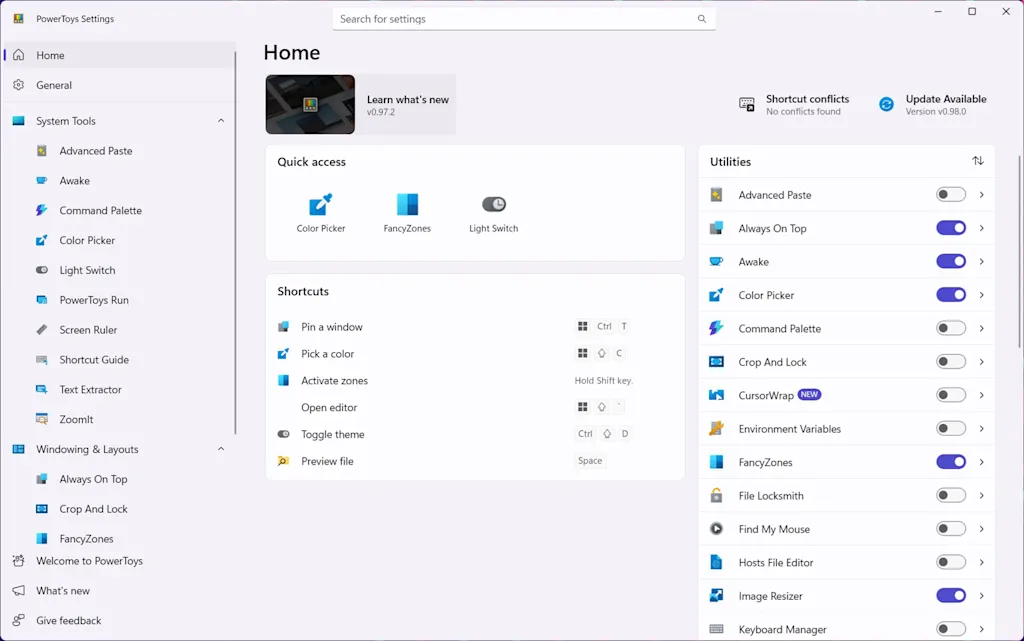
Of the 28 utilities in PowerToys today, 12 of them credit the work of one or more open-source developers. Microsoft doesn’t pay for these contributions, but Finney says he’s benefitted in other ways, like earning a Microsoft MVP award and joining weekly calls with the PowerToys team. PowerToys is also one of the top referrers to his standalone TextGrab app, which has additional features and is available for free on GitHub or for $10 through the Microsoft Store.
“Being an indie software developer who’s doing this nights and weekends, the big motivating thing is energy,” he says. “Being part of any community is where that energy comes from.”
Future Windows ideas today
Even if Microsoft doesn’t gain direct financial benefit from PowerToys, it’s at least succeeded in generating developer goodwill. On Microsoft’s GitHub page, it’s the second most-starred project behind only Visual Studio Code.
But over the past few years, PowerToys has also become a proving ground for new Windows features.
Joseph Finney’s Text Extractor utility, for instance, is still available within PowerToys, but its settings page now recommends using Windows 11’s built-in “Snipping Tool,” which includes its own text extractor inspired by the PowerToys version. PowerToys’ FancyZones tool, which lets users drag and drop windows into preset layouts, also helped inform the window tiling features in Windows 11. Rutkas says the Microsoft developer who originally built FancyTools worked on Windows 11’s tiling features as well.
Why not just test these features through Microsoft’s preview versions of Windows? Rutkas says PowerToys lets the company try out new ideas faster, with rough prototypes that it refines through community feedback. And even if a feature does graduate to Windows proper, the PowerToys may still serve a narrower audience.
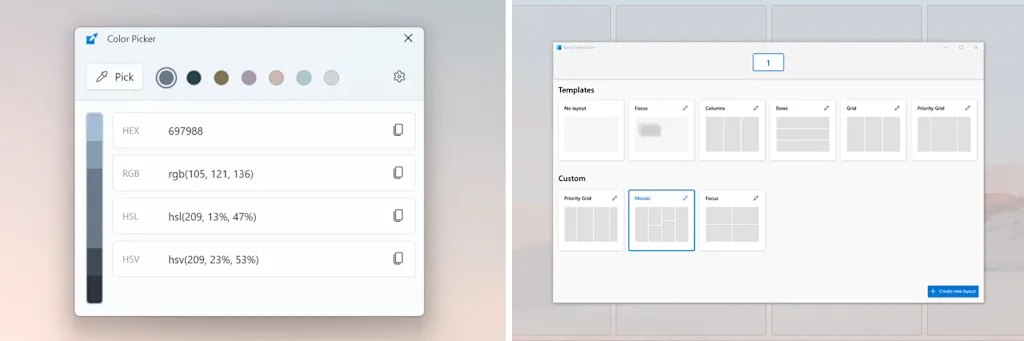
“We’re helping out an extremely advanced user, so that lets us be a lot more free on the UI for certain things. But we can take those experiences and learnings and then bring them back into Windows,” Rutkas says.
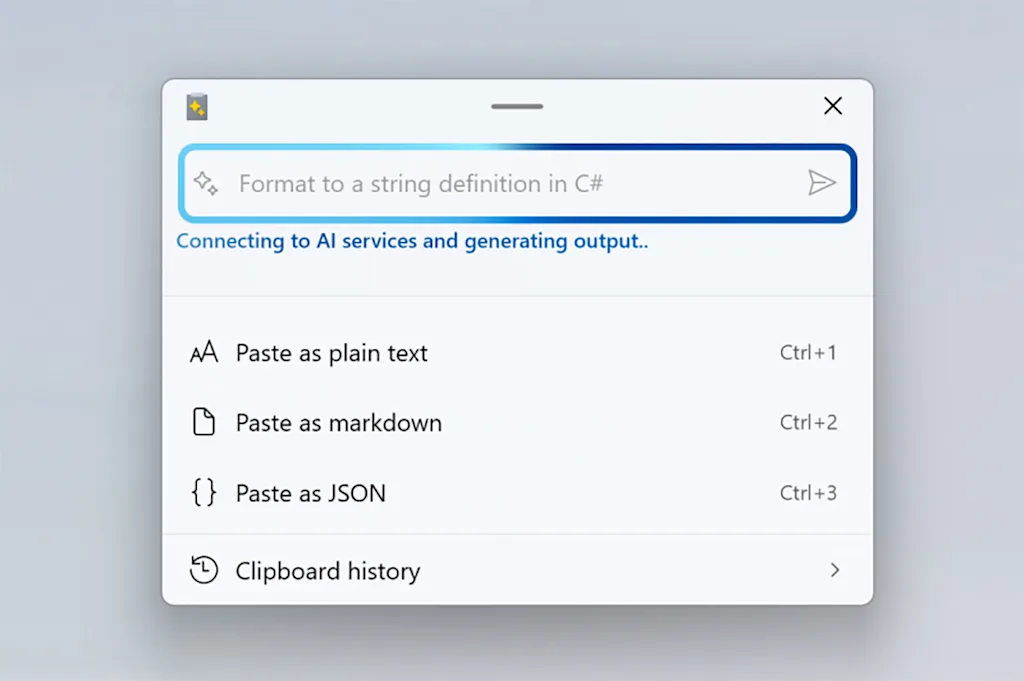
Some recent PowerToys developments seem more overtly aimed at becoming future Windows features. A tool called Advanced Paste, for instance, can use AI to rewrite or translate text in users’ clipboards, while the Command Palette tool is equivalent to the Spotlight search bar built into MacOS. Users can bring up Command Palette with a keyboard shortcut and use it to launch apps, locate files, search the web, and perform calculations. Users can even create and share extensions that add more features to the search bar. It’s by far the most ambitious tool that PowerToys offers.
Rutkas won’t comment on whether tools like Command Palette will become core Windows features in the future, but it may not matter either way. What makes PowerToys great is that it exists on its own little island without overt pressure to become something bigger. Meanwhile, Windows proper has stretched out in so many directions that it’s lost sight of the basics, prompting Microsoft to acknowledge that it needs to rebuild trust again. Leaving PowerToys alone to do its own thing would be a start.
“We’re testing, incubating, pushing the bleeding edge of a lot of these things,” Rutkas says. “We love developers on Windows, and this is one of the ways we help get very powerful experiences, very quickly, to our end users.”