Close Menu
    Facebook X (Twitter) Instagram
    TRENDING :
    • South Korea’s Kospi stock index is falling: Why AI chipmakers SK Hynix and Samsung are facing investor jitters
    • The powerful branding trick Guinness, Corona, and Spotify all share
    • Duffy’s ‘DEI bike lanes’ comment politicizes urban design. The policy won’t make roads faster
    • Resy Founder Reveals His Secret to Customer Loyalty
    • What to Do When You Feel Stuck in Your Career
    • The Dark Side Of Washington – Money Before Country
    • From One Tow Truck to Millionaire: Early Walker’s Giveback Plan
    • Garbage Trucks Surveillance Florida Neighborhoods
    Compatriot Chronicle
    • Home
    • US Politics
    • World Politics
    • Economy
    • Business
    • Headline News
    Compatriot Chronicle
    Home»Business»Kevin O’Leary: CEOs who blindly pursue AI are ‘dead in the water’
    Business

    Kevin O’Leary: CEOs who blindly pursue AI are ‘dead in the water’

    March 21, 20263 Mins Read
    Share Facebook Twitter Pinterest LinkedIn Tumblr Telegram Email Copy Link
    Follow Us
    Google News Flipboard
    Share
    Facebook Twitter LinkedIn Pinterest Email

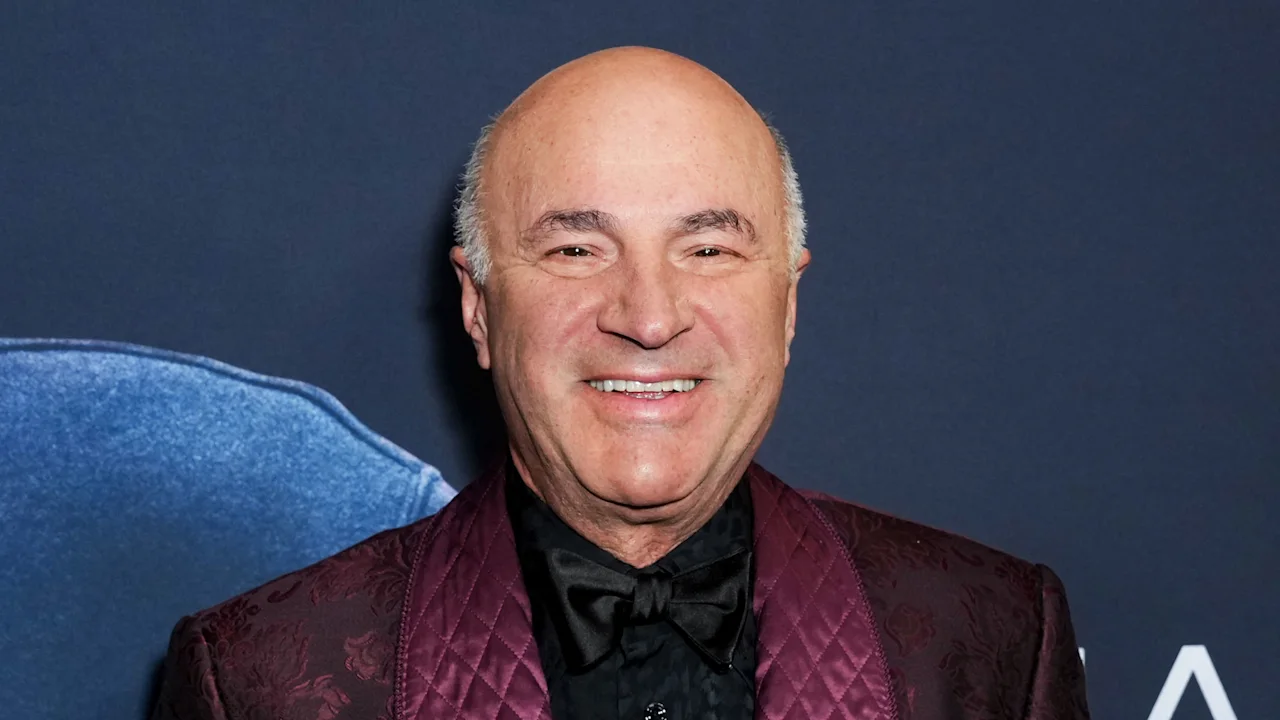
    Investor and Shark Tank personality Kevin O’Leary said CEOs who blindly pursue AI are “dead in the water”. But the winning formula, he said, is pairing AI with storytelling and critical thinking. 

    On Wednesday, in a post on X, O’Leary wrote: “In business, it’s about critical thinking and communication, period.”

    He shared the comment alongside a clip from a recent Fox News appearance, where he discussed the renewed relevance of liberal arts degrees in the age of artificial intelligence.

    Technical fields like computer science—once considered the safest bet for a stable, high-paying job—are increasingly on shaky ground. Rather than a specific set of technical skills that could become obsolete tomorrow, employers are now hunting for talent who can think critically, creatively, and contextually—the soft skills liberal arts majors have in spades. 

    “Liberal arts graduates can certainly cut through the noise,” O’Leary agreed on X. “But the real value is in the ability to tell a story, paired with AI talent. That’s where the smart money is going. Everything else is noise.”

    Storytelling has emerged as a core skill over the past year, with U.S. job postings referencing “storytelling” doubling over the past year, according to LinkedIn data cited in The Wall Street Journal.

    “The number one inflation is creators, like storytellers, writers that actually have AI talents,” O’Leary said in the clip. Those employees who once earned $48,000 a year, now are commanding $600,000 salaries, he said. This increased value can be measured through customer acquisition, according to O’Leary. 

    “If you can prove that you can change a company’s ability to acquire more customers, you can measure that every week, and you can pay them a portion of the profit you make off a new customer,” he explained in the Fox interview. “That’s the new model.”

    That model only works, he elaborated, if companies maintain focus on value-execution. “I don’t care if you have a liberal arts degree or an MBA; if you can’t tell a story that actually moves the needle on customer acquisition, you’re worth zero,” he wrote alongside the clip. 

    The same is true on the flip side. “If you’re a CEO and you’re just pushing a button to generate garbage, you’re dead in the water,” wrote O’Leary—or drowning in workslop, resulting in both time and money down the drain. 

    “That’s why I only look at it as a tool,” O’Leary said in the interview. “But the people that actually manage it are very valuable.”

    As we enter the era of the AI-augmented workforce, companies are experimenting—some with more success than others. 

    Take Buzzfeed’s recent woes as a teachable moment. The media company’s full-throttle pivot to AI in 2023—just a month after shutting down its Pulitzer Prize-winning BuzzFeed News division—hasn’t panned out as planned. The company reported a net loss of $57.3 million in 2025 in an earnings report released this month, and said last week it has “substantial doubt” about its ability to continue as a business.

    The lesson is clear: The most successful companies won’t be those who resist AI or submit to it blindly. It will be those who can leverage their workers’ strengths, integrating human creativity and critical thinking with AI’s speed and scale. 

    “The challenge isn’t the technology,” as O’Leary wrote. “It’s the execution.”


    Source link

    Share. Facebook Twitter Pinterest LinkedIn Tumblr Email

    Related Posts

    South Korea’s Kospi stock index is falling: Why AI chipmakers SK Hynix and Samsung are facing investor jitters

    July 29, 2026

    The powerful branding trick Guinness, Corona, and Spotify all share

    July 29, 2026

    Duffy’s ‘DEI bike lanes’ comment politicizes urban design. The policy won’t make roads faster

    July 29, 2026
    Top News

    Email To Congress | Armstrong Economics

    By Staff WriterSeptember 29, 2025

    I sent this email to members of Congress. This is what I warned: (1) We…

    There will be 500,000 seasonal workers this holiday season. Half of them will work for Amazon

    October 13, 2025

    A new report says Trump’s ballroom will ruin the White House, but he can build it anyway

    December 18, 2025

    Amazon Leo is ready for testing and aimed squarely at Starlink’s dominance

    November 24, 2025
    Top Trending

    South Korea’s Kospi stock index is falling: Why AI chipmakers SK Hynix and Samsung are facing investor jitters

    By Staff WriterJuly 29, 2026

    It’s no secret that investors are getting nervous about AI, leaving chipmakers’…

    The powerful branding trick Guinness, Corona, and Spotify all share

    By Staff WriterJuly 29, 2026

    When Guinness drinkers talk about “Splitting the G,” they mean taking the…

    Duffy’s ‘DEI bike lanes’ comment politicizes urban design. The policy won’t make roads faster

    By Staff WriterJuly 29, 2026

    The Trump administration could soon reduce public transportation choices in the U.S.…

    Categories
    • Business
    • Economy
    • Headline News
    • Top News
    • US Politics
    • World Politics
    About us

    The Populist Bulletin serves as a beacon for the populist movement, which champions the interests of ordinary citizens over the agendas of the powerful and entrenched elitists. Rooted in the belief that the voices of everyday workers, families, and communities are often drowned out by powerful people and institutions, it delivers straightforward, unfiltered, compelling, relatable stories that resonate with the values of the American public.

    The Populist Bulletin was founded with a fervent commitment to inform, inspire, empower and spark meaningful conversations about the economy, business, politics, inequality, government accountability and overreach, globalization, and the preservation of American cultural heritage.

    The site offers a dynamic mix of investigative journalism, opinion editorials, and viral content that amplify populist sentiments and deliver stories that echo the concerns of everyday Americans while boldly challenging mainstream narratives that serve the privileged few.

    Top Picks

    South Korea’s Kospi stock index is falling: Why AI chipmakers SK Hynix and Samsung are facing investor jitters

    July 29, 2026

    The powerful branding trick Guinness, Corona, and Spotify all share

    July 29, 2026

    Duffy’s ‘DEI bike lanes’ comment politicizes urban design. The policy won’t make roads faster

    July 29, 2026
    Categories
    • Business
    • Economy
    • Headline News
    • Top News
    • US Politics
    • World Politics
    Copyright © 2025 Populist Bulletin. All Rights Reserved.

    Type above and press Enter to search. Press Esc to cancel.