
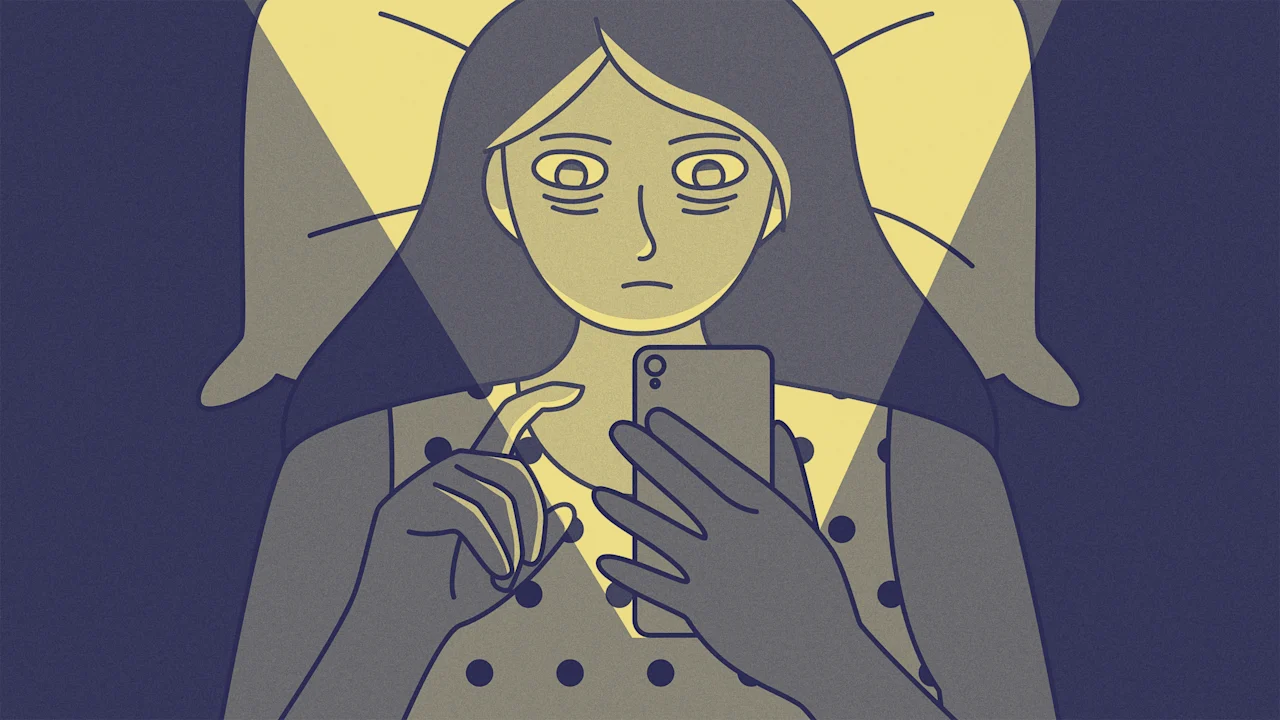
Most people don’t actually want to give up their phone.
They just want it to stop tugging at them like a needy toddler.
There’s a difference. One suggests extremism and poor reception. The other is far more sensible: learning how to live with technology without letting it quietly take charge of your attention, mood, and nervous system while pretending it’s being helpful.
Because for most of us, the problem isn’t “addiction” in the dramatic sense. No one’s pawning the sofa for screen time. It’s accumulation. A thousand tiny habits layered together until checking becomes automatic and being offline feels faintly unsettling, like you’ve forgotten something important but can’t quite place what.
The aim isn’t digital purity. It’s getting your sense of choice back.
Why willpower doesn’t work (and never has)
If resisting your phone feels disproportionately difficult, that’s not a personal shortcoming. It’s biology doing exactly what it was designed to do, just in an environment it was never meant for.
A growing body of research supports this:
- A study found that simply having your phone visible, even when turned off, reduces available cognitive capacity.
- Research shows that habits triggered by environmental cues are often more powerful than conscious intentions, meaning simply being in the right context can automatically drive behavior.
- Behavioral scientist BJ Fogg has consistently shown that behavior change is more reliably driven by environment design than motivation or willpower.
Apps are engineered around novelty, intermittent rewards, and social feedback, perfect conditions for reinforcing habit loops. Not in dramatic bursts, but in just enough variation to keep your brain thinking, one more check won’t hurt.
At the same time, your nervous system treats notifications as potential demands. Even neutral ones trigger a mild alert response. Over time, this creates a constant low-level urgency that shows up as restlessness, distraction, or the sense that you should probably be doing something else.
Trying to solve this with discipline alone is like trying to unwind while someone keeps poking you and saying, “Sorry, just one more thing.”
Start by changing the environment, not yourself
The most effective changes don’t rely on heroic self-control. Small adjustments can make it easier for your brain to focus and reduce constant distractions.
Move the phone out of sight
Not just face down, completely out of view. Your brain is far less interested in things it can’t see. This simple step often cuts phone checking dramatically, much to the mild shock of everyone around you.
Turn off non-essential notifications
Not permanently, just enough to stop your nervous system from flinching every few minutes. Most notifications can wait. Your body shouldn’t have to make that decision constantly.
Create “dead zones” for devices
Designate spaces or times where devices take a backseat: bedrooms, meals, workouts, or the first hour of the morning. These aren’t rigid rules—they’re recovery areas, where your nervous system can rest.
What if your job requires you to be available?
Most advice falls apart here. If your role involves real-time issues, emergencies, or team dependencies, “just turn it off” isn’t realistic and can actually create more stress.
Try structured availability instead:
- Whitelist notifications: Allow calls, texts, or key apps only from people or channels that truly require urgency.
- Batch everything else: Email, Slack, and non-critical updates can wait for scheduled check-ins.
- Create clear escalation paths: Let your team know how to reach you in a true emergency (e.g., call twice). This reduces the need to monitor everything constantly.
- Use physical signals: Even something as simple as placing your phone face-down and out of reach during focused work can curb reflex checking—while still keeping you available when needed.
This approach keeps you responsive without being constantly reactive.
Work with your brain’s rhythms, not against them
Attention isn’t designed to be continuous. It comes in waves.
Instead of trying to stay focused indefinitely, build in intentional check-in times. When your brain knows it will get a look later, the urge to check constantly tends to ease.
Short breaks help but only if they’re actually restorative. Scrolling usually isn’t.
Better options:
- Movement (even a short walk)
- Daylight exposure
- A few slow, intentional breaths
If you need something discreet and fast during a busy workday, small sensory resets can help shift your state without pulling you into your phone.
Some ideas:
- Meditating for one or two minutes
- Chewing gum or mints (oral sensory reset)
- Stepping outside for 2–3 minutes
- Quick posture resets or stretching
Think of it as giving your brain a clean handover, rather than stacking stimulation on top of stimulation and hoping for the best.
Make real life slightly more interesting than your screen
This sounds obvious, but it matters more than most people realize.
The phone wins when everything else feels dull or effortful. So the solution isn’t just less phone. It’s making the physical world marginally more engaging again.
Nothing dramatic required, just try the following:
- Walking without headphones
- Eating without scrolling
- Letting your mind wander without immediately filling the silence
- Doing one thing at a time, deliberately
These small moments recalibrate attention. They remind your brain that stimulation doesn’t need to be constant to be satisfying.
Pay attention to how you feel after, not during
Most people judge phone use by how entertaining it feels in the moment. A better test is how you feel five minutes later.
Calm? Grounded? Or oddly restless and scattered, like you’ve eaten an entire packet of biscuits without meaning to?
Your nervous system gives feedback quickly if you’re willing to notice it. Over time, that awareness becomes more effective than any app limit or well-intentioned rule.
The bigger shift
Reducing device dependence isn’t about rejecting modern life. It’s about stepping back into it properly.
Technology works best when it supports attention rather than competing for it. When it helps connection instead of impersonating it. When it fits into your day instead of quietly organising it for you.
You don’t need to unplug completely.
You just need your phone to stop acting like it’s the manager.