
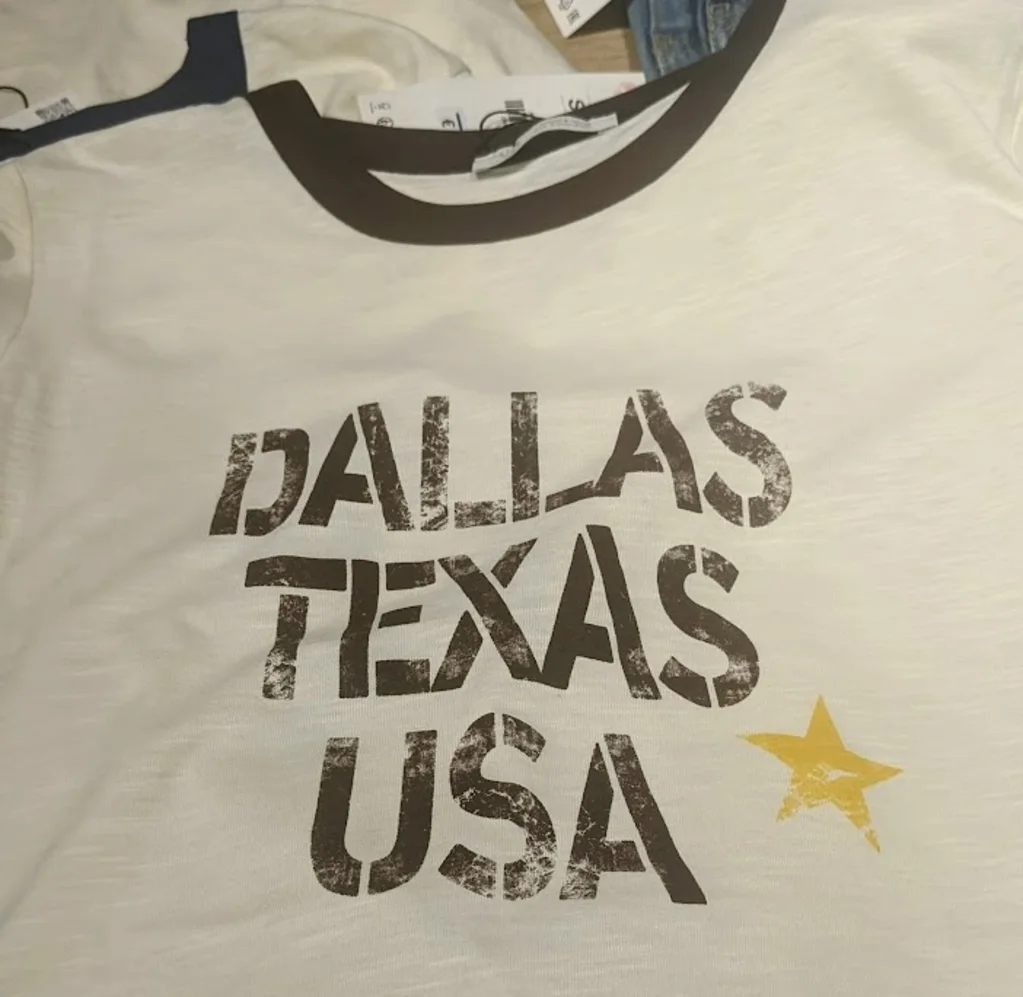
Call it chic or call it cringe: Clothing that bears the name of a city near or far has become a closet staple for many consumers in recent years.
Once mostly reserved for impulse purchases from kitschy tourist shops while traveling, now clothing with the name of far-off places is just as likely to be purchased at home.
Consider the iconic “I love New York” tee, a favored souvenir for nearly 50 years. Gone are the days when you would need to brave the Times Square crowds to get one. You can buy a similar-looking version from Walmart for less than $10 or an embroidered crewneck version for $380 from Lingua Franca.
Clothing makers and consumers alike are seemingly indiscriminate about what passes for cool.
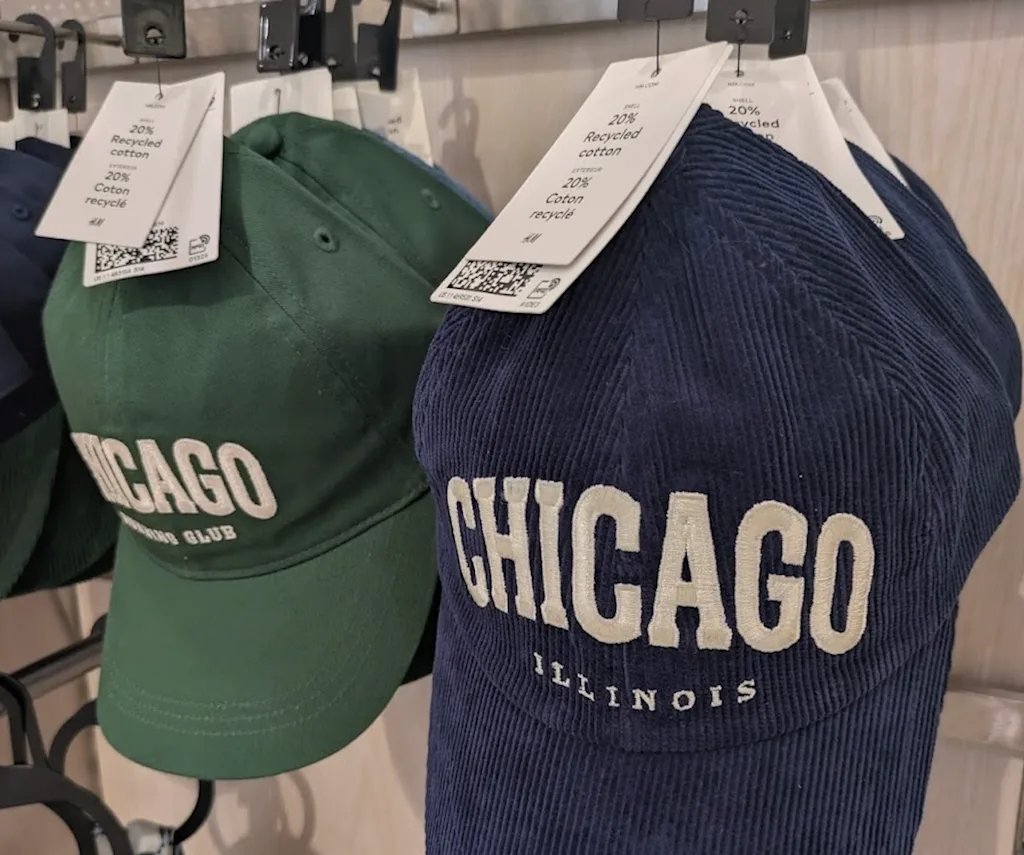
H&M and Zara have hawked generic-looking T-shirts with any number of city names splashed across the chest, while Balenciaga and Alexander Wang have upgraded city skyline Ts with a designer spin and their logos to justify heftier price tags.
Oh, the places you’ll go—or not
Of course, the most logical place to pick up this kind of clothing is while traveling. The global souvenir market, already expanding since 2021, is projected to surge more than 40% from 2024 levels to nearly $20 billion by 2033, according to Straits Research.
Among the various generations, millennial and Gen Z travelers are, by far, the most likely to shop for one-of-a-kind souvenirs to remind them of their trip, according to a 2025 global travel trends report from American Express.
Brands have tapped into this sense of wanderlust among younger consumers, which explains why place-name items began appearing at all sorts of non-souvenir stores.
In turn, this clothing earned a place in the closets of consumers who want to convey that they’re worldly, says Sara Holzman, style director for Marie Claire.
“It’s a neutral way to wear your own postcard of where you’ve been,” Holzman tells Fast Company. “People are wearing it almost like a souvenir that they’ve been there and it’s kind-of trickled into this bona fide fashion statement.”
While travel has resumed to pre-COVID-19 levels (and travel is such a nonnegotiable for many Americans that they’ll cut back on other spending just to afford a trip), there are other ways to collect proverbial postcards of a jet-set lifestyle.
Wearing clothes from popular destinations is one way, but it’s not the only way—there’s even an app people can download to create fake, AI-generated vacation photos.
“Souvenir-style graphics are helping to satisfy consumers’ cravings for travel while acting as escapism for the cash-strapped consumer booking staycations over expensive getaways,” notes Hannah Watkins, head of prints and graphics at WGSN, the trend-forecasting agency.
Mad for Malibu
A notable uptick in the so-called experience economy in the post-COVID era, along with the perceived social status that comes with being well-traveled also factor into this fashion trend, says Reilly Newman, a brand strategist and founder of Motif Brands.
Whether or not someone has actually visited a place doesn’t matter as much as the lifestyle that clothing suggests, Newman says, noting, “It’s status signaling based off of the new currency of travel and culture.”
Newman has watched with some bemusement how trendy it’s become for younger women, in particular, to sport brightly colored clothing bearing the word Malibu, a place he happens to know pretty well from regular visits to family who live in the California beach town.
Perception seemingly matters more than reality when it comes to this trend, he says, and some brands have expertly figured that out.
Walking through a mall and seeing just how many retailers have co-opted the appeal of the perceived Malibu lifestyle illustrates that brands recognize how important it is to tap into a particular vibe, Newman adds.
Whereas high-end designers may want to ensure that their logo is on a tourist-looking T-shirt, middle-of-the-road brands know that their name doesn’t carry as much weight as the value they bring in curating an aesthetic.
“These brands are trying to ride on the coattails of this trend and the association that comes with it,” Newman says. “As long as it gives that beach-town vibe, people don’t care who’s selling it.”
Decoding destination dressing
Even if souvenir slogans are often deemed perennial for graphic T-shirts, the “newness” factor is that brands are leaning into even more details about a place, including the location-specific food and drinks that give it flavor, WGSN’s Watkins says.
This trend of “destination dressing” has extended to broader concepts, she points out, like the viral #SardineSummer graphics that served as mementos for European holidays last summer.
Tracing the origins of any fashion trend is always a bit tricky, and there’s not a lot of data to track the rise of the place-name clothing trend.
Fashion trends, in general, typically begin with luxury brands before eventually trickling down to the masses. And, of course, these trends are cyclical, as clothing is often used to hearken back to prior eras.
For instance, fashionistas have been digging into the archives of Princess Diana in recent years for inspiration, including her mid-1990s tendency to pair an oversize graphic sweatshirt bearing the names of U.S. universities like Harvard or Northwestern with some biker shorts.
“She’s on a fashion pedestal, and rightly so,” Holzman says.
When you buy a shirt bearing the name of a university that you may (or may not) have attended, or a luxury hotel where you may (or may not) have stayed, or a place that you may (or may not) have visited, or a band whose greatest hits you may (or may not) know, these clothing choices are all emblematic of a similar idea: They signal who you are or who you aspire to be.
“It’s all in the zeitgeist,” Holzman says, adding that brands recognize there’s a market for clothing that offers “cool-kid credibility” or some perceived cachet. “They’re selling a lifestyle.”
More localization to come
With so many people dressing like they’re constantly on the go, this fashion trend isn’t likely to go anywhere anytime soon.
To appease some consumers’ desire for “status merchandise,” several luxury hotels and even farmers markets have expanded their merchandising departments to sell branded clothing that can be purchased only on-site, Holzman says.
Brands have already shifted beyond generic city names to specific neighborhoods—a favorite for H&M these days is New York’s SoHo neighborhood, for example.
And the next iteration of graphic tees may focus on what insiders know and love about a place, Watkins says, noting that WGSN has been tracking the rise of Highsnobiety’s “Not In” city series, which features big-city names like New York alongside neighborhood icons and well-loved independent vendors.
“As souvenir slogans evolve, expect them to become even more local to the brand’s DNA,” Watkins says. “Expect brands to continue tapping into the ‘leverage the local’ trend, emblazoning tees with ‘IYKYK’ place names and collaborating with local restaurants, bars, and shops to celebrate their homeland and drive buzz.”