Close Menu
    Facebook X (Twitter) Instagram
    TRENDING :
    • My LinkedIn Ghostwriting Side Hustle Makes $9K to $12K a Month
    • 75% of Founders Regret Selling Their Business Within a Year — Here’s How to Walk Away With More Than Just Money
    • All 55 European Football Federations Voted to Boycott FIFA
    • The Service Business That Wins AI Search Does These 3 Things
    • The Growth Trap Founders Fall Into When Every Opportunity Looks Too Good to Ignore
    • Market Talk – July 30, 2026
    • That cringey LinkedIn post? You can now report it as ‘AI slop’
    • 5 Ways the Sales Funnel Broke (and How AI is Replacing It)
    Compatriot Chronicle
    • Home
    • US Politics
    • World Politics
    • Economy
    • Business
    • Headline News
    Compatriot Chronicle
    Home»Economy»The Oil Conspiracies | Armstrong Economics
    Economy

    The Oil Conspiracies | Armstrong Economics

    April 15, 20264 Mins Read
    Share Facebook Twitter Pinterest LinkedIn Tumblr Telegram Email Copy Link
    Follow Us
    Google News Flipboard
    Share
    Facebook Twitter LinkedIn Pinterest Email


    QUESTION: Mr. Armstrong, about half the cargo ships are headed to the US to get oil. Some have claimed that Trump is trying to replace the Middle East. This seems to be a conspiracy theory that contradicts what you have reported. What do you make of that?

    RW
    Trump Hormuz Blockaide

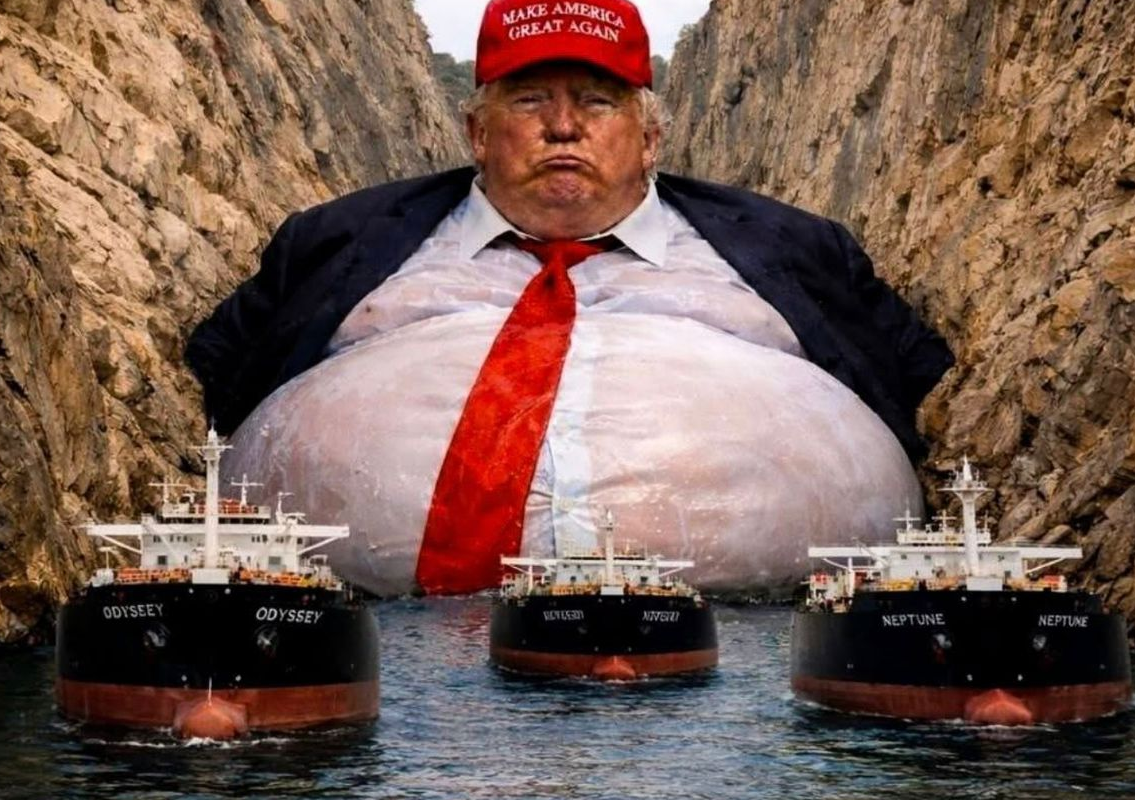
    ANSWER: I know, there are wild conspiracy theories being proposed. I have even heard that Trump did this to force the EU to collapse. Sending the world into recession/depression is absurd. Trump is trying to sell more widgets, not fewer. Plus, rising oil prices put the Midterms at risk. That just makes no sense. Most of these conspiracy theories assume the people in government are smart – that is NOT the case.

    As for tankers, there are not enough in the world to transport all the oil that needs to be transported. We have had some of the world’s largest shippers as clients for decades. There is what is known as “Tonne-miles” (or tonne-kilometers), which is the standard unit for measuring freight transportation volume, and it’s a key metric for understanding crude oil logistics.

    A single ton-mile represents moving one ton of cargo over a distance of one mile. In the oil industry, a “ton” of crude oil is approximately 7.5 barrels. This metric allows you to directly compare the total transport “work” done by different modes (pipeline, rail, ship, truck), regardless of the shipment size or distance.

    The most notable shift in the data is from water carriers to pipelines. In 1980, water carriers held a slight lead over pipelines for crude oil ton-miles. By 1999, pipelines had grown their share to over 75%, while water carriers had dropped to under 24%.

    On a global scale, the focus shifts to seaborne trade, which is measured in tonne-miles (the metric equivalent). Recent data shows this is a massive and growing industry, currently being reshaped by geopolitical events. Global oil tonne-miles (for all products) grew from roughly 15.3 trillion in 2020 to 16.4 trillion in 2024, an increase of about 6%. Crude oil itself constitutes roughly 70% of total global seaborne tonne-miles.

    In 2025, the global figure stood at approximately 12.2 trillion (year-to-date), indicating a contraction. This decline is partly due to the rerouting of tankers away from the Red Sea because of Houthi attacks, which caused tanker tonne-miles to hit a five-year high earlier in 2024 before the current dip. The reason this is critical to our analysis is that this is a core measure of economic activity. The total volume of crude oil moved is a key input for GDP figures, while changes in tonne-miles affect the costs of energy and consumer goods.

    This allows for a direct comparison of efficiency between modes. For example, pipelines and large tankers are far more energy-efficient per ton-mile than trucks or rail. Some look at this also as a carbon footprint and other environmental costs of transporting crude oil over long distances. Energy companies and governments rely on tonne-mile forecasts to decide where to build new pipelines, expand ports, or invest in rail infrastructure.

    The longer the trip to transport oil the higher the cost to ship that oil. Therefore, we have another variable here regarding the cost of shipping. On top of all of this, the claim that the United States is somehow displacing Iran is really absurd. The United States is a NET IMPORTER of crude oil. We may be able to facilitate some for geopolitical reasons and to try to keep prices down, but the US can in no possible way replace the Middle East. Who ever makes up these stories are really beyond hope.


    Source link

    Share. Facebook Twitter Pinterest LinkedIn Tumblr Email

    Related Posts

    Market Talk – July 30, 2026

    July 30, 2026

    Only The Tip Of The COVID Conspiracy Has Surfaced

    July 30, 2026

    The Fed Holds While Inflation Refuses To Die

    July 30, 2026
    Top News

    From OpenAI to Nvidia, here’s a list of recent multibillion-dollar AI deals

    By Staff WriterDecember 27, 2025

    Nvidia has agreed to license technology from AI startup Groq for use in some of…

    Market Talk – October 23, 2025

    October 24, 2025

    Top 7 Best Loyalty Program Software Solutions

    February 28, 2026

    Can you get fired for calling your CEO a “rich jerk”? This company says yes

    March 18, 2026
    Top Trending

    My LinkedIn Ghostwriting Side Hustle Makes $9K to $12K a Month

    By Staff WriterJuly 31, 2026

    Key Takeaways Dunham messaged potential clients on LinkedIn and charged $300 per…

    75% of Founders Regret Selling Their Business Within a Year — Here’s How to Walk Away With More Than Just Money

    By Staff WriterJuly 31, 2026

    Opinions expressed by Entrepreneur contributors are their own. Key Takeaways Selling a…

    All 55 European Football Federations Voted to Boycott FIFA

    By Staff WriterJuly 30, 2026

    Last week, FIFA announced plans to sell a $20 billion stake in…

    Categories
    • Business
    • Economy
    • Headline News
    • Top News
    • US Politics
    • World Politics
    About us

    The Populist Bulletin serves as a beacon for the populist movement, which champions the interests of ordinary citizens over the agendas of the powerful and entrenched elitists. Rooted in the belief that the voices of everyday workers, families, and communities are often drowned out by powerful people and institutions, it delivers straightforward, unfiltered, compelling, relatable stories that resonate with the values of the American public.

    The Populist Bulletin was founded with a fervent commitment to inform, inspire, empower and spark meaningful conversations about the economy, business, politics, inequality, government accountability and overreach, globalization, and the preservation of American cultural heritage.

    The site offers a dynamic mix of investigative journalism, opinion editorials, and viral content that amplify populist sentiments and deliver stories that echo the concerns of everyday Americans while boldly challenging mainstream narratives that serve the privileged few.

    Top Picks

    My LinkedIn Ghostwriting Side Hustle Makes $9K to $12K a Month

    July 31, 2026

    75% of Founders Regret Selling Their Business Within a Year — Here’s How to Walk Away With More Than Just Money

    July 31, 2026

    All 55 European Football Federations Voted to Boycott FIFA

    July 30, 2026
    Categories
    • Business
    • Economy
    • Headline News
    • Top News
    • US Politics
    • World Politics
    Copyright © 2025 Populist Bulletin. All Rights Reserved.

    Type above and press Enter to search. Press Esc to cancel.