Close Menu
    Facebook X (Twitter) Instagram
    TRENDING :
    • What Separates Entrepreneurs Who Endure From Those Who Quit
    • Your Team Doesn’t Need Certainty. It Needs Direction.
    • This Restaurant Chain Went Back to the Basics to Boost Sales
    • Market Talk – July 29, 2026
    • How to Land Your First Agency Client (and How Not to)
    • Visa Is Cutting 2,600 Jobs — AI Is Only Part of the Reason
    • Church’s Chicken Lands ‘Significant’ Investment for Its Next Phase
    • This Startup Wants to Bring Concierge Healthcare to the Masses
    Compatriot Chronicle
    • Home
    • US Politics
    • World Politics
    • Economy
    • Business
    • Headline News
    Compatriot Chronicle
    Home»Economy»Bank Of Korea Vows To Create CBDC
    Economy

    Bank Of Korea Vows To Create CBDC

    April 22, 20263 Mins Read
    Share Facebook Twitter Pinterest LinkedIn Tumblr Telegram Email Copy Link
    Follow Us
    Google News Flipboard
    Share
    Facebook Twitter LinkedIn Pinterest Email


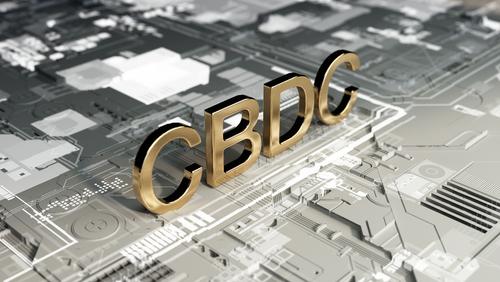
    The Bank of Korea has now made its position unmistakably clear, and this is precisely what I have been warning about for years. In his very first address, Governor Shin Hyun-song did not merely suggest innovation in digital finance, he explicitly prioritized a system built around central bank digital currencies and bank-issued deposit tokens, while deliberately omitting stablecoins entirely from the discussion. What you are witnessing is not competition in money, it is the consolidation of control.

    They are trying to rebrand this as modernization, but behind the curtain this is about power. Shin outlined that CBDCs and deposit tokens will form the core of South Korea’s future monetary system, reinforcing a structure where the central bank and regulated banking institutions remain the gatekeepers of all financial activity. This is not accidental. Deposit tokens are essentially programmable bank liabilities tied directly into a centrally controlled system, ensuring that even when money becomes “digital,” it never leaves the institutional framework.

    What stands out is not what he said, but what he refused to say. Stablecoins, which represent a competing form of digital liquidity outside direct state control, were entirely absent from his inaugural speech despite ongoing legislative efforts in South Korea to establish a domestic stablecoin market. That omission speaks volumes. Central banks do not fear volatility, they fear competition.

    Even when pressed previously, Shin made it clear that stablecoins would only play a “supplementary” role, not a foundational one. In other words, private digital money may exist, but only within boundaries defined by the state. This is the same pattern we are seeing globally. Governments will tolerate innovation only to the extent that it does not threaten their monopoly over money and taxation.

    The Bank of Korea is already expanding real-world testing through initiatives like Project Hangang, aiming to integrate CBDCs and deposit tokens into everyday transactions and even government spending. This is how it always unfolds. First comes the pilot program, then limited adoption, and finally full integration under the justification of efficiency and stability. By the time the public realizes what has happened, the infrastructure is already in place.

    They will argue this is about improving payment systems, reducing friction, and enhancing transparency. But transparency for whom? Governments will gain unprecedented visibility into every transaction, every movement of capital, and ultimately every individual’s economic behavior. The original promise of cryptocurrency was decentralization and financial sovereignty. What is being constructed here is the exact opposite.

    First, they marginalize private alternatives like stablecoins. Then they elevate bank-issued tokens tied directly into the regulatory system. Finally, they introduce CBDCs as the ultimate settlement layer, where all money flows can be monitored, restricted, or even reversed.

    South Korea is simply one piece of a much larger global shift. The same debate is playing out in Europe, in the United States, and across Asia. The technology may differ, the language may vary, but the objective is consistent. Governments are moving toward a system where money is no longer just a medium of exchange, but a tool of policy enforcement.

    This is why I have repeatedly stated that the future battle is not about inflation, it is about control. Once money becomes programmable, it ceases to be neutral. It can be conditioned, restricted, and weaponized. The danger is not that CBDCs will fail, but that they will succeed exactly as intended.

    The public is being told this is innovation. In reality, it is the redesign of the monetary system from the ground up, and once implemented, there is no easy way back.


    Source link

    Share. Facebook Twitter Pinterest LinkedIn Tumblr Email

    Related Posts

    Market Talk – July 29, 2026

    July 29, 2026

    The Dark Side Of Washington – Money Before Country

    July 29, 2026

    Garbage Trucks Surveillance Florida Neighborhoods

    July 29, 2026
    Top News

    Weather whiplash to sweep U.S. with simultaneous blizzard, polar vortex, and heat dome

    By Staff WriterMarch 13, 2026

    Nearly every part of the United States is getting walloped by wild weather or just…

    Key Benefits of Buying a Franchise

    January 3, 2026

    This CEO Looks for 3 Traits From New Hires

    July 14, 2026

    NY Fed President Believes CPI Data Was “Distorted”

    December 26, 2025
    Top Trending

    What Separates Entrepreneurs Who Endure From Those Who Quit

    By Staff WriterJuly 30, 2026

    Opinions expressed by Entrepreneur contributors are their own. Key Takeaways We are…

    Your Team Doesn’t Need Certainty. It Needs Direction.

    By Staff WriterJuly 29, 2026

    Opinions expressed by Entrepreneur contributors are their own. Key Takeaways Your team…

    This Restaurant Chain Went Back to the Basics to Boost Sales

    By Staff WriterJuly 29, 2026

    Key Takeaways Chili’s parent company, Brinker International, is focusing on core restaurant…

    Categories
    • Business
    • Economy
    • Headline News
    • Top News
    • US Politics
    • World Politics
    About us

    The Populist Bulletin serves as a beacon for the populist movement, which champions the interests of ordinary citizens over the agendas of the powerful and entrenched elitists. Rooted in the belief that the voices of everyday workers, families, and communities are often drowned out by powerful people and institutions, it delivers straightforward, unfiltered, compelling, relatable stories that resonate with the values of the American public.

    The Populist Bulletin was founded with a fervent commitment to inform, inspire, empower and spark meaningful conversations about the economy, business, politics, inequality, government accountability and overreach, globalization, and the preservation of American cultural heritage.

    The site offers a dynamic mix of investigative journalism, opinion editorials, and viral content that amplify populist sentiments and deliver stories that echo the concerns of everyday Americans while boldly challenging mainstream narratives that serve the privileged few.

    Top Picks

    What Separates Entrepreneurs Who Endure From Those Who Quit

    July 30, 2026

    Your Team Doesn’t Need Certainty. It Needs Direction.

    July 29, 2026

    This Restaurant Chain Went Back to the Basics to Boost Sales

    July 29, 2026
    Categories
    • Business
    • Economy
    • Headline News
    • Top News
    • US Politics
    • World Politics
    Copyright © 2025 Populist Bulletin. All Rights Reserved.

    Type above and press Enter to search. Press Esc to cancel.