Close Menu
    Facebook X (Twitter) Instagram
    TRENDING :
    • This Startup Wants to Bring Concierge Healthcare to the Masses
    • Apple Watch Saves Cincinnati Man After He Collapsed at His Home
    • 12,000 pounds of bacon recalled as USDA slaps product with dreaded ‘Class 1’ designation. Is that serious?
    • South Korea’s Kospi stock index is falling: Why AI chipmakers SK Hynix and Samsung are facing investor jitters
    • The powerful branding trick Guinness, Corona, and Spotify all share
    • Duffy’s ‘DEI bike lanes’ comment politicizes urban design. The policy won’t make roads faster
    • Resy Founder Reveals His Secret to Customer Loyalty
    • What to Do When You Feel Stuck in Your Career
    Compatriot Chronicle
    • Home
    • US Politics
    • World Politics
    • Economy
    • Business
    • Headline News
    Compatriot Chronicle
    Home»Business»Most people can’t tell when a personal text message is written by AI. Here’s why it matters
    Business

    Most people can’t tell when a personal text message is written by AI. Here’s why it matters

    April 25, 20265 Mins Read
    Share Facebook Twitter Pinterest LinkedIn Tumblr Telegram Email Copy Link
    Follow Us
    Google News Flipboard
    Share
    Facebook Twitter LinkedIn Pinterest Email


    Two new experiments show that most people do not even consider that a personal message could be AI-generated, even when they themselves use artificial intelligence to write.

    To see how people judge someone based on their writing in the age of ChatGPT, my colleague Jiaqi Zhu and I recruited more than 1,300 U.S.-based participants, ages 18 to 84, and showed them AI-generated messages like an apology sent in an email. We split our volunteers into four groups: Some people saw the messages with no information about who or what wrote them, as in everyday life. Others were told the messages were definitely written by a human, definitely AI-generated, or that the source could be either.

    We found a clear “AI disclosure penalty.” When people knew a message was AI-generated, they rated the sender much more negatively (“lazy,” “insincere,” “lack of effort”) than when they believed that the same text was written by a person (“genuine,” “grateful,” “thoughtful”).

    But here’s the twist: The participants who were not told anything about authorship formed impressions that were just as positive as those from people who were told the messages were genuinely human.

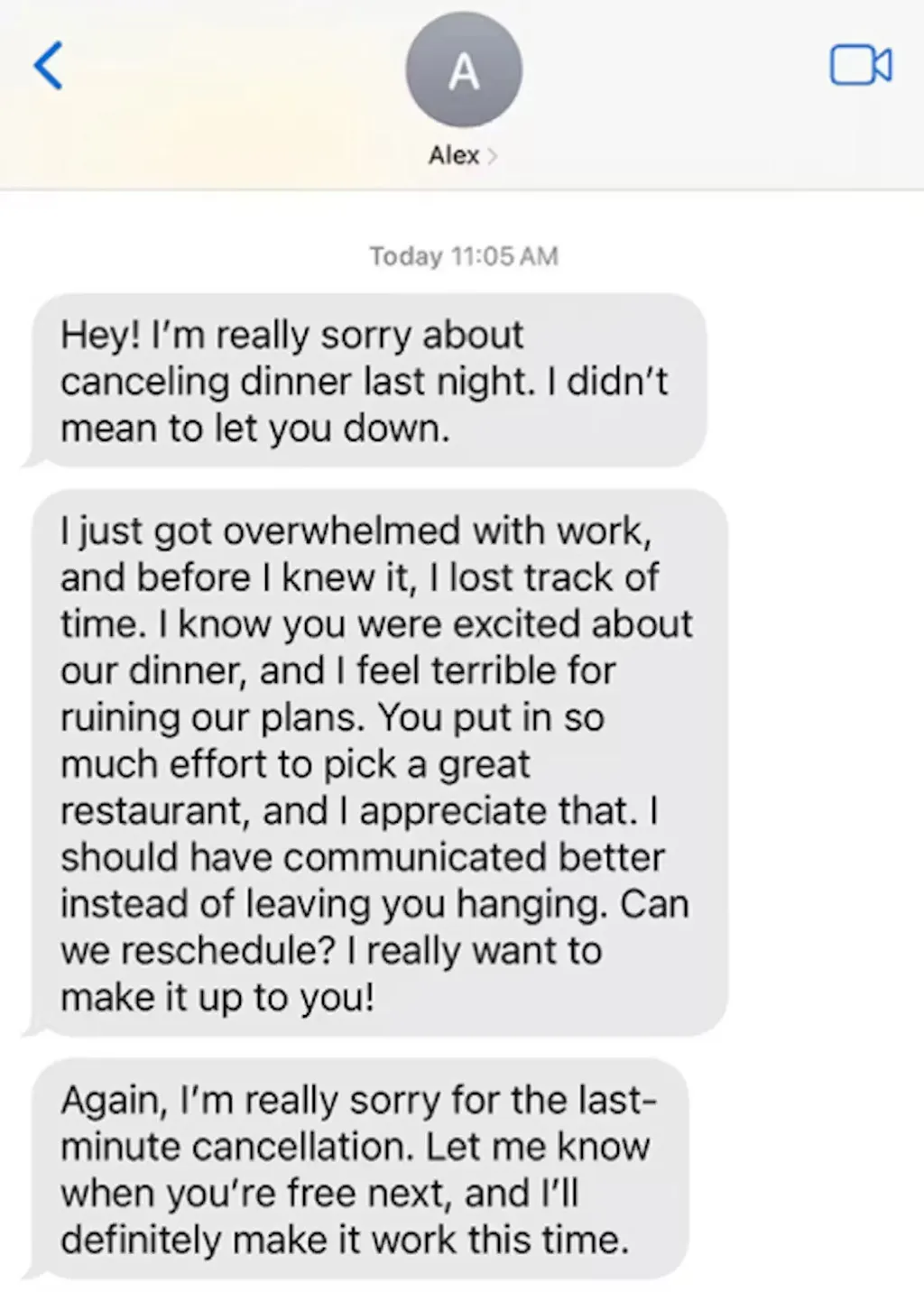
    An AI-generated fictional apology sent via text was one of the messages participants evaluated in a recent study. [Source: Zhu & Molnar (2026)]

    This complete lack of skepticism surprised us—and it raises new questions. Maybe participants were not familiar enough with AI to realize that today’s models can produce detailed and personal messages. (They can.) Or perhaps participants have never used AI themselves. (They likely have.) So we also tested whether participants’ own AI use changed how they judged senders.

    To our even bigger surprise, we found little to no effect. People who use generative AI quite frequently in their daily lives—at least every other day—did penalize AI use slightly less when AI authorship was disclosed, compared with people who never or rarely use AI. But participants were no more skeptical by default: When authorship was not disclosed, heavy AI users, light AI users, and nonusers all tended to assume the text was written by a person and formed essentially the same impressions.

    Why it matters

    Lack of skepticism and a lack of negative impressions matter because people make social judgments from text all the time. Recipients consider taking the time and effort to send written messages as an insight into the writer’s sincerity, authenticity, or competence, and those impressions shape people’s decisions in friendships, dating, and work.

    Yet our main findings reveal a striking disconnect: People usually don’t suspect AI use unless it is obvious. This unawareness creates a moral dilemma: People who use AI in secret can enjoy the benefits while facing almost no risk of detection. Meanwhile, paradoxically, people who are up front and admit to using AI suffer a reputational hit.

    A word cloud showing words that describe how people reading text messages felt.
    Word clouds depict participants’ first impressions of senders who wrote messages themselves, left, and those who used AI, right. [Source: Andras Molnar]

    Over time, a lack of skepticism and awareness could reshape what writing means in everyday life. Readers might learn to treat writing as a less reliable signal of someone’s character or effort, and instead rely on other forms of communication. For example, widespread AI use has already prompted employers to discount the value of cover letters from job applicants. Instead, they’re relying more on personal recommendations from an applicant’s current supervisor or connections made through in-person networking.

    What other research is being done

    Other researchers have documented a wide range of negative impressions about people who disclose their AI use. Studies show it makes job applicants seem less desirable and employees seem less competent. Readers of creative writing perceive AI users as less creative and inauthentic. People see personal apologies and corporate apologies that stem from AI as less effective. In general, disclosing AI use decreases trust and undermines legitimacy.

    Yet without disclosure, there is clear evidence that most people cannot reliably detect AI-generated text, even with the help of detection tools, especially when the text is a mix of human-written and AI-generated content. Even when people feel confident about their ability to spot AI text, their confidence may be nothing more than a self-affirming illusion.

    What’s next

    Even though our experiments did not reveal suspicion of AI use, that doesn’t mean people never suspect it in the real world. In some settings, people may already be hypervigilant about AI. Use in academia is an obvious example. In our next studies, we want to understand when and why people naturally start to suspect AI use, and what flips the switch between trust and doubt.

    Until then, if you want your personal message to be judged as heartfelt, the safest strategy may be to make a phone call, leave a voicemail, or, better yet, say it in person.


    The Research Brief is a short take on interesting academic work.

    Andras Molnar is an assistant professor of psychology at the University of Michigan.

    This article is republished from The Conversation under a Creative Commons license. Read the original article.


    Source link

    Share. Facebook Twitter Pinterest LinkedIn Tumblr Email

    Related Posts

    This Startup Wants to Bring Concierge Healthcare to the Masses

    July 29, 2026

    Apple Watch Saves Cincinnati Man After He Collapsed at His Home

    July 29, 2026

    12,000 pounds of bacon recalled as USDA slaps product with dreaded ‘Class 1’ designation. Is that serious?

    July 29, 2026
    Top News

    How Often Do Businesses Pay Taxes – A Step-by-Step Guide

    By Staff WriterMay 10, 2026

    As a business owner, grasping how often you pay taxes is essential for maintaining compliance…

    Market Talk – February 11, 2026

    February 11, 2026

    Dick’s joins growing list of companies trimming subsidiary brands with Foot Locker closures

    November 25, 2025

    Zelenskyy Rules Out Pulling Troops From Donbas Ahead of Trump–Putin Summit

    August 22, 2025
    Top Trending

    This Startup Wants to Bring Concierge Healthcare to the Masses

    By Staff WriterJuly 29, 2026

    Key Takeaways Max Marchione struggled for years to get a real diagnosis,…

    Apple Watch Saves Cincinnati Man After He Collapsed at His Home

    By Staff WriterJuly 29, 2026

    Mohammad Islam thought he was coming down with something. A few hours…

    12,000 pounds of bacon recalled as USDA slaps product with dreaded ‘Class 1’ designation. Is that serious?

    By Staff WriterJuly 29, 2026

    Bacon lovers, beware. The USDA’s Food Safety and Inspection Service (FSIS) has…

    Categories
    • Business
    • Economy
    • Headline News
    • Top News
    • US Politics
    • World Politics
    About us

    The Populist Bulletin serves as a beacon for the populist movement, which champions the interests of ordinary citizens over the agendas of the powerful and entrenched elitists. Rooted in the belief that the voices of everyday workers, families, and communities are often drowned out by powerful people and institutions, it delivers straightforward, unfiltered, compelling, relatable stories that resonate with the values of the American public.

    The Populist Bulletin was founded with a fervent commitment to inform, inspire, empower and spark meaningful conversations about the economy, business, politics, inequality, government accountability and overreach, globalization, and the preservation of American cultural heritage.

    The site offers a dynamic mix of investigative journalism, opinion editorials, and viral content that amplify populist sentiments and deliver stories that echo the concerns of everyday Americans while boldly challenging mainstream narratives that serve the privileged few.

    Top Picks

    This Startup Wants to Bring Concierge Healthcare to the Masses

    July 29, 2026

    Apple Watch Saves Cincinnati Man After He Collapsed at His Home

    July 29, 2026

    12,000 pounds of bacon recalled as USDA slaps product with dreaded ‘Class 1’ designation. Is that serious?

    July 29, 2026
    Categories
    • Business
    • Economy
    • Headline News
    • Top News
    • US Politics
    • World Politics
    Copyright © 2025 Populist Bulletin. All Rights Reserved.

    Type above and press Enter to search. Press Esc to cancel.