Close Menu
    Facebook X (Twitter) Instagram
    TRENDING :
    • Uber just expanded into hotels, AI, and ‘room service’ and it’s moving fast
    • Social media’s big tobacco moment is just a first step
    • Ghirardelli Chocolate products recalled over Salmonella fears. Avoid this list of 13 beverage mixes
    • Google, TikTok and Meta could be taxed by Australia to fund its newsrooms
    • MacKenzie Scott says we underestimate the impact of small acts of kindness. Science agrees
    • Trump says Iran ‘better get smart soon’ as economies deal with skyrocketing energy prices
    • A key weapon in America’s ‘Golden Dome’ defense shield is taking shape
    • How F1 is revving up its U.S. takeover at the Miami Grand Prix
    Compatriot Chronicle
    • Home
    • US Politics
    • World Politics
    • Economy
    • Business
    • Headline News
    Compatriot Chronicle
    Home»Business»The Supreme Court’s geofence warrant case could reshape digital privacy
    Business

    The Supreme Court’s geofence warrant case could reshape digital privacy

    April 28, 20264 Mins Read
    Share Facebook Twitter Pinterest LinkedIn Tumblr Telegram Email Copy Link
    Follow Us
    Google News Flipboard
    Share
    Facebook Twitter LinkedIn Pinterest Email

    While the court battle between Elon Musk and OpenAI may have drawn more eyes Monday, another case getting underway could carry far broader implications for personal freedom.

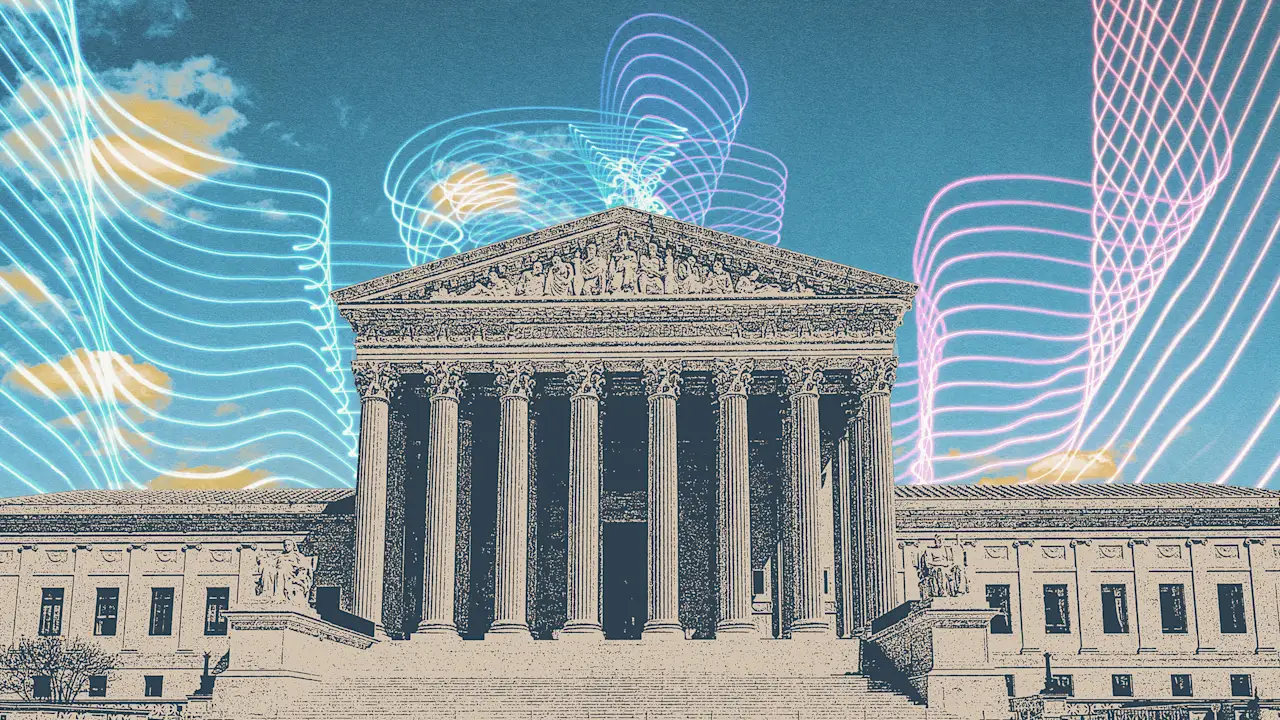
    The Supreme Court is scheduled to hear arguments in a case that will determine the legality of geofencing, a technique law enforcement uses to mine location history data to identify who was near the scene of a crime and may have been involved.

    Geofencing, in essence, draws a virtual perimeter around a crime scene. The government then obtains a warrant requiring tech companies to search their location data for anyone within that area during the relevant time frame. In the current case, Google’s location history data was used to identify the person ultimately convicted.

    Opponents argue the process violates the Fourth Amendment, which protects against unreasonable government searches and seizures. In an increasingly digital world, however, the amendment’s boundaries have become murkier.

    “Geofence warrants are an unprecedented increase in the government’s ability to locate individuals without substantial investigation or investment of resources,” writes the National Association of Criminal Defense Lawyers in a statement. “[They] are general warrants—which are prohibited by the Fourth Amendment—because they are devoid of probable cause and particularity.”

    Chatrie v. United States

    The case at the center of the Supreme Court hearing is Chatrie v. United States. Okello Chatrie is currently serving a 12-year prison sentence for robbing a credit union near Richmond, Virginia. Police used a geofence warrant to identify him, which his legal team argues was unconstitutional.

    The 4th Circuit U.S. District Court disagreed. Around the same time, however, a similar case before the 5th U.S. Circuit Court of Appeals reached the opposite conclusion, finding that people have a reasonable expectation of privacy in location history data. Both cases centered on Google location history.

    Those conflicting rulings sent the case to the Supreme Court, which will now weigh the extent to which “the execution of [a] geofence warrant violate[s] the Fourth Amendment.”

    “The Fourth Circuit held that a geofence warrant yielding two hours’ worth of precise location data involves no Fourth Amendment search and thus need not be supported by probable cause,” writes the Harvard Law Review. “The Fifth Circuit held not only that the practice constitutes a Fourth Amendment search but also that, given the massive scale of the database at issue, the Fourth Amendment does not countenance geofence warrants at all, notwithstanding probable cause that evidence would be found in the searched records.”

    The government is expected to argue that because cellphone users voluntarily opted into location history tracking, they waived any reasonable expectation of privacy. Chatrie’s team, meanwhile, is expected to argue that not only was a warrant required, but that the geofence warrant itself was overly broad, amounting to an unreasonable search of large numbers of innocent people.

    Limits already underway

    Privacy advocates are siding with Chatrie. Google, for its part, has already moved to limit geofencing’s reach. Historically, the company stored users’ location history data on cloud servers. Last July, however, it shifted that data onto individual devices, reducing the company’s own ability to identify users’ past locations.

    Not all tech companies have followed suit, however, which keeps the case highly relevant.

    The broader concern is that geofencing can sweep innocent people into criminal investigations while also enabling large-scale surveillance. At the same time, the practice has proved useful to investigators. Many arrests following the January 6 Capitol riot, for instance, relied on geofencing data.

    It remains unclear how extensively law enforcement relies on geofence warrants. The latest available data comes from 2020, when authorities served Google with 11,500 such warrants, writes Hofstra Law Review. Several states, meanwhile, have enacted laws restricting geofencing, particularly around healthcare facilities in abortion-related investigations.

    The ruling could also extend beyond geofence warrants themselves. Legal experts say it may shape the future legality of other digital investigative tools, including reverse-keyword warrants and chatbot data requests.

    A decision is expected sometime this summer.


    Source link

    Share. Facebook Twitter Pinterest LinkedIn Tumblr Email

    Related Posts

    Uber just expanded into hotels, AI, and ‘room service’ and it’s moving fast

    April 29, 2026

    Social media’s big tobacco moment is just a first step

    April 29, 2026

    Ghirardelli Chocolate products recalled over Salmonella fears. Avoid this list of 13 beverage mixes

    April 29, 2026
    Top News

    How to build a team that runs itself

    By Staff WriterApril 28, 2026

    A twenty-something man once went to a French restaurant in New York—the kind of place…

    Industrial Production Falls 1.4% In Euro Area

    February 18, 2026

    Most Californians Oppose Suggested Redistricting Changes: Poll

    August 20, 2025

    Research shows this habit parents hate is good for teenagers

    January 8, 2026
    Top Trending

    Uber just expanded into hotels, AI, and ‘room service’ and it’s moving fast

    By Staff WriterApril 29, 2026

    Uber Technologies is doing everything it can to save its customers’ time,…

    Social media’s big tobacco moment is just a first step

    By Staff WriterApril 29, 2026

    Many commentators have called March’s California jury verdict, finding Meta and Google…

    Ghirardelli Chocolate products recalled over Salmonella fears. Avoid this list of 13 beverage mixes

    By Staff WriterApril 29, 2026

    California-based Ghirardelli Chocolate Company has voluntarily recalled 13 of its powdered beverage…

    Categories
    • Business
    • Economy
    • Headline News
    • Top News
    • US Politics
    • World Politics
    About us

    The Populist Bulletin serves as a beacon for the populist movement, which champions the interests of ordinary citizens over the agendas of the powerful and entrenched elitists. Rooted in the belief that the voices of everyday workers, families, and communities are often drowned out by powerful people and institutions, it delivers straightforward, unfiltered, compelling, relatable stories that resonate with the values of the American public.

    The Populist Bulletin was founded with a fervent commitment to inform, inspire, empower and spark meaningful conversations about the economy, business, politics, inequality, government accountability and overreach, globalization, and the preservation of American cultural heritage.

    The site offers a dynamic mix of investigative journalism, opinion editorials, and viral content that amplify populist sentiments and deliver stories that echo the concerns of everyday Americans while boldly challenging mainstream narratives that serve the privileged few.

    Top Picks

    Uber just expanded into hotels, AI, and ‘room service’ and it’s moving fast

    April 29, 2026

    Social media’s big tobacco moment is just a first step

    April 29, 2026

    Ghirardelli Chocolate products recalled over Salmonella fears. Avoid this list of 13 beverage mixes

    April 29, 2026
    Categories
    • Business
    • Economy
    • Headline News
    • Top News
    • US Politics
    • World Politics
    Copyright © 2025 Populist Bulletin. All Rights Reserved.

    Type above and press Enter to search. Press Esc to cancel.