
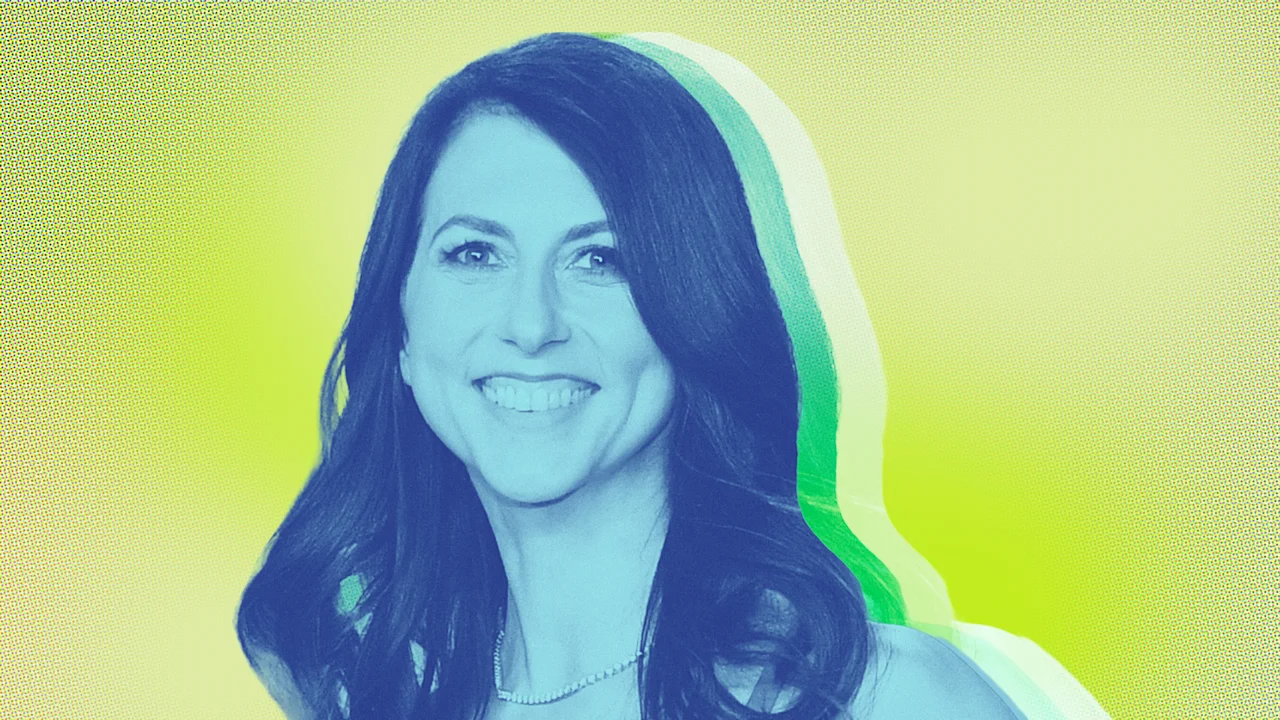
Whatever you think about the charitable gifts of MacKenzie Scott, no one would describe them as small. The novelist and philanthropist gave away $7 billion in 2025. That’s more than her ex-husband Amazon founder Jeff Bezos has given away in his entire lifetime. But when Scott penned her end-of-year essay reflecting on her efforts, she wasn’t focused on eye-popping numbers or dramatic gestures.
Instead, she wanted to spotlight the impact of small, everyday acts of kindness.
America the generous
“It’s easy to focus on the methods of civic participation that make news, and hard to imagine the importance of the things we do each day with our own minds and hearts,” she wrote. But our everyday acts of care and kindness add up financially.
“The total donated to U.S. charities of all kinds in 2020 was $471 billion, nearly a third of it in increments of less than $5,000. There was also $68 billion in reported financial support sent to family members living in other countries, tens of billions in crowdfunding, $200 billion in volunteer labor at service organizations, and nearly $700 billion in wages for the paid employees who chose to take jobs delivering those services over jobs where they might have earned more,” she points out.
Tot this up and it comes to over $1 trillion worth of kindness a year. The impact of all that selflessness isn’t just measured in dollars and cents, however. Scott stresses that our generosity also ripples out to create incredible intangible benefits, both for individuals and the broader society.
“Generosity and kindness engage the same pleasure centers in the brain as sex, food, and receiving gifts, and they improve our health and long-term happiness as well. The peace-fostering byproducts of one unexpected act of kindness toward a stranger of different background or beliefs might inspire a beneficial chain reaction that goes on for years,” she claims.
At a time when it feels like there is so much darkness and cruelty in the world, Scott offers a beautiful vision of how kindness ripples out and is amplified as it touches and inspires others. But is this just poetry, a pretty story told by a gifted, kindhearted writer?
Is Scott right?
If you are among those moved by Scott’s message but looking for cold, hard evidence that small acts of kindness really can make an outsize difference in the world, researchers have brought the receipts.
Let’s start with her claim that even tiny acts of care, like a well-timed compliment or a helping hand offered to someone struggling with their grocery bags, create measurable and meaningful psychological impacts. That’s not just pretty talk.
Oxford University researchers recruited more than 600 volunteers and asked them to perform a small act of kindness every day for a week. These were not heroic gestures, but simple actions anyone can easily do, like picking up litter or leaving a slightly bigger tip. Subjects’ happiness levels were measured before and after.
What did they find? Those who spread a little extra joy also ended up being significantly more joyful than a control group that carried on as normal.
The science of small acts of kindness
How about the claim that kindness can “inspire a beneficial chain reaction” that amplifies the impact of even small moments? Scientists found a clever way to investigate this claim, too.
Spanish psychologists recruited workers at a Coca-Cola plant, telling the employees they would be studying the impact of their moods on work performance. So far, a straightforward goal. But the scientists had a trick up their sleeve. They secretly seeded the group with 19 confederates who had been instructed to spread joy through small acts of kindness.
What happened after these secret accomplices sprinkled their colleagues with extra thank-you notes and coffee runs for a week?
“The acts of kindness don’t go unnoticed. The receivers observed more prosocial behaviors in the office and by the end of the study, they were reporting 10 times more prosocial behaviors than the controls,” reported the British Psychological Society’s Research Digest blog. “One month after the study ended, the receivers were also enjoying significantly higher levels of happiness than controls.”
Let’s underline that finding. Like sparks from a fire, kindness drifted outward and ignited more generosity and joy wherever it landed. The result was a 10-fold increase in acts of everyday kindness in the group as a whole. Also, unsurprisingly, greater happiness. Not just for those receiving kindness but also for givers and bystanders, too.
Scott offers a light in dark times
I’ll end this column on a personal note. As someone who delves into the internet for their job every day, I can testify that, with its blizzards and politics, 2026 hasn’t exactly been chock-full of reasons for hope so far. It’s easy to get lost in the prevailing gloom.
Scott’s essay, and the science that backs her up, provide a light to help guide us through the darkness. Yes, it can feel like cruelty and chaos are gaining ground, and that the great mass of decent people just don’t have the firepower to fight back. How can bringing cookies to your neighbor or sponsoring your local little league team possibly make a dent against so much ugliness?
But that thinking, tempting as it is (and after reading the headlines for a few hours it can be very tempting), underestimates the power of everyday kindness. Billion-dollar donations are eye-catching and praiseworthy. But small gestures matter more than we give them credit for.
Even the smallest actions not only rewire our psychology, helping us fight another day. They also inspire others to join team decency and light. Kindness, MacKenzie Scott reminds us, is contagious. And this is one time you want to go out and cough on your neighbors. You just might start an epidemic of generosity and care.
—Jessica Stillman
This article originally appeared on Fast Company’s sister website, Inc.com.
Inc. is the voice of the American entrepreneur. We inspire, inform, and document the most fascinating people in business: the risk-takers, the innovators, and the ultra-driven go-getters that represent the most dynamic force in the American economy.