
Opinions expressed by Entrepreneur contributors are their own.
Key Takeaways
- Lead with curiosity instead of defensiveness.
- Prioritize authenticity over performance.
- Maintain consistency when the pressure mounts.
- Develop capacity rather than dependency.
Leadership today feels heavier than it used to. In DDI’s latest global leadership survey, more than half of leaders globally say they feel used up at the end of the workday — and among those experiencing heightened stress, 40% have considered stepping away from leadership roles entirely to protect their well-being. For founders and leaders of growing teams, that pressure is amplified: Every decision carries weight, and every misstep is visible.
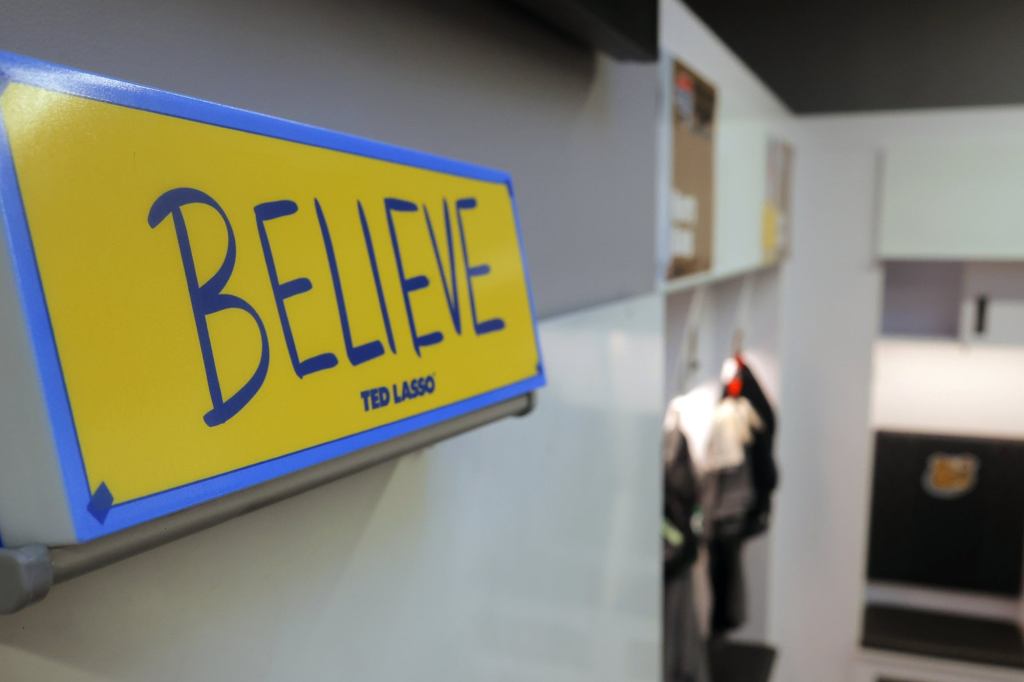
In that environment, we are often told that softness won’t hold up, which pushes many leaders to adopt a rigid, all-knowing persona just to keep pace. Against that backdrop, a handmade yellow sign that reads “BELIEVE” can look naïve.
Yet as we anticipate the return of everyone’s favorite mustachioed coach in Ted Lasso season 4 this summer, it is worth revisiting why his stubborn optimism is less sentiment than strategy. Beneath the biscuits and folksy charm is a disciplined approach rooted in curiosity and consistency. Those traits hold up in complex, high-stakes organizations because they prioritize human connection over corporate posturing.
Early in my own leadership journey, I tried performing authority. I assumed my title required certainty and composure at all times. Instead, it fueled imposter syndrome and made me less effective. When I shifted toward a more Lasso-like approach, prioritizing understanding over being right, the energy of my team changed. The work felt less like something I had to carry alone and more like a shared mission.
Here’s how those fictional lessons translate into very real leadership moves for founders and scaling teams:
1. Lead with curiosity instead of defensiveness
When Ted faces skepticism, he doesn’t pull rank or defend his résumé. Instead, he asks questions. In one instance, when a cynical reporter challenges his qualifications, Ted doesn’t argue. Instead, he simply asks why the reporter feels the way he does. This immediately shifts the dynamic from a confrontation to a conversation.
Whether you’re a seasoned startup founder or a new CEO, you might feel the urge to “prove” yourself by having the quickest answer, but that often silences the very insights you need to succeed.
In my experience, moving from “I need to be right” to “I want to understand” changes the tone of an entire room. Research from Harvard Business School shows that teams perform better when they feel safe asking questions, admitting uncertainty and speaking up without fear.
In your next challenge or disagreement, replace explanation with inquiry. Ask, “What risk am I not seeing?” or “What would make this idea stronger?” By slowing down judgment, you create psychological safety that allows for better decision-making and faster problem-solving, especially in high-stakes or fast-moving environments.
2. Prioritize authenticity over performance
Many leaders believe that to be taken seriously, we must adopt a “tougher” persona. Ted rejects this, staying kind and grounded even when the situation is dire.
For years, I struggled to feel comfortable being myself in bigger roles because I thought I had to “act” like a leader. When I finally let go of that performance and leaned into my actual strengths and limitations, people felt safer contributing without fear of judgment.
People need leaders who are credible and real. If you are stepping into a new scope of responsibility, don’t be afraid to say, “I don’t have the answer to that yet, but I’m going to find out.” This is one of the clearest signs of competence.
Research on workplace vulnerability from Psychology Today supports this: When leaders are open about uncertainty or mistakes, it strengthens trust and encourages more idea-sharing across teams.
That openness doesn’t undermine authority — it creates the conditions for better thinking and faster innovation. For founders, that translates directly into stronger ideas and fewer blind spots as your company scales.
3. Maintain consistency when the pressure mounts
Leadership is built in the small, predictable ways you respond to stress. Ted is the same person whether his team wins or loses, and that steadiness eventually becomes the team’s culture.
That consistency isn’t just a leadership preference; it’s a baseline expectation. 2025 Gallup research shows that stability is one of the four core needs people have of leaders, but what stands out is how much more they value something else: hope. In fact, 56% of desired leadership attributes center on hope, making it the most important signal leaders can send to their teams.
Think about the “mood” you project at work. When things go wrong, do you become unpredictable? If so, your team will stop focusing on performance and start focusing on self-protection. To build a “Lasso-like” culture of trust and hope, make sure your core values, such as quality or people development, show up every single day, not just when things are going well. Consistency at the top allows teams to stay focused on execution instead of reacting to shifting signals.
4. Develop capacity rather than dependency
It is tempting to step in and “save the day” when a project gets uncomfortable, but that unintentionally creates a team that waits for instructions instead of taking initiative. Ted avoids being the hero. Rather, he invites contribution and gives others real responsibility. This is the essence of true empowerment: giving people the clarity and authority to make decisions and then resisting the urge to take that control back.
Companies such as PepsiCo have operationalized this at scale. Through its “Next Big Idea” platform, employees are invited to develop and pitch new ideas directly to senior leadership. Instead of centralizing decisions at the top, the company distributes ownership across the organization, expanding both engagement and the volume of ideas leaders can act on — without becoming a bottleneck.
If you want to grow as a leader, your goal should be to build the capacity of those around you rather than centralizing power in yourself. This week, try giving a team member a decision you would normally keep for yourself. It might feel risky, but these small moves compound into major cultural shifts.
Why “BELIEVE” isn’t naïve
Ted’s famous yellow “BELIEVE” sign is a powerful leadership stance. Belief, as Ted models it, is the decision to anchor a team in shared purpose even when outcomes are uncertain.
Leaders who practice steady belief in people, processes and long-term growth create coherence. They allow teams to take risks without fracturing when setbacks occur.
That is not naïveté. It is disciplined leadership. In environments where the pressure is real and the margin for error is thin, it may be the most necessary discipline of all.
Key Takeaways
- Lead with curiosity instead of defensiveness.
- Prioritize authenticity over performance.
- Maintain consistency when the pressure mounts.
- Develop capacity rather than dependency.
Leadership today feels heavier than it used to. In DDI’s latest global leadership survey, more than half of leaders globally say they feel used up at the end of the workday — and among those experiencing heightened stress, 40% have considered stepping away from leadership roles entirely to protect their well-being. For founders and leaders of growing teams, that pressure is amplified: Every decision carries weight, and every misstep is visible.
In that environment, we are often told that softness won’t hold up, which pushes many leaders to adopt a rigid, all-knowing persona just to keep pace. Against that backdrop, a handmade yellow sign that reads “BELIEVE” can look naïve.
Yet as we anticipate the return of everyone’s favorite mustachioed coach in Ted Lasso season 4 this summer, it is worth revisiting why his stubborn optimism is less sentiment than strategy. Beneath the biscuits and folksy charm is a disciplined approach rooted in curiosity and consistency. Those traits hold up in complex, high-stakes organizations because they prioritize human connection over corporate posturing.