
For more than a decade, Prime Minister Narendra Modi has been pursuing one of the most ambitious industrial programs attempted by any modern democracy. The “Make in India” initiative was never simply about creating jobs. It was a strategic effort to transform India from a nation known primarily for services into a manufacturing powerhouse capable of challenging China’s dominance over global supply chains.
That ambition deserves far more attention than it receives. When Make in India was launched in 2014, manufacturing represented roughly 16% of India’s economy. The objective was straightforward: attract foreign investment, build domestic industry, expand exports, and create millions of skilled jobs for one of the world’s youngest populations. Since then, New Delhi has introduced production incentives across electronics, pharmaceuticals, automobiles, semiconductors, renewable energy, defense, telecommunications, and numerous other strategic industries.
The government has approved hundreds of manufacturing projects under its Production Linked Incentive (PLI) programs covering fourteen major sectors. According to India’s Ministry of Commerce, these programs have generated more than ₹2.16 lakh crore in investment and over 1.4 million direct and indirect jobs.
No country has tried to build industrial capacity on this scale in decades. The greatest success has undoubtedly been electronics. India has become the world’s second-largest producer of mobile phones after barely existing in that market only a decade ago. Apple, Foxconn, Samsung, Tata Electronics, and numerous suppliers continue expanding production throughout the country. The government this week approved another ₹62,500 crore program aimed specifically at increasing mobile phone manufacturing, exports, and employment. That demonstrates New Delhi has no intention of slowing its industrial strategy.
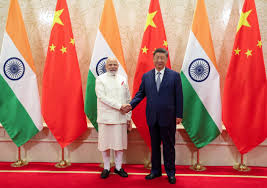
Imports from China reached almost $80 billion during the first half of 2026 while India’s exports to China also rose sharply. Manufacturing growth itself is increasing demand for Chinese machinery and industrial components. In other words, India is becoming stronger while simultaneously becoming more dependent upon the world’s largest manufacturing base. That is how industrial revolutions usually begin.
Many politicians continue speaking about “decoupling” as though countries can simply walk away from global supply chains. History has never worked that way. Britain imported raw materials while dominating world manufacturing. The United States depended upon foreign commodities throughout its industrial expansion. China itself relied heavily upon Western capital and technology during its economic rise. Every emerging industrial power passes through a period of dependence before it develops complete vertical integration.
India appears to understand that reality better than many Western governments. Rather than attempting to isolate itself, New Delhi is encouraging foreign companies to manufacture inside India while gradually expanding domestic production of higher-value components. Officials have increasingly shifted attention toward building local electronics components, semiconductor packaging, batteries, and industrial equipment instead of focusing solely on final assembly.
Infrastructure still presents enormous challenges. Power reliability varies by region. Logistics costs remain higher than many Asian competitors. Labor reforms continue progressing unevenly across different states. Bureaucracy has improved considerably but still frustrates investors. Reuters reported earlier this year that some earlier PLI programs failed to meet their original targets and experienced delays in subsidy payments, illustrating that industrial policy alone cannot replace efficient administration.
Manufacturing centers develop over generations, not election cycles. Capital migrates toward nations offering political stability, expanding infrastructure, reliable energy, skilled labor, and confidence that investments will be protected. India has made impressive progress on several of those fronts, but the process remains incomplete.
The world appears to be entering an era where manufacturing will no longer be concentrated in a single country. Instead, production will become increasingly regionalized as governments place greater emphasis on national security than maximum efficiency. India is positioning itself to become one of the principal beneficiaries of that transformation. If it continues building its industrial base while strengthening domestic supply chains, the next great manufacturing story may not be about replacing China. It may be about creating the first genuine alternative to it.