
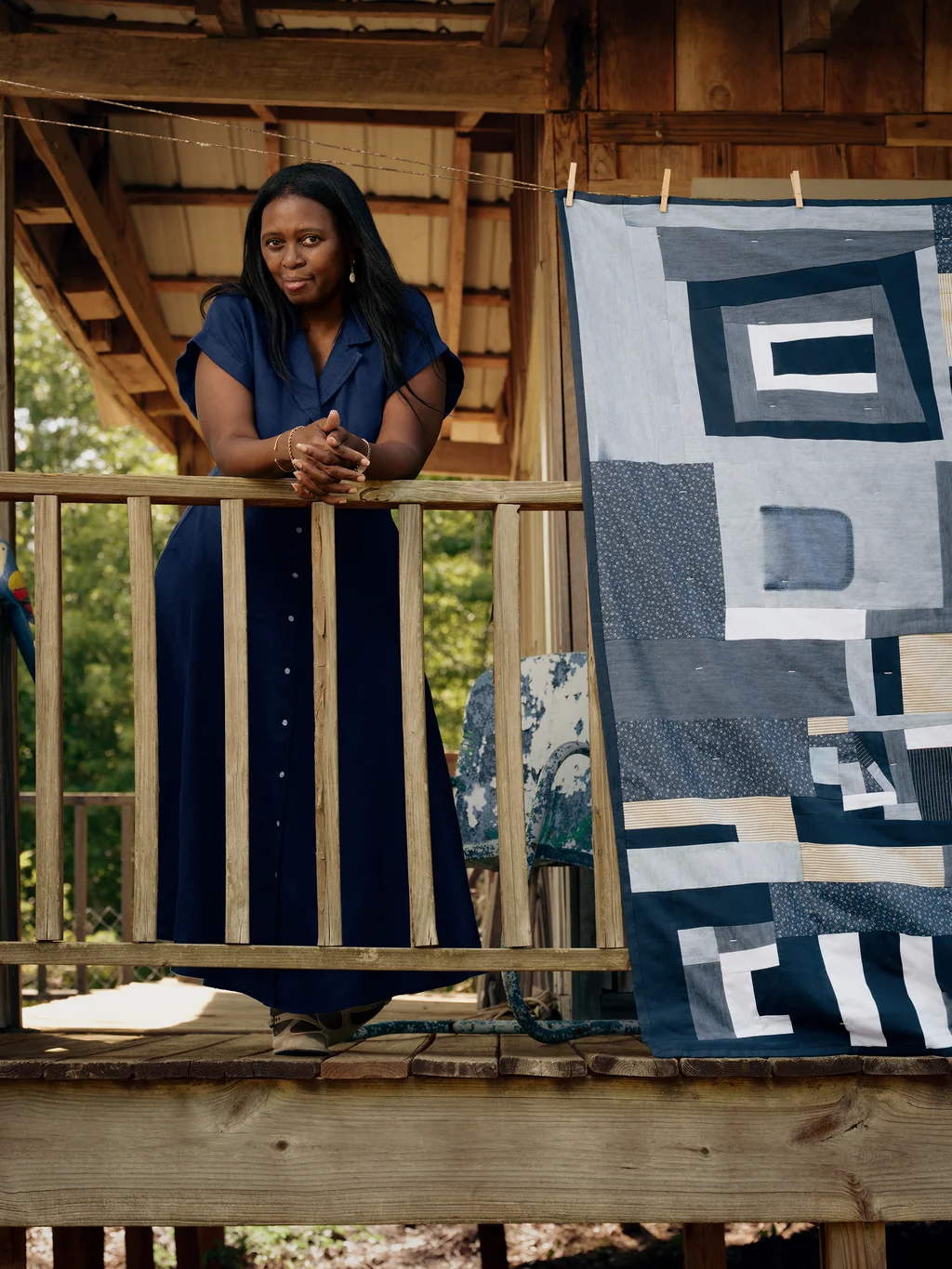
Deep in a curve of the Alabama River is the small rural community of Gee’s Bend. The site of a former cotton plantation where the residents trace their lineage to enslaved ancestors, it has recently become known for some of the most creative abstract art in America. The medium isn’t a canvas or sculpture: It’s the quilt.
For centuries, the women of Gee’s Bend faced extreme poverty and isolation. They would save up whatever scraps were on hand—worn out denim workwear, faded rags, old feed sacks—sewing them together to make blankets for the winter. The quilters had an eye for beauty, taking these mismatched, multicolored pieces to create geometric patterns. And today, there’s a movement among fourth- and fifth-generation Gee’s Bend quilters to preserve this craft.
“These quilts kept families warm when there wasn’t any heating in the house,” says Claudia Pettway Charley, one such artisan. “They didn’t have money to buy new fabrics. So you think about the struggle, the hardship, and how they turned sorrow into something beautiful.”
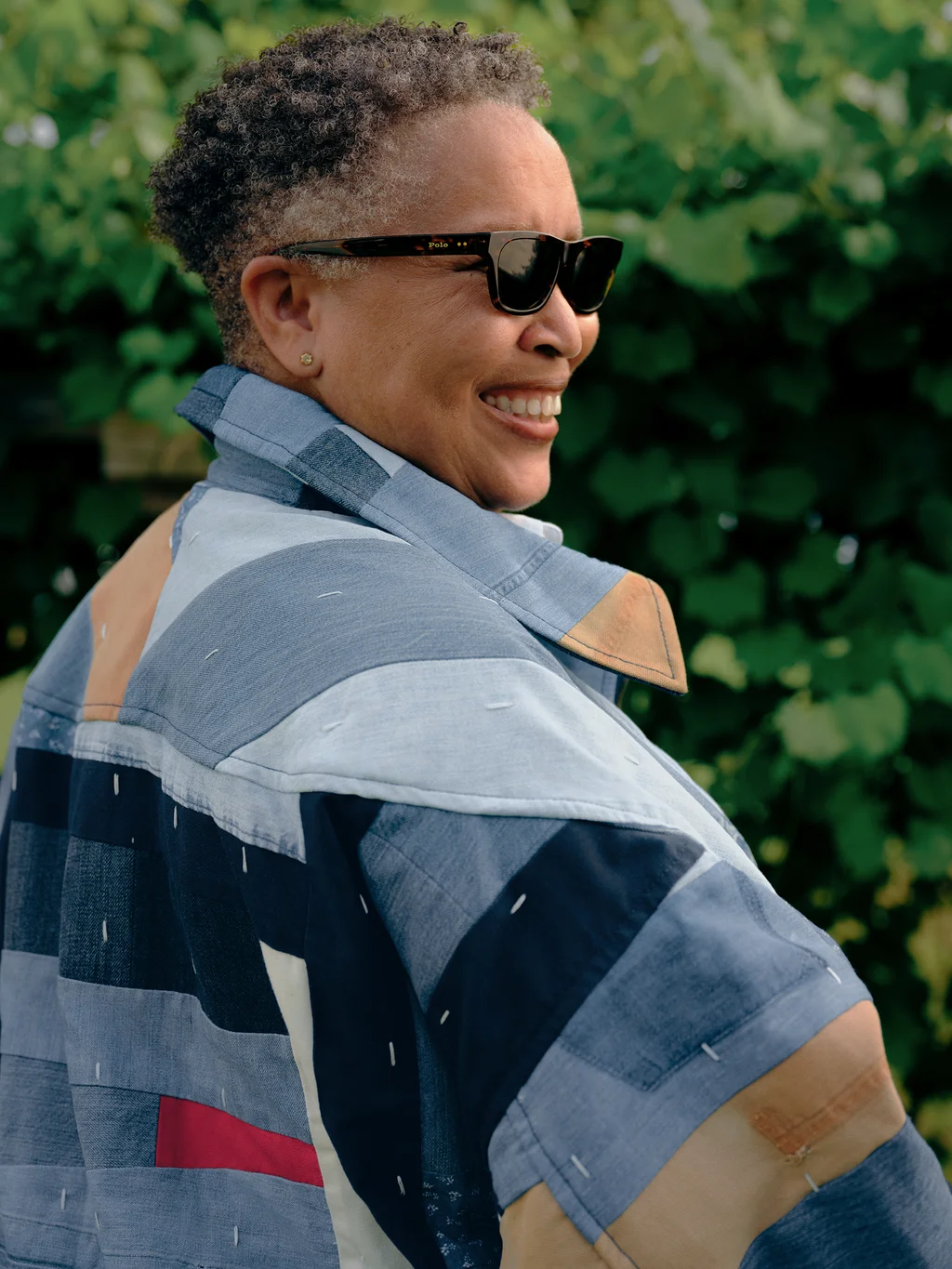
This craftsmanship takes center stage in a new partnership between Ralph Lauren and Gee’s Bend, the fifth installment of Ralph Lauren’s Artist in Residence Program. It highlights two renowned craftswomen—Charley and Loretta Pettway Bennett—who have created limited edition products that highlight traditional Gee’s Bend patterns, including quilts, pillows, a jacket, and a tote bag. It is part of Ralph Lauren’s effort to broaden our imagination of American art and design, and move from aesthetic inspiration to equitable collaboration.
Gee’s Bend, officially known as Boykin, remains a close-knit enclave of roughly 200-300 residents who all know each other and who have a shared history. Growing up, Bennett says that that quilt making was just part of everyday life. She often saw her mother and aunts sitting together, chatting while they worked on a quilt.
As Bennett has developed her craft, she’s created a style that is inspired by the signature elements of Gee’s Bend—the denim, the rows of rectangles—but has also generated her own aesthetic. Her pieces have a modernist quality. She doesn’t reach for straight-edged or rigid symmetry. She’s developed her own improvisational, organic rhythm that results in geometric designs that are both architectural and also intentionally nonuniform.
In one quilt Bennett made for the Ralph Lauren collaboration, there’s a single red triangle that stands out among the layers of blue. She says that pop of color represents her granddaughter, who is five-and-a-half and spends her summers in Gee’s Bend. Bennett is already teaching her the basics of quilting. “That one red piece represents another bloodline that’s coming,” she says, remembering that she also learned the tradition from her grandmother. “Now it’s my turn to be the grandma. I am giving her a taste of what I had when I was growing up, passing down the legacy.”
The Ralph Lauren x Gee’s Bend collection is grounded in denim, a fabric historically valued in Gee’s Bend for its durability as workwear. The items in the collection include Ralph Lauren textiles pieced together into fashion and home products. There’s also hand-painted ceramic tableware produced in Italy, featuring paintings based on Bennett’s quilting pattern, including the red triangle. The pieces are priced to reflect that these objects are collectable pieces of art: The jacket costs $4,998, the tote costs $2,198, and the quilts are $3,995.
Over the years, the Gee’s Bend quilters have been recognized by the art world. In 2002, the Whitney Museum of American Art debuted The Quilts of Gee’s Bend, and eventually, the pieces were shown at the Metropolitan Museum of Art. Now, Ralph Lauren wants to introduce their work to a wider audience, and acknowledge how this textile art has influenced the designs that appear in the fashion world. It ensures that the legacy of these craftswomen is recognized as a pillar of American design history.
This collaborative approach is central to Ralph Lauren’s Artist in Residence program, which was formalized in 2020 in the midst of the racial reckoning that swept across the fashion industry. Historically, Ralph Lauren—among other fashion brands—frequently drew inspiration from diverse cultural aesthetics, as it developed its own vision for what defined American style. At times, however, the brand was accused of appropriating from other cultures. Ralph Lauren has taken this criticism seriously, and worked hard to change how it works. The company has shifted from being inspired by American artists to direct collaboration with underrepresented craftspeople.
Ralph Lauren has sustained these partnerships, even as diversity initiatives in the U.S. have faced pushback from an administration that is determined to dismantle diversity, equity, and inclusion efforts. Previous Artists in Residence drops have including a multipart collection with the seventh-generation Diné (Navajo) weaver Naiomi Glasses, the multidisciplinary Diné artist Zefren-M, and the Oceti Sakowin (Dakota/Lakota) artists Jocy and Trae Little Sky of Tópa, a clothing and design brand. This commitment also builds on Ralph Lauren’s historic partnerships with historically Black colleges and universities and its deep ties to Oak Bluffs, a town on Martha’s Vineyard that is an important center of African American culture.
To provide direct community support, 5% of the purchase price of each item in the Ralph Lauren x Gee’s Bend collection is donated to the Equal Justice Initiative to fund hunger relief and direct assistance for low-income families across Alabama, including Gee’s Bend.