
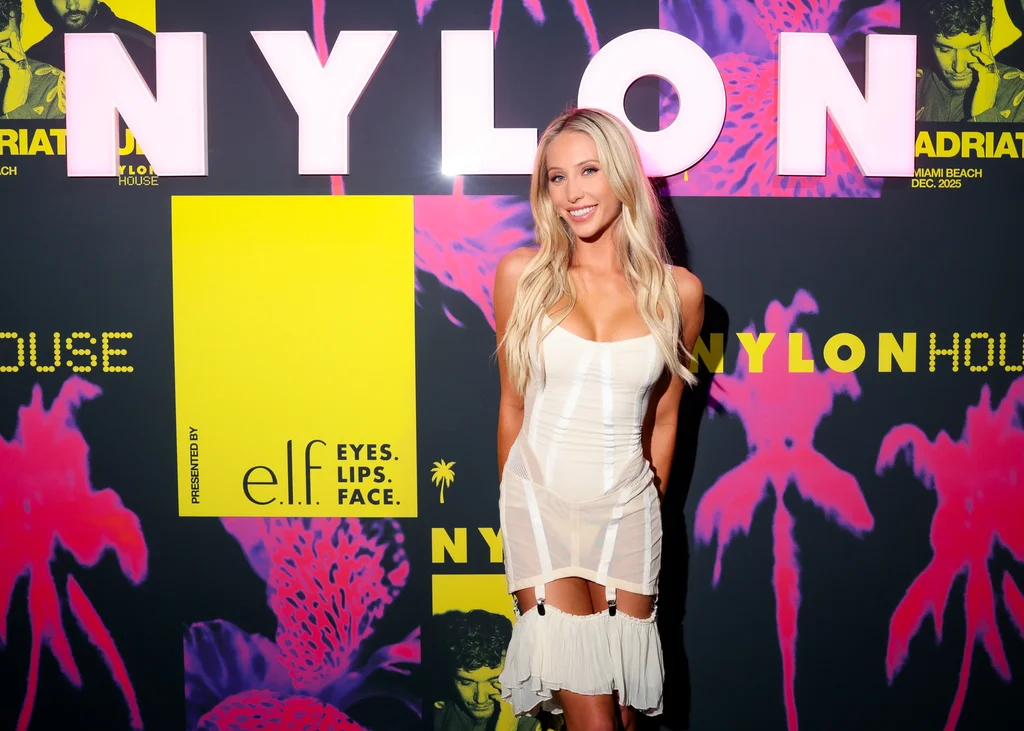
Bryan Goldberg, CEO of Bustle Digital Group, which operates editorial platforms including Bustle, Nylon, and W Magazine, among others, thinks that hosting events and cultivating a community of influential people to appeal to readers is the solution to keeping his media properties solvent and profitable. In September 2025, Goldberg launched an invite-only membership to Nylon Magazine. The membership, which gathers tastemakers and influencers, has helped BDG put on buzzy events, collect data on members, and ink dozens of lucrative partnerships with brands including Vera Wang, Nautica, and PVOLVE. Here, Goldberg talks about how to make money in journalism, why community is the secret to keeping readers consuming content, shutting down Gawker, and how he feels about media unions.
Why did you launch this Nylon membership?
At its core, it’s a data play. We have the ambition to build one of the largest databases of influence in the world—to understand who shapes taste in America. We learned that through hosting so many Nylon events. After doing 20–30 events a year—some with thousands of people—we noticed we were building something new: influence as community.
At our events, we kept seeing the same people—some famous, some just influential. Instead of rebuilding guest lists every time, we created a “permalist”: a few thousand people who consistently drive taste. When we announced it, over 10,000 people applied on day one.
Traditional “influencer rosters” already exist. But we think of this as Influence 2.0—a community of tastemakers. It’s not always who you think. It’s not just people with big social followings. Yes, some are influencers with millions of followers. But it might also be a stylist choosing what celebrities wear, a maître d’ at a popular restaurant deciding who gets in, a startup founder, or a DJ manager. Influence is much more complex than people realize.
What kind of data are you collecting?
Every time we host an event—like Coachella or F1 Miami—we open applications. We collect emails, phone numbers, social handles, and even addresses. Our events act as a massive user acquisition flywheel. This has allowed us to build a database of hundreds of thousands of tastemakers globally.
That wasn’t the original vision when I bought these magazines seven or eight years ago—but it’s where we’ve landed. We’ve effectively become a data company. The Nylon membership is the capstone: a curated group of the most influential people we want at our events—and that advertisers want to see there too.
Do people pay to apply?
No. Their presence is worth far more than a membership fee.
If someone with a big following posts from our event, that might generate $50,000 worth of media value. That’s much more valuable than charging them a few thousand dollars to join.
So how does this make money?
Sponsorship is the core model. Brands want cultural moments. Brands are finding that it’s hard to deliver taste and cultural moments. But they know it when they see it: their logo on a red carpet, everyone taking photos at a party they sponsored. They want to be associated with something real, especially in an AI-heavy world where everything feels generic. We create environments—events like Coachella parties or Art Basel—that combine performances, red carpets, brand activations, and tastemakers.
That creates what I call a “supernova of amplification.” If you have 2,000 guests averaging 100,000 followers each, that’s a potential reach of 200 million. We often generate 20-40 million views from a single event. Ten years ago, we measured scale through website traffic. Now, we can reach tens of millions of people in one night. That, to me, is the future of media.
How do you decide who becomes a member?
It’s not just about follower count. The biggest factor is the network effect. If someone has 300,000 followers but no overlap with our community, that raises questions. Meanwhile, someone with 4,000 followers might be highly influential if they’re connected to key people—like a stylist or industry insider.
Which members drive the most revenue?
That’s proprietary. It’s part data, part editorial instinct. For example, at an Art Basel party, Travis Scott attended—but Alix Earle generated more press because of what was happening in her personal life that night. We pay attention to those dynamics: who the press covers, who drives conversation.
Will you bring this model to other publications?
Yes—especially community-building. For example, W Magazine has a different kind of community—more exclusive, celebrity-driven. Their events are smaller but highly curated.
When did you decide to go all-in on events?
Around 2018. Before that, media was about producing more content for the internet. By 2018, we hit oversupply—too much content. SEO declined. Social traffic declined. I decided to pivot: focus on something Google and Facebook couldn’t compete with—live experiences. That eventually evolved into something bigger: relationships. We realized we weren’t just creating events—we were building relationships with celebrities and tastemakers.
Where does actual editorial content fit into all of this?
It’s still critical. Celebrities still want magazine covers—it’s something money can’t buy. Our magazines have authority. That authority draws celebrities in, which strengthens everything else we do. W had Rihanna on the cover debuting her new baby—that reached hundreds of millions of people.
That authority draws talent in. It’s a huge part of our ecosystem. We also focus on original, primary content—interviews, reviews, experiences—not commodity news stories. I’m bullish on journalists joining Substack, but fashion is different—it requires resources. You need photographers, stylists, and production budgets. That’s not easy to replicate independently.
You revived Gawker and then decided to shut it down in 2023. Why did you do it, and what did you learn from that experience?
Not every category benefits equally from brand authority. Fashion does. Other categories less so. We learned to focus on where authority really matters. The industry has changed. We now prioritize visual storytelling and relationship-building. The skill set has shifted—from writing-focused roles to people who can operate in the world, build networks, and create experiences.
How do you feel about media unions?
They made sense at the time. The industry was going through a major shift, and people were reacting to that. In hindsight, it wasn’t anyone’s fault—the business model had just broken.
Are you thinking about selling BDG?
Not actively. I love what I’m doing. We’re profitable and growing now—but it took years to get here. If we sell, it would have to be the right partner, and I’d want to stay involved long-term.
How are you using AI at your publications?
We won’t use AI to replace core creative output—like photo shoots or original reporting. AI is great for eliminating tedious work—like building decks or spreadsheets. That lets us invest more in what matters: creative work, editorial, and experiences.