
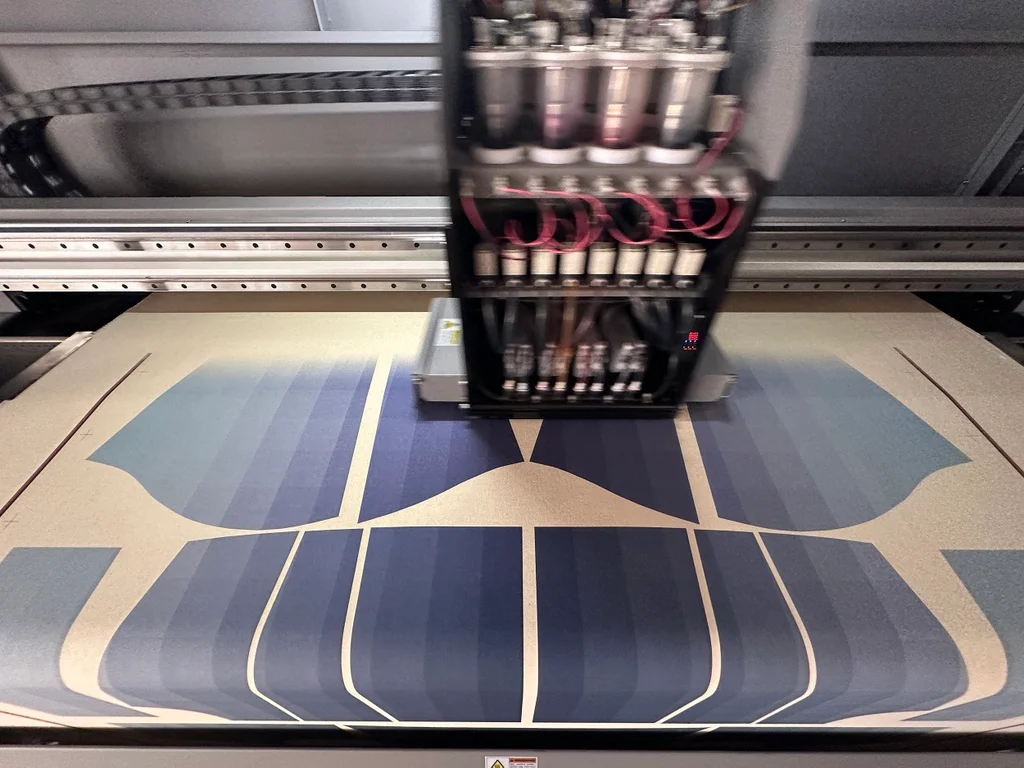
The classic blue color of denim has an environmental cost: Dyeing a single pair of jeans uses 20 gallons of water and requires industrial chemicals. But a new approach to digital printing re-creates the same look with around 2 tablespoons of water and bio-based dyes.
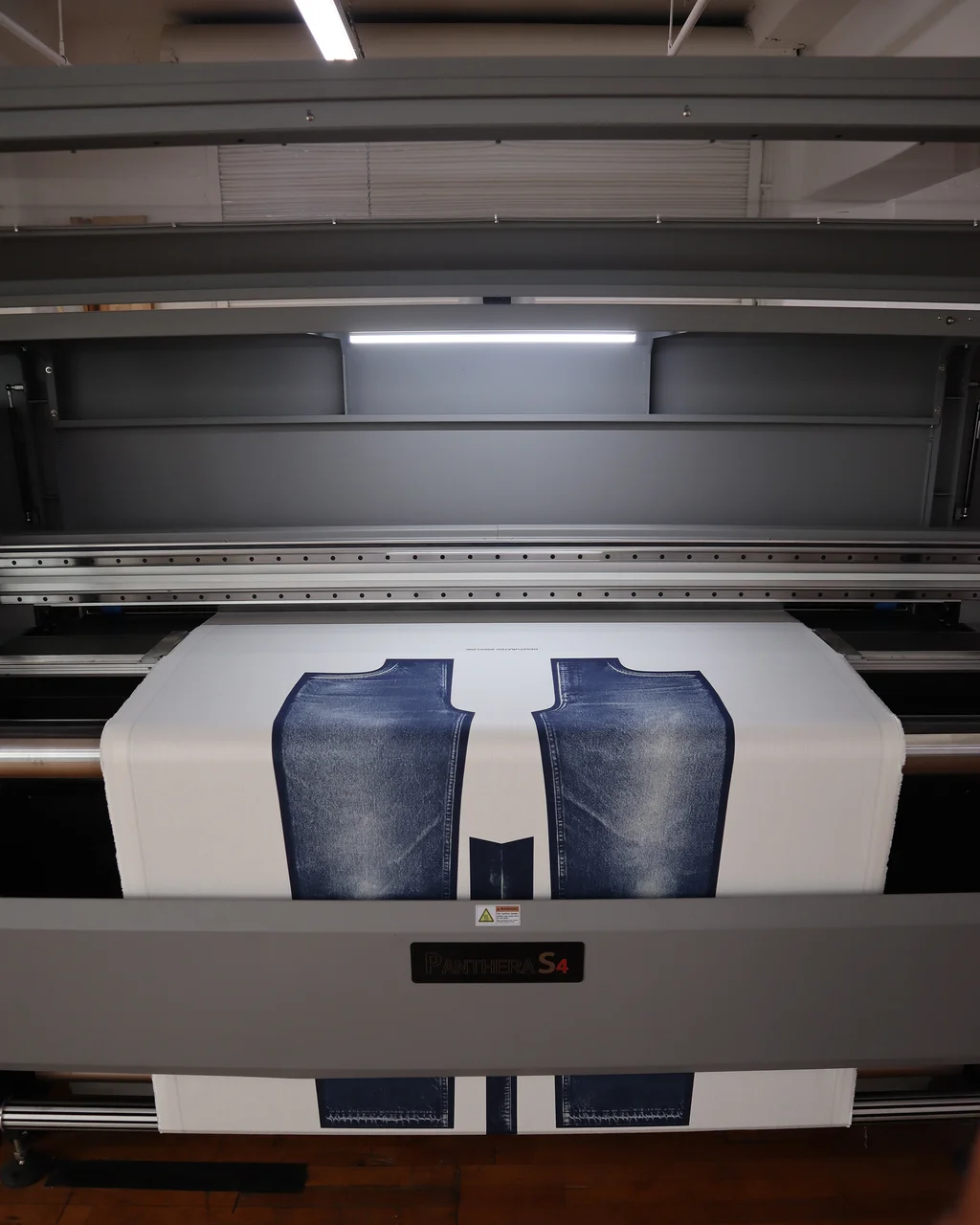
A startup called Wtrlss, now beginning to work with major brands, developed a patented biochemistry dye that’s added directly to rolls of fabric using its industrial-scale inkjet printers.
Digital printing isn’t new, but typically it involves printing only on the surface of the fabric. Instead, this new technology fully bonds to the fiber without additional steps, resulting in a fabric that the startup says looks indistinguishable from traditionally dyed denim.
“We built the first indigo replacement color set that works with digital,” says CEO Dustin White. “This is really a groundbreaking technology in the sense that it’s the first time we have indigo blue that can be deployed onto the fabric without indigo.” Wtrlss cofounder Mickaël Mheidle, a Switzerland-based scientist, developed the technology.
A new way to dye denim
Traditionally, dyeing denim requires a long series of steps. Cotton yarn goes into dye baths, where indigo (or, more often, synthetic indigo) is chemically altered to help it bind to the fibers. The next step usually involves removing some of the color.
“You’re using bleaches and lasers and all these different techniques to remove the color to get that washed-down look that we see on the shelves,” White explains. Blue yarns are woven with white yarns to make the final fabric, which typically goes through additional finishing steps.
The digital process at Wtrlss happens in a single step. Instead of starting with dark fabric and removing the color, the color and finish are applied directly onto undyed fabric. The biochemistry is designed to help the color bind into the fiber, and can be tweaked to match a specific look. “The designer controls how deep . . . to penetrate that fiber,” White says.
The color can go all the way through to be uniformly blue, or partway, mimicking, for example, the way dye ends up on the outer layer of cotton fiber in the traditional dyeing process. Even the amount that the color bleeds is controllable: A designer can choose to make a vintage-looking pair of jeans that won’t fade further, or to let the denim fade as it normally would when people wear it.
Final finishing, including creating the “hand feel” of the fabric, also happens in the machine. “Quite literally, you put the fabric in one side, it comes out the other side, and you cut and sew it,” White says.
Less water, faster production
The traditional process uses so much water—and creates so much polluted wastewater—that it often happens in places with looser environmental regulations. But the new process, which cuts water use by 99.99% because the only water left is in the dye itself, makes it possible to do the dyeing more easily in a place like New York or California.
“We unlock creativity with designers,” White says. “We unlock a tremendous amount of development that can happen in the studio or close to home, versus designing something overseas, waiting for it to be flown to you, going back and forth, and all of the other stuff that comes along with producing in other countries.”
For brands, a faster production process makes it easier to respond to trends and avoid overproducing the wrong styles. (Right now, companies often start production 18 months before a product comes out.) They can also produce in smaller quantities and test styles. The whole process is cheaper than the traditional option, as it uses less labor, 90% less energy, and avoids the cost of treating wastewater.
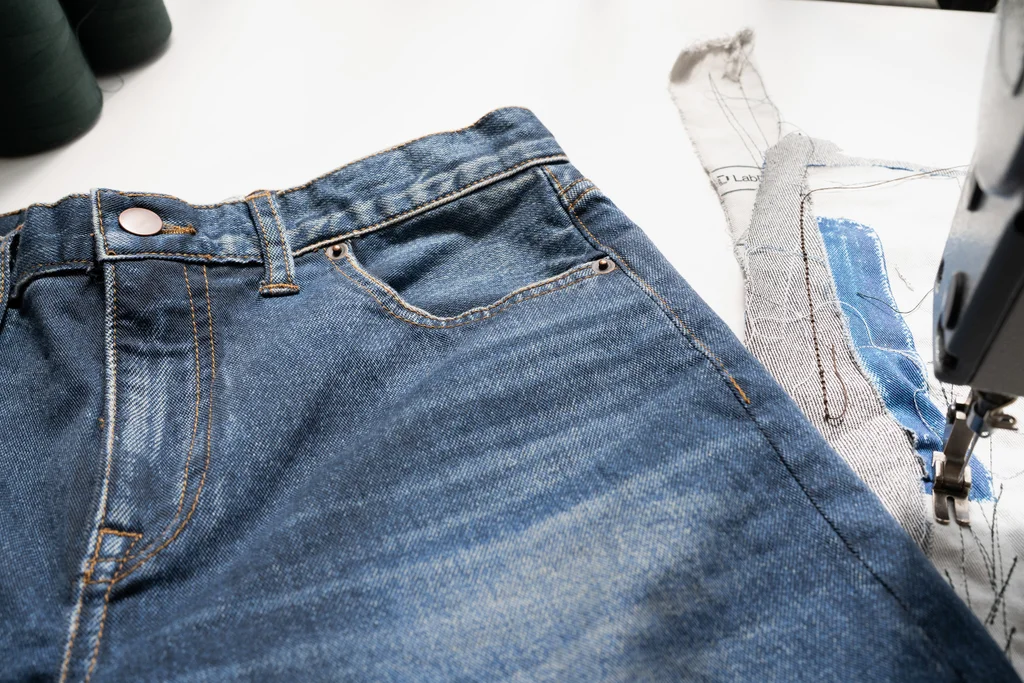
In tests, jeans made with the Wtrlss material have also lasted longer. The same chemicals and processes that are normally used to dye and finish denim also break down fibers; the new process provides the same look without the damage. According to White, in blind tests people can’t see a difference in appearance.
“If we couldn’t get it identical, we wouldn’t be shipping the equipment and putting products in the market because the brands wouldn’t do it,” he says.
The company is now in pilot testing with Ha-Meem Group, one of the world’s largest denim manufacturers, which works with brands like Levi’s and Gap. Though the startup couldn’t yet name the brands that are beginning to use its technology, it says the first products will begin to roll out this fall.
The same approach can be used for other types of dyeing, though the company is starting with denim because it’s especially water-intensive. Because the new process is more affordable and has other advantages beyond sustainability, it has the potential to scale up quickly. The company believes the technology could help shift the denim industry.
“The traditional indigo dyeing process of yarn dyeing is an art form that I think will always exist in specific categories, as it should,” White says. “But for the mass production of denim, it’s unreasonable to continue down the road that the industry is going down. It’s not sustainable.”