
Forty-five billion. That’s how many potatoes are used every year to make Lay’s, Ruffles, and other snacks produced by food and beverage giant PepsiCo. These potatoes are a crucial link in PepsiCo’s global supply chain, so it’s in the company’s best interest to make sure every farmer’s annual harvest is dependably strong.
These days, however, farmers are dealing with increasingly unpredictable weather patterns. A sustained drought leaves fields dry and dusty. A sudden flash flood washes away crops and robs the soil of critical nutrients. The list goes on, and that unpredictability is a big deal for PepsiCo. “If we don’t have a strong, resilient food system that can supply the crops, the ingredients, and the products that we need, then we don’t have a business,” says Jim Andrew, PepsiCo’s chief sustainability officer.
PepsiCo recognized it needed to take action to address the threats facing farmers and food producers around the world. In 2021, the company set an ambitious goal to spread more sustainable farming practices across millions of acres of farmland and sustainably source many of its key ingredients, from potatoes and corn to oats. Recognizing the growing pressures facing farmers and food producers around the world, the company in 2021 introduced PepsiCo Positive, its strategic business transformation designed to help build a more resilient future for the company and the global food system. As part of that effort, PepsiCo set goals to help spread regenerative, restorative, and protective agricultural practices across millions of acres of farmland and sustainably source many of its key ingredients, from potatoes and corn to oats and oranges.
The decision wasn’t focused only on PepsiCo’s bottom line. The company recognized that a drive toward more sustainable food production could have tremendous ripple effects, from reducing greenhouse gas emissions to improving the lives of farmers and their communities. “We knew we needed strategically to move faster, be bolder, and make more change happen more quickly,” Andrew says. “We need it for our business, but the world needs it to feed a population.”
THE ART AND SCIENCE OF FARMING
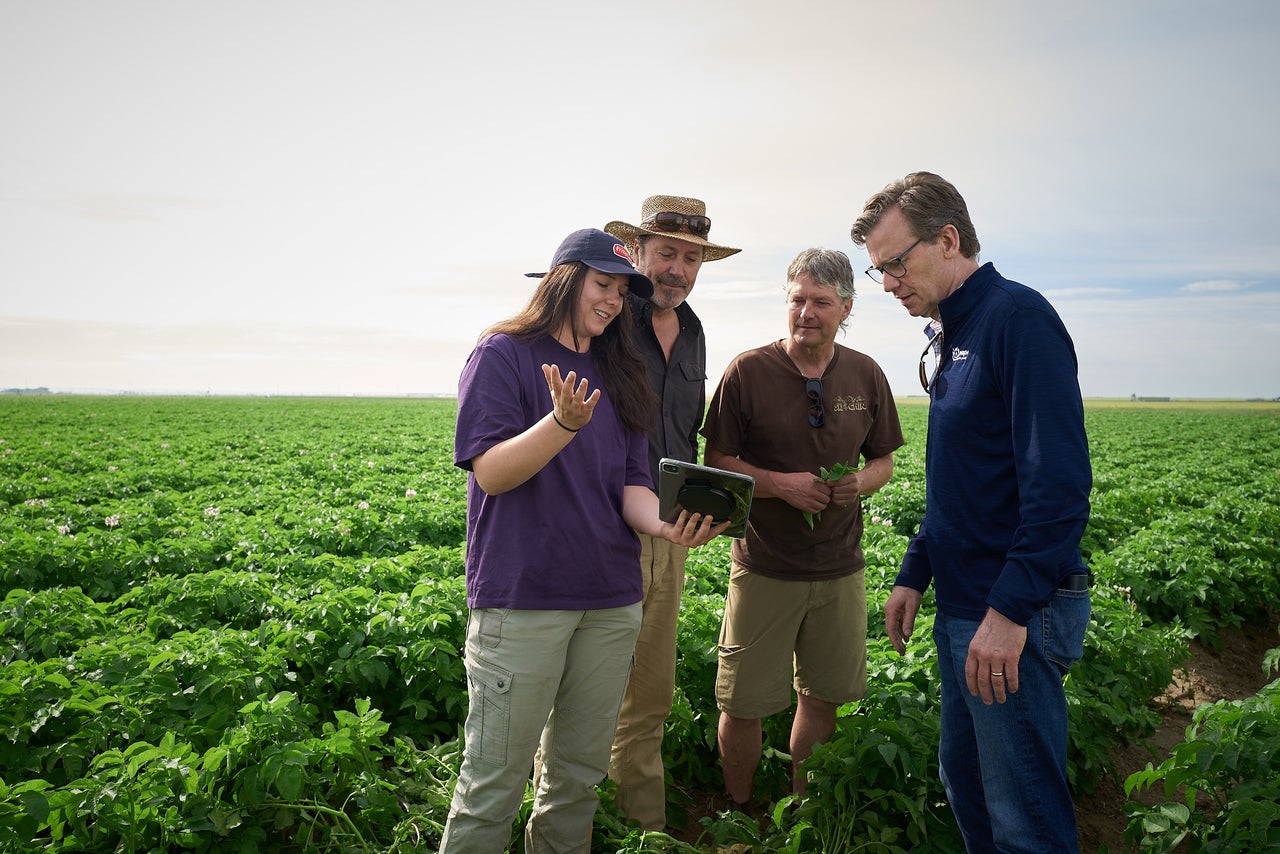
Perry Family Farm has supplied PepsiCo with potatoes for more than 45 years. The fourth-generation farm in Southern Alberta, Canada, offers a template for how farmers can take a more intentional and sustainable approach to food production. “Perry Family Farm is an amazing example of how human ingenuity, five generations of experience, and technology come together to create best practices of farming across the globe,” says Athina Kanioura, CEO, Latin America Foods, and global chief strategy and transformation officer of PepsiCo. “It’s created a farm that is built for the future while it optimizes the present.”
Brothers Chris and Harold Perry took the reins from their parents in 1998—and as their kids start immersing themselves in Perry Family Farm’s operations, a fifth generation is on the horizon. With 6,000 acres in production, Perry Family Farm is one of PepsiCo’s largest suppliers of potatoes. It’s also a leading practitioner of regenerative farming, which aims to create healthier soil and a better growing environment. It does so by taking advantage of the local natural environment—from the worms in the ground to the bugs in the air—rather than relying on insecticides, synthetic fertilizers, and chemicals. “When the soil is in good-enough shape to supply the plant with everything that it needs, the plant can regulate itself and doesn’t need a lot of inputs,” Harold Perry says.
At Perry Family Farm, regenerative farming has helped reduce water consumption because the soil is healthier and can hold more moisture. And using multispecies cover crops between planting seasons keeps the Perrys from having to till the fields, which saves money and requires fewer fossil fuels to keep its farm machines running.
A TEMPLATE FOR SUSTAINABILITY
Regenerative farming is as much a science as an art. Nearly 15 years ago, the Perrys began experimenting with ways data and technology could help them make more-informed decisions about managing its potato crop. That included using multispectral imaging from drones to relay information about plant and soil conditions and building a variable-rate irrigation system that provides water only where it’s needed. “We wanted to take all of that information and make a big easy button,” Chris Perry says. “We took acres, turned them into pixels, and treated all parts of the field differently depending on the real-time application.”
These are the types of lessons PepsiCo aims to spread to the growers it works with. The company operates more than 60 demonstration farms around the globe where farmers can get a hands-on look at regenerative agriculture practices. It also leverages teams of agronomists to work closely with growing partners to support trials and offer training to help farmers build their skills. A farmer might get help experimenting with no-till strategies, learn how strips of flowers can provide natural pest control, or explore how AI can help unlock insights from troves of soil, crop, and weather data. For Jim Andrew, the stakes go far beyond PepsiCo’s supply chain. Building a more resilient agricultural system means helping ensure that farmers can continue producing the crops the food industry depends on. It also will help make the farming industry more sustainable in the years and decades to come. “That will help ensure that the next generation of farmers can step forward, take their place, and continue farming,” he says. “Without that, the whole food system is at risk.”
Source link