Close Menu
    Facebook X (Twitter) Instagram
    TRENDING :
    • 10 Lessons From 10 Years — How to Build a Lasting Business
    • Everyone’s Arguing About AGI Taking Over — Here’s What Matters
    • Every Founder Should Ask This Question Before Taking on Debt
    • His Podcast Is on Track for $60 Million in Revenue. How He Grew.
    • What Rejected College Applicants Can Teach Entrepreneurs
    • Design Lessons From Mattel’s Toy Machine
    • Your Customers Just Got an AI Agent. Is Your Business Ready?
    • Nearly half of U.S. mortgages have one thing in common, and it’s creating a huge problem
    Compatriot Chronicle
    • Home
    • US Politics
    • World Politics
    • Economy
    • Business
    • Headline News
    Compatriot Chronicle
    Home»Economy»Russians Not Welcome In Europe?
    Economy

    Russians Not Welcome In Europe?

    October 14, 20263 Mins Read
    Share Facebook Twitter Pinterest LinkedIn Tumblr Telegram Email Copy Link
    Follow Us
    Google News Flipboard
    Share
    Facebook Twitter LinkedIn Pinterest Email


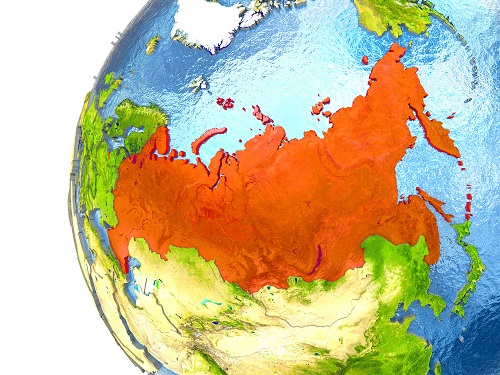
    Finland wants the European Union to stop issuing tourist visas to Russians until Moscow ends its war against Ukraine. Finland’s Foreign Ministry says Schengen countries issued close to 500,000 tourist visas to Russians in 2025. Foreign Minister Elina Valtonen declares that “Russian citizens should not be issued tourist visas,” adding, “The same must finally happen at the EU level.” Her argument is that Russians should not enjoy European freedoms while their country attacks Ukrainian homes. But who, exactly, is being held accountable here? The person applying for a holiday visa did not necessarily order the invasion, support it, or possess any means of stopping it.

    I question the logic of making someone’s freedom to travel conditional upon a decision made in the Kremlin. What is an ordinary Russian supposed to do to satisfy that condition? Walk into Putin’s office and demand that he withdraw the army? Europe describes Russia as an authoritarian state and then treats its citizens as though they personally control its foreign policy. You cannot have it both ways. If political power is concentrated and opposition is repressed, the responsibility of the individual must be judged by what that individual has actually done.

    The people with money have more options. Russian businessmen Mikhail Fridman and Petr Aven, for example, hold multiple nationalities and have challenged sanctions through European courts. That does not mean wealthy Russians are untouched by sanctions; many have faced asset freezes and travel restrictions. It means a billionaire’s position is very different from that of someone with one passport, a salary, and no team of international lawyers. A blanket nationality restriction is easiest to apply to the person least equipped to contest it.

    As for espionage, does anyone seriously believe Russian intelligence depends entirely on Russians arriving with tourist visas and their real identities neatly printed in their passports? Documented cases show intelligence officers operating under commercial and diplomatic cover, as well as covert agents using false identities. Travel restrictions can complicate some operations, but they cannot replace counterintelligence. The Kremlin can recruit people already abroad or use intermediaries. Keeping out an ordinary visitor does not establish that a professional operative has been stopped.

    There is also a consequence Europe seems unwilling to consider. Closing ordinary contact can strengthen the Kremlin’s claim that the West despises Russians themselves. A person who might otherwise discover that Europeans distinguish between a government and its citizens instead encounters a policy telling him that his passport is sufficient reason for exclusion. That outcome would serve propaganda far better than diplomacy. If the objective is to weaken hostility between societies, treating an entire nationality as suspect deserves considerably more scrutiny.

    In truth, Russians already feel the hostilities from Europe. The arrogance is believing that another restriction on ordinary people constitutes a meaningful blow against rulers who remain in office. Finland is promoting the hatred of Russian people. The distinction between the Kremlin and the Russian citizen disappears.

    Once an entire nationality is treated as suspect, people find it easier to dismiss the suffering of its ordinary citizens and harder to imagine any future reconciliation. Demonizing the population makes it politically easier to maintain confrontation. The rulers remain insulated while ordinary people learn to distrust one another. Europe should ask whether closing those human connections weakens the Kremlin or merely gives it another reason to tell Russians that the West hates them.


    Source link

    Share. Facebook Twitter Pinterest LinkedIn Tumblr Email

    Related Posts

    France & The Demise Of Macron

    October 22, 2026

    The Value Decade – Revolt Or Revolution

    October 22, 2026

    US Home Builder Pessimism Peaks

    October 22, 2026
    Top News

    2025 IFA Advocacy Summit Wraps in Washington, D.C.

    By Staff WriterSeptember 20, 2025

    Hundreds of franchise leaders converged on Washington, D.C., this week for the International Franchise Association’s…

    7 Essential Documents Needed for Employment Background Check

    February 23, 2026

    Real Estate & COVID | Armstrong Economics

    August 27, 2025

    5 Simple Steps to Form Your Sole Proprietorship

    May 31, 2026
    Top Trending

    10 Lessons From 10 Years — How to Build a Lasting Business

    By Staff WriterOctober 23, 2026

    Opinions expressed by Entrepreneur contributors are their own. Key Takeaways Building a…

    Everyone’s Arguing About AGI Taking Over — Here’s What Matters

    By Staff WriterOctober 23, 2026

    Opinions expressed by Entrepreneur contributors are their own. Key Takeaways Nvidia CEO…

    Every Founder Should Ask This Question Before Taking on Debt

    By Staff WriterOctober 22, 2026

    Opinions expressed by Entrepreneur contributors are their own. Key Takeaways A shrinking…

    Categories
    • Business
    • Economy
    • Headline News
    • Top News
    • US Politics
    • World Politics
    About us

    The Populist Bulletin serves as a beacon for the populist movement, which champions the interests of ordinary citizens over the agendas of the powerful and entrenched elitists. Rooted in the belief that the voices of everyday workers, families, and communities are often drowned out by powerful people and institutions, it delivers straightforward, unfiltered, compelling, relatable stories that resonate with the values of the American public.

    The Populist Bulletin was founded with a fervent commitment to inform, inspire, empower and spark meaningful conversations about the economy, business, politics, inequality, government accountability and overreach, globalization, and the preservation of American cultural heritage.

    The site offers a dynamic mix of investigative journalism, opinion editorials, and viral content that amplify populist sentiments and deliver stories that echo the concerns of everyday Americans while boldly challenging mainstream narratives that serve the privileged few.

    Top Picks

    10 Lessons From 10 Years — How to Build a Lasting Business

    October 23, 2026

    Everyone’s Arguing About AGI Taking Over — Here’s What Matters

    October 23, 2026

    Every Founder Should Ask This Question Before Taking on Debt

    October 22, 2026
    Categories
    • Business
    • Economy
    • Headline News
    • Top News
    • US Politics
    • World Politics
    Copyright © 2025 Populist Bulletin. All Rights Reserved.

    Type above and press Enter to search. Press Esc to cancel.