
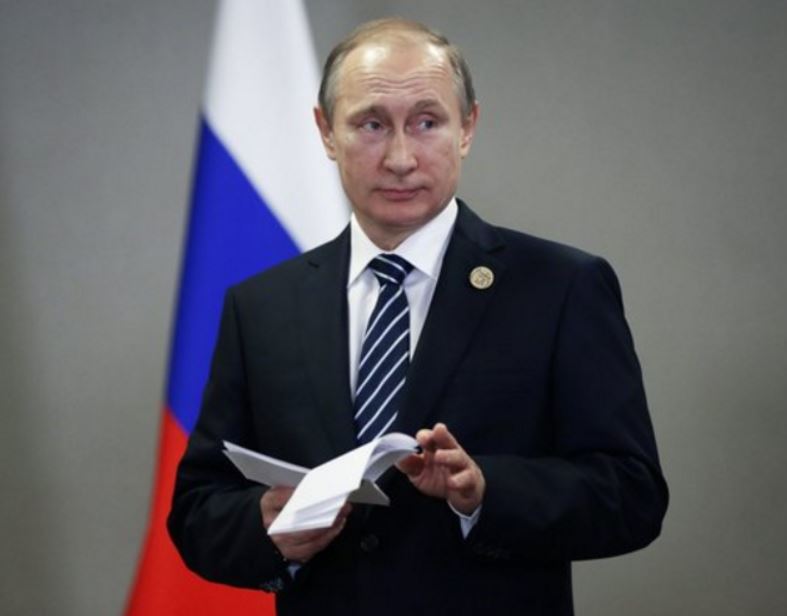
Finnish President Alexander Stubb and Norwegian Prime Minister Jonas Gahr Støre have finally done something that should have been happening throughout this entire war. They picked up the telephone and spoke directly with Vladimir Putin. On October 27, the two leaders initiated a conversation with the Russian president to discuss ending the war in Ukraine and restoring some degree of stability to Europe. What makes this development particularly significant is that Finland and Norway stated explicitly that they were acting as leaders of their own nations, rather than claiming to represent Europe as a whole. Imagine that. Two national leaders recognizing that they have a responsibility to protect their own people rather than waiting for Brussels to tell them whether they are permitted to speak to Moscow.
Stubb described the conversation as “frank and substantive” and acknowledged that Finland and Norway share borders with Russia and will be directly affected by the outcome of this war. He stated that ending the conflict requires direct discussions. That should be obvious to anyone who understands diplomacy. How can Europe possibly negotiate an end to a war when so many of its leaders have refused to speak with one of the principal parties? The European political establishment has spent years announcing sanctions, military aid packages, and increasingly ambitious security commitments. Yet the basic act of maintaining communication with Moscow has become so controversial that a telephone call between heads of state is now treated as a remarkable diplomatic breakthrough.
What makes Stubb’s decision especially interesting is his own record. When he was elected president in February 2024, he declared that Finland would not restore high-level political relations with Russia until the war ended. In February 2025, he delivered a speech in Kyiv in which he argued that Putin could not be trusted and called for continued sanctions, military assistance, and pressure upon Moscow. He has been an outspoken supporter of Ukraine, Finland’s NATO membership, and stronger European security arrangements. This is hardly a politician who has spent the past several years defending the Kremlin. Yet he now recognizes that direct communication is necessary if the war is ever going to end. That change in diplomatic approach deserves attention because it acknowledges the practical limits of trying to isolate a major military power indefinitely.
Norwegian Prime Minister Støre has been more consistent on this particular issue. As far back as October 2022, he warned the Norwegian parliament that the lack of direct communication with Russia was dangerous because it reduced the prospects of a negotiated settlement and increased the risk of further escalation. Norway shares a 198 km land border with Russia, along with a much longer maritime boundary in the Arctic. These countries cannot simply relocate themselves because politicians in Brussels dislike their neighbor. In May 2026, Støre again emphasized that Norway’s relationship with Russia must balance national security with the geographical reality that the two countries will remain neighbors. His government has supported Ukraine and maintained sanctions, but it has also recognized that certain practical contacts with Moscow remain necessary.
This is the fundamental problem with the European Union’s approach to foreign policy. The European Commission is not a sovereign nation. Its president is selected through the EU’s institutional process rather than directly elected by the population of Europe. The Commission nevertheless exercises considerable influence over sanctions, economic policy, and the political positions advanced in Brussels. National governments retain important foreign-policy powers, particularly in security matters, but European leaders have increasingly attempted to present a unified position on Russia. Unity can be useful when countries genuinely share the same interests. It becomes far more complicated when governments are discouraged from pursuing diplomatic contacts necessary to protect their own populations.
Denmark’s Prime Minister Mette Frederiksen immediately criticized the Finnish and Norwegian initiative, complaining that the two countries had acted independently rather than coordinating with the rest of Europe. She questioned what they expected to accomplish and argued that Europe should speak with one voice. Yet Stubb and Støre had consulted Ukraine before making the call and subsequently briefed Zelensky about their conversation. They were not secretly negotiating away Ukrainian territory or abandoning their commitments to Kyiv. They were attempting to communicate directly with Moscow before another round of negotiations. The objection appears to concern the lack of broader European coordination, but surely national leaders should retain the ability to speak with a neighboring government when their own security is at stake.
Finland has a particularly painful history with Russia. The Soviet Union invaded Finland in November 1939, beginning the Winter War, and Finland ultimately surrendered territory while preserving its independence. Stubb himself has discussed how his family lost its ancestral homeland as a consequence of that conflict. Finland subsequently maintained a delicate relationship with Moscow throughout the Cold War, balancing its independence against the realities of Soviet military power. Following Russia’s invasion of Ukraine, Finland abandoned its longstanding military nonalignment and joined NATO in 2023. Its border with Russia stretches approximately 1,340 kilometers.
The October 27 conversation followed a meeting in Oslo on October 20 involving Stubb, Støre, Zelenskyy, and American representatives Steve Witkoff and Jared Kushner. Witkoff subsequently met Putin in St. Petersburg. The diplomatic discussions are now directed toward another round of negotiations involving Russia, Ukraine, and the United States in Abu Dhabi during the first half of November.
Europe’s political leadership should recognize that diplomacy is not an endorsement of another government’s actions. Speaking with an adversary does not require accepting its demands. It is how governments determine whether compromise is possible, communicate warnings, and reduce the risk of catastrophic misunderstandings. During the Cold War, the United States and the Soviet Union maintained diplomatic channels despite possessing the ability to destroy one another. Today, European leaders have sometimes treated the simple act of talking to Putin as though it were a political betrayal.