Close Menu
    Facebook X (Twitter) Instagram
    TRENDING :
    • 28-Year-Old’s Side Hustle Hit $125K in Year 1: More Than Matcha
    • How to Speak Honestly at Work Without Derailing Your Career
    • Silicon Valley Doesn’t Have a Monopoly on Startup Wisdom
    • The EU Will Block Peace Between Russia & Ukraine
    • Laid-Off Marketer’s Apartment-Made Pizzas Sell Out in 30 Seconds
    • 4 Questions That Separate Real Founders From Performers
    • $14 Billion Company Is Giving 7,000 Employees a Day Off to Game
    • Why Consumers Are Paying to Participate, Not Just to Consume
    Compatriot Chronicle
    • Home
    • US Politics
    • World Politics
    • Economy
    • Business
    • Headline News
    Compatriot Chronicle
    Home»Business»The Amazon rainforest, long known as the ‘lungs of our planet,’ now releases more carbon than it absorbs
    Business

    The Amazon rainforest, long known as the ‘lungs of our planet,’ now releases more carbon than it absorbs

    October 29, 20264 Mins Read
    Share Facebook Twitter Pinterest LinkedIn Tumblr Telegram Email Copy Link
    Follow Us
    Google News Flipboard
    Share
    Facebook Twitter LinkedIn Pinterest Email


    The Amazon rainforest has long been called the “lungs of our planet,” because of how it takes in and stores billions of tons of carbon dioxide. 

    But the Amazon has been losing that ability. Years of deforestation, drought, and fires have hindered just how much CO2 the rainforest can absorb. 

    Now, the Amazon rainforest often releases more carbon than it takes in, a new study finds. It’s only in the “wettest years” that the rainforest is nearly carbon neutral.

    The study, published in the journal Nature, was led by Brazil’s National Institute for Space Research and included an international team of researchers. They used 15 years of atmospheric carbon measurements, which had been collected by research planes.

    Those years were then grouped by different characteristics, like the level of human activities—which includes deforestation, logging, or using fires to clear land—and the amount of climate stress—like drought or heat waves. 

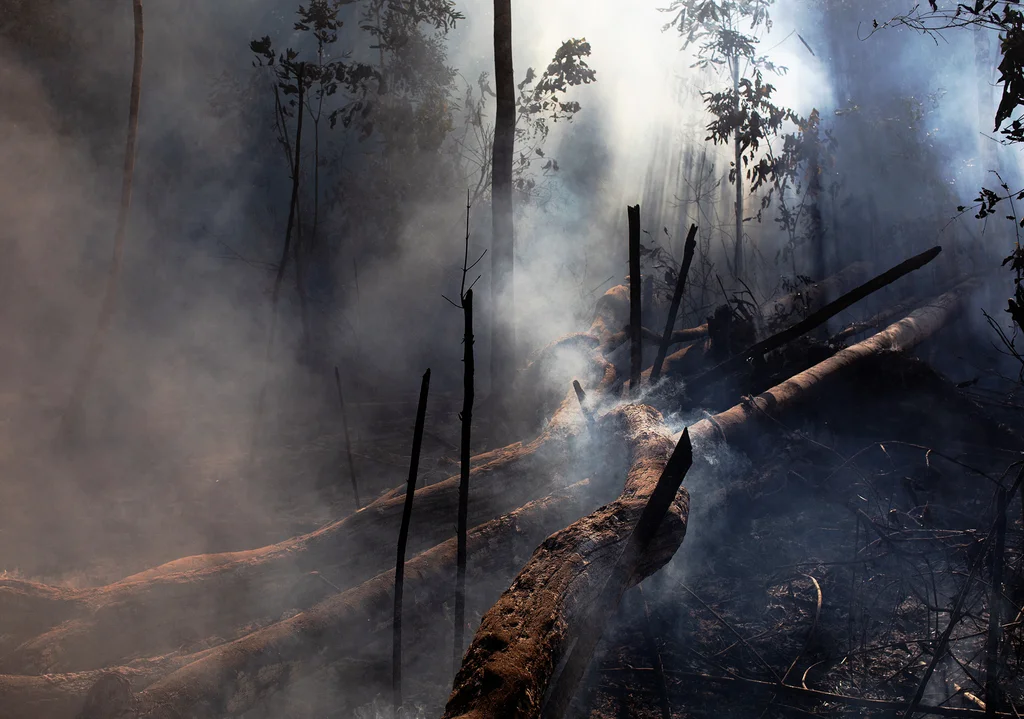
    [Photo: João Laet/AFP/Getty Images]

    What the research found

    Some years were wet with low human activity, some had low climatic stress but high human activity, and others had “intense global climate events, such as El Niño” along with intense amounts of human activity. 

    In the years where the rainforest stayed relatively wet, and where there was relatively low deforestation and few wildfires, the Amazon was nearly carbon neutral. The forest was still a slight source of carbon into the atmosphere, but it “did not significantly contribute to the global carbon balance” in those years, the researchers write.

    When drought or heat were mild but deforestation and wildfires occurred more, the net carbon emissions from the Amazon “jumped dramatically,” according to a statement. 

    The years with lots of climate stress coupled with lots of damaging human activity were the worst. But they were still close to the net emissions from the second group, which led researchers to say that most of the carbon emitted by the Amazon comes from human activities, predominantly land-use change.

    “Global climate and climate-mediated stressors are important modulating factors, but people’s choices about how to use and live on the land surface in this region are key to understanding the movement of carbon between the land and the atmosphere,” says coauthor Jen Johnson, assistant professor of ecology and evolutionary biology at the University of Kansas, in a statement. 

    This isn’t the first paper to point out that the Amazon is not the grand carbon sink it once was. A 2021 study looked at how, as huge areas of the forest are cut down or burned, its ability to capture carbon was shrinking. 

    In 2023, a year of extreme drought and high temperatures, researchers showed how the Amazon became a source of carbon emissions, releasing between 10 and 170 million tons of carbon instead of absorbing it. 
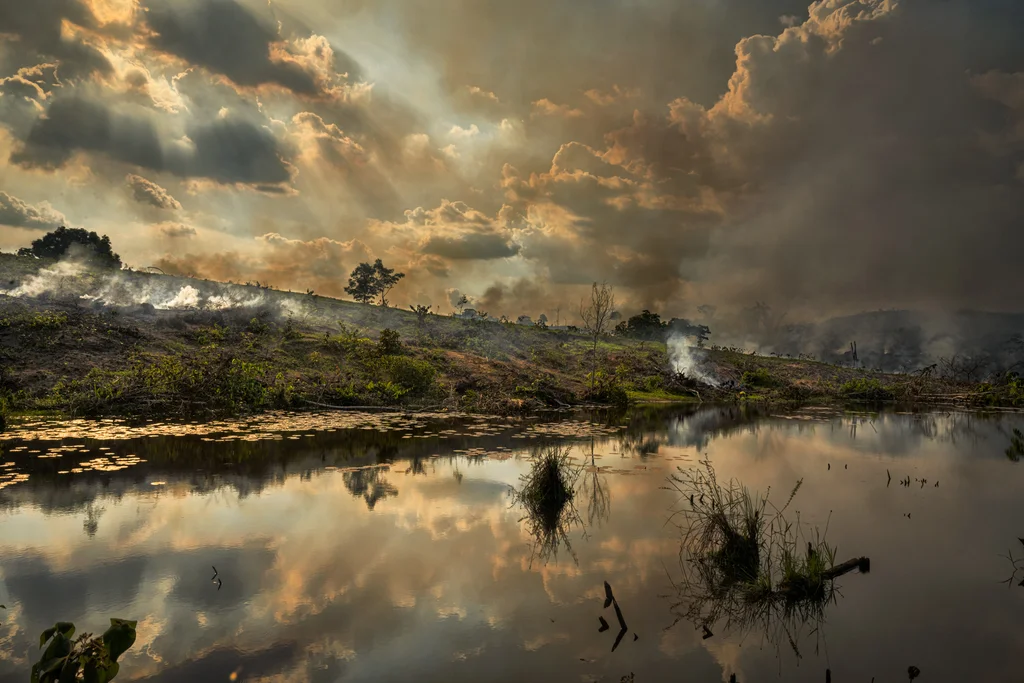
    [Photo: Lynsey Addario/Getty Images]

    Slow burn

    We’ve also long known that human activity is threatening the Amazon’s survival. In 2019, there were more than 74,000 fires burning in Brazil, mostly in the Amazon—80% more than the year before.

    And though we often think of these as “wildfires,” they’re primarily set by ranchers who are clearing land for cattle to meet the demand for beef.  

    The more deforestation, we know, the drier the Amazon becomes, which makes it even more difficult for the remaining parts of the forest to recover. 

    “For many decades, there has been concern about the idea of a tipping point, where gradual drying and gradual loss of the forest could feed back on itself in a self-reinforcing way,” Johnson said.

    “That could create a transition from an ecosystem type that has stored huge amounts of carbon in living vegetation to drier forests or other ecosystem types that do not store nearly as much carbon,” she continued. “The more carbon from the Amazon that moves into the atmosphere and stays there, the more trouble our climate system is in.”

    Though the outlook is dire if these activities continue, the researchers say that policy changes can help. 

    “There’s a clear, policy-relevant prescription that comes from this analysis,” Johnson said. “Measures to bring deforestation down to zero are required to manage net carbon emissions from the Amazon . . . It’s not something that’s out of our control because it’s being driven by global climatic factors—it’s something very much under the control of governments and individuals.”


    Source link

    Share. Facebook Twitter Pinterest LinkedIn Tumblr Email

    Related Posts

    28-Year-Old’s Side Hustle Hit $125K in Year 1: More Than Matcha

    November 12, 2026

    How to Speak Honestly at Work Without Derailing Your Career

    November 12, 2026

    Silicon Valley Doesn’t Have a Monopoly on Startup Wisdom

    November 12, 2026
    Top News

    Apple suppliers Qorvo and Skyworks to merge, creating a $22 billion chip giant

    By Staff WriterOctober 28, 2025

    Apple suppliers Skyworks Solutions and Qorvo will merge in a cash-and-stock deal to create a…

    How They Built a Million-Dollar Franchise Business in 6 Months

    September 4, 2026

    Samsung is heading toward a strike that could impact global chip supplies and smartphones

    May 20, 2026

    What 30 Years of Building Has Taught Me About Leading Through Transformation

    August 6, 2026
    Top Trending

    28-Year-Old’s Side Hustle Hit $125K in Year 1: More Than Matcha

    By Staff WriterNovember 12, 2026

    Key Takeaways Goldwasser leveraged her marketing and consulting experience to build More…

    How to Speak Honestly at Work Without Derailing Your Career

    By Staff WriterNovember 12, 2026

    Key Takeaways There’s such a thing as being too honest in the…

    Silicon Valley Doesn’t Have a Monopoly on Startup Wisdom

    By Staff WriterNovember 12, 2026

    Opinions expressed by Entrepreneur contributors are their own. Key Takeaways Founders in…

    Categories
    • Business
    • Economy
    • Headline News
    • Top News
    • US Politics
    • World Politics
    About us

    The Populist Bulletin serves as a beacon for the populist movement, which champions the interests of ordinary citizens over the agendas of the powerful and entrenched elitists. Rooted in the belief that the voices of everyday workers, families, and communities are often drowned out by powerful people and institutions, it delivers straightforward, unfiltered, compelling, relatable stories that resonate with the values of the American public.

    The Populist Bulletin was founded with a fervent commitment to inform, inspire, empower and spark meaningful conversations about the economy, business, politics, inequality, government accountability and overreach, globalization, and the preservation of American cultural heritage.

    The site offers a dynamic mix of investigative journalism, opinion editorials, and viral content that amplify populist sentiments and deliver stories that echo the concerns of everyday Americans while boldly challenging mainstream narratives that serve the privileged few.

    Top Picks

    28-Year-Old’s Side Hustle Hit $125K in Year 1: More Than Matcha

    November 12, 2026

    How to Speak Honestly at Work Without Derailing Your Career

    November 12, 2026

    Silicon Valley Doesn’t Have a Monopoly on Startup Wisdom

    November 12, 2026
    Categories
    • Business
    • Economy
    • Headline News
    • Top News
    • US Politics
    • World Politics
    Copyright © 2025 Populist Bulletin. All Rights Reserved.

    Type above and press Enter to search. Press Esc to cancel.