
COMMENT: I hear that your birthday was on the 1st, so let me wish you a happy belated birthday.
I understand your belief that your work may never receive the recognition it deserves during your lifetime. It seems increasingly apparent that powerful interests operating behind the scenes in finance and politics are deeply threatened by your analysis. Whether bankers, neocons, or politicians influenced by Marxist and Keynesian economic theories, your work challenges the established narratives upon which they depend to influence public opinion and policy.
I read the explanation on MSN, and the stark contrast between your analysis and the narratives promoted by the mainstream media is becoming more obvious by the hour. The difference is not merely one of opinion, but of how economic and political events are understood, interpreted, and presented to the public.
“The U.S. economy is accelerating, gathering enough momentum from the artificial intelligence boom and robust consumer spending to crash through wars, volatile markets and trade disruptions. Indeed, no major advanced economy has been growing like the U.S.”
There is absolutely no mention of the global economy or international capital flows, which are essential to understanding how the world economy actually functions.
I recall that you were invited to consult with the People’s Bank of China, and you remarked how impressed you were that the people you met had actual trading experience rather than merely academic credentials. You have also explained that your computer models project China will emerge as the financial capital of the world after 2032, reflecting a fundamental shift in global capital flows and economic power.
Interestingly, I asked DeepSeek whether PBOC employed the capital flow analysis that you pioneered. Its response suggested that it had incorporated your approach. That is a remarkable acknowledgment of the importance of your work, particularly when Western economic institutions continue to overlook the international movement of capital.
“Yes, the People’s Bank of China (PBOC) does use capital flow analysis, but it is more accurate to describe its work as conducting cross-border capital flow monitoring, analysis, and risk prevention, rather than using “capital flow analysis” as a singular, fixed technical term. The PBOC and the State Administration of Foreign Exchange (SAFE) have established a systematic monitoring and analysis mechanism for this purpose.“
You have been far more influential than you may realize—or are willing to acknowledge publicly. I can see that the powerful interests seeking to suppress your analysis are themselves part of the very cycle you have identified. Their resistance to ideas that challenge established institutions is not merely an obstacle to understanding; it is symptomatic of the broader decline and fall of the West.
I spent my career in a field I once assumed was enlightened and devoted to the pursuit of knowledge. You fundamentally changed my understanding of that world. I came to realize that academia is not simply populated by specialists who fail to recognize the connections between disciplines. It is an institutional system in which specialization is rewarded, while interdisciplinary thinking is often praised in principle but penalized in practice. Those who challenge conventional boundaries frequently encounter resistance precisely because their insights threaten established intellectual authority.
What you have demonstrated is far more important than you seem willing to take credit for. You have shown that history, economics, politics, and human behavior cannot be understood in isolation. Their interconnectedness is essential to understanding the forces shaping civilization. In doing so, you are not merely offering a different approach to economic analysis; you are illuminating a path toward the future of education itself.
I know you believe you are entering the twilight of your life. Yet what you have accomplished is to shine a brilliant light on the limitations of what we presume to know. You have challenged the arrogance of institutional certainty and demonstrated how much remains invisible when we mistake specialized knowledge for genuine understanding.
Your greatest contribution may ultimately extend far beyond forecasting markets or identifying historical cycles. It may be that you have helped redefine how future generations learn to understand the world.
Happy Birthday
UT
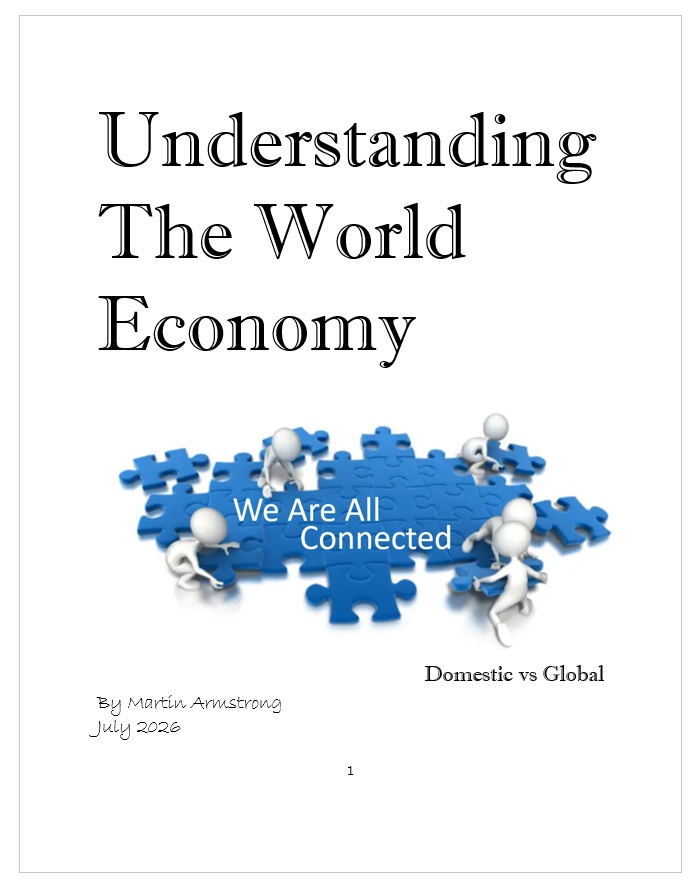
REPLY: Thank you very much for the words of encouragement. I do believe we are all connected. I tried to pass on much of what I have learned in the Understanding the World Economy. What you say is correct. In Economics class I was taught everything is random so the government can manipulate society and across the hall in Physics class they said God does not play dice with the universe. I came to the conclusion someone was not telling the truth. That never sat well with me.
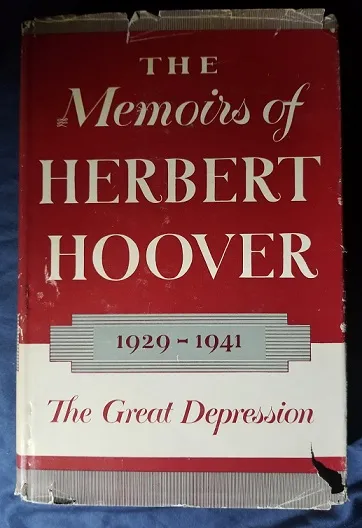
I then coming across Herbert Hoover’s memoirs, which was disregarded because they wanted to blame him for everything, exposed all the lies about what I was being taught. But it was my clients who opened my eyes. Because I was the first to forecast currency at the start of FX markets after 1971, I was being dragged in around the world and that made me see the world through everyone’s eyes denominated in their currency.
There has always been the question of “accident vs. theory-first.” I believe it is not wise to begin with a theory and then try to prove it for you then may even subconsciously cherry-pick data to prove your point. Carrots are lethal because every person who has ever eaten a carrot has died. True statement, but we all die eventually.
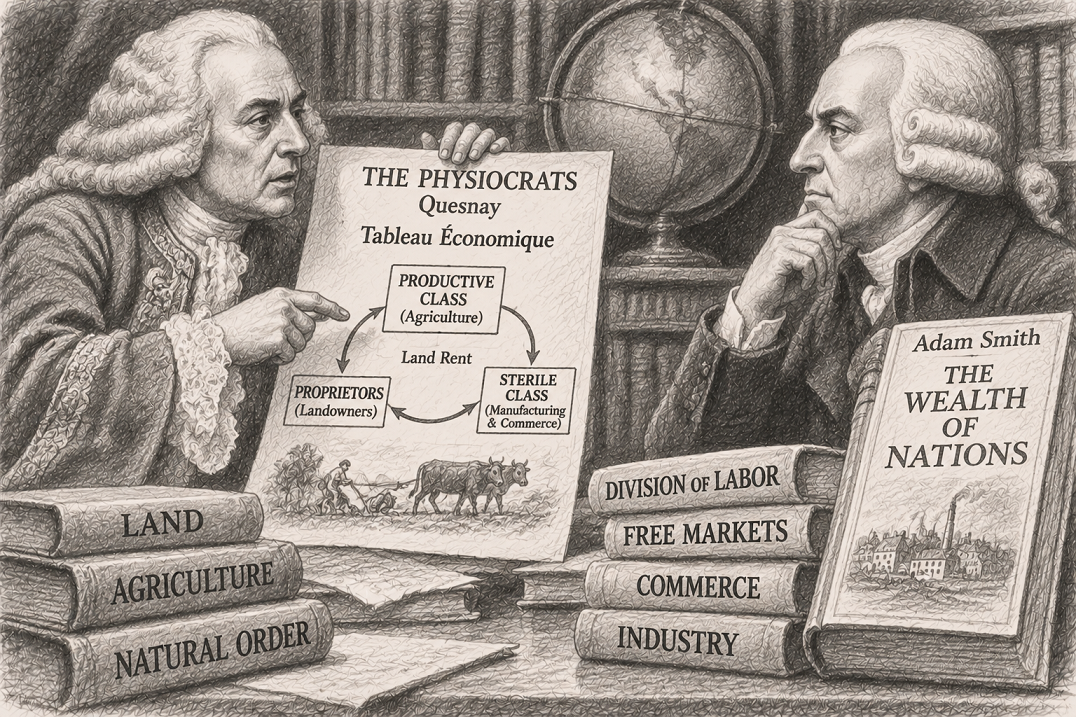
Adam Smith did not begin with his Invisible Hand. That came from observation. He was arguing against the François Quesnay of the French Physiocrats who saw agriculture as the majority of the economy and thus held that only agriculture was the wealth of a nation. They made the same mistake as Thomas Malthus who assumed over population would be the death of society failing to also understand that technology improved food production. Smith uncovered something he did not anticipate and that is the way research is actually conducted.
The theory of supply and demand also came from a trader John Law again from observation. Some of the greatest discoveries came from accidents like Penicillin, X-rays, Microwave, Vulcanized rubber, and even the structure of DNA was partly luck when Watson and Crick saw Franklin’s Photo 51.

It was my clients around the world who opened my eyes to a fundamental truth: everyone acts according to their own self-interest, and that self-interest is measured through the purchasing power and perspective of their own currency. This realization became the foundation of my understanding of international capital flows.
I have had a front-row seat to the transformation of the global monetary system since the collapse of the Bretton Woods gold standard. As one of the early international hedge fund managers in the ’80s, I witnessed firsthand how capital moved across borders, shifting between currencies, markets, and nations in response to changing economic and political conditions. This was not something I learned from academic textbooks. It was something I observed directly in the markets through the experiences of clients operating around the world.
Yes, China invited me to consult with its central bank. What impressed me was that the Chinese had sent people to work on trading desks at major financial institutions around the world. They gained practical experience in how international markets actually functioned before returning to China to assume positions within its central banking system.
That is precisely why they understood and appreciated my Capital Flow Analysis. They approached economics from the perspective of actual market experience rather than abstract academic theory. They had witnessed the movement of capital firsthand and understood that international capital flows could overwhelm domestic monetary policy.
This stood in sharp contrast to the central banks of the West, where academic economists largely dominated monetary policy and tended to view the economy through domestic models, often overlooking the international movement of capital. This is what they and the media are doing again right now.
The fundamental difference was experience versus theory. China recognized that understanding the world economy requires understanding how capital moves internationally, why confidence shifts between nations, and how individuals make decisions based on their own self-interest and the currency in which they measure their wealth and pay taxes. That is the foundation of Capital Flow Analysis.