
Iranian businesses have reported an astonishing $34 BILLION in economic losses from forced closures and disruptions during the year ending March 2026. According to the Iran Chamber of Commerce, businesses lost approximately 22% of their potential operating time, with 61 days of compulsory closures and another 190 days disrupted by electricity shortages, gas shortages, internet shutdowns, civil unrest, and war. Think about that. A country sitting on some of the largest energy reserves in the world cannot even provide its own industries with reliable electricity. The government is so consumed with maintaining political control and confronting foreign enemies that the productive economy is being strangled. Iran’s leadership can boast about military strength all it likes, but an economy cannot survive when businesses are repeatedly ordered to shut their doors.
The economic figures are becoming catastrophic. Industrial producer prices rose 147.3% year-over-year during the summer of 2026, according to figures attributed to Iran’s Statistical Center. Mining producer prices increased 107.7%, while electricity prices surged 111.2%. The four-quarter average industrial producer inflation rate reached 97.3%. These are the prices businesses must confront before their products ever reach consumers. When the cost of production more than doubles, manufacturers have few options. They can raise prices, reduce output, dismiss workers, or close entirely. The government can manipulate statistics and attempt to control prices, but it cannot force a business to operate indefinitely at a loss. This is how inflation destroys an economy from within.
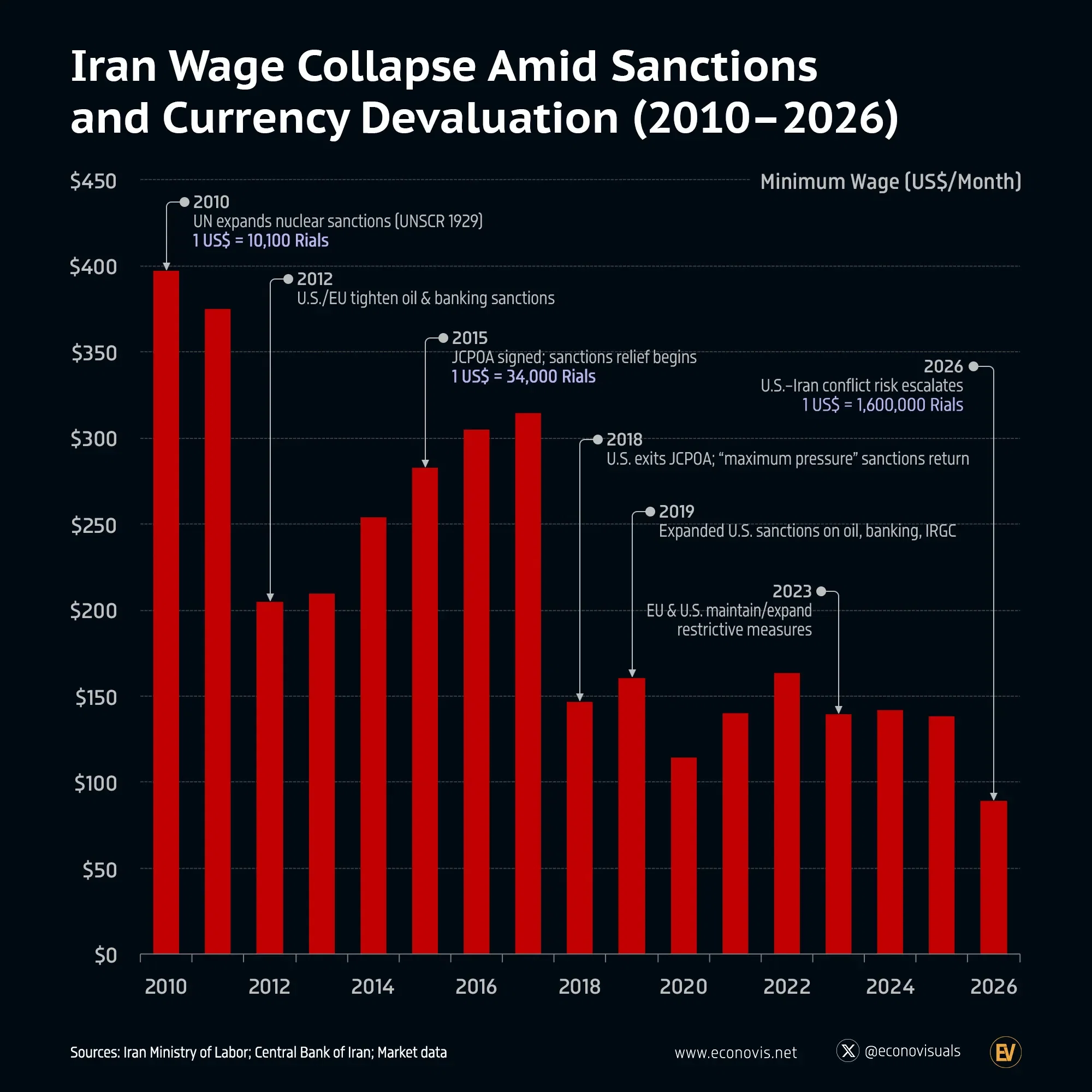
I have explained countless times that inflation is the destruction of purchasing power, and governments are primarily responsible for creating the conditions that allow it to accelerate. Iran has been dealing with chronic currency depreciation, sanctions, excessive government intervention, and a collapse in confidence. War has made these problems considerably worse, but they did not begin with the latest military confrontation. The Iranian rial has suffered repeated devaluations as people seek to protect whatever savings they have left. When confidence in a currency disappears, people rush to exchange it for anything they believe will retain value. Gold, foreign currencies, property, and tangible goods become preferable to holding money that is losing purchasing power. Governments call this speculation, but it is simply the public attempting to survive.
The destruction is spreading through the labor market. Reports indicate that approximately 450,000 jobs disappeared in spring 2026 compared with the previous year, including more than 600,000 industrial positions. The unemployment rate rose from 7.3% to 9.1%, while labor-force participation declined. GDP reportedly contracted 10.1% year-over-year during the spring, and fixed capital formation fell 8.4%. These figures reveal something far more serious than a temporary interruption caused by war. Businesses are losing employees, production is declining, and investment in future capacity is disappearing. Once investment collapses, the economy loses its ability to recover. Factories cannot modernize, machinery cannot be replaced, and companies cannot expand when they have no confidence that they will be permitted to operate tomorrow.
Nearly 92% of industrial bank lending during the first three months of the Iranian year reportedly went toward working capital rather than expansion. That is an alarming indication of how desperate the situation has become. Businesses are borrowing simply to survive their existing operations. They are not investing in new factories or expanding production. They are struggling to pay suppliers, purchase materials, and keep employees on the payroll. Around 1,400 war-damaged businesses were reportedly awaiting reconstruction loans. What good is a loan to rebuild a factory if the government cannot guarantee electricity, natural gas, transportation, or access to markets? You cannot rebuild an economy through lending alone when the fundamental conditions required for production have been destroyed.
The sanctions imposed by the West have compounded Iran’s economic problems, particularly by restricting access to international banking, investment, and technology. Yet sanctions alone cannot explain the scale of domestic mismanagement. A government must still provide the basic infrastructure required for its economy to function. The war has added destruction and uncertainty to an already weakened system, while military expenditures compete with desperately needed civilian investment. Both sides of this confrontation should understand that economic warfare does not merely punish political leaders. It destroys businesses, employment, and the savings of ordinary people who have little influence over the decisions being made in Tehran or Washington.
People can endure hardship for a period, but there is a limit to how long a government can demand sacrifice while providing no credible prospect of improvement. Inflation destroys savings, unemployment destroys household income, and shortages undermine daily life. Civil unrest becomes increasingly likely when people conclude that the political system is incapable of correcting the economic crisis. I have warned that civil unrest rises as confidence in government deteriorates. Iran is demonstrating how economic deterioration can feed political instability, particularly when the authorities respond to public frustration with further restrictions.
The Iranian government cannot bomb, censor, or regulate its way out of this crisis. It needs functioning infrastructure, productive investment, stable commercial conditions, and confidence that businesses will be permitted to operate without constant interruption. The $34 billion estimate is especially revealing because it reflects losses from a combination of disruptions, not merely direct damage from war. Even if the fighting stopped tomorrow, the underlying economic problems would remain. Repairing a damaged power station is one thing. Restoring confidence after years of currency depreciation, political uncertainty, and economic mismanagement is an entirely different undertaking.
Iran is entering an extremely dangerous period in which the deterioration of the economy threatens to become a crisis of political legitimacy. Its leadership continues speaking about geopolitical victories while the businesses responsible for supporting the country are being driven toward bankruptcy. Industrial prices are exploding, investment is contracting, and workers are losing their livelihoods. The government may control the military and the security apparatus, but it cannot command capital to invest or force consumers to trust a currency. When confidence disappears, no amount of political propaganda can restore it. Iran’s greatest threat may ultimately come from the economic destruction taking place within its own borders.