
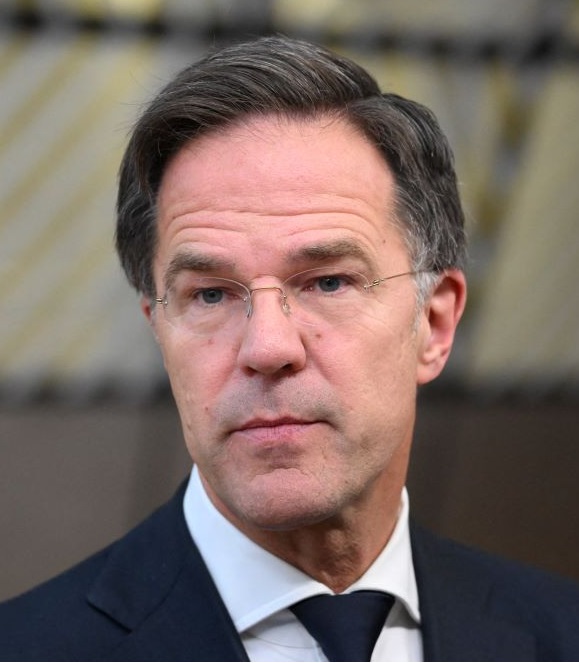
NATO Secretary General Mark Rutte has apparently lost all sense of reality. He is now lecturing Portugal and Spain about their attitudes toward the war in Ukraine, as though these countries have unlimited funds to finance a conflict involving a nation that is not even a NATO member. Portugal is struggling with housing affordability, public healthcare, education, and the rising cost of living. Yet Rutte believes these governments should be thinking about how quickly Russian missiles could reach Lisbon rather than the economic problems confronting their own citizens. This is the mentality of the unelected bureaucrats running NATO. They have become so obsessed with Russia that they seem to regard the domestic needs of European taxpayers as an inconvenience.
Rutte claimed during an interview with Dutch television that he sometimes hears Portuguese and Spanish officials dismiss the war in Ukraine as distant, something that primarily concerns Poland and the countries bordering Russia. He responded by warning that modern Russian missiles would take only five minutes longer to reach Lisbon than Warsaw. What an extraordinary statement from the head of a military alliance that is supposed to provide security and prevent war. Instead of explaining how NATO intends to reduce the danger of a direct confrontation with Russia, Rutte is using the possibility of missile strikes against Portugal to frighten its population into accepting his geopolitical priorities. Apparently, the answer to every problem in Europe is to spend more money on the military and keep financing Ukraine.
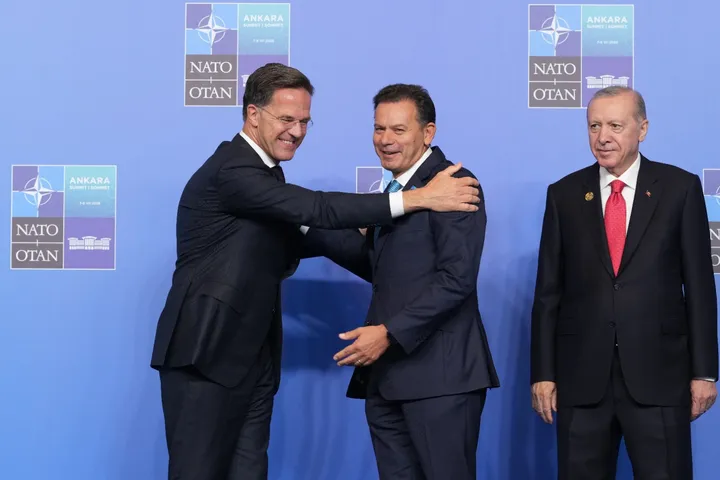
Portuguese Prime Minister Luís Montenegro was furious. He described Rutte’s comments as “unfortunate” and “completely out of touch with reality,” adding that the NATO secretary general had demonstrated ignorance of a situation he should understand. Portugal’s Foreign Ministry also criticized the carelessness of his remarks. Montenegro pointed to Eurobarometer figures showing that 92% of Portuguese respondents consider Russia’s invasion of Ukraine a threat to European Union security, compared with an EU average of 76%.
Portugal has provided hundreds of millions of euros in direct assistance since the war began in 2022. The Kiel Institute’s Ukraine Support Tracker puts its bilateral military, financial, and humanitarian allocations at approximately €385 million through August 2026. A broader estimate that includes Portugal’s share of European Union assistance and the cost of hosting Ukrainian refugees places its contribution at approximately €1.3 billion. These figures measure different forms of assistance and should not be confused, but they demonstrate that Portugal has made a substantial commitment relative to its economic size. Portugal is not Germany, France, or the United States. It is a nation of roughly 10.7 million people with its own fiscal constraints and enormous domestic demands.
Where does Rutte imagine this money comes from? Portugal has young people who cannot afford housing in the cities where they work. Families are struggling with rents and living expenses, while public hospitals and schools face persistent demands for additional resources. The government must finance pensions, healthcare, education, infrastructure, and the ordinary responsibilities of running a country. Yet European leaders are being pressured to allocate ever greater sums toward military expenditure while continuing to support Ukraine. The politicians discuss percentages of GDP as though they are moving numbers around on a computer screen. Those percentages represent real resources extracted from the productive economy.
NATO’s own figures reveal how far these commitments have expanded. At the 2024 Washington summit, allies agreed to a baseline of €40 billion in annual security assistance for Ukraine. At the 2026 Ankara summit, they pledged €70 billion in military equipment, assistance, and training for 2026, with a commitment to sustain at least an equivalent level in 2027. Ukraine is not a NATO member and does not enjoy the collective-defense protection of Article 5. NATO members have nevertheless made enormous commitments to its defense. There is a legitimate debate about the strategic value of that support, but there must also be a limit to what governments can promise without considering their own financial condition.
Rutte seems to believe that every European nation should organize its finances around the possibility of a future war with Russia. That is an extraordinarily dangerous way to govern. Military preparedness is a legitimate responsibility of NATO members, but there is a fundamental difference between defending one’s own territory and financing a prolonged foreign conflict. Portugal has every right to decide how much assistance it can afford while meeting its obligations to its own citizens. Membership in NATO does not eliminate the responsibility of elected governments to balance national security with the economic welfare of the people they represent.
The irony is that Rutte spent years as prime minister of the Netherlands before becoming NATO secretary general. He knows perfectly well that governments face competing demands for limited resources. Yet from Brussels, he now lectures other countries about the urgency of spending more on defense. It is always easier to demand expenditures when someone else is responsible for collecting the taxes and explaining the cuts.
Europe is increasingly organizing its economy around the expectation of prolonged confrontation with Russia. That affects energy policy, industrial investment, government budgets, and international capital flows. Resources that could support productive infrastructure and private investment are redirected toward military procurement. Some defense spending strengthens domestic industry, but it does not automatically generate the same economic benefits as investments chosen for their productive return. A continent already suffering from declining competitiveness cannot assume that permanent military expansion will solve its economic problems.
Portugal’s prime minister was correct to challenge Rutte’s characterization of his country. The Portuguese people have already demonstrated considerable support for Ukraine, and their government has contributed financially and militarily despite domestic pressures. That does not give NATO’s secretary general the right to demand unlimited sacrifices. The alliance exists to protect its members, and its leadership should be concerned with preserving peace rather than frightening populations with hypothetical missile attacks.
This is the arrogance of a political class that has forgotten whom governments are supposed to serve. National defense is essential, but bankrupting member states in the name of security ultimately weakens the very alliance Rutte is supposed to lead. Portugal has supported Ukraine, recognized the threat of war, and remained committed to NATO. Its people should not be treated as insufficiently loyal because they also expect their government to finance hospitals, schools, and housing. Europe cannot preserve its security by sacrificing its economic foundation, and no amount of fearmongering from Brussels will change that reality.