Close Menu
    Facebook X (Twitter) Instagram
    TRENDING :
    • This tiny government division charged with AI safety is now reporting to the White House. Experts are concerned
    • The U.N.’s climate talks are tackling this major hurdle to renewable energy
    • Warren Buffett says really successful people say no to almost everything. Most leaders miss the point of his famous quote
    • A major Venmo update could change how you pay for dinner with friends
    • How Mastercard’s Michael Miebach learned to love collaboration
    • These Soviet anti-drinking PSAs show a different side of Russian propaganda
    • How the New Urbanism took on sprawl and won
    • Russia Slashes Military Recruitment Bonuses
    Compatriot Chronicle
    • Home
    • US Politics
    • World Politics
    • Economy
    • Business
    • Headline News
    Compatriot Chronicle
    Home»Business»A Harvard economist calculated exactly how much the Iran war will cost U.S. taxpayers—and it’s staggering
    Business

    A Harvard economist calculated exactly how much the Iran war will cost U.S. taxpayers—and it’s staggering

    April 14, 20263 Mins Read
    Share Facebook Twitter Pinterest LinkedIn Tumblr Telegram Email Copy Link
    Follow Us
    Google News Flipboard
    Share
    Facebook Twitter LinkedIn Pinterest Email

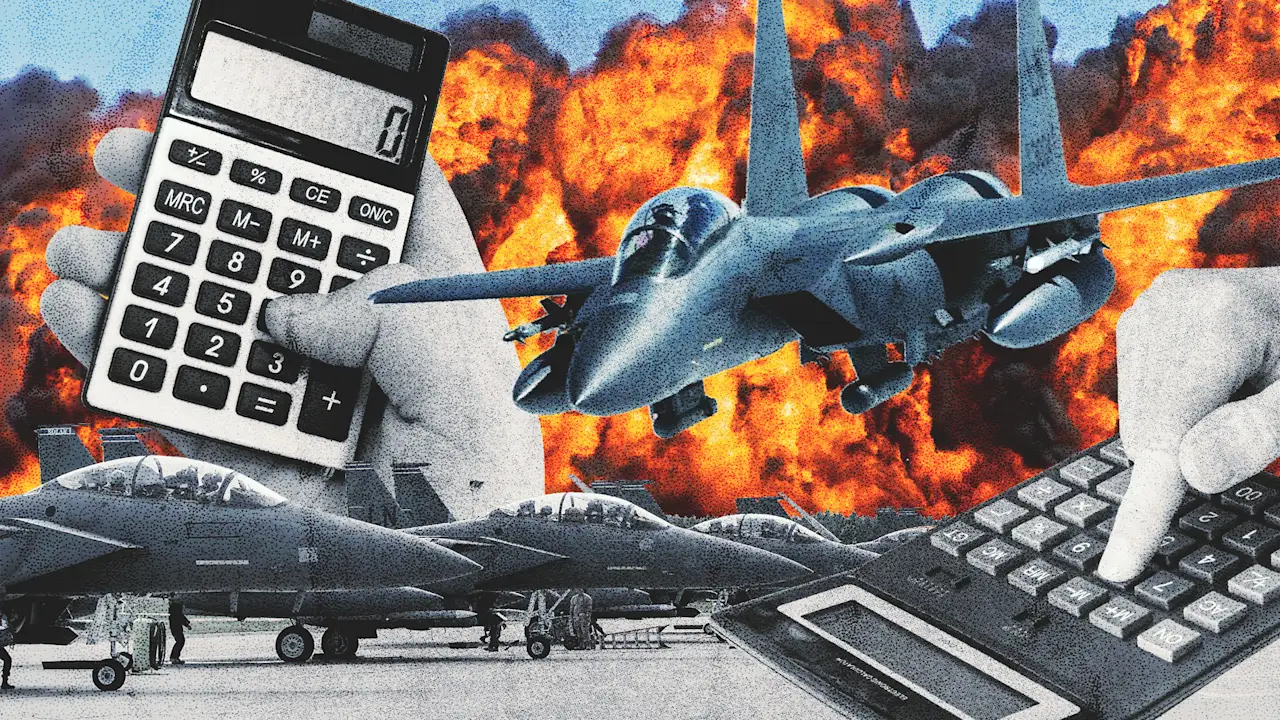
    While wars always come with an added cost to taxpayers, a public policy expert is saying the Trump administration’s military efforts in Iran, which include attacking infrastructure and a blockade of the Strait of Hormuz, could drag on and come with tremendous costs to the American people—and long term, the projections are alarming.

    That’s according to Linda Bilmes, a senior lecturer in Public Policy and public finance expert at Harvard’s Kennedy School. She says that the war is already costing about $2 billion a day, but that’s only “the tip of the iceberg.”

    In a recent interview, Bilmes said that while the Pentagon said the war cost around $11.3 billion in the first few days of the war alone, that’s an “underestimate,” and the true cost is much higher.

    “According to my calculations, those first few days cost at least $16 billion,” Bilmes explained. “We are spending down munitions at an extraordinarily fast pace—to put it in perspective, we fired more Patriot missiles in the first four days of the Iran war than we have given to Ukraine over the past four years,” she said.
    The researcher asserted that short-term costs are adding up quickly, as “we are losing high-cost assets,” but it’s the long-term costs that are most troubling. For starters, Bilmes said it’s important not to overlook the cost of human life, which is already being lost. Thousands of Iranians, including at least 1,700 civilians, have already lost their lives to the war. Hundreds of U.S. soldiers have been injured with at least 13 dead. Financially speaking, the cost of medical and disability care for veterans will be substantial. So will be the increase in the defense budget, which Bilmes explained could become permanent.

    “The president is proposing roughly a 50% increase in the defense budget,” Bilmes explained. “If enacted in full, that would push defense spending to levels about 20% higher than the peak reached during World War II. This raises the baseline. Even if Congress does not agree to approve the full increase, it is highly likely that at least $100 billion per year will be added to the base defense budget that would not have been approved in the absence of this war.”

    Bilmes says those costs add up to at least $100 billion per year. “I am certain we will reach $1 trillion for the Iran war,” Bilmes explained.

    While the projections are no doubt troubling, Americans are already paying for the war. Gas prices recently saw the largest jump in about 60 years, which means that air travel costs are also up. And on Tuesday, the International Monetary Fund (IMF) warned that if the conflict continues to escalate, we could face a global recession.

    As the costs of the war are adding up quickly, Bilmes is urging that the financial impacts, which so far have been underestimated, will spread far and wide. “There are many dangers, but they are not all military threats,” Bilmes says.


    Source link

    Share. Facebook Twitter Pinterest LinkedIn Tumblr Email

    Related Posts

    This tiny government division charged with AI safety is now reporting to the White House. Experts are concerned

    November 9, 2026

    The U.N.’s climate talks are tackling this major hurdle to renewable energy

    November 9, 2026

    Warren Buffett says really successful people say no to almost everything. Most leaders miss the point of his famous quote

    November 9, 2026
    Top News

    You can put a data center at your house—but who really pays?

    By Staff WriterMay 10, 2026

    Nvidia has put its name behind a fledgling effort to put mini-data centers beside people’s…

    Fed’s favored inflation gauge climbs slightly in August

    September 26, 2025

    e.l.f. Beauty CEO Tarang Amin: What helping run my father’s motel taught me about risk

    June 10, 2026

    Marco Rubio Sends a Stern Message After Destruction of Drug Cartel Vessel: ‘Those Days Are Over’ (VIDEO) | The Gateway Pundit

    September 4, 2025
    Top Trending

    This tiny government division charged with AI safety is now reporting to the White House. Experts are concerned

    By Staff WriterNovember 9, 2026

    With public anxiety growing over mounting reports about out-of-control artificial intelligence agents,…

    The U.N.’s climate talks are tackling this major hurdle to renewable energy

    By Staff WriterNovember 9, 2026

    Outdated power grids are a major hurdle in the transition to renewable…

    Warren Buffett says really successful people say no to almost everything. Most leaders miss the point of his famous quote

    By Staff WriterNovember 9, 2026

    Most leaders are pretty good at adding things. There’s always room for…

    Categories
    • Business
    • Economy
    • Headline News
    • Top News
    • US Politics
    • World Politics
    About us

    The Populist Bulletin serves as a beacon for the populist movement, which champions the interests of ordinary citizens over the agendas of the powerful and entrenched elitists. Rooted in the belief that the voices of everyday workers, families, and communities are often drowned out by powerful people and institutions, it delivers straightforward, unfiltered, compelling, relatable stories that resonate with the values of the American public.

    The Populist Bulletin was founded with a fervent commitment to inform, inspire, empower and spark meaningful conversations about the economy, business, politics, inequality, government accountability and overreach, globalization, and the preservation of American cultural heritage.

    The site offers a dynamic mix of investigative journalism, opinion editorials, and viral content that amplify populist sentiments and deliver stories that echo the concerns of everyday Americans while boldly challenging mainstream narratives that serve the privileged few.

    Top Picks

    This tiny government division charged with AI safety is now reporting to the White House. Experts are concerned

    November 9, 2026

    The U.N.’s climate talks are tackling this major hurdle to renewable energy

    November 9, 2026

    Warren Buffett says really successful people say no to almost everything. Most leaders miss the point of his famous quote

    November 9, 2026
    Categories
    • Business
    • Economy
    • Headline News
    • Top News
    • US Politics
    • World Politics
    Copyright © 2025 Populist Bulletin. All Rights Reserved.

    Type above and press Enter to search. Press Esc to cancel.