
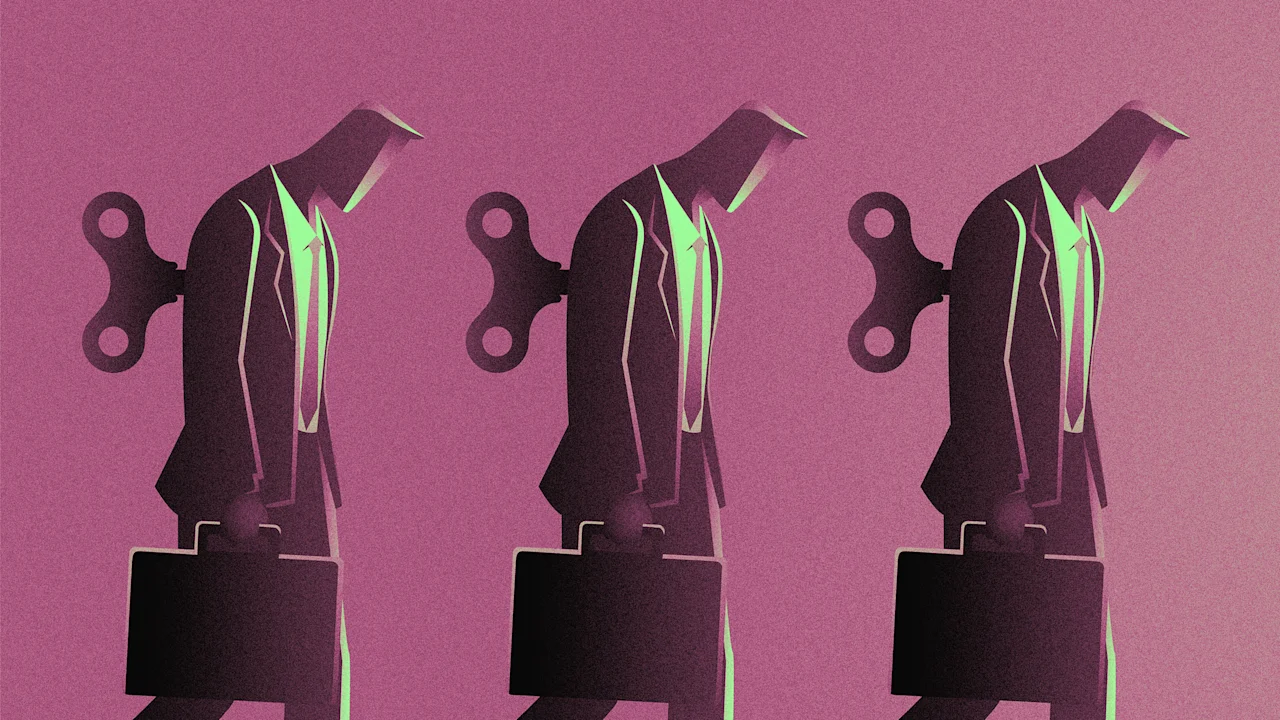
Over the past year, a quiet shift has been unfolding across the internet. A growing wave of AI-generated news and content sites has flooded search results. Many of them are technically accurate, cleanly written, and structurally sound, yet they feel strangely interchangeable. A recent analysis by NewsGuard identified more than 1,000 AI-driven content farms producing articles at scale, often without original reporting, perspective, or voice. The information is there. But something essential is missing. It is not accuracy or clarity; it is a point of view. That absence points to a deeper question: If everyone is using the same models, trained on the same data, to generate ideas, what happens to originality? We’re not losing information; we are losing distinction.
The Rise of the “Average Answer”
AI systems are exceptional at recognizing patterns. That’s precisely what makes them useful and also what limits them because they don’t originate from lived experience. They generate from aggregated experience, drawing on what has already been said, written, and validated. In doing so, they naturally gravitate toward the statistically probable, the structurally familiar, and as a result, the “safe middle.”
Research from Stanford University has shown that large language models tend to produce responses that cluster around normative patterns, even when prompted for novelty. Similarly, studies published in Science suggest that while AI can improve productivity, it can also lead to idea convergence within groups, reducing variance in thinking. So, this is the paradox: AI expands access to ideas, but it also narrows their range. It doesn’t just scale intelligence; it scales the average.
Culture Is Built on Friction, Not Efficiency
Culture has never been built on averages. It evolves through tension—through contradiction, collision, and the friction between different ways of seeing the world. Sociologist Richard Florida has long argued that innovation thrives in environments where diverse perspectives intersect. Likewise, research on “creative abrasion” by Linda Hill shows that breakthrough ideas emerge when differences are not smoothed out but actively engaged with.
The most meaningful breakthroughs don’t come from optimizing what already works. They emerge when seemingly unrelated ideas meet, like design and technology, storytelling and data, and art and strategy. What makes those moments powerful is not efficiency. Its integration and integration is inherently human.
The Subtle Drift Toward Sameness
The real risk with AI is not that it replaces creativity. It’s that it compresses it into predictable forms. You can already see it happening. Writing across platforms is beginning to sound more uniform—technically polished, structurally clean, and increasingly interchangeable. Brand voices are converging. Strategic thinking is starting to mirror the same frameworks and language patterns. An analysis in Science Advances found that AI-assisted outputs often improve clarity and correctness, but reduce linguistic diversity and stylistic variation. The output improves, but the texture fades, and texture is where meaning lives.
Over time, this creates a deeper consequence: cultural atrophy. When leaders begin outsourcing not just execution, but thinking itself, something subtle begins to erode. The internal struggle that sharpens ideas—the wrestling with ambiguity, the discomfort of not knowing, the slow formation of insight—starts to disappear.
Cognitive science suggests that effortful thinking is essential for original insight. Psychologist Daniel Kahneman described this as the difference between fast and slow thinking. When we default too quickly to automated answers, we bypass the deeper processing required for novel ideas. Without friction, originality weakens, and without originality, leadership becomes derivative. This is not just a creative concern, it’s a critically strategic one. The future will not be shaped by those who generate the most ideas, but by those who can make meaning from them—who can connect across domains, hold contradictions without rushing to resolve them, and see patterns others miss.
The Counterbalance: Multidimensional Thinking
In my work as a workplace strategist and leadership advisor, I have seen that the most impactful leaders don’t rely on a single mode of thinking. They move fluidly between perspectives. I describe this as multidimensional thinking—the ability to integrate across differences rather than default to a single lens. This idea is supported by research from David Epstein, who found that individuals with broader experiences and the ability to connect across domains consistently outperform narrow specialists in complex environments.
Multidimensional thinkers reframe problems before they rush to solve them, and that’s becoming a critical counterbalance to AI because while AI expands access to information, it does not expand perspective. It reflects what exists, but it does not originate from within, and that distinction is where human advantage now lives. That remains our role in the partnership.
Designing for Originality in an AI World
If originality is going to survive—and more importantly, matter—we need to become more intentional about how we think. That begins by interrupting the default patterns AI reinforces. The most obvious answer is often the most widely available. Moving beyond it requires deliberate awareness and choice.
It also requires reintroducing friction. Original ideas rarely emerge from ease. They come from sitting with what doesn’t resolve quickly, from staying in questions longer than is comfortable, from resisting the urge to outsource the messy middle of thinking.
Research on creativity from Harvard Business School shows that incubation time—periods of unresolved thinking—significantly improves the originality of solutions. And perhaps most importantly, it requires integration—pulling from unexpected places: different disciplines, lived experiences, creative practices, and human insight. AI can support this process. It can expand possibilities, surface options, and accelerate execution, but it should not replace the part of us that decides what matters.
The real opportunity is not to use AI more, it’s to use it differently. Not as a substitute for thinking, but as a partner in it. Not as the source of ideas, but as a tool to pressure-test, refine, and extend them, because in a world where outputs are increasingly similar, the advantage shifts. From intelligence to perspective, from speed to discernment, and from generation to integration. If AI gives everyone access to the same starting point, then what differentiates us is no longer what we know. It’s how we see, and that is something no model can standardize.