

Foreclosure filings across the United States have now climbed to their highest level in six years, with ATTOM reporting a 26% year-over-year increase as more homeowners fall behind on mortgage payments. Florida and Texas are leading the nation as rising property taxes, exploding insurance premiums, elevated interest rates, and mounting consumer debt place enormous strain on household finances.
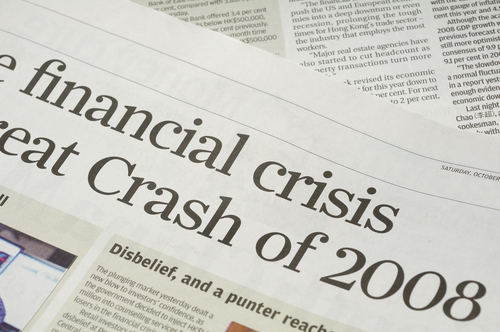
Naturally, many people immediately compare this situation to 2008, but I have said repeatedly that this is not the same type of housing crisis that unfolded during the Great Recession. The pressures today are real, but the structure underneath the market is fundamentally different.
Back in 2008, the problem centered on reckless leverage and toxic lending practices. Banks issued enormous quantities of adjustable-rate mortgages, no-income verification loans, interest-only products, and outright fraudulent mortgage structures to borrowers who never realistically had the capacity to repay long-term. Wall Street then packaged those loans into complex securities spread throughout the global financial system. Housing became the center of a massive debt pyramid built on artificial liquidity and speculation.
When interest rates reset higher and home prices stopped rising, the system collapsed violently because leverage existed everywhere simultaneously.
Entire neighborhoods became ghost towns. Foreclosure signs covered suburban streets. Construction halted. Banks failed. Millions lost their homes because borrowers had little equity, and many mortgages were structurally unsustainable from the beginning.
Today’s situation is different in several critical ways. Most homeowners locked in historically low fixed mortgage rates during the post-2020 period. Unlike 2008, the majority are not suddenly facing adjustable-rate payment shocks. Lending standards overall have also remained tighter than during the subprime era, with higher credit requirements and more documentation attached to mortgage approvals.
The problem now is affordability pressure rather than pure credit collapse. Americans are being squeezed by rising ownership costs surrounding the mortgage itself. Property taxes have surged in many states after pandemic-era valuation increases. Insurance premiums, especially in Florida, Texas, California, and coastal regions, have exploded as insurers absorb storm losses and increasingly abandon high-risk markets. Utility costs, HOA fees, maintenance expenses, and consumer debt burdens are all rising simultaneously.
In practical terms, homeowners may have low mortgage rates but still find total monthly ownership costs becoming unsustainable. Florida is one of the clearest examples. Many homeowners there now pay insurance premiums rivaling secondary mortgage payments annually. Some insurers left the market entirely, forcing homeowners into far more expensive state-backed coverage systems. At the same time, migration booms during the pandemic pushed housing prices sharply higher, leaving many recent buyers financially stretched near cyclical peaks.
This creates stress, but it is not identical to the systemic mortgage fraud structure underlying 2008. I have also said repeatedly that demographics matter enormously in housing. Unlike 2008, the United States still faces a structural housing shortage in many regions because construction slowed dramatically for years following the financial crisis. Millennials are now entering prime family formation years while inventory remains relatively constrained in many areas nationally. That underlying supply imbalance provides a degree of support that simply did not exist during the housing bubble era when overbuilding was rampant.
Many younger Americans simply cannot qualify for homes at current price levels and financing costs. Existing homeowners are reluctant to move because they would lose ultra-low mortgage rates if forced to refinance into higher-rate environments. Builders face higher financing costs and slowing buyer demand simultaneously.
The market is becoming frozen rather than collapsing outright. The bigger issue is broader economic pressure spreading underneath the surface. Credit card balances remain elevated, savings buffers have deteriorated for many households, delinquency rates are rising in portions of consumer credit markets, and the federal government itself faces an exploding debt burden as interest expenses surge higher.
That creates an environment where foreclosure activity can rise meaningfully even without a full-scale 2008-style implosion.
What we are seeing now is a slow deterioration in financial conditions rather than the sudden credit seizure that defined 2008. That distinction is extremely important because it means the stress may unfold over a longer period while still steadily eroding household stability and consumer confidence.
The housing market is weakening, but this cycle is being driven more by affordability exhaustion and economic pressure than by the toxic leverage structure that detonated during the Great Recession.