
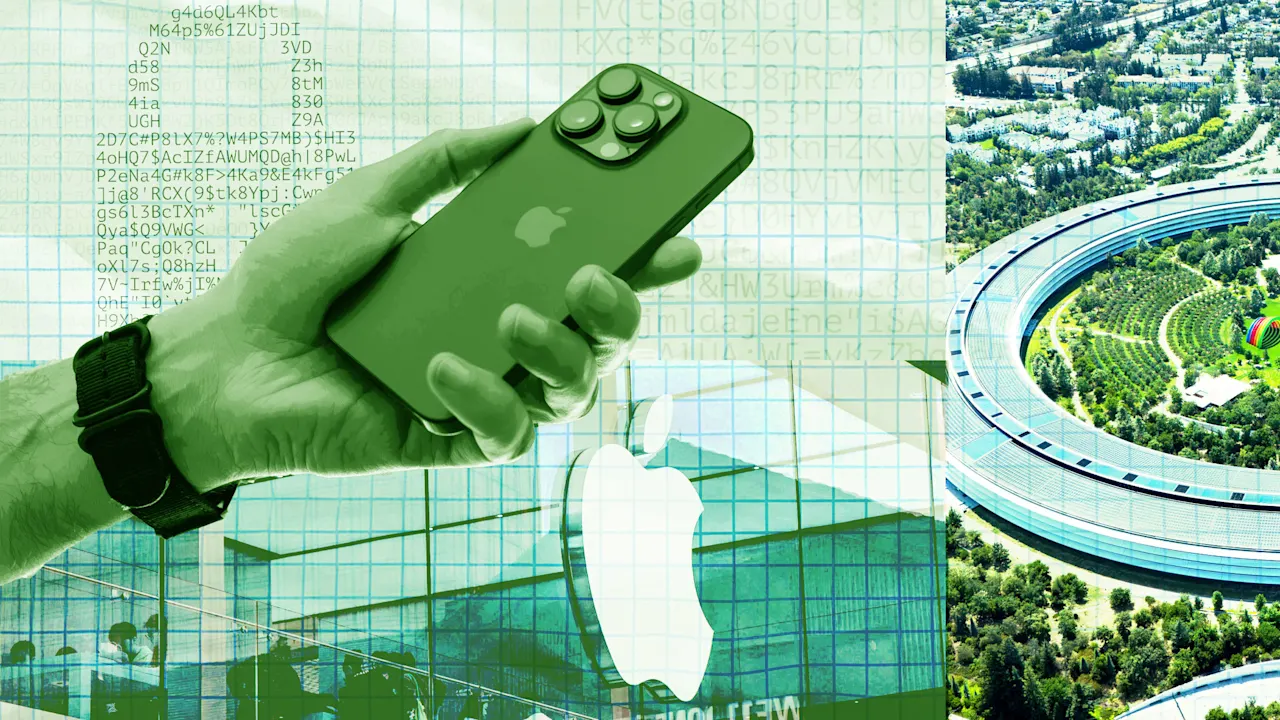
Wednesday, April 1, marks 50 years since Apple was founded. Over the next week, you’ll no doubt see countless articles examining the company’s influence, with many likely focusing on which single Apple product had the most consequential impact on the tech industry and society as a whole. To be sure, there are myriad options to choose from, most notably, the original Macintosh, the iMac, the iPod, and the iPhone.
Yet to me, Apple’s most important contribution over the past fifty years isn’t a physical product. Rather, it’s a policy—one asserting that privacy is a fundamental human right, and, to protect that right, products must be designed with privacy in mind.
It’s a policy that is more important today than ever.
Apple makes a seismic shift
Whether you realize it or not, you are the most important product sold by many of the largest companies in existence. Sure, Google might sell ads, but those ads are only valuable to businesses because of the amount of data that the search giant has on you, which allows those ads to be targeted more effectively. The same goes for Meta, TikTok, Pinterest, Snap, and more. These companies offer services in exchange for you giving up your privacy (either knowingly or, often, unknowingly), and then monetizing your data to rake in billions.
For roughly the first 20 years of the public internet’s existence, most online companies collected privacy-invasive personal data as a central part of their business model. And as technology became more integrated into our daily lives— with the advent of smartphones packed with all kinds of new sensors and chips that could gather even more data about us—most tech companies only grew hungrier for our data.
But then something changed. Around 15 years ago, the world’s largest tech company, Apple, began to embrace privacy. One of the first big privacy moves Apple made was to make its iMessage platform end-to-end encrypted, ensuring that no one but you and the recipient could read your messages.
It’s hard to overstate how seismic a privacy shift this was. While end-to-end encryption had existed earlier in some enterprise messaging solutions, we ordinary everyday users had always been denied equivalent protection—until Apple decided to step in.
Nearly every year since, Apple has continued innovating on the privacy front, implementing new measures to keep more of our data out of others’ hands. For example, the company was the first to block both third-party and first-party trackers in its web browser, shutting advertisers and publishers from tracking you around the web. It was also the first company to let users block the sharing of their precise location data with apps.
Guarding user privacy, even from itself
And keep in mind, Apple hasn’t just provided privacy mechanisms to prevent other companies from obtaining your personal data—it’s prevented itself from doing so as well.
For example, your iPhone and Apple Watch contain all sorts of health information about you—from how many calories you burn to how well you sleep. All this data is end-to-end encrypted, so not even Apple can read it.
Or take Apple Pay, the company’s digital payment solution. Apple built its digital payments platform in a way that ensures it never has access to users’ personally identifiable purchasing history, despite the billions in revenue this data could generate for Apple.
And as our data moved from our computer’s hard drives to the cloud, Apple was the first major tech giant (and currently, still the only one) that let users enable end-to-end encryption of their cloud storage by default, preventing even Apple from knowing what you store on its servers.
The hardware factor
To be sure, Apple’s business model was always different than most of its tech peers. It sold high-margin physical hardware, not services or ads, so it didn’t need to mine user data for profit.
Indeed, cynics might say that Apple can embrace privacy in the way it does because it rakes in hundreds of billions a year through its hardware, so the company has the luxury of not having to mine user data for a profit. These critics would also, rightfully, point out that Apple benefits massively from marketing its strong privacy stance to help it sell even more hardware.
Apple’s ardent fans, on the other hand, would argue that Apple has embraced privacy to the degree it has for ideological reasons—that its executives actually do believe that privacy “is a fundamental human right” and thus believe that the company must use its power to protect privacy for the good of all.
Yet for me, the reason doesn’t really matter. All that matters is that Apple does embrace privacy—and does so loudly. Apple is one of the most successful (and now oldest) tech companies in the world. The industry pays attention to what it does. So do consumers. And Apple’s industry competitors know that if their customers have friends who use Apple products and constantly boast about those products’ privacy protections, their own users will come to expect the same privacy protections—or else they may jump ship.
How Apple can lead in the age of AI
Indeed, several years ago, Apple’s software chief, Craig Federighi, conceded to me that Apple’s stance likely plays an important role in advancing privacy industry-wide.
“I think history has shown that we can move the industry in really meaningful ways,” Federighi told me in 2021. “And certainly, sometimes others come along slowly or reluctantly. But ultimately, when customers become aware of what they should expect, what they can expect, what is possible once they are made aware that the deal they thought they had to make—that actually, that’s not a deal they have to make—then the whole industry has to react to offer customers what they now realize they want and demand.”
Today, fifty years after Apple was founded, and with potentially invasive technology now deeply embedded in every aspect of our lives, it’s more important than ever to uphold the expectation that privacy is a fundamental human right. This is especially true in the new era of artificial intelligence we find ourselves in—an era in which AI companies are even hungrier for our data than the adtech giants of the past, making the risk to our privacy even greater, too.
Apple’s privacy ethos stands to continue to set the company apart—and make society better—in the AI age. If the company’s policy of designing products around privacy can not only continue to affect the development of its own artificial intelligence products, but also the development of its competitors’ AI products in users’ favor, then there is no doubt in my mind that Apple’s most significant contribution in the next fifty years will be the same as its first fifty years. And that is something we will all benefit from.