
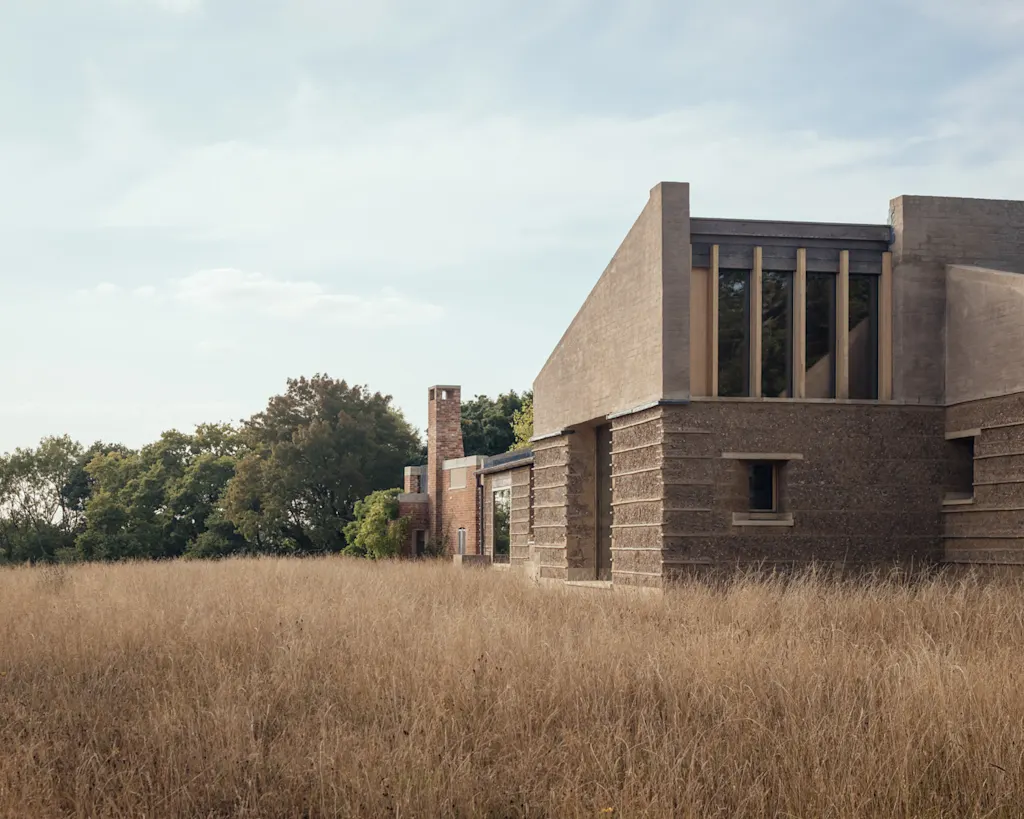
In the English countryside, a new project has emerged from the landscape—quite literally. Rammed Earth House, a residential estate by London-based Tuckey Design Studio, combines renovated brick buildings with new rammed earth structures, harnessing the clay soil of the very land it sits on. “The material is already under your feet, and it doesn’t come with all the carbon baggage that other [building] materials come with,” says studio founder Jonathan Tuckey.
As a building technique, rammed earth—which combines clay soil with aggregate such as gravel into tightly compressed layers—traces back thousands of years. It was widely used in ancient China, but appears globally throughout history, including in the U.S. After the industrial revolution, and the innovations of steel, concrete, glass, and mass-produced bricks, the traditional method fell out of favor. Now, however, an increasing number of architects are looking to the material as a sustainable, place-rooted way to build amid a climate crisis that calls for dramatically reduced carbon emissions.
Studio]
“It has this carbon credit locked into it—that’s a major head start against any other material,” says Tuckey. Because rammed earth doesn’t require high-temperature firing processes like bricks or concrete, and can use material from the building site itself (without need for transportation), its associated carbon emissions tend to be much lower.
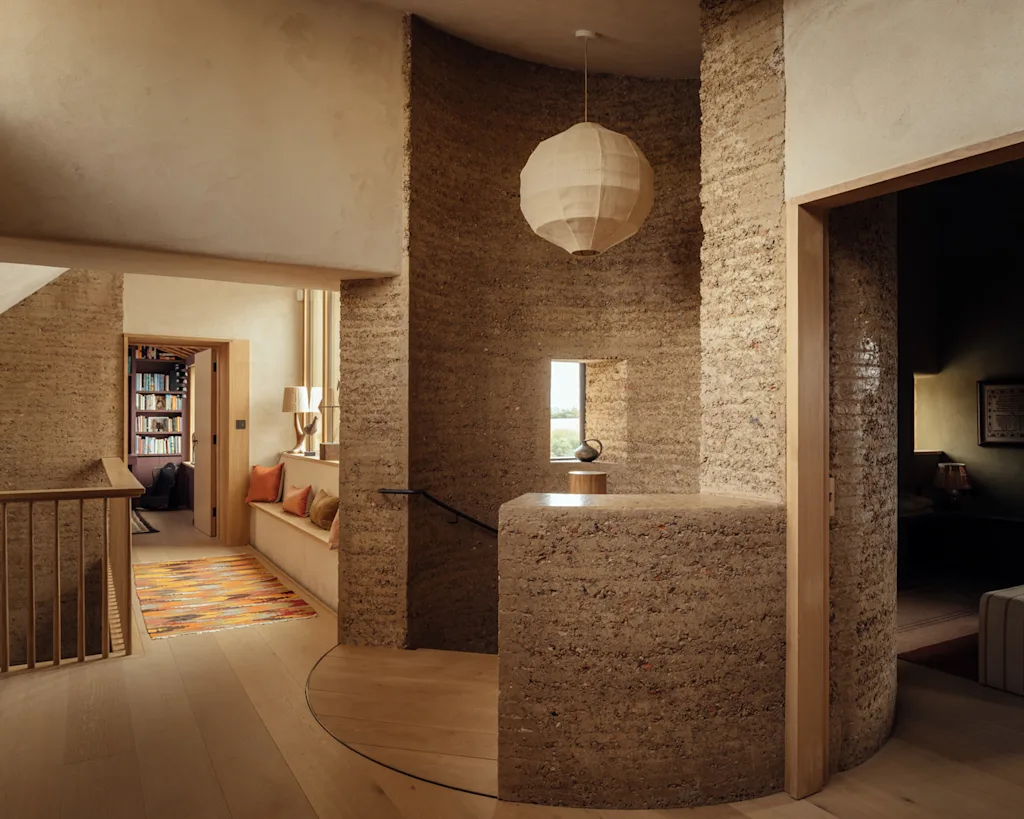
It can also harness material that might otherwise go to waste. At Rammed Earth House, the client wanted some run-down buildings on site to be demolished—but rather than this rubble being wasted, Tuckey Design Studio used it as the aggregate for the rammed earth, recycling the old buildings into the new.
Studio]
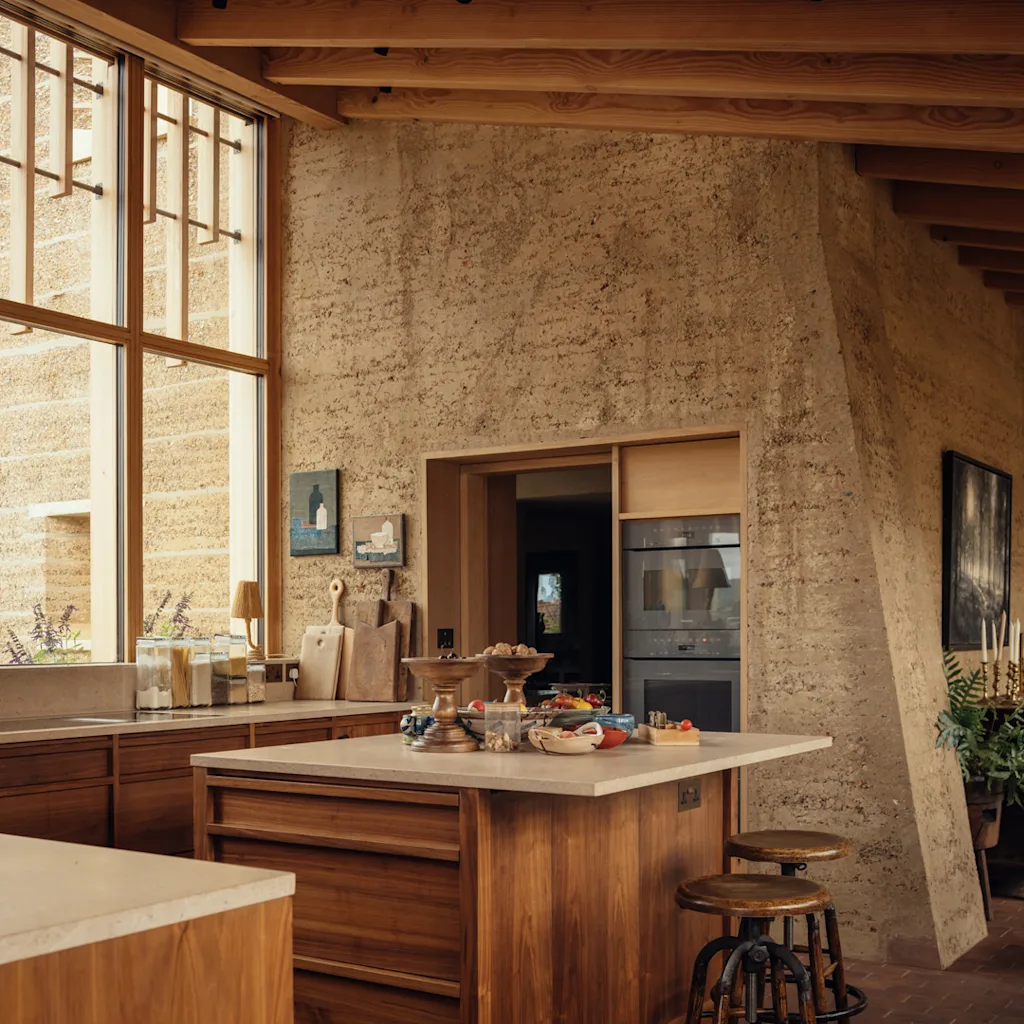
“It’s an entirely circular material,” says Tuckey of rammed earth. “If you ever wanted to demolish it, it would just go back into the ground. If you wanted to repair it, you can just pick up the clay from the ground and bash it in simply—it will be restored immediately.”
Studio]
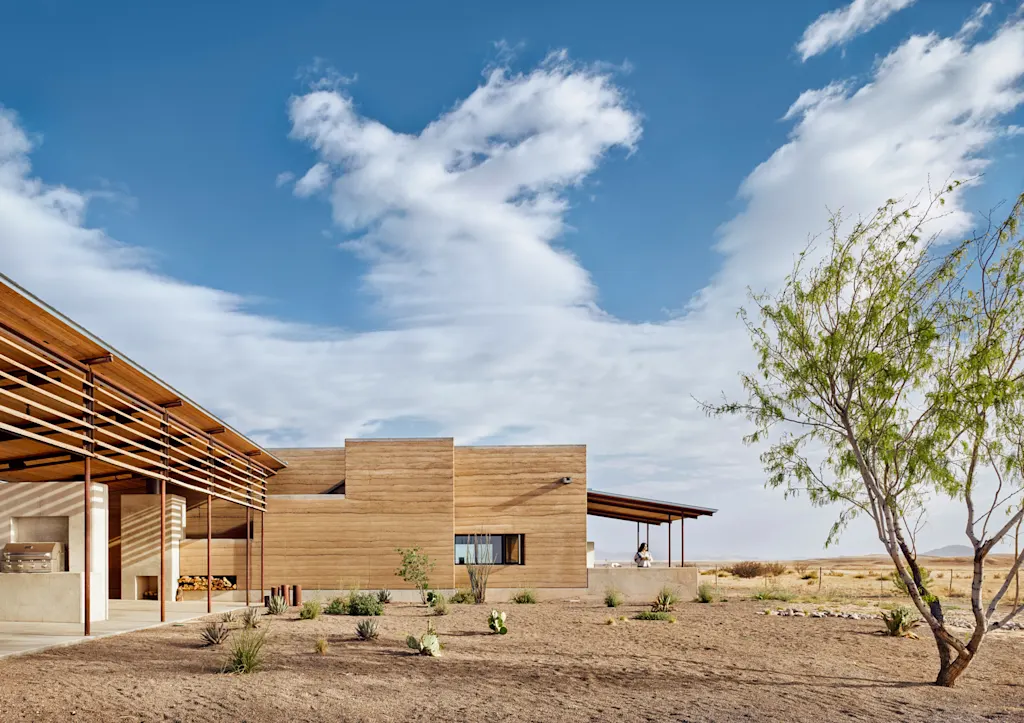
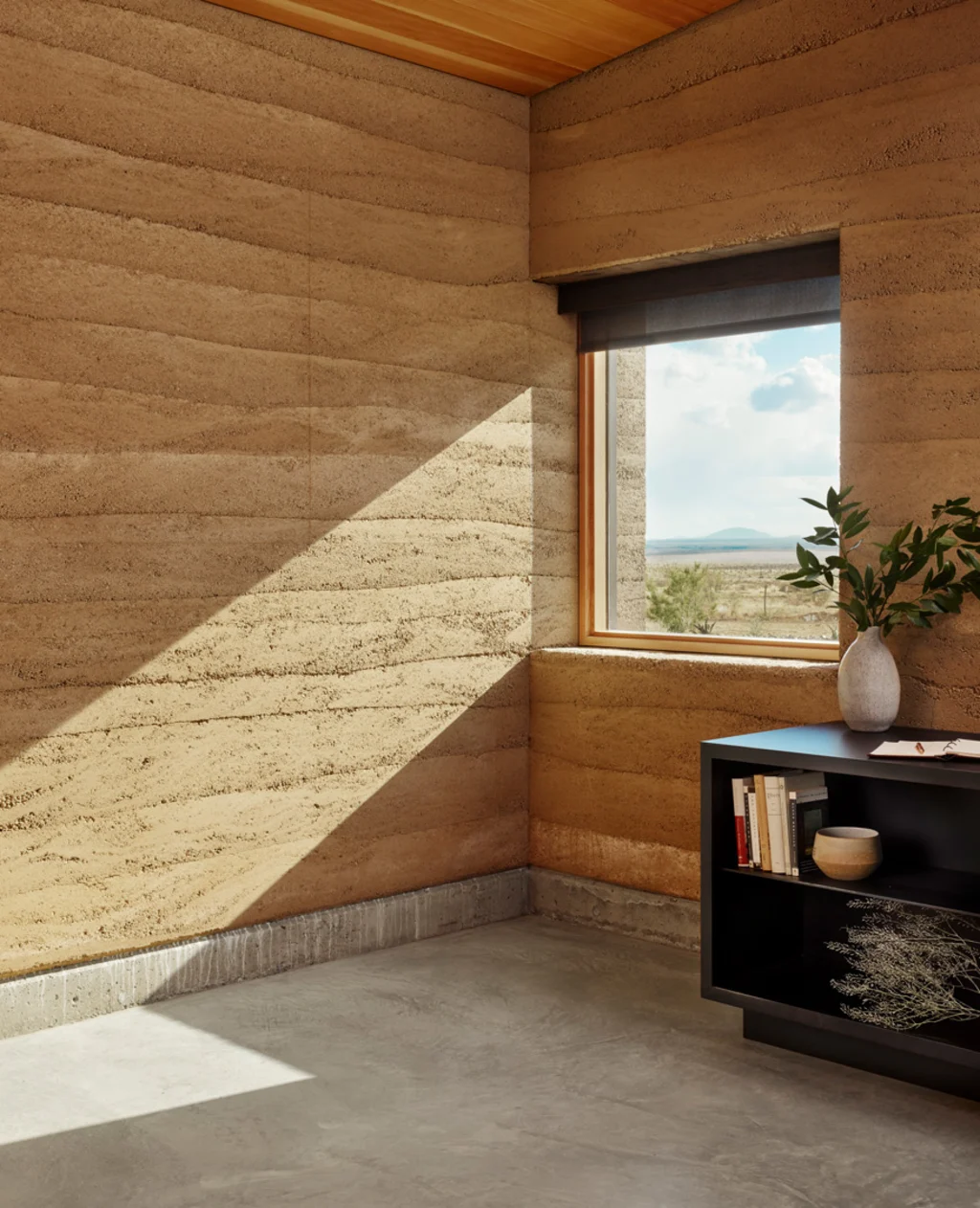
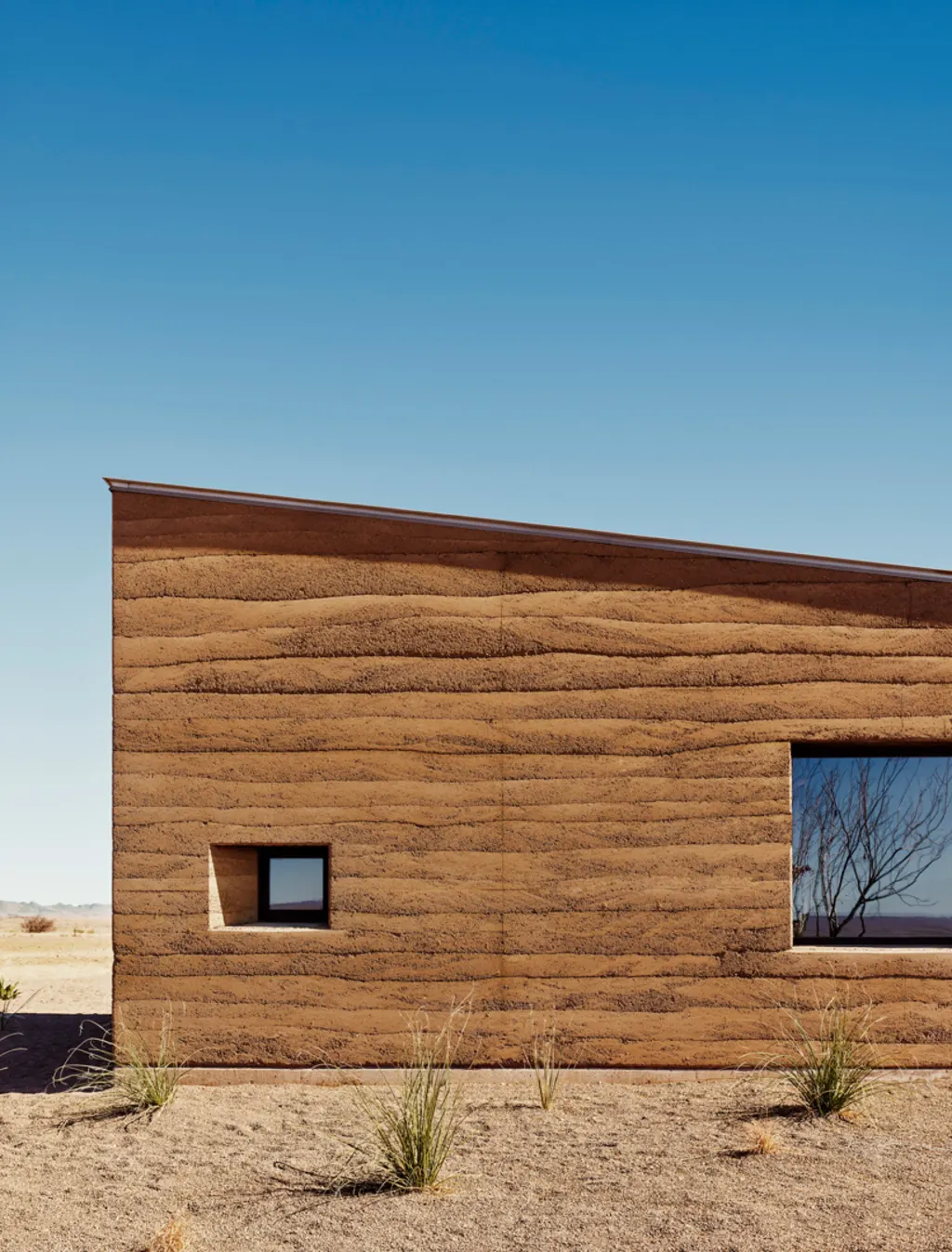
Architects also praise rammed earth’s high thermal mass—insulative properties that regulate a building’s indoor temperature. For U.S practice Lake Flato Architects, this was particularly helpful for a home in west Texas, Marfa Ranch.
In the desert environment, temperatures vary greatly; using rammed earth meant the dwelling “could be comfortable on the hottest days of the year, and also on the coldest,” says practice partner Bob Harris. The material also connected the building to its landscape, using locally sourced earth. “It felt really natural for us to build of that material,” says Harris.
The same was true for global practice Snøhetta, which is using rammed earth for the upcoming Theodore Roosevelt Presidential Library in North Dakota’s Badlands, integrating large internal walls made from the material. “We were looking to create a building that is of the place,” explains Aaron Dorf, director and architect at Snøhetta. The surrounding landscape is “defined by layers and layers of earth that you see—it’s profoundly beautiful.”
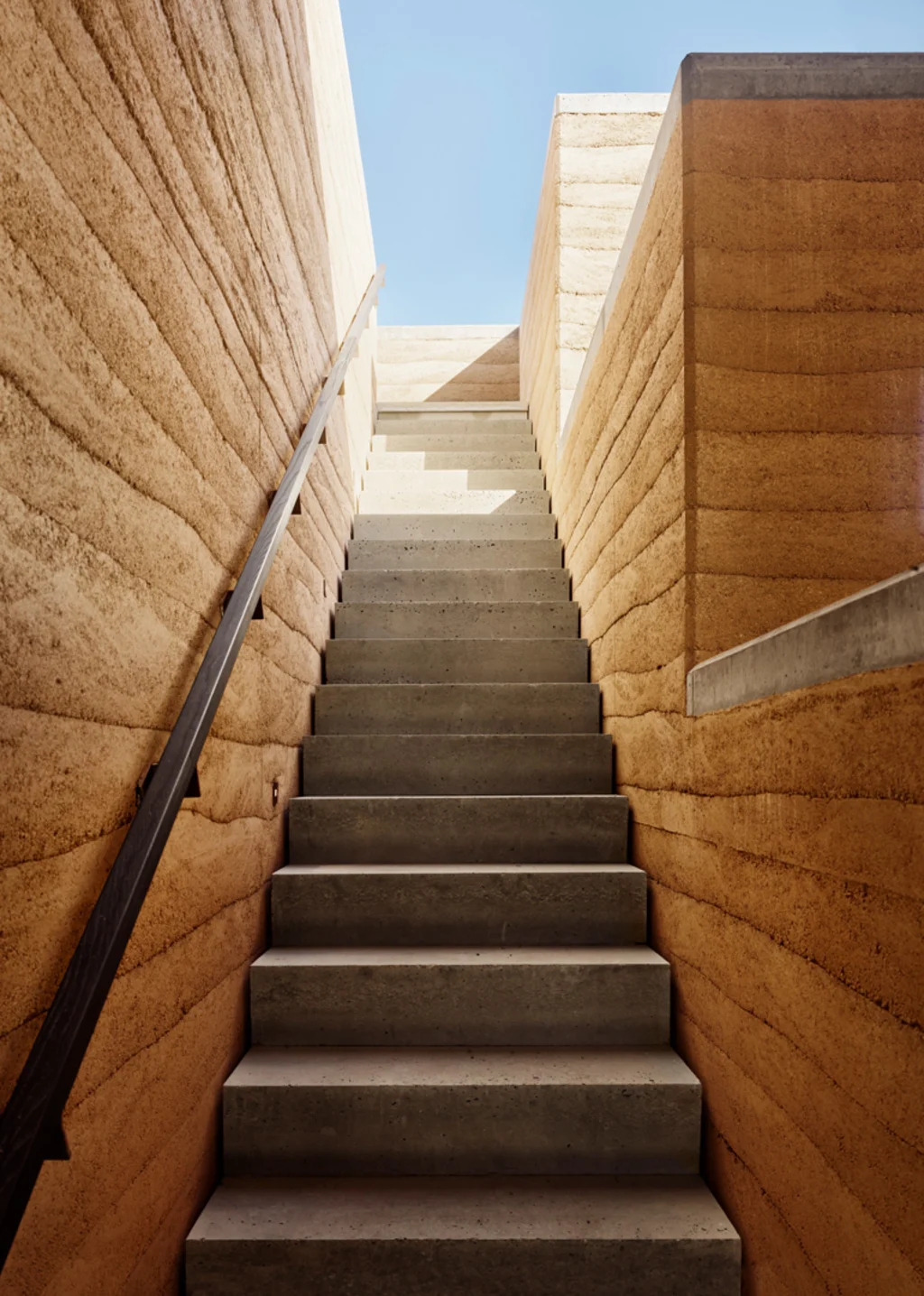
The material has a natural, textured and warm-hued appearance that can enhance an interior. “It’s a much more tactile public-facing material,” says Dorf. Tuckey describes it as looking like “some precious travertine stone.”
The expertise problem
The material does come with challenges, however—and resilience, labor, time, and location are primary issues.
“When you decide to use rammed earth, you come quite quickly to a fork in the road as to which route you’re going to go down, and they are fundamentally different materials,” says Tuckey. These two versions, “stabilized” and “unstabilized” rammed earth, demand different features and have variable ecological credentials.
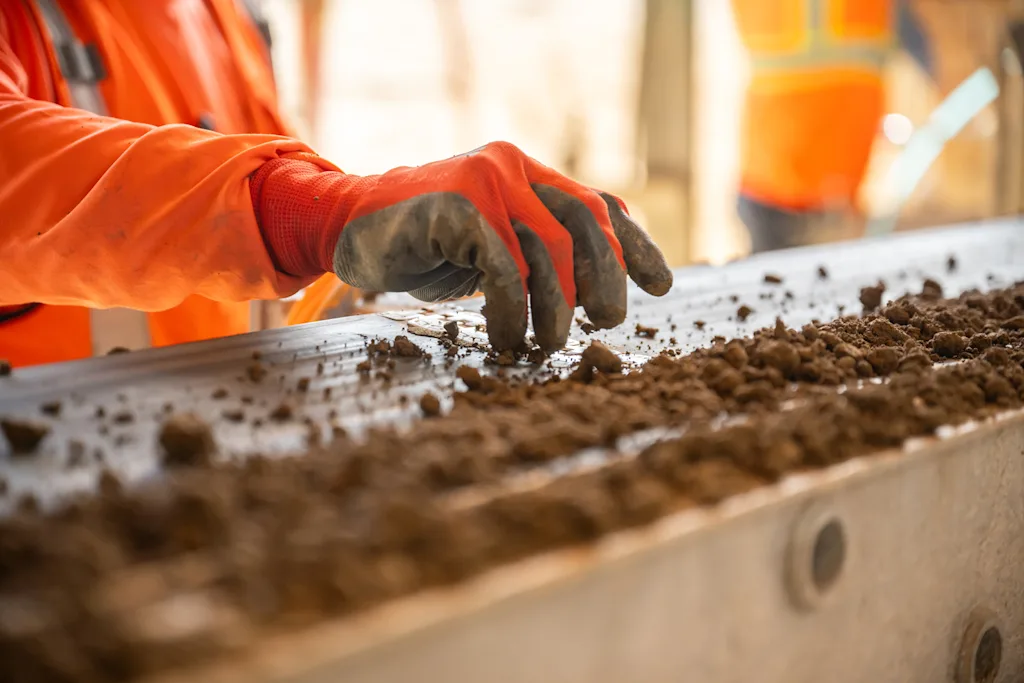
Stabilized rammed earth has cement in the mix to make the material more robust and resilient, especially to water. Some sustainability experts have criticized this as having a similar negative ecological impact to concrete, which also uses cement (the carbon emissions from cement come during the heating of limestone to high temperatures).
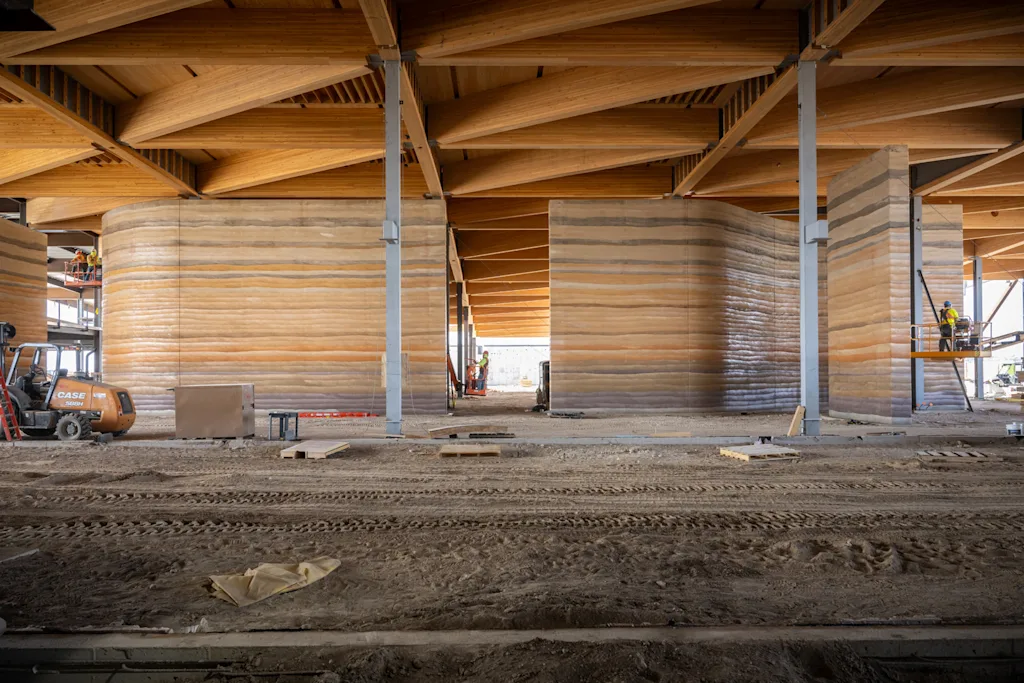
Lake Flato and Snøhetta used stabilized rammed earth for durability, but the architects insist the proportion of cement used is very low. At Marfa Ranch, cement makes up approximately 6% of the material, explains Harris, which can be compared to an average of 10% to 15% in concrete.
Unstabilized rammed earth does not include any cement, thus eliminating those associated carbon emissions and becoming a circular material, but it subsequently requires techniques to prevent erosion when exposed to the elements.
Tuckey explains that using a base and topper of more waterproof material—in the case of Rammed Earth House, he used bricks—protects the rammed earth walls from water damage. Meanwhile, to protect from rain, he placed slim horizontal lines of trass lime rock that project away from the external surface, allowing rainwater to fall off.
“As long as you understand how the material is used, the challenges fall away,” Tuckey says. But it is this in-depth knowledge of building with rammed earth that can be hard to find. “It has become a lost form of construction,” says Tuckey, who collaborated with Martin Rauch, a rammed earth expert from Austria.
“Expertise is a challenge,” agrees Lake Flato partner Andrew Herdeg, who oversaw the practice’s Horizon House project in Nevada, which also used rammed earth. There, the architects brought in a consultant from northern California.
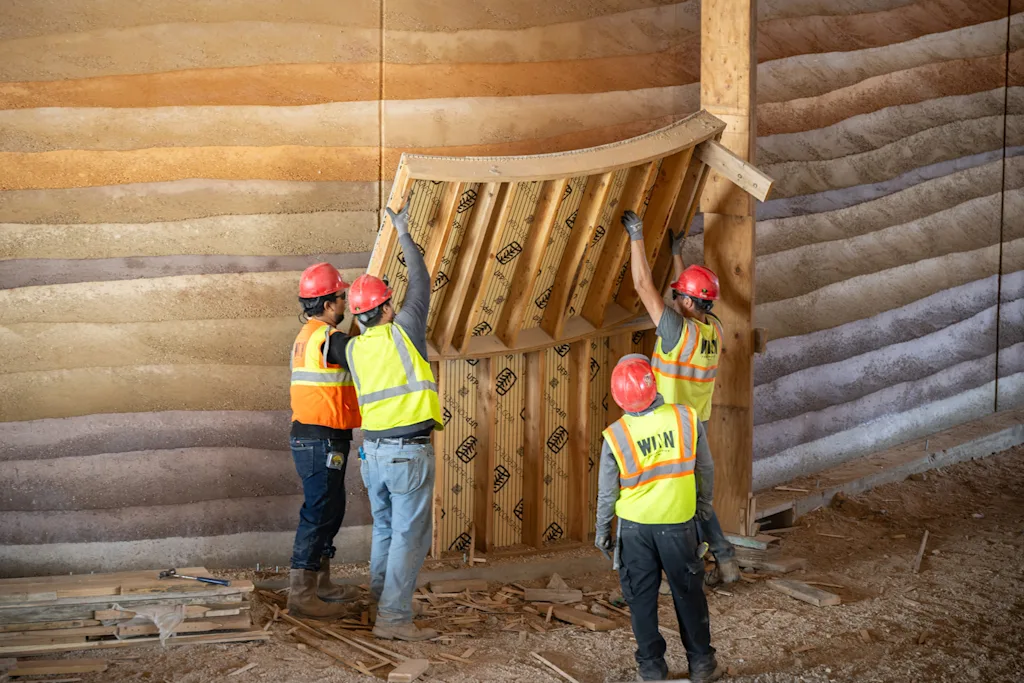
The process can be a slow one, too—especially for those new to the technique. The earth is compressed down within tightly confined formwork (wooden supporting structures that are removed at the end of the process); ramming it by hand is a “grueling process,” says Herdeg—though it is possible to use pneumatic tampers.
“It’s very labour intensive,” agrees Harris. “It takes quite a long time to construct [the] walls.” Because of that labour, he adds, “it can be costly.” The architects estimate that compared to concrete, there is a roughly 12% cost uplift when building with rammed earth.
Built for the right climate
Perhaps most important is to use rammed earth in the locations and climates that make most sense. “We wouldn’t want to drive earth around the country, just to use it for the sake of it,” says Tuckey, explaining that it’s best if the clay soil needed is found locally.
Lake Flato advocates it as “a dry climate response,” says Herdeg; best in a context where there’s low humidity and high diurnal swings. “It really excels in those environments.”
Snøhetta’s Dorf echoes the sentiment: “You have to build it in the right location. And I think forcing it into the wrong climate isn’t going to work very well.”
Still, the architects seem to believe that when those right conditions align and the challenges are navigated, rammed earth has a positive impact across multiple aspects. “We think of our work as a tool to connect people to place, to context, to the natural environment,” says Herdeg. For him, rammed earth can reflect “a literal mission of building responsibly,” but also a philosophical mission, encouraging others to care about that responsibility.
Lake Flato is currently planning an extension to Horizon House, and though contractors advocate poured concrete, Herdeg is keen to continue using rammed earth. “The reality is you can do just a coloured concrete wall and it looks quite similar to rammed earth and costs significantly less,” he says. “But at the end of the day, the carbon footprint of the concrete is significantly higher—and you don’t get that real material texture.”
Meanwhile, many are looking to intersect new technologies and engineering with the ancient building method to make it more practical or affordable to use. Tuckey cites one company that produces prefabricated timber frames infilled with rammed earth, and engineers in Australia recently developed modular blocks of rammed earth in cardboard cylinders.
Inspired by using the material for Rammed Earth House, Tuckey’s studio is now working on a project of terraced houses using prefabricated rammed earth blocks. The aim is to establish a factory near to the site in Gloucestershire, in southwest England, to make the prefabricated elements, using local construction waste as the aggregate in the rammed earth mixture.
“I think it’s about a reawakening,” Tuckey says of the new era of rammed earth architecture, and of moving away from more carbon-intensive building materials. His hope is that “when you look at a pile of brand-new bricks, you look at them not just with dollar signs in your mind, but also carbon signs.”