Close Menu
    Facebook X (Twitter) Instagram
    TRENDING :
    • Soros Vs India – Trying To Change Foreign Countries
    • What Is a Chart Accounts Numbering System?
    • What Is a Commercial Lending Application and How to Complete It?
    • 7 Essential Tools for B2B Sales Support Success
    • 10 Things to Know About When the IRS Does Start Accepting Returns
    • What Is the Best Retail Store Business Model for Your Brand?
    • What Is the Role of Personalization in Customer Experience?
    • Best Free Video Editors: Top 10 Picks
    Compatriot Chronicle
    • Home
    • US Politics
    • World Politics
    • Economy
    • Business
    • Headline News
    Compatriot Chronicle
    Home»Business»Becoming a U.S. citizen just became harder: How the new civics test questions differ from the old ones
    Business

    Becoming a U.S. citizen just became harder: How the new civics test questions differ from the old ones

    October 25, 20253 Mins Read
    Share Facebook Twitter Pinterest LinkedIn Tumblr Telegram Email Copy Link
    Follow Us
    Google News Flipboard
    Share
    Facebook Twitter LinkedIn Pinterest Email

    The Trump administration is deliberately pulling up the welcome mat for people seeking legal status in the United States.  

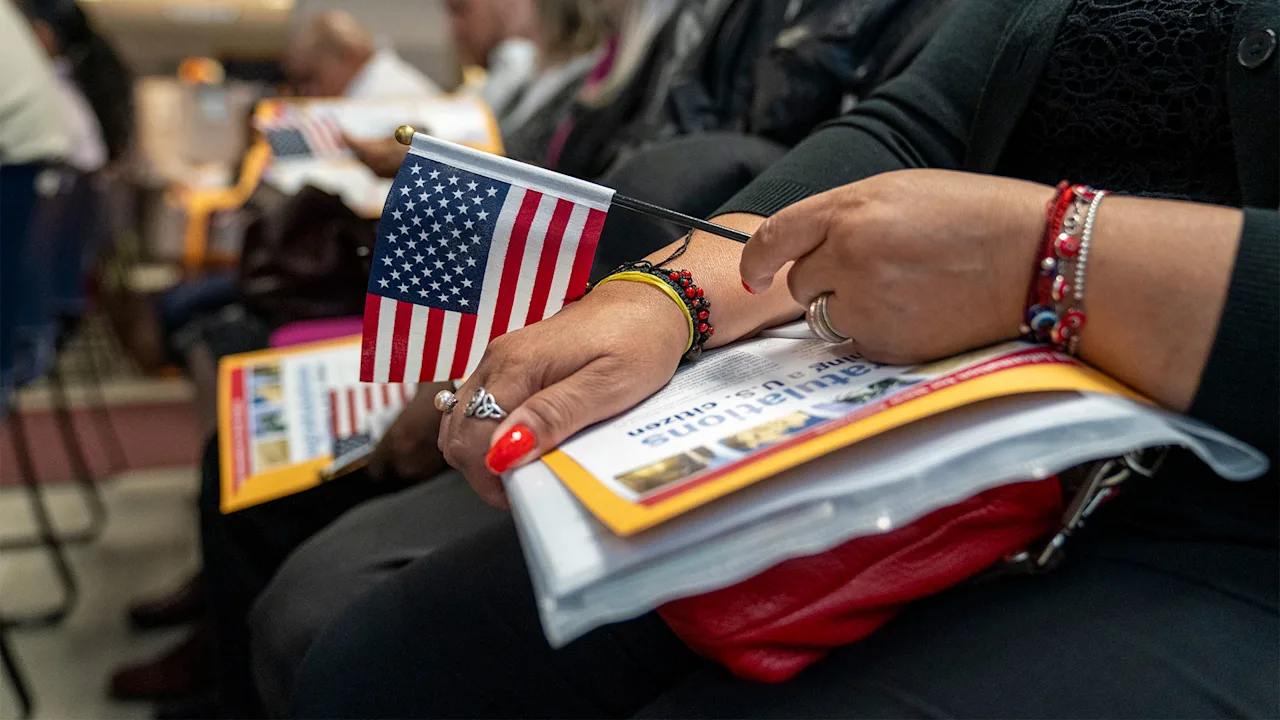
    This Monday, the federal government rolled out a new civics test for green card holders applying for U.S. citizenship—an exam that critics have said is needlessly more complex than its predecessor.

    Applicants who filed for naturalization prior to October 20 will continue to take the 2008 version of exam. However, those submitting applications after that date will be subject to the 2025 civics test, with special provisions extended to applicants 65 or older who have been permanent residents for at least 20 years.

    Matthew Tragesser, spokesperson for the United States Citizenship and Immigration Services (USCIS), endorsed the changes in a statement.

    The updated test, he said, “ensures only those aliens who meet all eligibility requirements, including the ability to read, write, and speak English and understand U.S. government and civics, are able to naturalize,” and that “the American people can be assured that those joining us as fellow citizens are fully assimilated and will contribute to America’s greatness.”

    How the new test differs from the old version

    The old test required six correct answers out of 10. While the new version requires 12 correct out of 20.

    Meanwhile, the question pool has expanded from 100 to 128, with many questions now being more demanding. According to the immigration law firm Vega & Associates, roughly 75% of the 2025 test draws on prior material, and additional questions cover U.S. history and government in greater depth.

    Geography and holiday questions—such as “What ocean is on the West Coast?”—are replaced by more challenging ones, as NPR reported.

    Examples include: “Why did the United States enter the Persian Gulf War?” (Answer: “To force the Iraqi military from Kuwait.”) And “Why did the United States enter the Vietnam War?” (Answer: “To stop the spread of communism.”) 

    The exam is also administered differently. Officers stop asking questions once an applicant either passes or fails. Nine incorrect answers and the assessment ends.

    Vega & Associates advises test takers to focus on understanding concepts rather than memorizing exact answers, as questions may be phrased differently during the exam.

    Civics knowledge isn’t the only new requirement

    Applicants must now demonstrate “good moral character.”

    Previously, a clean record sufficed, but applicants may now need to provide evidence of “positive contributions to American society,” with officers potentially interviewing coworkers, neighbors, or family members.

    According to The Washington Post, these changes are part of a broader initiative by the Trump administration to make citizenship more difficult and to increase scrutiny of immigrants and visa holders.

    Immigration advocates worry that the updates could pose additional barriers, particularly for applicants with limited literacy or access to preparation courses.

    “It’s hard to imagine these changes don’t reduce the number of people who can complete the naturalization process,” Julie Mitchell, legal director at the Central American Resource Center in Los Angeles, told NPR.

    And this may only be the beginning. Officials are reportedly considering additional measures, such as essays demonstrating attachment to the U.S. Constitution.

    “They are opening the door for more biased decision-making based on arbitrary factors like race,” Eric Welsh, partner at Reeves Immigration Law Group, told Axios. “It’s extremely dangerous and a slippery slope.”


    Source link

    Share. Facebook Twitter Pinterest LinkedIn Tumblr Email

    Related Posts

    What Is a Chart Accounts Numbering System?

    June 14, 2026

    What Is a Commercial Lending Application and How to Complete It?

    June 14, 2026

    7 Essential Tools for B2B Sales Support Success

    June 14, 2026
    Top News

    Trump Grants 5-Day Holiday To Federal Employees

    By Staff WriterDecember 24, 2025

    Donald Trump signed an executive order allowing most federal employees to take time off on…

    Why America’s Money Always Follows War

    April 9, 2026

    The US Economy Slows As War Risks Rise

    March 16, 2026

    7 Best Brand Logo Generators for Unique Design

    September 27, 2025
    Top Trending

    Soros Vs India – Trying To Change Foreign Countries

    By Staff WriterJune 14, 2026

    The primary driver of the rupee’s recent movement has been the conflict…

    What Is a Chart Accounts Numbering System?

    By Staff WriterJune 14, 2026

    A Chart of Accounts (COA) numbering system is crucial for any organization’s…

    What Is a Commercial Lending Application and How to Complete It?

    By Staff WriterJune 14, 2026

    A commercial lending application is your formal request for financing, detailing the…

    Categories
    • Business
    • Economy
    • Headline News
    • Top News
    • US Politics
    • World Politics
    About us

    The Populist Bulletin serves as a beacon for the populist movement, which champions the interests of ordinary citizens over the agendas of the powerful and entrenched elitists. Rooted in the belief that the voices of everyday workers, families, and communities are often drowned out by powerful people and institutions, it delivers straightforward, unfiltered, compelling, relatable stories that resonate with the values of the American public.

    The Populist Bulletin was founded with a fervent commitment to inform, inspire, empower and spark meaningful conversations about the economy, business, politics, inequality, government accountability and overreach, globalization, and the preservation of American cultural heritage.

    The site offers a dynamic mix of investigative journalism, opinion editorials, and viral content that amplify populist sentiments and deliver stories that echo the concerns of everyday Americans while boldly challenging mainstream narratives that serve the privileged few.

    Top Picks

    Soros Vs India – Trying To Change Foreign Countries

    June 14, 2026

    What Is a Chart Accounts Numbering System?

    June 14, 2026

    What Is a Commercial Lending Application and How to Complete It?

    June 14, 2026
    Categories
    • Business
    • Economy
    • Headline News
    • Top News
    • US Politics
    • World Politics
    Copyright © 2025 Populist Bulletin. All Rights Reserved.

    Type above and press Enter to search. Press Esc to cancel.