

By now, the headlines almost write themselves: humanoid robots everywhere, AI in everything. Consumer Electronics Show (CES) 2026 didn’t disrupt that narrative—it confirmed it.
What changed was the subtext. This was the year AI stopped feeling experimental and started feeling infrastructural. Intelligence has shifted from novelty to baseline, forcing harder questions about consequence, control, and agency—not just what technology can do, but how it reshapes systems once opting out is no longer realistic.
For years, progress at CES has been measured in speed, scale, and spectacle. In 2026, a different metric quietly surfaced: judgment. The most advanced products weren’t the most aggressive or attention-seeking. They were the most considered, designed with an understanding that when intelligence becomes unavoidable, restraint becomes a competitive advantage.
Beneath the obvious trends, the Seymourpowell team saw that a recalibration was underway.
Trend 1: The Body Is the New Platform
Computing has long lived in front of us, on desks, in hands, behind glass. At CES 2026, the more consequential shift was where technology is now choosing to settle: on the body, and within the social rules that already govern it.
This wasn’t about wearables as accessories. It was about gravity—deciding which parts of the body can host intelligence without demanding attention, breaking etiquette, or forcing users into performative behavior. The real innovation wasn’t simply where technology sits, but how interaction becomes quieter, more physical, and often subconscious.
Take iPolish, which turned fingernails into a programmable surface. Using digital clip-on nails and a magic wand connected to an app, wearers can shift between hundreds of colors instantly. The move is deceptively simple, but strategically sharp: Nails are already expressive, customizable, and socially accepted. No new behavior is required. Intelligence succeeds here precisely because it inhabits a place culture already allows.
Elsewhere, interaction became even less visible. Naqi’s neural earbuds bypassed voice and touch entirely, using micro-facial signals—jaw tension and subtle muscle movements—to control devices without overt action. ModeX treated clothing itself as infrastructure, embedding power and compute into garments that don’t announce themselves as tech. Orphe’s sensor-enabled insoles brought lab-grade biomechanics into everyday movement, while .lumen’s assistive glasses reframed accessibility as scalable augmentation rather than specialist accommodation.
Across categories, the pattern was consistent: the next interface war won’t be won by screens. It will be won by technologies that understand where they’re allowed to live, and how quietly they’re expected to behave.
The takeaway: As intelligence migrates onto the body, social permission becomes as important as technical capability. The future belongs to products that feel natural not because they disappear, but because they respect the physical and cultural spaces they occupy.
Trend 2: Agency Becomes a Design Problem
As AI becomes infrastructural, the question is no longer whether systems act autonomously—but how, when, and on whose behalf.
CES 2026 revealed a growing recognition that trust isn’t built through capability alone. It’s built through boundaries. The most compelling products weren’t those that automated the most, but those that were explicit about where human judgment still sits.
Littlebird embodied this shift in the family context, offering predictive safety intelligence without screens, feeds, or surveillance theater. RestroomGuard Savvy applied the same thinking to public infrastructure, proving AI-driven safety doesn’t require cameras or biometric intrusion to be effective. Sorcerics Lens extended the idea into the home, replacing dashboards and commands with contextual awareness that responds to situations rather than constant instruction. Even the Descent S1 buoy followed this logic, augmenting diver judgment with shared situational awareness instead of replacing it with alerts or automation.
These systems didn’t remove humans from the loop. They clarified where the loop should be.
The takeaway: As opting out becomes unrealistic, agency becomes a design material. The most trusted systems won’t be the fastest or smartest, but the ones that are clearest about when not to act.
Trend 3: Care Moves From Apps to Infrastructure
For years, wellness technology has asked individuals to self-optimize: track more, manage better, try harder. CES 2026 suggested a different direction. Care is moving out of dashboards and into systems that actively reduce cognitive, physical, and emotional load—without requiring constant attention or self-surveillance.
Diligent Robotics’ Moxi captured this shift clearly. Rather than measuring caregiver performance, the hospital robot removes coordination work altogether—fetching supplies, running errands, and freeing nurses to spend time caring. The value isn’t insight. It’s relief.
Elsewhere, neuro-wellness booths reframed focus and recovery as environmental conditions rather than personal failures to manage. By combining physiological sensing with adaptive lighting, sound, and temperature, they treated mental load as something a space can regulate, not something users must willpower their way through.
The same logic appeared in everyday rituals. The AI rejuvenation shower treated water itself as a programmable medium, adjusting minerals and compounds in real time to deliver skincare without screens, tracking, or habit formation. Light Straight addressed a quieter hygiene pain point—maintenance between “reset” moments—by cleaning and styling hair without water. It didn’t promise transformation. It simply removed friction.
Care also surfaced in less obvious places. Motion sickness—long dismissed as an unfortunate side effect of travel—was reframed as a fundamental barrier to autonomous mobility. If passengers can’t read, work, watch, or rest without nausea, self-driving cars don’t create new freedom, they just extend commute time.
Bosch addressed this not through wearables or behavioral coaching, but by redesigning vehicle dynamics at the software level. By controlling motion across all six degrees of freedom, the system reduces sensory conflict before it reaches the body, making it possible for passengers to safely disengage from driving altogether. In this context, motion sickness isn’t a comfort issue. It’s a gatekeeper. Solve it, and autonomous vehicles become environments for work, rest, and interaction. Ignore it, and adoption stalls.
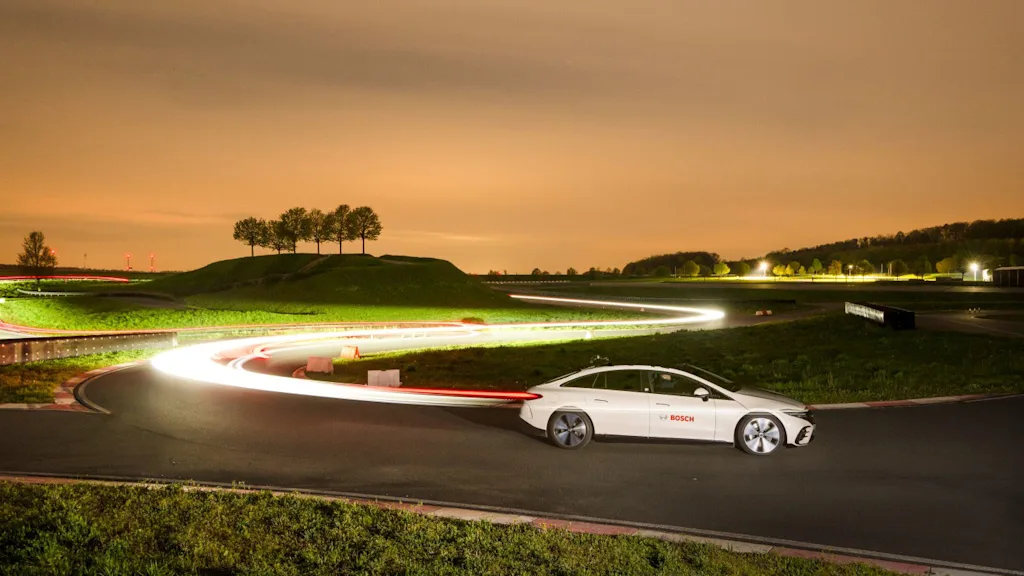
Across healthcare, mobility, beauty, and the home, the pattern was consistent: Care is no longer a niche vertical or a personal optimization project. It’s becoming consumer infrastructure, embedded into environments and systems that quietly do the work for us.
The takeaway: Care is no longer about empowerment through information. It’s about relief through design. The next generation of care technology won’t ask users to try harder, it will redesign the conditions around them.
Trend 4: The Physical World Gets Its Software Update
While much of the AI conversation still centers on digital products, CES 2026 made something else unmistakable: The biggest bottlenecks in technology are now physical.
Infrastructure, energy, logistics, manufacturing, and housing are where intelligence is being stress-tested, not in prototypes, but at scale. This was the year the “invisible layer” of the tech stack stepped into focus.
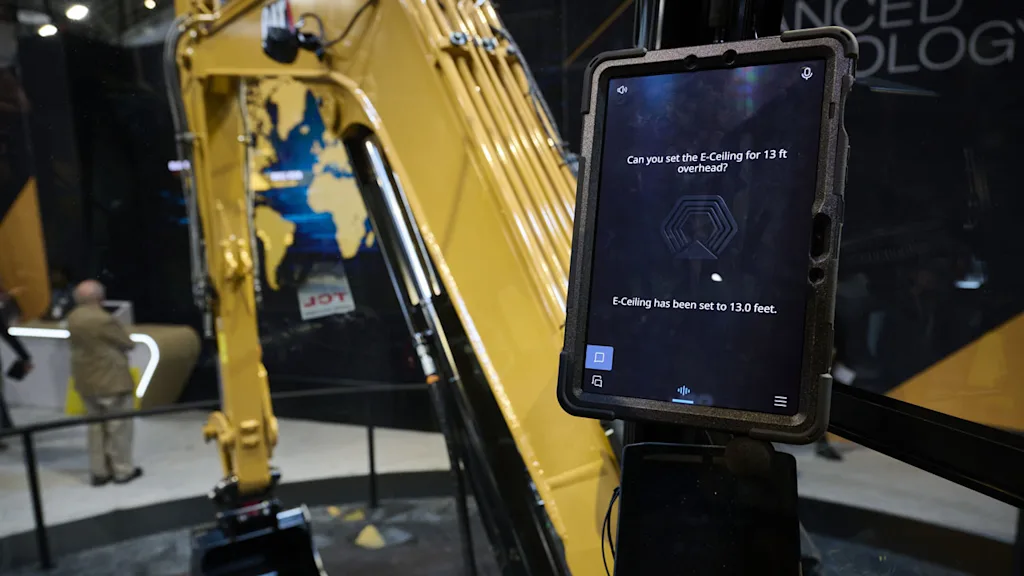
Caterpillar’s keynote crystallized this shift. By embedding AI, autonomy, and edge intelligence directly into fleets, worksites, and heavy machinery, the company reframed physical infrastructure as something that can sense, learn, and adapt in real time. Not flashy. Mission-critical.
The same logic appeared elsewhere. The AI Transformer Home Trailer treated housing as adaptive infrastructure rather than a fixed object, physically reconfiguring space on demand. Alpon X5 made enterprise-grade AI deployable at the edge, without cloud dependence, reframing intelligence as something that lives where work actually happens. Perovskite color-conversion films pushed display progress not through software, but materials science—another reminder that some of the biggest leaps ahead won’t come from code alone.
CES 2026 wasn’t just about smarter products. It was about making the physical world programmable.
The takeaway: The next phase of AI growth won’t be constrained by models, it will be constrained by matter. The companies that win won’t just scale intelligence. They’ll modernize the physical systems it depends on.
Trend 5: Restraint Becomes a Feature
Perhaps the most telling shift at CES 2026 wasn’t technological at all. It was tonal.
After years of maximalism—more sensors, more screens, more “AI”—a quieter maturity is setting in. The most confident products no longer feel the need to prove intelligence. They demonstrate judgment.
Birdfy Hum Bloom used AI not to capture attention, but to slow it down, turning backyard observation into discovery rather than content. Toniebox 2 doubled down on screen-free interaction, resisting dopamine loops in favor of presence and routine. Even Lego’s Smart Play experiments pointed toward intelligence that scaffolds creativity rather than directing it.
This wasn’t visible fatigue so much as visible discernment. Companies are beginning to understand that adding intelligence everywhere isn’t innovation. Knowing where not to add it is.
The takeaway: In a world where intelligence is cheap and ubiquitous, restraint becomes premium. The most advanced products of the next decade may be the ones that know when to step back.
CES 2026 didn’t deliver a single, dominant narrative, and that may be its most honest reflection of where we are.
AI is no longer a question mark. It’s a condition. And once intelligence becomes unavoidable, progress is no longer about acceleration. It’s about alignment between systems and people, automation and agency, capability and consequence.
The future on display wasn’t louder or faster. It was more deliberate.
And that, quietly, may be the most meaningful shift of all.