
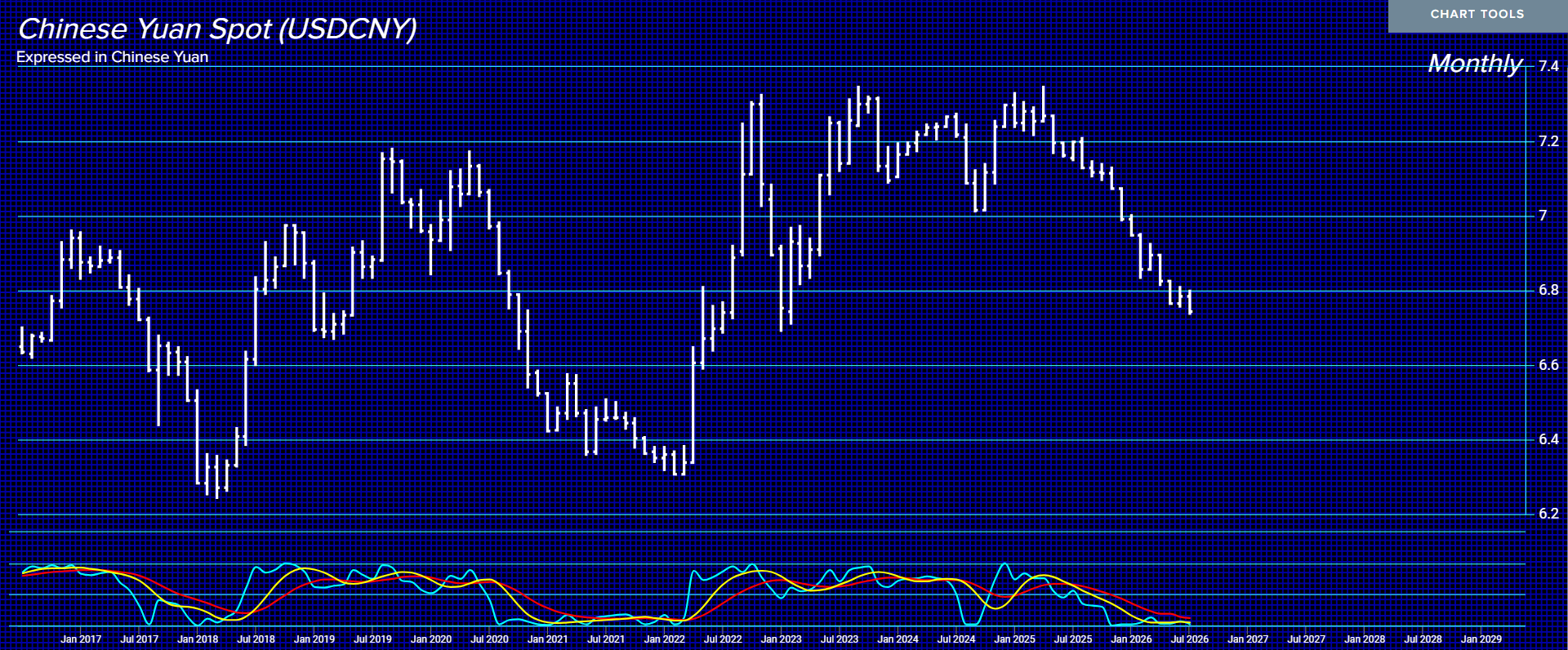
QUESTION: Marty, last March you said the dollar would peak against the yuan and then decline into August–September 2026. You also said the computer suggested this move would coincide with rising tensions in the Middle East, specifically involving Iran. Since then, we’ve seen Operation Midnight Hammer on June 22, 2025. In your debt report, you also explained that China has major strategic and economic interests in the region, including its railroad projects with Iran and its broader ties to Iraq and Saudi Arabia. Given those interests, do you see China becoming directly involved in the conflict with Iran, or will it seek to protect its interests through other means?
FJ
ANSWER: Yes, but I do not see China sending troops. Beijing views Iran primarily through the lens of great-power competition. From China’s perspective, a prolonged conflict involving Iran ties down American military, financial, and political resources, leaving the United States less able to focus on what Beijing regards as the primary long-term objective—Taiwan. The drain on military assets has called into question if the US has the missile capacity to even defend Israel while Zelensky is demanding Patriot Missiles.
I have said from the outset that Trump was persuaded by the Neocons, who used Netanyahu to sell the Iran war. Iran has waged its proxy war against Israel for 45 years. Netanyahu has been making essentially the same argument since at least 1996—that Iran is only weeks away from acquiring a nuclear weapon and must be destroyed. Decades later, the narrative remains remarkably unchanged. In my view, this conflict has never been solely about Israel’s security or Iran’s nuclear program. Netanyahu has consistently sought the destruction of the Islamic Republic itself.
Even if Iran had a nuclear weapon they would not use it anymore than Pakistan uses its nukes. Iran sees a nuke as a deterent against Israel which has nukes. But let’s get real. Russia has more nukes than the USA. That does not stop Ukraine even boasting that Moscow will fall. Granted, Iran sees this as taking down Iraq because they did not have nukes. Has Saddam had nukes, the Neocons would not have invaded which was again for Israel.
To understand this conflict objectively, we must first understand its history and we must look at this through each party’s eyes.
Hezbollah officially declared its existence in 1985. What many people overlook is that before the 1979 Islamic Revolution, Iran was the second country in the Middle East to recognize Israel as a sovereign state under the Pahlavi monarchy. That relationship ended with the Revolution. The new Islamic Republic severed diplomatic ties with Israel and adopted a revolutionary anti-imperialist ideology that portrayed Israel as an illegitimate state and a symbol of Western domination. From that point forward, ideology became the principal driver of the conflict.
Iran’s leadership has consistently described Israel as an illegitimate “cancerous tumor” and an American colonial outpost in the Middle East. Support for the Palestinian cause became one of the central pillars of the Islamic Republic’s ideology and a major source of its legitimacy throughout much of the Muslim world.
From Israel’s perspective, however, Iran’s repeated calls for Israel’s destruction and its support for organizations such as Hezbollah and Hamas constitute an existential threat. Netanyahu’s campaign to persuade the United States to confront Iran has therefore always extended beyond the issue of nuclear weapons. The broader objective has been the overthrow of the Islamic Republic.
At the same time, we must also understand why Iran refers to the United States as the “Great Satan.” That did not arise in a vacuum.
The 1953 CIA-backed coup that overthrew Prime Minister Mohammad Mosaddegh and restored the Shah remains the defining event in modern U.S.-Iranian relations. While it is not the only source of hostility, it is the foundational grievance upon which decades of mistrust were built.
From the Iranian perspective, the United States intervened after Mosaddegh nationalized Iran’s oil industry, threatening Western economic interests. Washington and London supported the return of the Shah, who increasingly ruled as an authoritarian monarch. The original conflict in 1953 was fundamentally about control over oil and geopolitical influence.
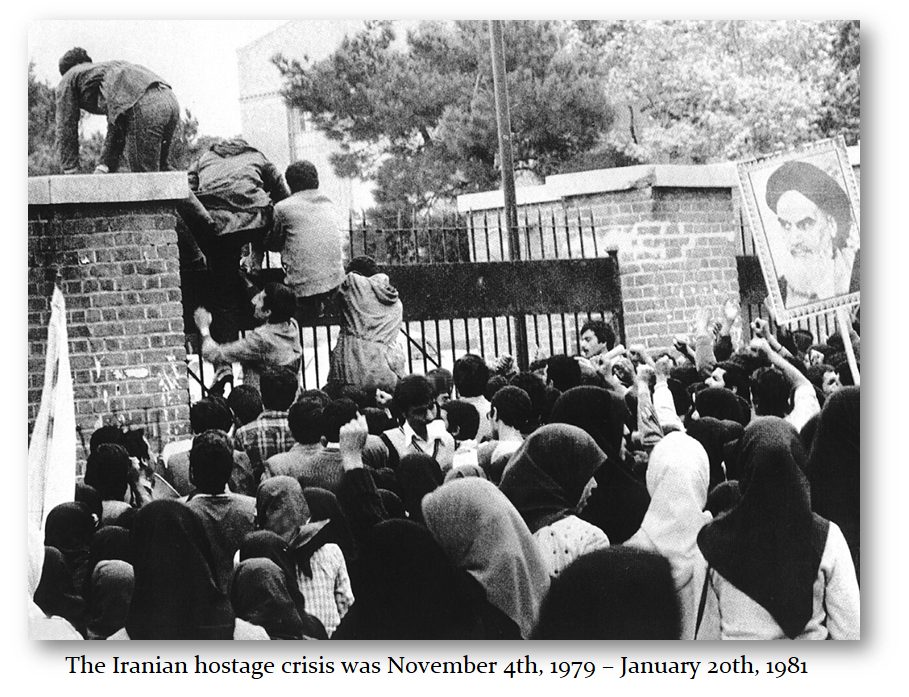
When the Islamic Revolution erupted in 1979, the memory of that coup became one of the principal justifications for the seizure of the U.S. Embassy and the hostage crisis. The revolutionary leadership also faced significant domestic opposition, much of it secular rather than religious. By portraying the United States as the external enemy, the new regime could brand internal opponents as agents of a foreign power rather than simply political adversaries. History repeatedly shows that governments under pressure often strengthen internal unity by emphasizing an external threat.
The same political tactic appears in many conflicts. Rather than addressing criticism directly, opponents are portrayed as supporting the enemy, allowing governments to shift the debate away from the substance of the criticism itself.
Whether one agrees with Iran’s interpretation or not, understanding the origins of the hostility is essential. The deep antagonism between Washington and Tehran did not begin with the nuclear issue. It is rooted in the events of 1953, reinforced by the 1979 Revolution, and has been sustained by decades of mutual confrontation ever since.
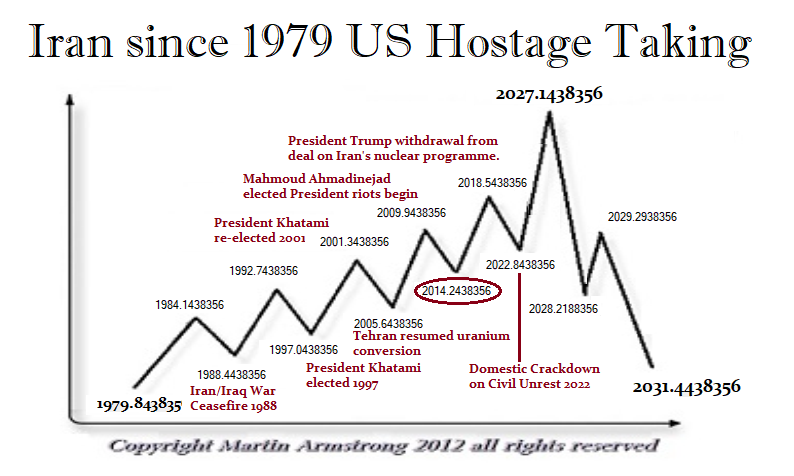
The 1979 revolution set the two nations on a collision course, and the issues over nuclear weapons and proxy warfare have only deepened the divide but are not truly the core issue. This is ultimately a duel to the death. It has been shaping Middle Eastern geopolitics for over 45 years and it appears to be headed into serious confrontation in 2027.
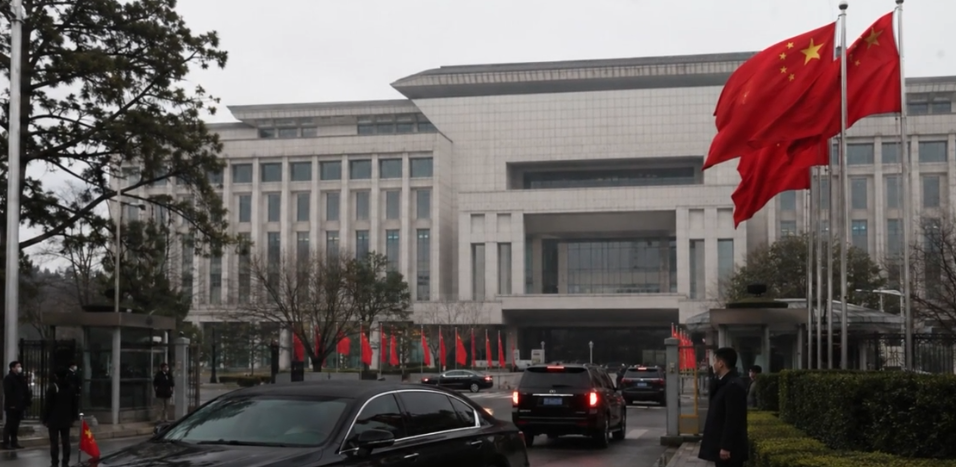
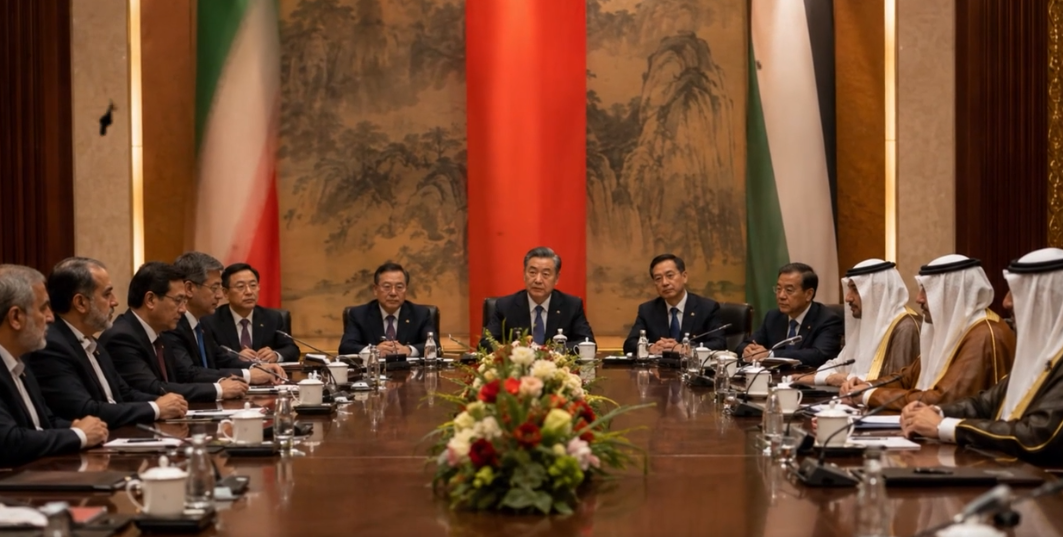
China has been supporting Iran diplomatically and economically, but there is little indication that Beijing intends to become a direct military participant in the conflict. It is important to note that Iranian Foreign Minister Abbas Araghchi traveled to Beijing for high-level discussions during the crisis. The visit underscored the strategic and economic importance that both countries attach to their relationship. Following those meetings, China reaffirmed its support for Iran’s sovereignty while calling for negotiations and de-escalation rather than a further expansion of the war.
I have said before that regime change cannot be achieved simply by bombing a country into submission. In fact, such a strategy often produces the opposite effect. I know Iranians who were strongly opposed to the Islamic Republic, yet the American bombing campaign has caused them to rally behind their country rather than support foreign intervention. The treatment of the Iranian team and its supporters during the World Cup was viewed by many Iranians—including those living in the United States who are otherwise thoroughly Westernized—not merely as criticism of their government, but as an insult to the Iranian people themselves.
That reaction should not surprise anyone. If a foreign power attacked the United States, Republicans and Democrats would almost certainly put aside their political differences and unite in defense of the nation. National identity frequently overrides domestic political divisions when a country comes under external attack.
China has several compelling reasons to maintain close relations with Iran. Energy security is foremost among them. China has long been one of the largest purchasers of Iranian oil, often buying at discounted prices despite Western sanctions. Beyond energy, Iran occupies a strategic position within China’s Belt and Road Initiative, serving as a critical land bridge linking China to Central Asia, the Middle East, and ultimately Europe. Preserving that corridor gives Beijing a strong economic and geopolitical incentive to maintain stable relations with Tehran.
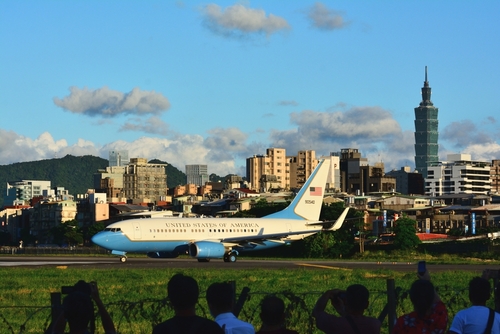
Pelosi Flies to Taiwan
Adding to this, China increasingly views the United States as its principal strategic rival, a perception reinforced by actions it regards as overt attempts at containment. From Beijing’s perspective, policies pursued by successive U.S. administrations, along with highly visible actions such as former House Speaker Nancy Pelosi’s visit to Taiwan, signaled growing American support for challenging China’s claims over the island.
In the case of Iran, China sees the relationship as part of a broader effort to balance American influence rather than simply choosing sides in a regional conflict. Beijing has consistently opposed U.S.-led military interventions and the extensive use of economic sanctions, advocating instead for a multipolar international order.
In my view, American foreign policy since the George W. Bush administration has been heavily influenced by the Neoconservative approach, which has favored sanctions as a precursor to military pressure. China has pursued a very different strategy. Rather than relying on sanctions or military intervention, it has steadily expanded its influence through investment, infrastructure, trade, and long-term economic partnerships.
China today has substantial investments not only in Iran, but also in Saudi Arabia, Iraq, the United Arab Emirates, and other Gulf states. While the United States has often projected influence through military alliances and sanctions, Beijing has quietly expanded its presence throughout the Middle East through economic integration. That difference in strategy explains why China seeks regional stability: its investments span both sides of the region’s geopolitical divides.
Beijing wants to preserve its strategic relationship with Tehran, but it also wants stable relations with the Arab Gulf states, which collectively are even more important economic partners. If we examine China’s position dispassionately, it is difficult to conclude that Beijing seeks military confrontation. Rather, China’s policy is best described as a balancing act—one that stands in sharp contrast to the more interventionist approach often associated with recent U.S. foreign policy.
That does not mean military cooperation between China and Iran is absent. Reports indicate that Iran is expected to receive Chinese-made portable air-defense systems under a commercial agreement. While Beijing has denied direct government involvement, China is unlikely to remain indifferent if it believes the objective has shifted from containing Iran to destroying the Iranian state. From Beijing’s perspective, Netanyahu’s government is pursuing a policy aimed at the complete elimination of the Islamic Republic, making Israel—not Iran—the principal escalatory actor in the conflict.
China will almost certainly continue providing diplomatic support for Iran in international forums while maintaining its extensive economic and energy relationships with Tehran. At the same time, Beijing has consistently encouraged negotiations and de-escalation because it has every incentive to avoid committing Chinese forces to the conflict. This strategy allows China to protect its interests in Iran and throughout the Gulf while minimizing the risk of a direct military confrontation with the United States.
The unfortunate reality is that victory is defined very differently by each side.
For Iran, victory may simply mean survival. If the government remains in power, Tehran can claim it withstood the combined pressure brought against it by the Great Satan and God has protected them.
For the Neoconservative faction, supported by Netanyahu, victory requires something far more ambitious. But how is that measured? Is reopening the Strait of Hormuz a victory when it was open before the war began? Is it the destruction of Iran’s nuclear facilities, even if they can eventually be rebuilt? Or is the objective regime change?
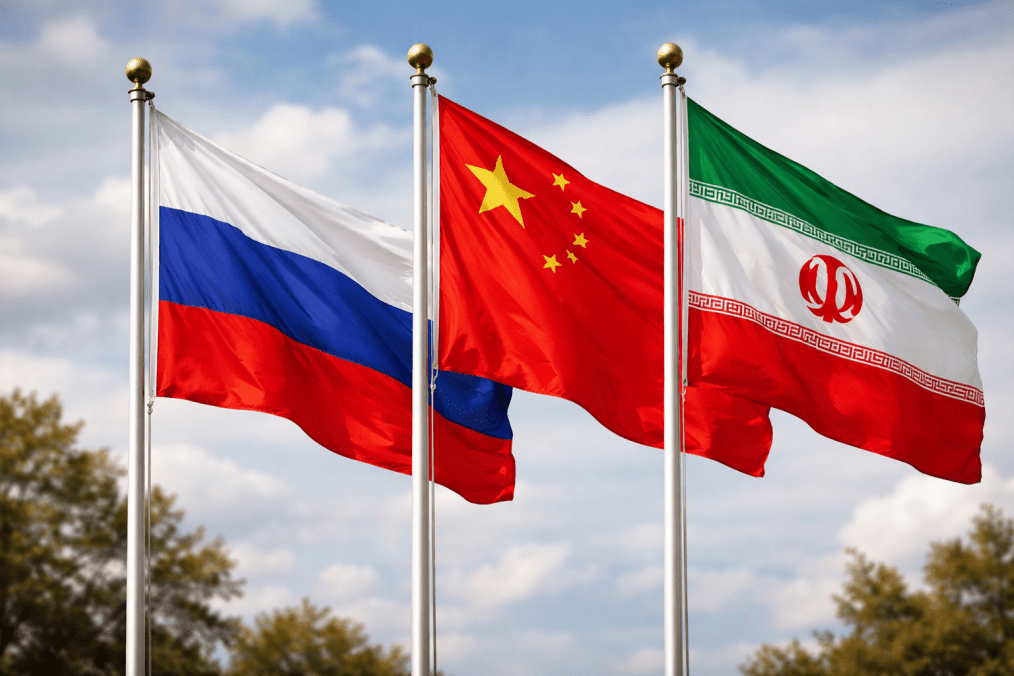
The problem is that there is no clear or lasting victory available because this conflict is fundamentally ideological rather than merely territorial or military. Attempting to topple the Iranian government also carries the serious risk of drawing both China and Russia more directly into the confrontation.
In my view, this is precisely why the conflict risks becoming another open-ended war with no clearly defined end state. The computer continues to indicate a significant risk of escalation into early 2027. At the same time, President Trump will almost certainly need a tangible outcome that can be presented as a victory. Politically, simply walking away without an identifiable achievement would be extremely difficult. That dynamic alone increases the risk that the conflict will continue rather than conclude quickly.