Close Menu
    Facebook X (Twitter) Instagram
    TRENDING :
    • Payroll Tax Obligations for Small Businesses
    • Want part of Amazon’s $2.5 billion settlement? The deadline is Monday
    • The Toronto Tempo president explains how she’s building a WNBA franchise like a startup
    • The invisible tax that might be holding back your startup
    • Should you take that promotion?
    • The Real Conspiracy Behind COVID
    • OpenAI gets sued over ChatGPT medical advice gone wrong
    • Cyclosporiasis update: CDC says parasite outbreak just spread to 4 new states. Full list of where to skip the lettuce
    Compatriot Chronicle
    • Home
    • US Politics
    • World Politics
    • Economy
    • Business
    • Headline News
    Compatriot Chronicle
    Home»Economy»Cuba’s Power Grid Has Collapsed
    Economy

    Cuba’s Power Grid Has Collapsed

    July 7, 20263 Mins Read
    Share Facebook Twitter Pinterest LinkedIn Tumblr Telegram Email Copy Link
    Follow Us
    Google News Flipboard
    Share
    Facebook Twitter LinkedIn Pinterest Email


    BREAKING: Cuba has been hit by another island-wide blackout, leaving roughly 10 million people without power.

    Officials say the cause is under investigation as the country’s aging electric grid continues to struggle and fuel reserves run low.

    It’s the second nationwide blackout… pic.twitter.com/MwFlJNYjUl

    — Fox News (@FoxNews) July 6, 2026

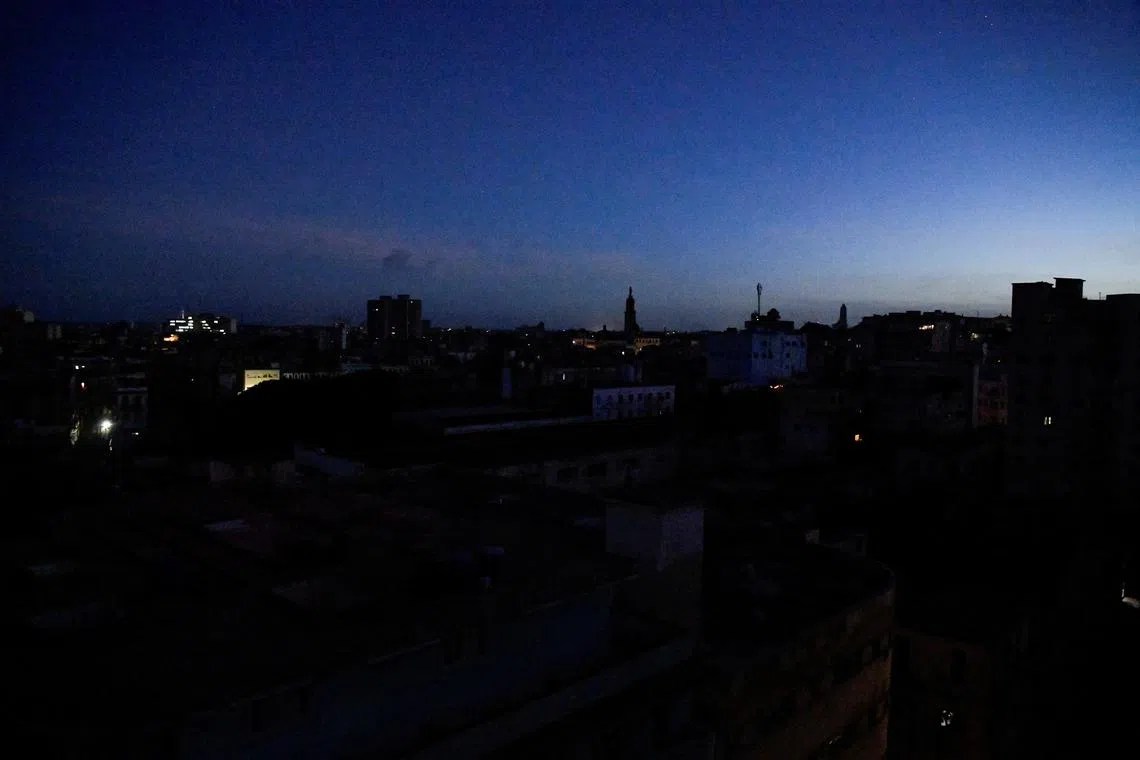
    Cuba’s national electrical grid suffered yet another total collapse on July 6, leaving nearly the entire island without electricity. According to the report, the outage began after a failure at the Diezmero substation near Havana triggered a chain reaction that shut down power generation across the country. This marks the fourth nationwide grid collapse in less than a year, underscoring just how fragile Cuba’s electrical infrastructure has become. Authorities estimate nearly 10 million people were affected as engineers once again struggle to restart an electrical system that has become increasingly unstable.

    Many immediately blame socialism alone, but the reality is more complicated. Cuba has endured decades of economic isolation, sanctions, fuel shortages, and chronic underinvestment. None of that excuses Havana’s policies, yet pretending that American policy has played no role ignores history. Washington has maintained one of the longest embargo regimes in modern history while successive administrations tightened restrictions on fuel shipments and financial transactions. The result has been an economy unable to obtain the capital, spare parts, and financing necessary to modernize infrastructure that was already decades old.
    Cuba’s electrical grid has become one of the clearest examples of what happens when infrastructure is sacrificed to politics. Most of the country’s thermoelectric plants were built during the Soviet era and continue operating well beyond their intended lifespan. Mechanical failures have become routine rather than exceptional. The country imports much of its fuel, and when shipments from allies such as Venezuela declined because of their own economic collapse, the entire system became even more vulnerable. You cannot maintain a twentieth-century electrical grid indefinitely without investment. Eventually transformers fail, transmission lines deteriorate, and power stations simply reach the end of their useful lives.

    Infrastructure does not suddenly collapse overnight. It deteriorates after years of deferred maintenance, declining investment, and governments that continually choose short-term politics over long-term planning. Whether the system is socialist or capitalist makes little difference if there is no capital available to maintain the foundation upon which the economy depends.

    The sovereign debt crisis I have discussed for years ultimately produces exactly these types of failures. Governments borrow to fund current consumption while neglecting productive investment. The public notices little at first because the lights still work. Then one day they do not. Cuba simply reached that point sooner than many others because it lacked access to both capital and reliable energy supplies. Every nation that neglects its infrastructure while diverting resources elsewhere eventually discovers that economic decline begins long before the markets recognize it. The blackout is not the crisis. It is merely the symptom of decades of economic decay.


    Source link

    Share. Facebook Twitter Pinterest LinkedIn Tumblr Email

    Related Posts

    The Real Conspiracy Behind COVID

    July 26, 2026

    Market Talk – July 24, 2026

    July 24, 2026

    The Truth About The S&L Crisis Caused By Government & Endless Taxation

    July 24, 2026
    Top News

    Make AI a force for good in schools 

    By Staff WriterJanuary 14, 2026

    Advancements in artificial intelligence are shaping nearly every facet of society, including education. Over the…

    Tax day 2026 new deductions: Filing for ‘No tax on tips’ and overtime, car loan interest, senior tax breaks could save you thousands

    April 1, 2026

    This iPhone trick lets you use ChatGPT without the privacy risks

    April 11, 2026

    How Austin’s sandlot baseball scene became a magnet for indie rockers, filmmakers, designers, and brands 

    June 1, 2026
    Top Trending

    Payroll Tax Obligations for Small Businesses

    By Staff WriterJuly 26, 2026

    As a small business owner, you face various payroll tax obligations that…

    Want part of Amazon’s $2.5 billion settlement? The deadline is Monday

    By Staff WriterJuly 26, 2026

    If you’ve been an Amazon Prime member at some point in the…

    The Toronto Tempo president explains how she’s building a WNBA franchise like a startup

    By Staff WriterJuly 26, 2026

    The Toronto Tempo arrived in the WNBA this season with record-breaking attendance,…

    Categories
    • Business
    • Economy
    • Headline News
    • Top News
    • US Politics
    • World Politics
    About us

    The Populist Bulletin serves as a beacon for the populist movement, which champions the interests of ordinary citizens over the agendas of the powerful and entrenched elitists. Rooted in the belief that the voices of everyday workers, families, and communities are often drowned out by powerful people and institutions, it delivers straightforward, unfiltered, compelling, relatable stories that resonate with the values of the American public.

    The Populist Bulletin was founded with a fervent commitment to inform, inspire, empower and spark meaningful conversations about the economy, business, politics, inequality, government accountability and overreach, globalization, and the preservation of American cultural heritage.

    The site offers a dynamic mix of investigative journalism, opinion editorials, and viral content that amplify populist sentiments and deliver stories that echo the concerns of everyday Americans while boldly challenging mainstream narratives that serve the privileged few.

    Top Picks

    Payroll Tax Obligations for Small Businesses

    July 26, 2026

    Want part of Amazon’s $2.5 billion settlement? The deadline is Monday

    July 26, 2026

    The Toronto Tempo president explains how she’s building a WNBA franchise like a startup

    July 26, 2026
    Categories
    • Business
    • Economy
    • Headline News
    • Top News
    • US Politics
    • World Politics
    Copyright © 2025 Populist Bulletin. All Rights Reserved.

    Type above and press Enter to search. Press Esc to cancel.