Close Menu
    Facebook X (Twitter) Instagram
    TRENDING :
    • Can India Become The Next Factory Of The World?
    • Silence in a Meeting Isn’t Alignment. It’s Fear. Here’s How to Build a Team That Tells You the Truth
    • For Two Years, I Was Using AI Wrong. Fixing It Is Why My Clients Are Winning While Other Brands Fall Behind.
    • Your Cold Outreach Keeps Getting Deleted for These 5 Reasons
    • What Separates Entrepreneurs Who Endure From Those Who Quit
    • Your Team Doesn’t Need Certainty. It Needs Direction.
    • This Restaurant Chain Went Back to the Basics to Boost Sales
    • Market Talk – July 29, 2026
    Compatriot Chronicle
    • Home
    • US Politics
    • World Politics
    • Economy
    • Business
    • Headline News
    Compatriot Chronicle
    Home»Business»‘Dilbert’ taught white-collar workers how to talk about hating work
    Business

    ‘Dilbert’ taught white-collar workers how to talk about hating work

    January 14, 20264 Mins Read
    Share Facebook Twitter Pinterest LinkedIn Tumblr Telegram Email Copy Link
    Follow Us
    Google News Flipboard
    Share
    Facebook Twitter LinkedIn Pinterest Email

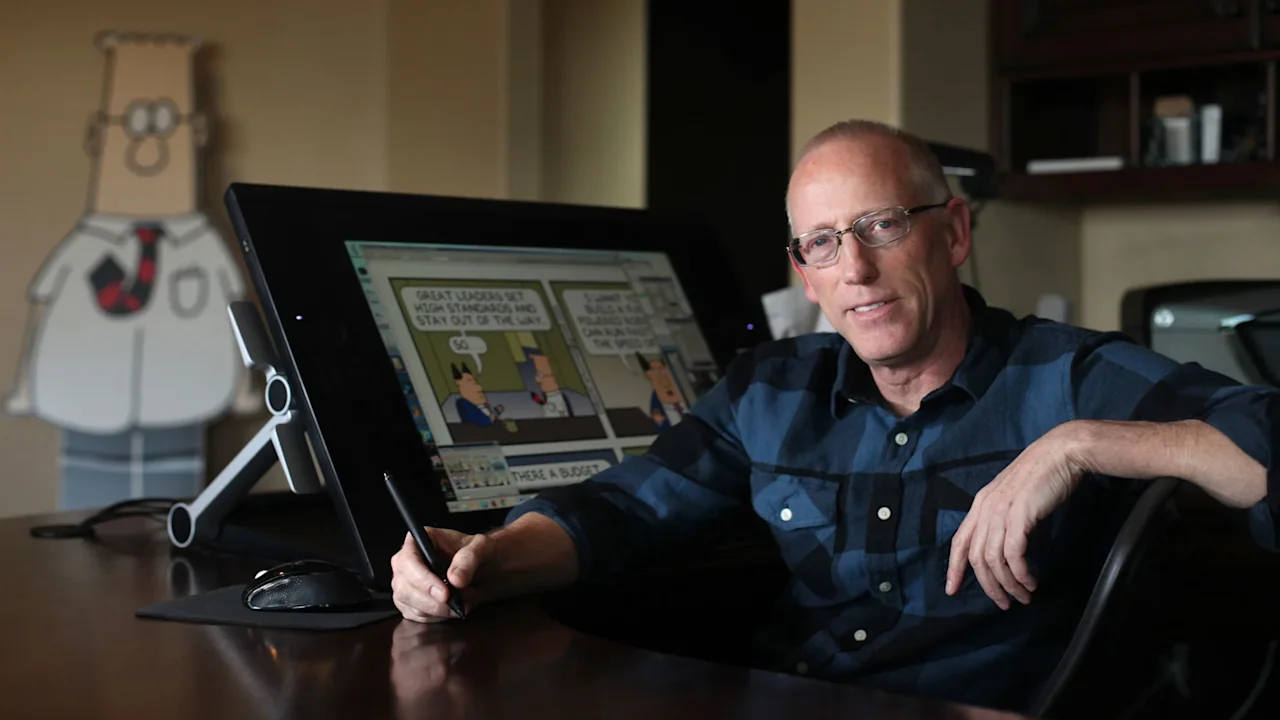
    Scott Adams, the creator of the uber-popular and satirical comic strip Dilbert, has died. He passed away on January 13, after announcing his diagnosis of metastatic prostate cancer last spring. He was 68. 

    On Tuesday morning, the cartoonist’s former wife, Shelly Miles, shared the news of his death during a livestream on X. Miles read from a statement that Adams had prepared himself for the occasion. 

    “I had an amazing life,” the statement said. “I gave it everything I had. If you got any benefits from my work, I’m asking you to pay it forward as best you can. That is the legacy I want. Be useful. And please know I loved you all to the very end.”

    Dilbert was created in 1989, and it broke new ground, offering a refreshing and pointed critique of white-collar work life. It became known for its ever-relatable digs about the drudgery of office culture and insufferable bosses, long preceding relatable movies and TV shows like Office Space and The Office, which featured similar dismal (and hilarious) views of work culture years later.
    In its heyday, the comic strip appeared in over 2,000 newspapers worldwide, with an estimated readership of more than 150 million. Adams’s strip amassed such popularity that he was named the 1997 recipient of the National Cartoonist Society’s Reuben Award. That same year, Dilbert (the character) became the first fictional person to make Time magazine’s list of the most influential Americans.
    However, while Dilbert became one of the most popular cartoons of all time, Adams battled deep controversy in his later years. In 2023, hundreds of newspapers dropped the classic comic after Adams made racist comments on his podcast, saying that it no longer “makes any sense as a white citizen of America to try to help Black citizens anymore.” He also described Black people as a “hate group.”
    Adams said his statements were taken out of context. Still, the incident, and its aftermath, effectively ended Dilbert‘s wide syndication in newspapers. Other comics weighed in, too. “He’s not being canceled. He’s experiencing the consequences of expressing his views,” Bill Holbrook, creator of the strip On the Fastrack, told The Associated Press at the time. “I am in full support of him saying anything he wants to, but then he has to own the consequences of saying them.”
    Regardless of Adams’s troubling personal views and complicated legacy, Dilbert has played a large role in the conversation around work life. Experts say that his cartoons’ outspoken critiques of bosses and work life, which were perhaps ahead of their time, can’t be rolled back.

    Phil Lohmeyer, a cartoonist, animator, and middle school design teacher from Connecticut, tells Fast Company that he’s confident the kind of office critiques made popular by Dilbert will live on because they are so universal. “Dilbert wasn’t as much about the characters, even though the characters themselves became famous. It was more about the annoyance of ‘middle management,’” he notes. 

    Lohmeyer says that the idea truly resonated with office workers, who posted the comics in their cubicles in the ’90s, or emailed them to coworkers. While younger generations might not be well-versed in Dilbert, the teacher still sees the ideas show up in his middle school classroom. The kids “make fun of the rules, schedules,” and more, he says. “They use comic strip humor to question the system, kind of how Adams was doing years ago.”

    While so much has changed in offices and classrooms alike, Lohmeyer says that feeling seen in your role will forever be relevant. “Adams turned work issues into cartoon gags, making the previously invisible finally visible.”


    Source link

    Share. Facebook Twitter Pinterest LinkedIn Tumblr Email

    Related Posts

    Silence in a Meeting Isn’t Alignment. It’s Fear. Here’s How to Build a Team That Tells You the Truth

    July 30, 2026

    For Two Years, I Was Using AI Wrong. Fixing It Is Why My Clients Are Winning While Other Brands Fall Behind.

    July 30, 2026

    Your Cold Outreach Keeps Getting Deleted for These 5 Reasons

    July 30, 2026
    Top News

    Senate nears vote on government shutdown deal

    By Staff WriterNovember 11, 2025

    The Senate was drawing closer to a vote on legislation to end the shutdown on…

    Why a Korean film exec is betting big on AI

    February 11, 2026

    Why Republics Will Collapse | Armstrong Economics

    October 28, 2025

    Crypto scams took $17 billion last year. 2026 could be even worse

    January 15, 2026
    Top Trending

    Can India Become The Next Factory Of The World?

    By Staff WriterJuly 30, 2026

    For more than a decade, Prime Minister Narendra Modi has been pursuing…

    Silence in a Meeting Isn’t Alignment. It’s Fear. Here’s How to Build a Team That Tells You the Truth

    By Staff WriterJuly 30, 2026

    Opinions expressed by Entrepreneur contributors are their own. Key Takeaways Most employees…

    For Two Years, I Was Using AI Wrong. Fixing It Is Why My Clients Are Winning While Other Brands Fall Behind.

    By Staff WriterJuly 30, 2026

    Opinions expressed by Entrepreneur contributors are their own. Key Takeaways AI does…

    Categories
    • Business
    • Economy
    • Headline News
    • Top News
    • US Politics
    • World Politics
    About us

    The Populist Bulletin serves as a beacon for the populist movement, which champions the interests of ordinary citizens over the agendas of the powerful and entrenched elitists. Rooted in the belief that the voices of everyday workers, families, and communities are often drowned out by powerful people and institutions, it delivers straightforward, unfiltered, compelling, relatable stories that resonate with the values of the American public.

    The Populist Bulletin was founded with a fervent commitment to inform, inspire, empower and spark meaningful conversations about the economy, business, politics, inequality, government accountability and overreach, globalization, and the preservation of American cultural heritage.

    The site offers a dynamic mix of investigative journalism, opinion editorials, and viral content that amplify populist sentiments and deliver stories that echo the concerns of everyday Americans while boldly challenging mainstream narratives that serve the privileged few.

    Top Picks

    Can India Become The Next Factory Of The World?

    July 30, 2026

    Silence in a Meeting Isn’t Alignment. It’s Fear. Here’s How to Build a Team That Tells You the Truth

    July 30, 2026

    For Two Years, I Was Using AI Wrong. Fixing It Is Why My Clients Are Winning While Other Brands Fall Behind.

    July 30, 2026
    Categories
    • Business
    • Economy
    • Headline News
    • Top News
    • US Politics
    • World Politics
    Copyright © 2025 Populist Bulletin. All Rights Reserved.

    Type above and press Enter to search. Press Esc to cancel.