

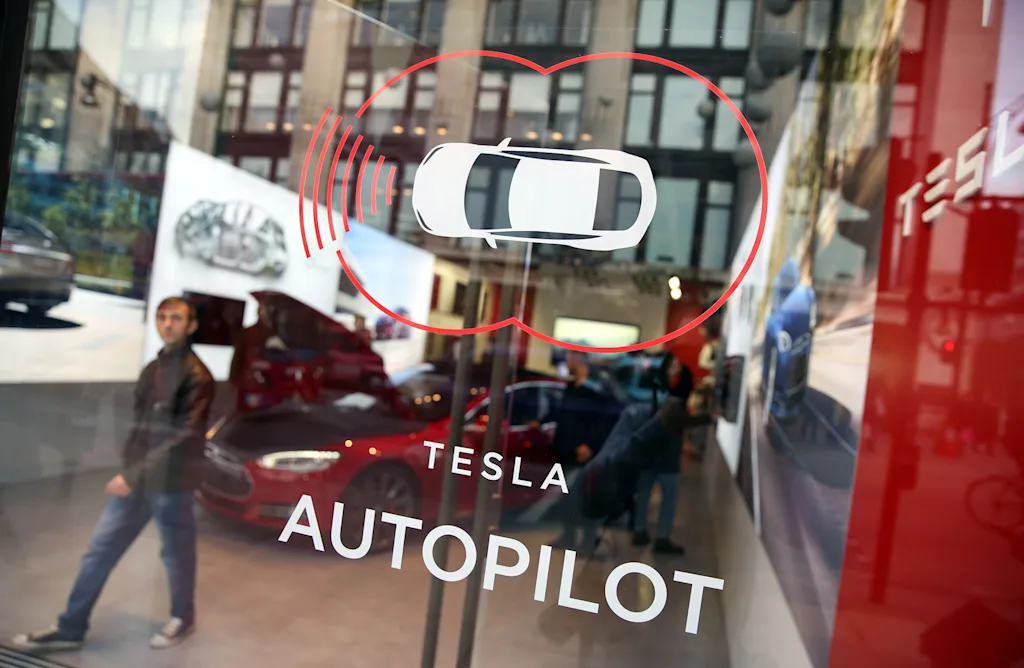
Two months ago, a state administrative judge in California determined that Tesla broke the law by misleading consumers. The argument: Tesla led them to believe that its cars had real self-driving capabilities, calling them “Autopilot” and “Full Self-Driving” (commonly known as FSD). The issue is that Teslas can’t really drive by themselves; they still require drivers to remain constantly vigilant to prevent catastrophe. The verdict prompted the California Department of Motor Vehicles to threaten a temporary suspension of Tesla’s manufacturing and sales licenses.
Two months after the ruling, on February 13, Tesla’s attorneys filed a complaint alleging the state “wrongfully and baselessly” labeled it a false advertiser, brazenly arguing that “it was impossible” to buy or use the “auto-pilot” software “without seeing clear and repeated statements that they do not make the vehicle autonomous.” Yet, their fine-print defense clashes with Musk’s failed promises and stunts, such as when he took his hands off the wheel on CBS’s 60 Minutes in 2018 and proudly declared he was “not doing anything.” Or when he showed fake, staged videos of Autopilot in action.
Four days after Tesla’s complaint, California’s DMV backed off its shutdown threats when the company agreed to clean up its marketing, rebranding the $99-a-month subscription to “Full Self-Driving (Supervised)”.
Now CNBC reports that Tesla is suing anyway to completely reverse the ruling. Musk is demanding the right to use his futuristic language to sell cars— determined false by the courts—while simultaneously relying on its owners’ manuals to shift the blame to drivers the second the system fails. The move prompted the DMV to declare it will “defend the Administrative Law Judge’s findings and decision in court” to protect the public.
Long trail of bodies
Tesla’s new legal gambit to defend its autonomous driving fantasy clashes with the brutal reality of a deficient technology. Tesla cars still only have a Level 2 autonomy—a mechanism designed to handle basic steering and speed—out of four levels (the fourth is true full autonomy, which so far only Chinese manufacturer BYD has been able to achieve while parking).
According to the Tesla accident tracking site Tesla Deaths, in the decade after the release of Autopilot in October 2015 there have been at least 65 fatalities connected to Tesla’s Autopilot system. Of those, an April 2024 NHTSA report investigated and verified 29 fatal crashes.
The common thread in these tragedies is a catastrophic failure of the Level 2 advanced driver assistance system to recognize stationary objects or crossing vehicles. In May 2016, Joshua Brown died in Florida when the system failed to notice the white side of an 18-wheeler against a bright sky, leading the National Transportation Safety Board to conclude the software permitted “prolonged disengagement from the driving task.” Incidents continued over the years, culminating in a landmark August 2025 federal jury verdict where Tesla was found 33% liable and ordered to pay $243 million after a 2019 crash in Key Largo, where the driver admitted, “I trusted the technology too much.”
While Tesla continues to beta-test its software on public roads with deadly consequences, international competitors are quietly delivering the autonomous future Musk has been promising for a decade. Chinese automaker BYD recently deployed its ‘God’s Eye’ intelligent driving system over-the-air to more than one million cars, introducing a Level 4 autonomous parking feature that allows a vehicle to navigate a lot, find a spot, and park completely unattended.
Unlike Tesla’s stubborn reliance on cameras alone, BYD utilizes a robust sensor architecture that includes up to 12 cameras, 12 ultrasonic sensors with 0.4-inch accuracy, millimeter-wave radars, and even lidar on higher trims. BYD is so confident in this technology that it issued a blanket guarantee to cover any damages if the system makes a mistake. They are not the only ones. Volvo, who uses Waymo’s self-driving system, also covers any damages. Tesla, on the other hand, deflects blame to the driver.
Failure after failure
Musk has been predicting the imminent arrival of FSD every year for over a decade now. The gap between his grand vision and Tesla’s actual engineering output has become a chasm of broken promises and delayed timelines. So much so that I’m beginning to think that, in his head, FSD must mean Full Self-Delusion.
Musk promised a steering-wheel-free Cybercab by 2026, but January came and he changed the tune to “before 2027,” saying it was going to be extremely hard to produce them in big numbers. He also claimed that autonomy will begin moving the financial needle by mid-2026 and that the company’s humanoid Optimus robots will soon hit a production rate of one million units per year.
Reality tells a drastically different story, with executives warning Musk that the profitability for the robotaxi venture would be “very, very hard outside the U.S.” It’s a reality check that is reflected in the data. According to the latest stats, Waymo’s autonomous cabs currently manage a staggering 17,311 miles between disengagements, while Tesla’s Full Self-Driving struggles to hit just 489 miles before a human has to intervene.
Despite these internal warnings and external failures, Musk refuses to change course or adopt better hardware. He famously dismissed lidar—a crucial technology that uses pulsed laser light to map the environment in three dimensions, much like a bat uses echolocation to navigate in the dark—as a “crutch” and a “loser’s technology.” Instead, he opted to strip ultrasonic sensors from Tesla vehicles entirely, a cost-cutting move that has resulted in owners reporting persistent errors with basic parking assist features, particularly when rain, snow, or low light blinds the camera lenses.
Tesla seems to be trying to change the narrative and manipulate public perception with words, but the public is increasingly not buying the propaganda. Tesla sales continue to tank quarter after quarter due to stale design, lack of innovation, and Musk’s personal brand failure. While the courts will ultimately decide if the automaker can continue advertising its flawed experimental program by dressing it up in the costume of a fully self-driving machine, the public has spoken.