

I hold the key to the Ferrari in my hand. I press it, like a puzzle piece, into a notch by my right hip. Yellow fades from the key as the hue enters the shifter and the dashboard comes to life with a wave of yellow.
I’m enchanted. My foot can’t wait to slam down on the pedal. The only thing I’m missing is . . . the entire rest of the car.
Even for a legendary automaker launching its first EV, it was a preposterous pitch: Ferrari’s big car reveal would not show the car. And it wouldn’t show the car’s interior, either. Instead, journalists were asked to fly—some of them halfway across the world—to scope out a steering wheel, a few chunks of dashboard, a center console, and a seat.
I can count the designers I’d do that for, not on one hand, but on one finger. As it happens, that was the designer pointing the way.
While the world will never get a ride in Jony Ive’s long lost Apple Car, they will get a spiritual sequel with a 1,000+ horsepower upgrade, Jony Ive’s spin on Ferrari.
Ferrari meets Silicon Valley
Designed over the last five years with the firm LoveFrom, the Ferrari “Luce” (translation to “light” or “illumination”) is a generationally important car for the Italian automaker as it transitions to an electric future. Everything from the car’s form, to its layout, to its buttons, to an e-ink key that’s the size and shape of a Zippo lighter, to the vehicle’s interface and typeface, was designed through the gaze of the San Francisco firm.
It’s nearly impossible to ignore the Venn diagram between Ferrari’s first electric vehicle and the golden era of Apple products. And you certainly don’t need to squint to spot some of Ive’s favorite materials, like the prominent use of anodized aluminum and Gorilla Glass across the components.
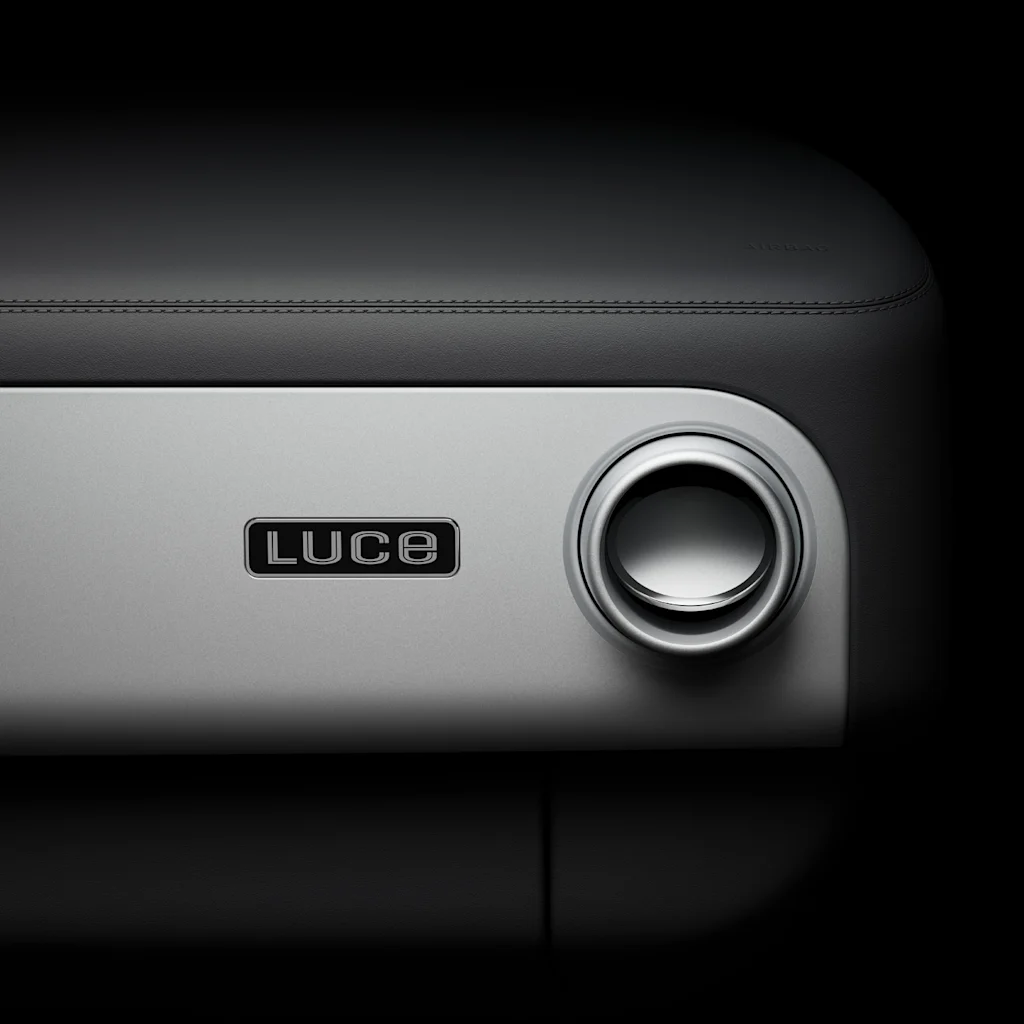
But this outcome seems largely by Italy’s own design. Ferrari’s CEO, Benedetto Vigna, spent two decades on semiconductors before turning to Italian supercars in 2021. He wants to carve a future for Ferrari in a rapidly changing world, and also crack the code to court new customers, like Silicon Valley billionaires, to spend some of their fortune on cars.
The project—to be fully revealed later this year before shipping in October—was led by the aforementioned Ive and Marc Newson. Before co-founding LoveFrom, they were best friends for decades, and collaborators on projects ranging from a 1.5-ton desk auctioned for charity to the Apple Watch.
Ive, of course, defined the modern era by designing products ranging from the iMac to the iPhone. While Newson, a lesser-known name in Apple history, is a star in his own rite. He’s also an almost archetypal designer to reimagine a luxury automaker. Long before he posted his own exploits racing vintage cars on his Instagram, he crafted just about every object imaginable (including a public bathroom for Japan, Nikes built for space, and the influential Ford 021C), with a particular penchant for high-end brands. His Lockheed Lounge is still the most expensive piece of furniture ever sold by a living designer. (Get a deep look into his career and design process here.)
Backing the two of them, of course, are the industrial, UX, mechanical, and graphic design experts at LoveFrom—many of whom worked with Ive during his days at Apple.
Ive, as it turns out, had good reason for extending the hype cycle for LoveFrom’s first major client outside of Apple. If they showed the body of the Luce now, it’s all anyone would notice. Meanwhile, LoveFrom has been working for years on dozens of components inside the car, each of which they treated as beloved products all their own.
Ferrari’s chief design officer, Flavio Manzoni, frames the Luce as something of a capsule project that’s independent from Ferrari’s full lineup, which offered LoveFrom license to create a thesis that can live self-contained. “This is very inspiring, and certainly will influence everything [we do],” says Manzoni. “But it also must be kept as something really singular and unique. Everything has been done interpreting the soul of a very special car.”
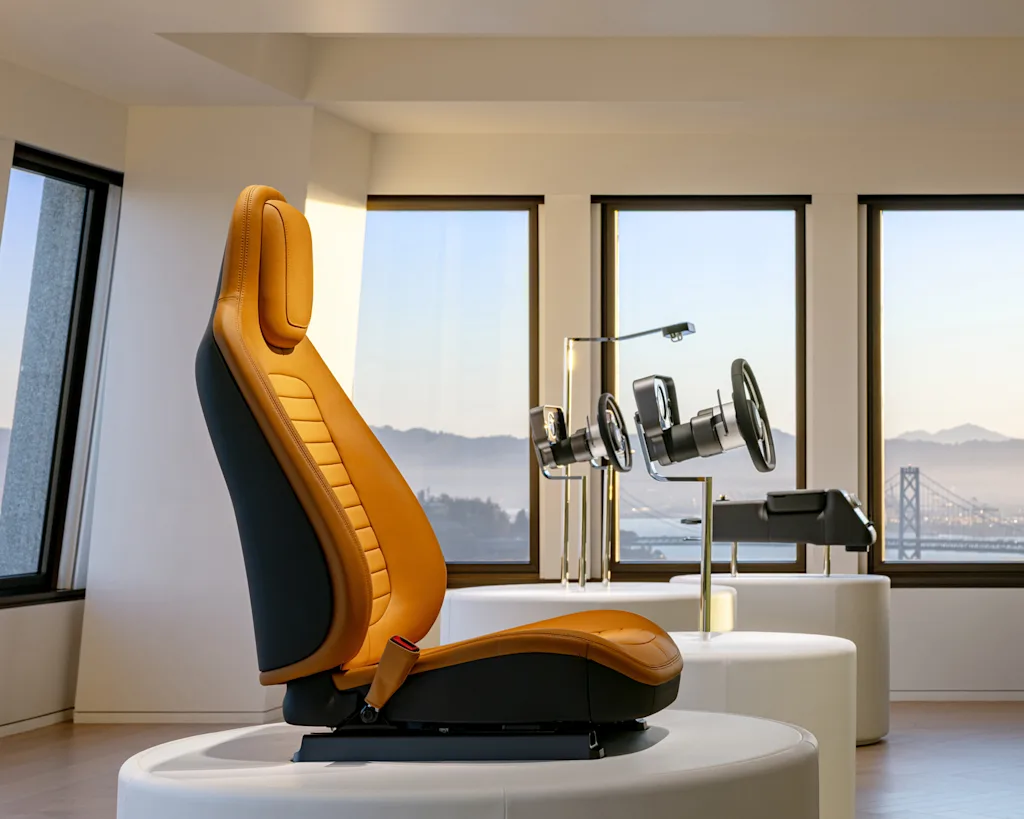
Deconstructed and organized atop white tables during the preview, I could appreciate not only the Luce’s components like its wheel, but its subcomponents of knobs, switches, and paddles—perhaps a dozen different buttons each offering their own feeling. With nested, CNCd aluminum housings, you can almost see a watch, or a game controller, or just some irresistibly interesting thingamabob living harmoniously inside another. The vehicle is an ecosystem of mini gadgets.
Pulse-rocketing supercars couldn’t be more disparate from the ever-serene atmosphere inside LoveFrom’s San Francisco studio, where fresh cut flowers casually adorn each nook. As I sit with Ive and Newson at a long white table, upon soft blue, yellow, and orange stools mirrored by their Moncler collection at the far end of the room, the duo conjures a whole other thought space, riffing on their high-octane handiwork.
“We really wanted every part, every component, to be designed as an individual product. So it’s like dozens and dozens of cameras and watches. The idea [was] we could spend the time and invest the care on every part and have it work,” says Ive. “Even the forms are very self-contained and modular.”
The components, as it turned out, are worth talking about. As the auto industry inevitably transitions to electric, LoveFrom’s design team created a love letter to tactile interface, offer solutions to blending digital and physical experiences in the vehicle, and tease the sort of auteur-driven work that’s disappeared in an increasingly blanded and averaged automotive industry that sold its soul chasing Tesla.
“We’re very aware that we love the sounds of our big old Ferrari engines,” says Ive. “And so rather than trying to figure out some sort of surrogate or something inauthentic to [compensate], we worked so hard to try and create as visceral and direct connection with the object [as possible].”
Focusing the driver’s experience
A Ferrari is a driver’s car, and without looking around at any other spectacle in the Luce, the driver experience has been designed for focus.
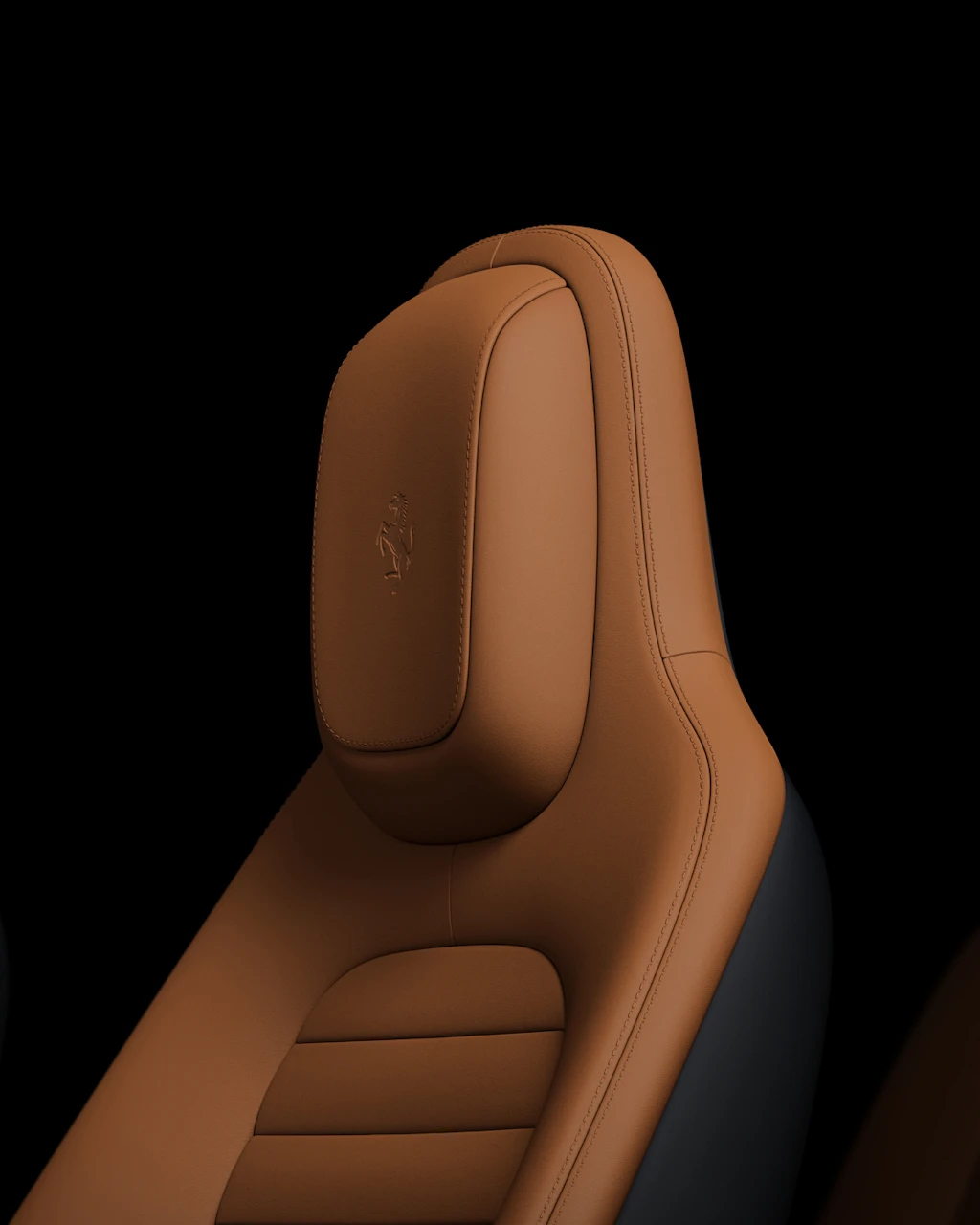
It begins with the car’s seats, which seem plucked from somewhere between a race car and a living room. After sinking into them, drivers place their key into the console, and they take the wheel.
Most wheels tilt up and down independently from the car’s instrument panel, making it sometimes difficult to be comfortable while having a clear line of sight through the wheel to your gauges. But the Luce moves this entire rig as one unified gesture: The wheel, steering column, and instrument panel shift as one. (What I hear was a particular engineering challenge for both safety and mitigating vibration.)
The wheel feels like a natural conclusion to Ferrari’s last few generations of fussing with its own icon. The manufacturer added controversial touch capabilities in 2019, before reversing course last year with a modernized, more mechanical option that can be retrofitted into older vehicles.
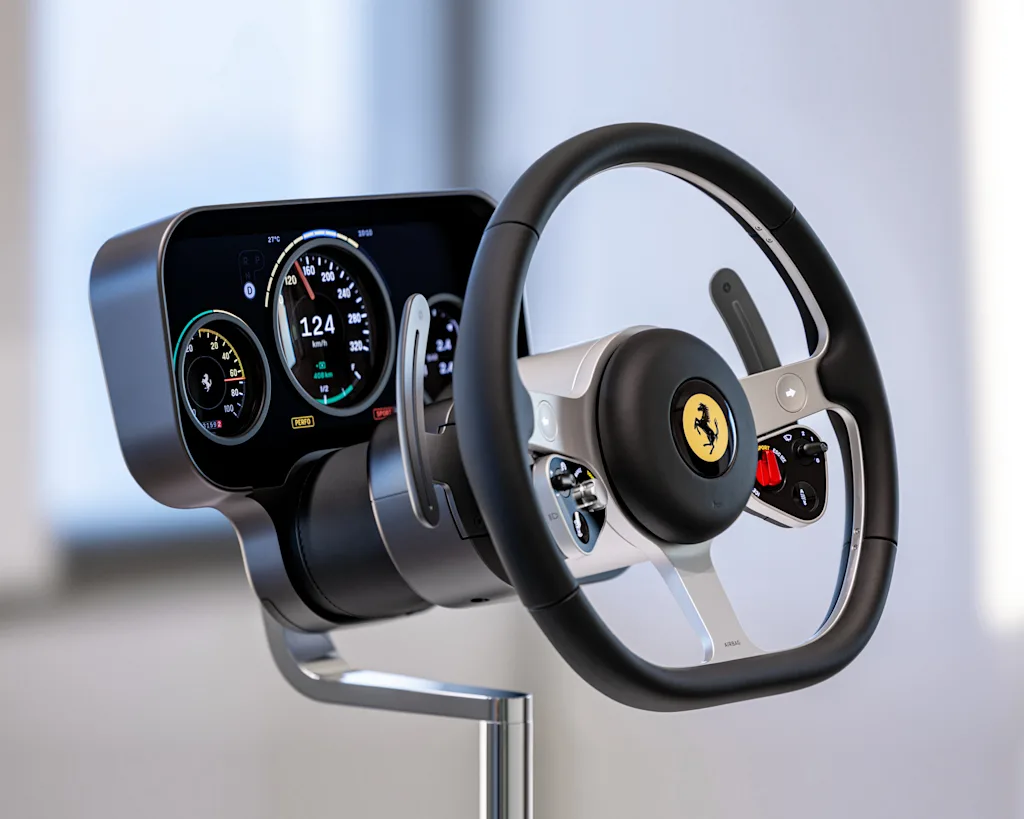
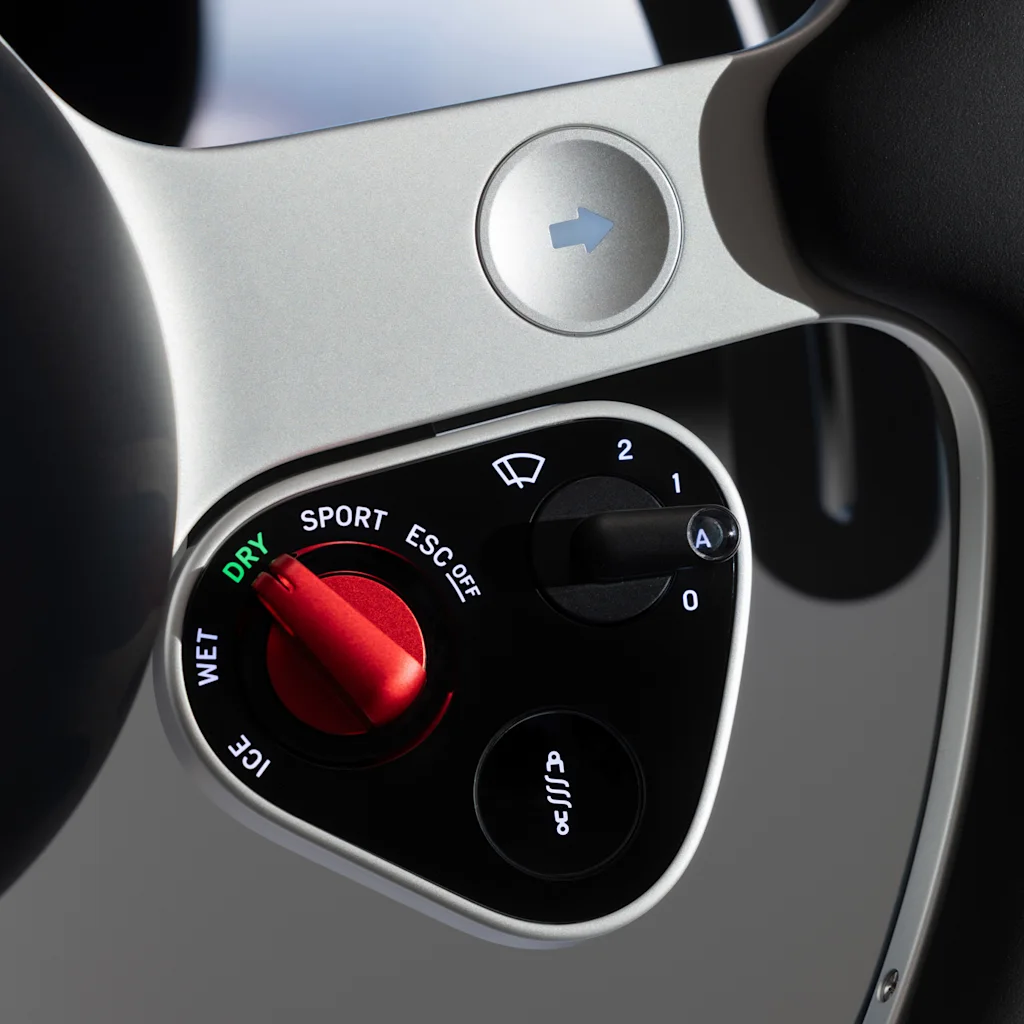
The LoveFrom wheel reads rounder all around, veering more toward vintage Ferrari than an oblong reference to F1. Its aluminum core is earnestly exposed rather than obfuscated in leathers and rubber. The controls gently reorganize Ferrari mainstays, like the bold red Manettino dial (to adjust your driving mode), into something you feel like your brain can process alongside new touches like left and right buttons (they’re turn signals).
The instrument panel—or binnacle—is not just a wide screen with widgety virtual controls: it’s a collection of four screens. Three round screens, making up the speedometer and other dials, live recessed inside a fourth screen. Lenses and parallax effects give the panels additional depth and physicality. But that physicality is more than an illusion of pixels and refraction: the speedometer needle is real.
The combined effect will be something drivers haven’t exactly seen or felt before, punctuated by a pared back interface that tells most of the story through the three hues of the Tricolore—without it feeling like a trip through our grocery store’s international aisle.
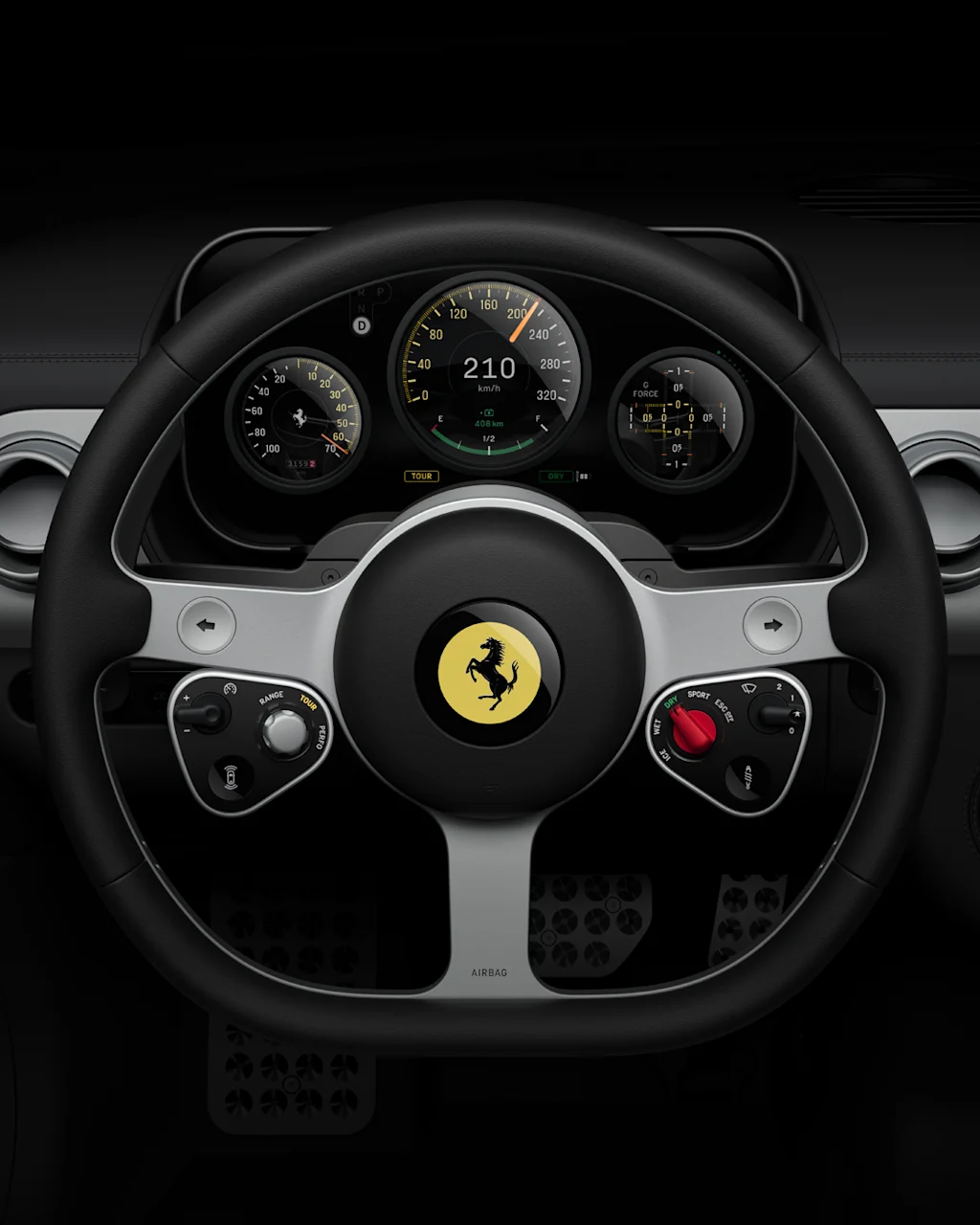
Chris Wilson, who you know for his work on the Apple Watch UI, worked with Ferrari engineers to marry onscreen UX with its new torque shifting technology. While electric motors require no shifting, pulling the paddle on the left side of the wheel provides a virtual downshift (turning the dial green while motors slow the car to recoup energy). When it’s time for an extra jolt of power, the interface blinks red, and you pull the paddle on the right.
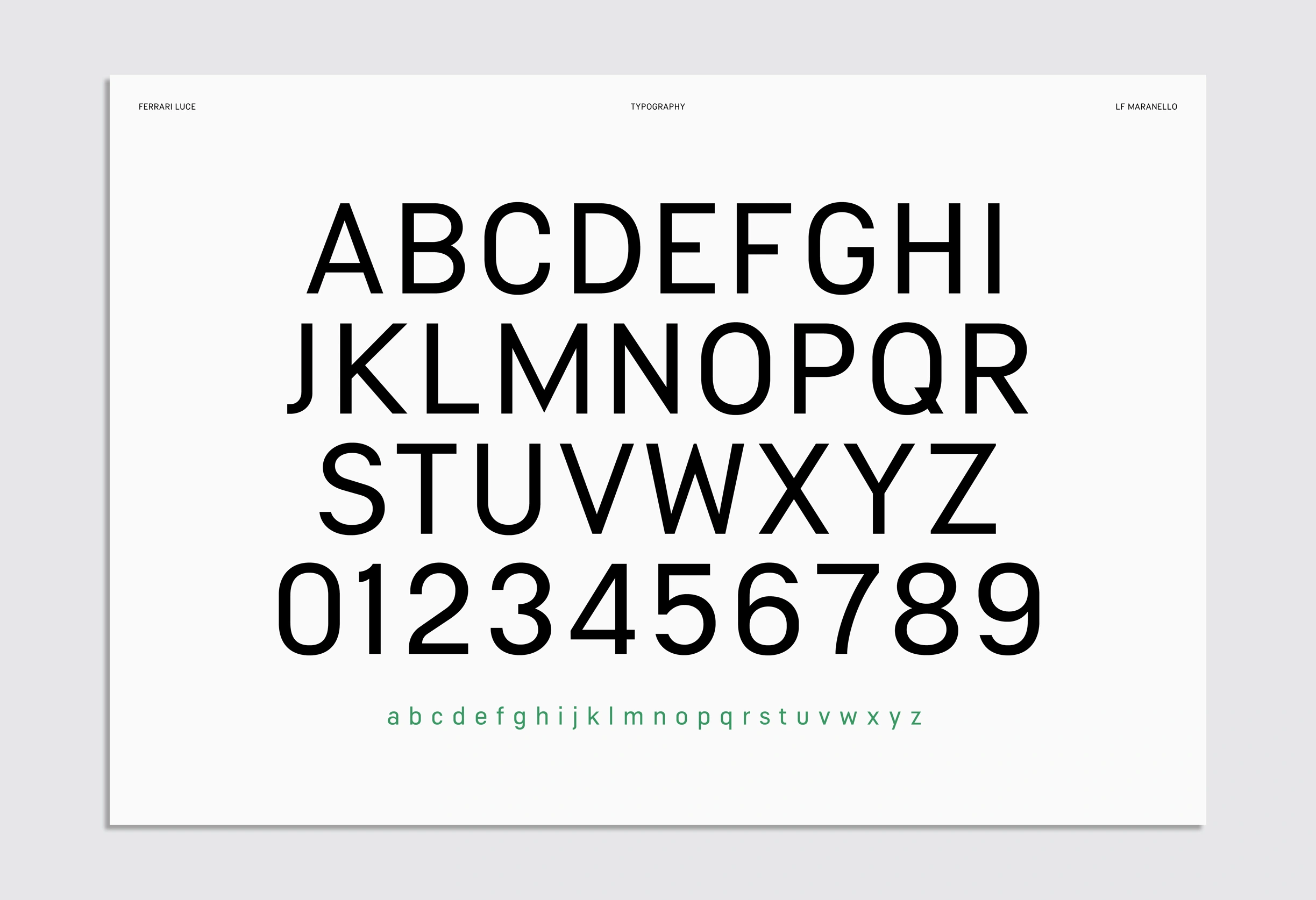
Meanwhile, the numbers you see on the instrument panel are part of a new typeface family called “LF Maranello” designed by LoveFrom’s Antonio Cavedoni, who worked alongside Wilson on Apple’s San Francisco typeface before making LoveFrom’s own. Bucking the wide stance letters Ferrari is known for, the clean san serif is an amalgamation of midcentury Ferrari engine stamping, the numbers on old Ferrari dials (themselves often plucked from whatever watch manufactures were already using), and local signage from Ferrari’s hometown of Maranello. With the slightest expressive indulgences—a curvy flag on the 1, a short stem on the 4—it manages to look vintage and contemporary at the same time.
“The hardware is geometrically perfect,” says Cavedoni. “But here, we can do anything.”
Fixing human factors at high speeds
Over two days of previews, Ive doesn’t mince words about the influential approach Tesla has taken, in which, through some desperate attempt to create sci-fi mystery, the vehicles mask the simplest functions. One such example is the way a Tesla handles its gaspers (that’s the technical term for the fans built into the dash). Whereas Tesla literally hides them so well you can only control them via a screen, LoveFrom’s gaspers almost glow.
With spherical aluminum bodies, they could double as Macbook satellite speakers. You twist a ring, and a visible, central flap swings open or closes with a satisfying click. You don’t need to dig through a UI, or even squint to look for an “X” symbol on some dial on the dash. The object explains itself.
“Clarity is so important. Not only in terms of physical interaction, but intellectual clarity,” says Newson.
Since Elon Musk stuck what Ive calls “an iPad” into the center of a Tesla, a disjointed center screen has increasingly taxed the experience of driving. It’s why I was perhaps the most and least surprised by LoveFrom’s choice to have a tablet in the center of the vehicle.
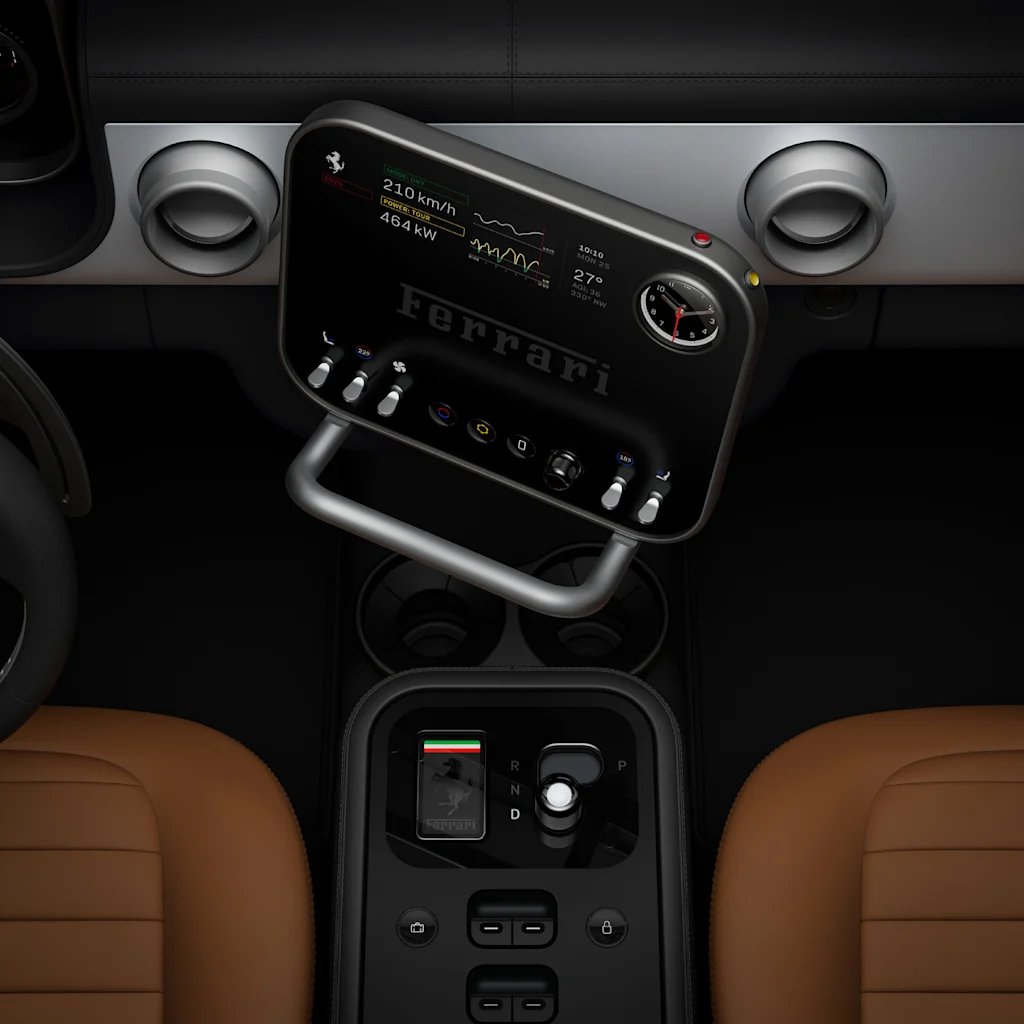
However, Luce’s tablet is foundationally different. It’s entirely unnecessary for driving, and, perhaps ironically, a screen that’s usable without looking at it.
The tablet sits atop a large aluminum handle, which allows you to tilt the screen or blindedly rest your palm for a point of reference.
That handle also adds impact protection from a series of aluminum toggle switches that live in the bottom of the display, managing tasks like climate control and seat warming. Yes, these switches appear straight out of midcentury Ferrari design language. And yes, LoveFrom produced four thick books charting the history of Ferrari gifted to the company at the start of their collaboration. But the team bristles when I characterize the choice for toggle switches as an homage.
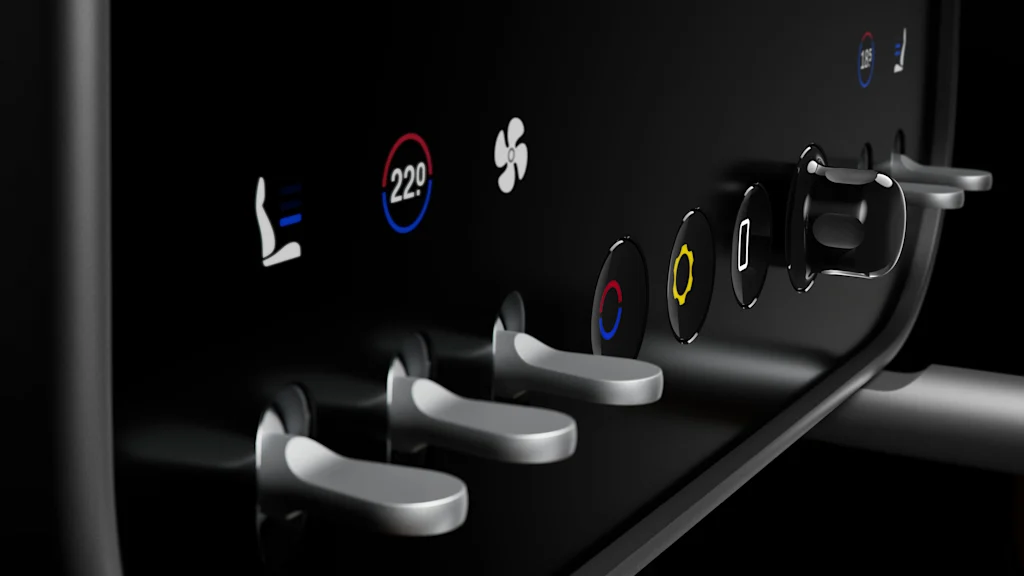
Newson points out the toggle itself is a known typology, “because it’s the best tool for the job.” That’s why it’s in the Luce and all sorts of vintage control panels, he notes—and that’s also why we innately think toggles are so cool.
“If you look at helicopters from the ‘50s, ‘60s, they weren’t screwed up with design,” says Ive. “Their beauty was a function of them being so brilliantly utilitarian. And I think so often stuff just gets ugly when design gets in the way.”
Setting the stage for performance
But that’s not to say the Luce is some unflinching commitment to minimalism, or that a serious commitment to craft requires the driver to never crack a smile.
In the upper right hand corner of that tablet is a “multigraph.” At a glance, it looks like a clock with physical minute and hour hands that could be straight out of a fine timepiece. But a split second later, it can turn into a compass or one of two stopwatches (in 60-second, and 5-second launch variants). Unlike typical timepieces, the hands will spin independently from one another, animating in an unexpected way.
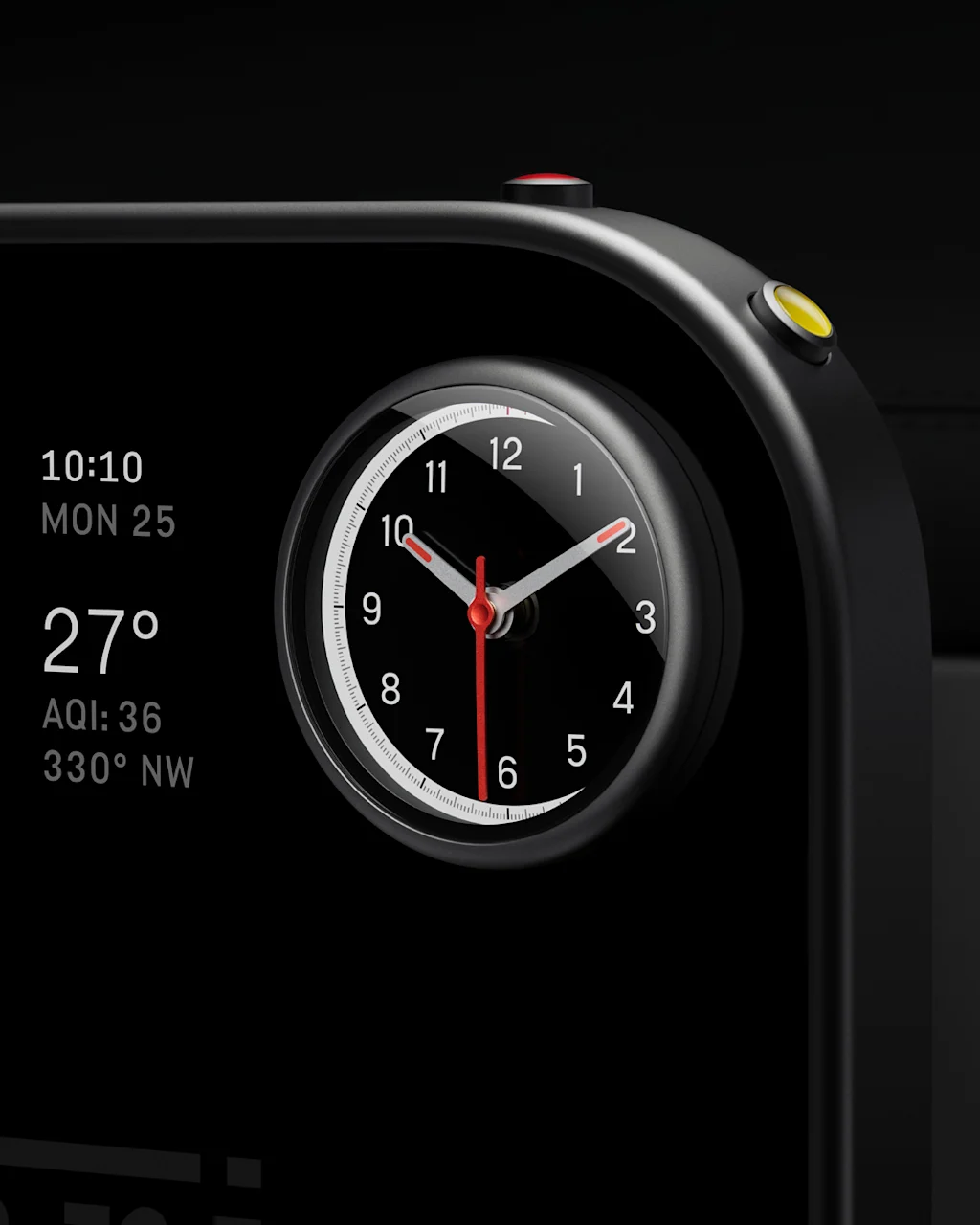
Is this touch purely about function? Ha! Of course not—a virtual clock could appear on the screen in the same spot. It’s LoveFrom stunting, taking its own metaphorical Ferrari out of the garage and bringing fans along for the ride.
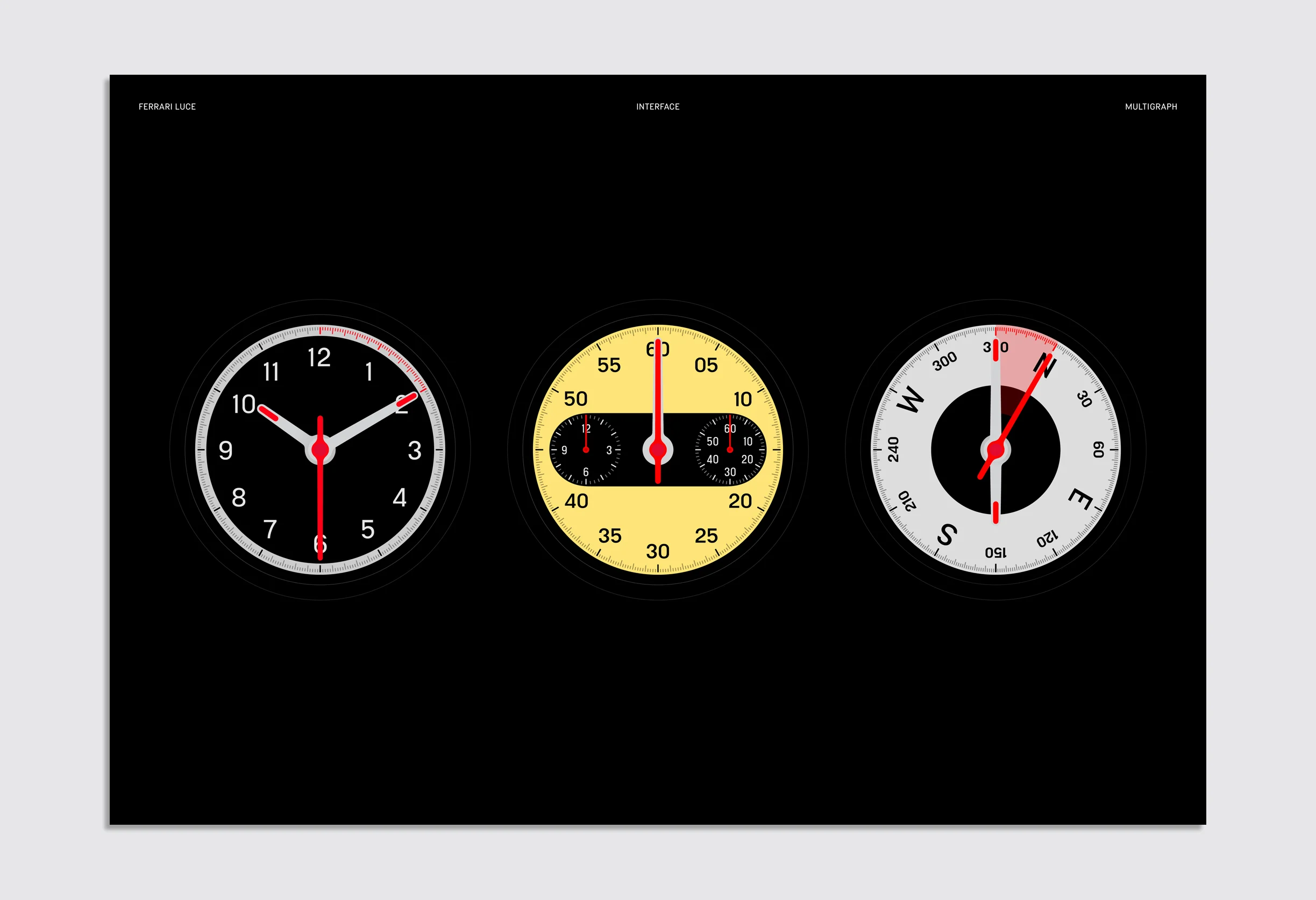
“We’re introducing an impediment…an engineering challenge, but it makes it way more engaging,” says Ive, before holding his own iPhone into the air looking like an Uber driver scanning for their next ride. “Or it could just be [that] mounted.”
We see a similar celebration of driver engagement with Luce’s launch control. This is a setting that preps the car, the battery, and the driver to coax the maximum straight-line power for acceleration. Instead of pressing a button on the wheel, this new launch control requires the driver to hold the brake while reaching above their head and pull on a cylindrical, pneumatic handle.
After a few seconds, I’m told, the car’s entire cabin lights up orange, enlisting everyone into the vehicle to hold on with dramatic flare.
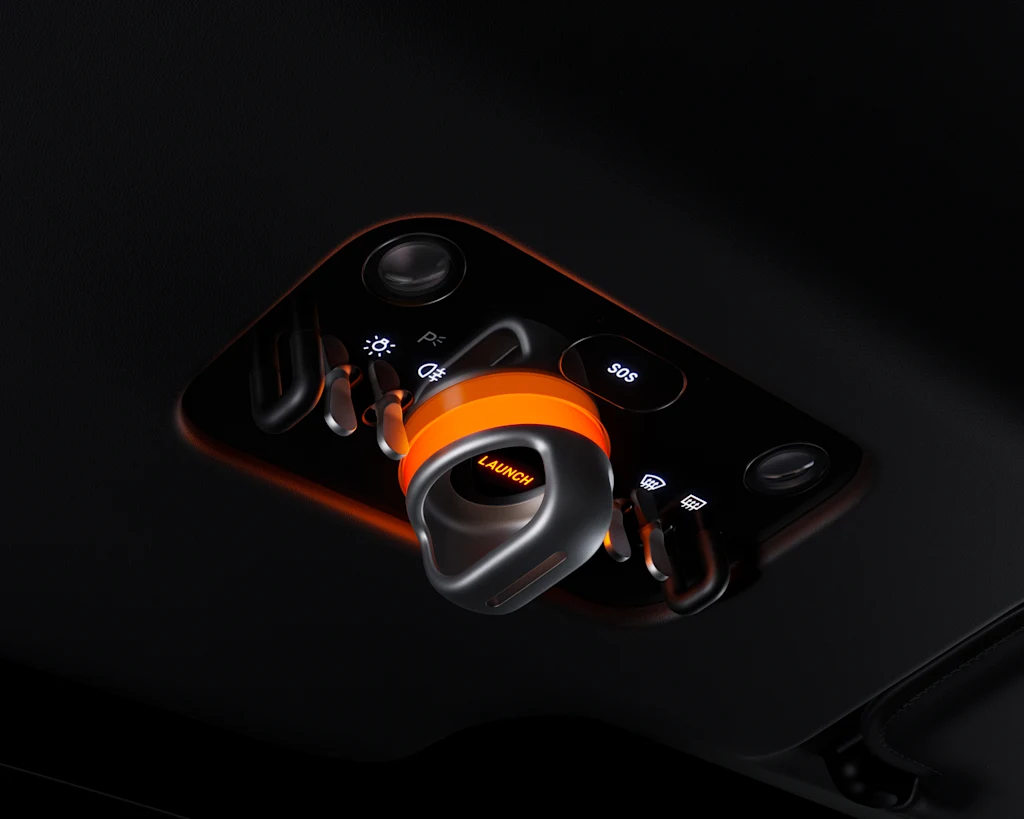
Back in LoveFrom’s studio, Ive and Newson deconstruct their code-orange approach.
“The Ferrari brand is extremely visceral. And in some ways there’s a theatricality you really need to embrace,” says Newson. “So things like the launch control, things like the key ceremony—there’s a nice, ‘humor’ is the wrong word…”
“…It’s tough to figure out the word for the yellow of the key translating into the car…I mean, it’s sort of funny,” chuckles Ive.
“It’s fun—joyful. It needs to be,” says Newson. “No one needs a Ferrari, sorry to say, but you own a Ferrari, because it will just be a much more fun way of [driving].”
“We love that there was such a focus on being fun and joyful to drive, and it’s like, no apology,” says Ive.