
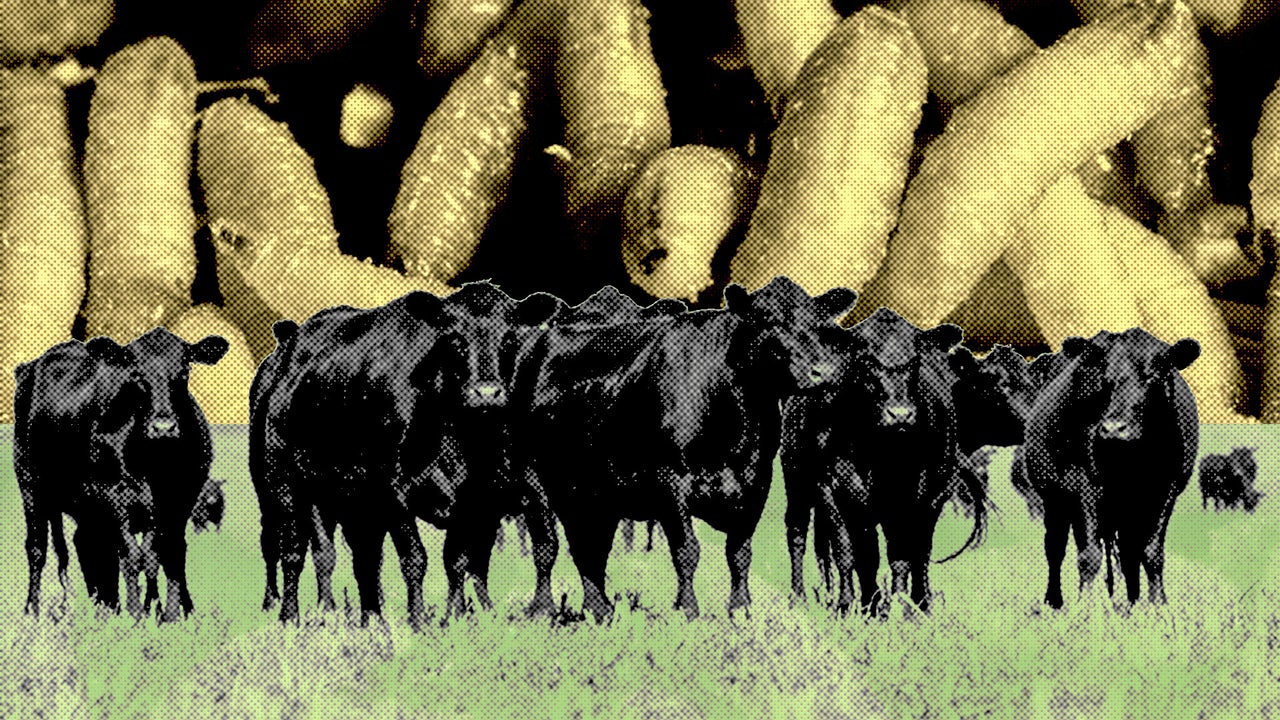
U.S. officials have confirmed the presence of a flesh-eating maggot in the United States that has the potential to devastate livestock populations and, as a result, send beef prices spiking.
Here’s what you need to know about the New World screwworm that is a threat to both animals and humans.
What’s happened?
This week, the U.S. Department of Agriculture’s (USDA) Animal and Plant Health Inspection Service (APHIS) confirmed what Texas farmers and the broader American cattle industry had long worried about: the New World screwworm (NWS) has once again been detected within America’s borders.
Despite its name, the New World screwworm (NWS) is actually a type of parasitic fly. It gets its “screwworm” moniker because of the larva that hatches from the eggs the female flies lay. Those eggs are usually laid in the bodily openings of animals—such as mouths, eyes, or genitalia—or in wounds in the animals’ bodies.
When the eggs hatch, larvae—maggots—emerge into the bodily openings. And because of the maggot’s screw-like shape, it is simple for them to screw their way deeper into the animal’s flesh, which they consume.
And there is where the problem happens: Unlike most maggots, the larvae of the New World screwworm don’t eat just dead flesh; they eat living flesh, too.
This causes wounds in the animal’s flesh, which could become infected, eventually making the animal sick or even causing its death.
Large New World screwworm infestations can decimate cattle populations, which in turn can have a severe economic impact on ranchers and consumers.
If a New World screwworm leads to the mass die-off of cattle, beef prices—already sky high—will rise, impacting beef consumers in America.
Where has the New World screwworm been detected in America?
According to the USDA, the New World screwworm has been detected in Zavala County, Texas. The county has a population of around 9,200 and lies about 31 miles east of the Texas-Mexico border.
If there is a silver lining, it’s that the New World screwworm has so far only been detected in one bovine—a 3-week-old calf, according to the USDA. The larvae were discovered in the calf’s umbilical area, which is one of the natural openings the New World screwworm can infest.
But the worry many have is that, given how large populations of New World screwworm can be, it is likely that this is not the only incident of New World screwworm in America’s borders.
Even this single known incident, however, marks a major defeat against the pest.
That’s because the New World screwworm was eliminated from the United States in the mid-20th century. Since then, the parasitic fly has been mainly limited to Central and South America on this side of the world.
But in recent years, New World screwworm populations have been migrating northwards, up through Mexico, and now, as of last week, back into the United States.
Are humans at risk from the New World screwworm?
They can be. The New World screwworm can infect nearly any kind of warm-blooded animal, including humans. As a matter of fact, last year, a New World screwworm infestation was detected in a person in Maryland.
As Fast Company reported at the time, the person had traveled from Central America to the United States and is believed to have been infected while outside of America’s borders.
In other words, while the New World screwworm was technically found within America’s borders last year, it was introduced via the infected flesh of a person entering the United States.
That is a much less alarming situation than the one we face now, which shows that the New World screwworm has crossed the US border and is now within the country again of its own accord.
What is being done to fight the New World screwworm in America?
According to the USDA, the agency and officials in Texas have established “a 20 km infested zone” around the location where the infected calf was located. Within that zone, the USDA has implemented “quarantines, movement controls, and surveillance.”
Of course, a quarantine zone doesn’t mean much to the New World screwworm, which flies and has no concept of local or national borders.
That’s why the most long-term preventative measure to stop the spread of the New World screwworm in America is to actually release millions of New World screwworms into the environment.
These flies would be genetically modified, however, making them sterile. Since a New World screwworm generally only mates once in its life, any eggs it lays after mating with a sterile partner will be unable to hatch. This will eventually kill off the population since it will be unable to breed.
The controlled release of sterile insects is a common method for controlling similar threats.
The USDA says that 4 million sterile New World screwworms are already being released each week, and additional ones will now be released into the established zone.
Will the New World screwworm affect me?
That depends on whether or not the further spread of the New World screwworm into America can be contained.
If not, the New World screwworm may cause a threat to ordinary Americans. As has been shown previously, the New World screwworm can infect humans, which can lead to life-threatening secondary bacterial infections.
But the more likely threat to the average person in America, should the New World screwworm continue to make inroads into the country, is an economic one. If the infestation spreads, cattle populations could be decimated, causing beef prices to rise.
Rising beef prices could impact how much you have to spend to get a burger from McDonald’s or a steak from the supermarket. And that would just lead to further economic pain that most Americans are already feeling thanks to inflation and skyrocketing gas prices.