
Close Menu
    Facebook X (Twitter) Instagram
    TRENDING :
    • I’m a CEO overwhelmed by AI projects. Here’s my system for staying sane
    • Why Gen Z is suddenly carrying ‘analog bags’ everywhere—and what they put inside them
    • Scrapping your gas-powered car right now would actually be better for the planet than fixing it, study says
    • International Beer Day: Here’s everything to know about the beverage, and where to score some local deals
    • Don’t eat this pistachio nut butter sold at Walmart. It could make you very sick
    • Some adults use AI for financial advice, but trust is still low, Gallup poll finds
    • The 4 Seasons That Shape Every Entrepreneur’s Journey
    • Employee happiness is climbing back from all-time lows, survey suggests
    Compatriot Chronicle
    • Home
    • US Politics
    • World Politics
    • Economy
    • Business
    • Headline News
    Compatriot Chronicle
    Home»Business»Forget AI training data. This startup learned from slime mold
    Business

    Forget AI training data. This startup learned from slime mold

    July 17, 20263 Mins Read
    Share Facebook Twitter Pinterest LinkedIn Tumblr Telegram Email Copy Link
    Follow Us
    Google News Flipboard
    Share
    Facebook Twitter LinkedIn Pinterest Email


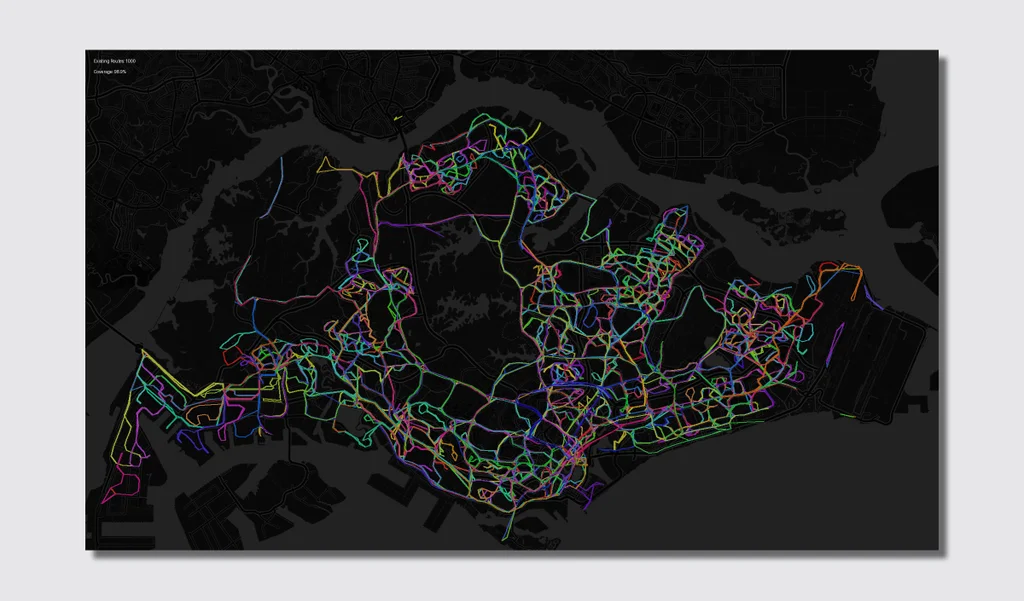
    In a classic experiment more than a decade ago, researchers in Japan gave a slime mold—a single-celled organism known for forming efficient networks—a “map” of the cities around Tokyo. They represented each municipality with an oat flake, the organism’s favorite food, and watched as it created a network that looked eerily similar to the Japanese rail system.

    The takeaway was clear: Slime mold is surprisingly good at creating complex and efficient paths. A startup called Mireta Urban Dynamics is now using the same basic approach in software designed for urban planners.

    [Image: Mireta Urban Dynamics]

    “Very early on in my architecture degree, I was fascinated with strategies that nature and biology evolved for solving challenges,” says Mireta cofounder Raphael Kay. Humans have been designing transportation networks for thousands of years, but some organisms “have been solving analogous challenges for hundreds of millions, if not billions, of years,” he says.
    [Image: Mireta Urban Dynamics]

    Instead of training AI on the slime mold, the software copies the basic way the organism grows. “This is already a form of intelligence that has been evolved over a large number of evolutionary cycles,” Kay says.

    Then the software adds in multiple other layers. For example, a city planner looking at a subway network could add details about the city’s population distribution—so the tool prioritizes certain areas—and a flood map that helps it avoid other areas. (AI can help build these other features, though the core of the tool is based on biological intelligence, not AI.)

    [Image: Mireta Urban Dynamics]

    The tool can be used either to design transportation networks from scratch or to suggest small changes to existing networks. Mireta has begun working with design firms on a handful of projects, from a road network on a college campus to a new metro network. So far, those designs are still in the proposal stage with clients, though Kay expects them to move forward.

    [Image: Mireta Urban Dynamics]

    There’s already evidence that the tool works. In the pilot projects, the company says that the tool has created networks that are 20% to 30% more resilient for the same unit cost as alternatives. Resilience, in this case, means that if a disaster shuts down some part of a transportation network, people still have other ways to get around. That’s a challenge that slime molds know how to address.

    “There’s this beautiful naturally evolved trade-off between cost and resiliency that I think biology has had to solve because there’s a huge penalty for dying,” Kay says. “They’ve evolved strategies for strategic redundancy.”

    [Image: Mireta Urban Dynamics]

    As climate change increases disaster risk, from wildfires to flooding, planners are looking for ways to build more resilience into design.

    “It’s only recently that the winds have shifted, where municipalities are starting to really pay attention to and pay for long-term resiliency solutions,” Kay says. “What’s emerged is that there’s a lack of tooling and quantitative approaches to meet the demand of resiliency planning and network design. What’s really fascinating is that these organisms have been solving this challenge for so long.”


    Source link

    Share. Facebook Twitter Pinterest LinkedIn Tumblr Email

    Related Posts

    I’m a CEO overwhelmed by AI projects. Here’s my system for staying sane

    August 9, 2026

    Why Gen Z is suddenly carrying ‘analog bags’ everywhere—and what they put inside them

    August 9, 2026

    Scrapping your gas-powered car right now would actually be better for the planet than fixing it, study says

    August 9, 2026
    Top News

    The eye-popping price of Harry Styles tickets has social media users furious

    By Staff WriterJanuary 31, 2026

    More than 11.5 million fans signed up for presale tickets to Harry Styles’s upcoming Madison…

    Why AI-powered city cameras are sounding new privacy alarms

    April 5, 2026

    Instacart scraps AI pricing tests after backlash over grocery price swings

    December 23, 2025

    Ruggable just made washing your rugs even easier

    September 30, 2025
    Top Trending

    I’m a CEO overwhelmed by AI projects. Here’s my system for staying sane

    By Staff WriterAugust 9, 2026

    I’ve never been good at stopping what I’m doing. AI has made…

    Why Gen Z is suddenly carrying ‘analog bags’ everywhere—and what they put inside them

    By Staff WriterAugust 9, 2026

    Gen Z gets a lot of flak for being endlessly connected online.…

    Scrapping your gas-powered car right now would actually be better for the planet than fixing it, study says

    By Staff WriterAugust 9, 2026

    If you really want to reduce your transportation emissions, it would actually…

    Categories
    • Business
    • Economy
    • Headline News
    • Top News
    • US Politics
    • World Politics
    About us

    The Populist Bulletin serves as a beacon for the populist movement, which champions the interests of ordinary citizens over the agendas of the powerful and entrenched elitists. Rooted in the belief that the voices of everyday workers, families, and communities are often drowned out by powerful people and institutions, it delivers straightforward, unfiltered, compelling, relatable stories that resonate with the values of the American public.

    The Populist Bulletin was founded with a fervent commitment to inform, inspire, empower and spark meaningful conversations about the economy, business, politics, inequality, government accountability and overreach, globalization, and the preservation of American cultural heritage.

    The site offers a dynamic mix of investigative journalism, opinion editorials, and viral content that amplify populist sentiments and deliver stories that echo the concerns of everyday Americans while boldly challenging mainstream narratives that serve the privileged few.

    Top Picks

    I’m a CEO overwhelmed by AI projects. Here’s my system for staying sane

    August 9, 2026

    Why Gen Z is suddenly carrying ‘analog bags’ everywhere—and what they put inside them

    August 9, 2026

    Scrapping your gas-powered car right now would actually be better for the planet than fixing it, study says

    August 9, 2026
    Categories
    • Business
    • Economy
    • Headline News
    • Top News
    • US Politics
    • World Politics
    Copyright © 2025 Populist Bulletin. All Rights Reserved.

    Type above and press Enter to search. Press Esc to cancel.