
A couple of miles from Google headquarters, a rehabbed midcentury shopping mall is home to a company that might be even Googlier than Google. Known as Google X until 2015, when it became a self-contained arm of the new holding company called Alphabet, it’s now just X. For clarity’s sake, it’s fond of calling itself “X, the Moonshot Factory”—definitely not to be confused with X, the Elon Musk-owned social network.
The moonshots in question are the often outrageous-sounding, potentially world-changing ideas the 16-year-old organization was created to incubate. They are the subject of the museum-like hall you walk through to enter its secretive workplace. Called the X Plex, this gallery of artifacts celebrates the factory’s triumphs (Waymo, Google Brain) and flops (Google Glass) in equal measure, along with intriguing lesser-known efforts such as Skip, a pair of “robotic pants.”
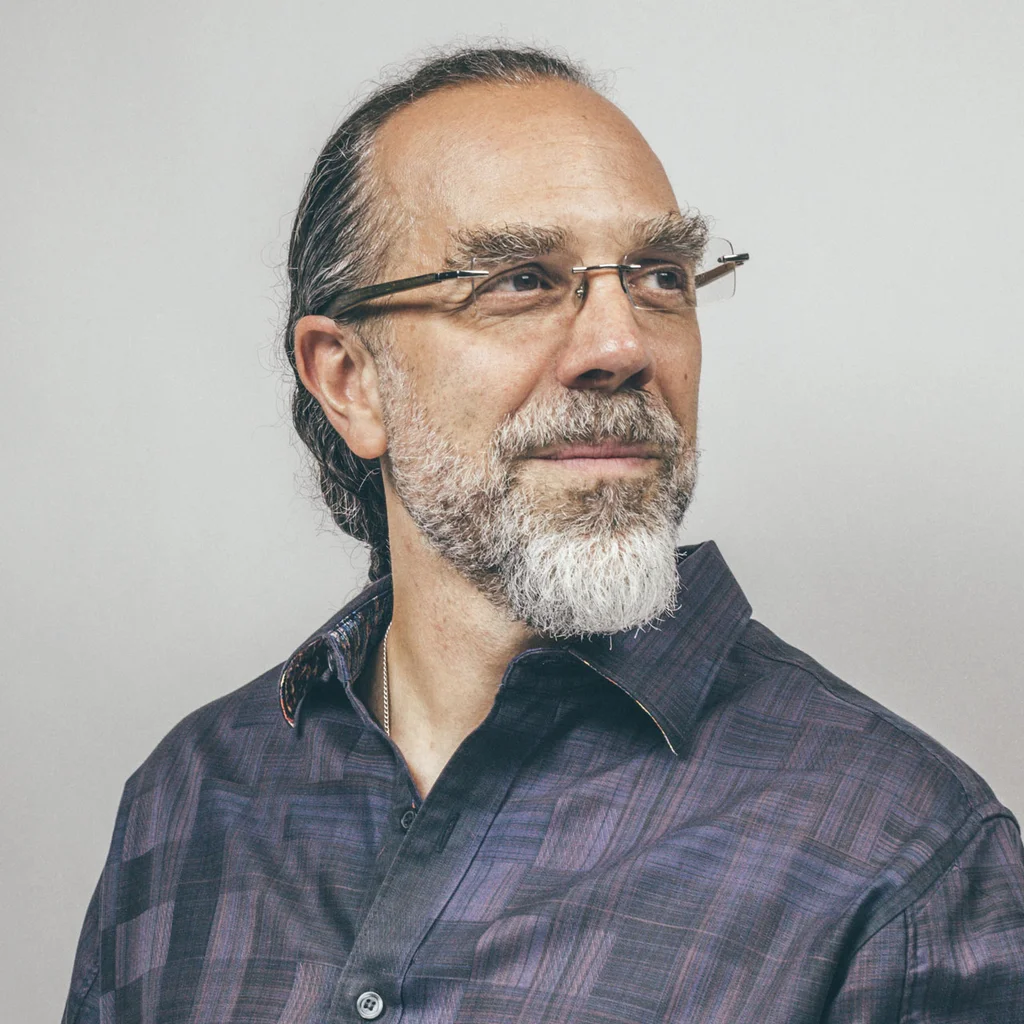
X’s foundational belief in taking huge swings and cherishing failure as a necessary ingredient of risk-taking reflects its Google origins. So does its cultivation of whimsical workplace idiosyncrasy. Most companies would look askance at employees skating indoors. X, by contrast, provides a supply of rollerblades right inside its entrance for staffers to use. It’s a nod to the preferred in-office transportation mode of its longtime leader, Astro Teller—who, in another willfully quirky touch, is X’s Captain of Moonshots, not its CEO.
But when Teller rolled up to the cafeteria table where we had lunch on a recent Tuesday, he wasn’t there to dwell on the case for X’s contrarian, hyper-ambitious approach to catalyzing new solutions to old problems. Instead, he spent more time talking about the ways the company has been fine-tuning its technique to give every promising moonshot its best chance at becoming a viable business—a goal that is often less about dreaming big than being ruthlessly objective.
An abrupt pivot this is not. Compared to X’s approach as originally conceived, “The philosophy is nearly identical,” he stresses. “We have learned a ton about how to implement that philosophy over time.”
That could make all the difference to X’s eventual legacy. When it comes to corporate America’s great innovation labs, “I’d say that the Mount Rushmore is Bell Labs, Xerox PARC, and X,” says venture capitalist Gideon Yu, whose past gigs include tenures as the CFO of both YouTube and Facebook. Yet Bell Labs and PARC are remembered not only for their breakthroughs but also their parent companies’ failure to capitalize on them. Even X is still in the process of proving that it has a reliable, repeatable system for turning wild ideas into wildly successful businesses.
Yu is playing a part in that effort. The founder of Series X Capital, an independent investment firm, he has $500 million to spend, an office on X’s premises, and first dibs on its moonshots. As he explains it: “In a very Google way, the fine folks at X thought to themselves, ‘How can we be intellectually honest and figure out the way for our best innovations, our best technologies, our best projects to reach their maximum value potential?” Series X has invested in X graduates Anori, Chorus, Taara, and Verily Health, all of which are now standalone companies rather than Alphabet subsidiaries.
Companies born at X taking on outside funding is not new. Waymo, for instance, raised its first external round in 2020 and has received investments from Andreessen Horowitz, Kleiner Perkins, Sequoia, and Silver Lake, among others. But Alphabet is now more open to reducing its stake below 50% in X graduates that aren’t core to its business, as it has with the ones Series X has invested in. That’s an acknowledgement that the company, for all its resources and eagerness to place big bets, can boil only so many oceans on its own.
“Would they like it if we gave them another one or two Google Brains or Waymos or Wings every decade?” asks Teller. “Of course. But do they want two a year? No, they don’t.”
After all these years, X’s overarching goal is still to make a science out of understanding which moonshots are most likely to reach their intended destination, then doing everything possible to get them there. “We believe that this is a numbers game,” says Teller. “And we have, I hope, a really efficient process at this point for discovering what the winners are and spending close to half of our money on them.”
A recently installed lending library near the X cafeteria offers a variety of books on 30-day loans for employees to draw inspiration from. That one of them is Roald Dahl’s Charlie and the Chocolate Factory is fitting: Teller himself has compared the company to Willy Wonka’s mysterious confectionery. But another is Good to Great, Jim Collins’ no-nonsense guide to operational excellence. It’s tough to imagine two classic volumes with less in common, unless you consider the Dahl book’s topic to be business management. Yet each tells us something about what’s on the Moonshot Factory’s mind these days.
Monkeys and pedestals
X research engineer Grace Young is showing me two empty granola bags. To the human eye, they appear identical. Molecularly, however, they’re far from twins.
“This one can keep granola fresher for longer, which is great,” she explains. “Less food waste. It does that because it has an additive in it called EVOH. And that additive makes this bag a little trickier to recycle than this one.”
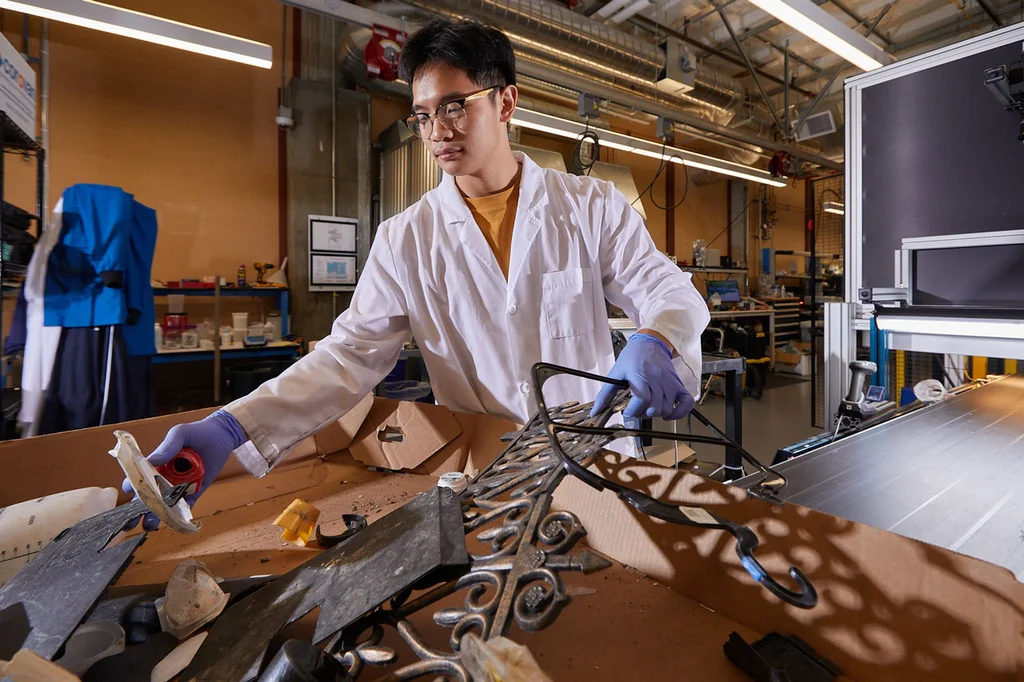
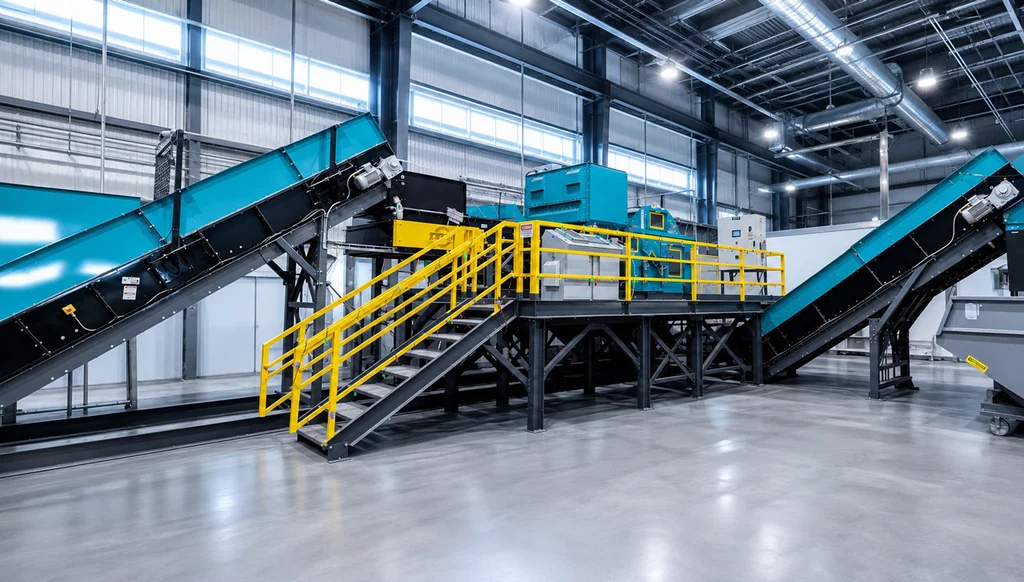
Even the most conscientious of consumers can’t responsibly recycle something based on factors they can’t detect. So an X moonshot named Materra is working to apply sensors and AI to the challenge. It’s testing them by sending various types of trash whizzing down a conveyor belt so they can be identified and sorted for proper handling. To be useful at scale, this system doesn’t just have to work. It also has to process each item in just a few milliseconds.

Plastics such as food packaging offer one of the biggest opportunities for Materra to make an impact, but it’s already working on other materials as well. Some are devilishly hard to recycle, including ecological scourges such as automotive and appliance shredder residue—the non-metallic bits and pieces of cars and household appliances that have been ground up.
Along with ensuring that its technology does the job, Materra is already thinking about how it will be deployed, which involves elements outside its control. “E-waste, building materials, even textiles—a lot of that stuff doesn’t go in a bin,” says Teller. “It just goes right to landfill. So it will take a while for us to figure out how to plug into the world’s infrastructure in a way where we can get that value back and get that benefit for society.”
With all its projects, X is trying hard to be more sensitive to such real-world barriers to adoption. That affects how it interprets a guiding parable of Teller’s devising called “The Monkey and the Pedestal.” Briefly, it goes like this: If you want to train a monkey to recite Shakespeare atop a pedestal, it’s tempting to begin with the easy-peasy part—constructing the pedestal. But if you fail to teach your ape pal to spout Hamlet, you won’t need a pedestal at all. That argues for confronting the hardest aspect of a project first.
Teller says that X staffers always took this lesson to heart. Over time, however, it became clearer that a project that flourished on a technical level might still be destined to fail. Maybe it would turn out that audiences just didn’t care to watch a Shakespeare-reciting monkey.
So X has redoubled its efforts to ask itself questions about moonshots as businesses—not just technologies—from their inception. Teller rattles off some of them: “Does anyone want this thing that we’re making? How much would they pay for it? What’s it likely to cost for us to make this thing in volume? If we gave it to somebody for a week and walked away, what would they actually do with it? There are all kinds of product and market questions that ultimately could be the Achilles’ heel, the reason we should kill a project.”
This conundrum is reflected in the fate of one of the factory’s best-known projects: Loon. A daring attempt to deliver internet access to underserved parts of the world by beaming it from solar-powered balloons, it began as a research effort in 2011. By 2018, the technology was far enough along to become the basis of an independent subsidiary within Alphabet. Its management struck a deal with a Kenyan telecom company and took on outside funding from SoftBank.
Then, two and a half years later, Loon shut down. While it was getting up and running, a fair chunk of those underserved areas had gotten connected through more conventional means. In those that remained, too much of the population either couldn’t afford a smartphone or didn’t see the value in owning one.
“Technically, it worked,” says Teller wistfully. “Operationally, they got it working. It just turned out that way too late in the process, we learned that we could have made it into a struggling business, but it was never going to turn into a massively profitable business.”
The Loon story does have a second act. The factory repurposed the technology into a new moonshot, Taara, that deploys connectivity via beams of light from ground stations, not balloons. Headed by Loon alumnus Mahesh Krishnaswamy, it’s now active in 20 countries and transmits more data every two minutes than Loon did in its entire history, says Teller: “It was a nice reminder that all is not lost even when we don’t get the win that we’re hoping for. That sort of moonshot compost is an important part of how this place works.”
Still, X would have been better off identifying Loon’s economic fragility much earlier in the game. To reduce such wasted effort in the future, it’s formed a business innovation team charged with that sort of hard-nosed analysis.
Say that some X employees have managed to teleport sand from one place to another—an example Teller emphasizes is a joke, although Jon Gertner’s 2014 Fast Company article about Google X mentioned staffers exploring teleportation in earnest, at least as an intellectual exercise. If the group’s initial business plan involved teleporting people, Teller explains, the business innovation team would be responsible for asking, “Have you asked humans if they’re okay being destroyed, so that we can figure out all of their data and recreate them on the other side of the planet?” That technologists might need such a reminder shows how easy it is to get carried away by the euphoria of creativity.
Back in the real world, Teller says, even Waymo might have benefited from more swiftly aligning its moonshot thinking with the realities of what its business would look like. In its early years as a research project, Google X envisioned selling self-driving cars to individuals: “We literally thought we had to become a car company.” Then, after it landed on operating a service that resembled Uber or Lyft—no driver required—its team started talking about a broader mandate of transforming mobility.
About five years ago, Waymo’s mission shifted to building the world’s safest driver. That might sound even more aspirational than transforming mobility. But it gave the company permission to hand off large chunks of the operational necessities of running a robotaxi service, such as running the ride-hailing app, charging the cars, and cleaning them. Today, it works with Uber in Atlanta and Austin (though that relationship is reportedly strained) and Lyft in Nashville. It’s also partnered with a company called Element Fleet Management for upcoming deployments, starting in San Diego, and with local ride-hailing and taxi companies in Tokyo to prepare itself for that market.
For Waymo, putting all of its energy into its platform for safe autonomous driving “focuses them on the thing they want to be world class at,” says Teller. “Then, the other stuff they’re very happy to let somebody else do, if the business deal is right.”
In the kitchen with X
“These are actually numbered—these are very expensive rocks.”
The pile of rocks that Joe Sargent is showing off looks like, well, a pile of rocks. But they’re imposters, produced for a moonshot involving making concrete manufacturing more sustainable. The project called for rocks that existed both as digital simulations and in real-world form, so X designed its own on a computer and then manufactured a batch.
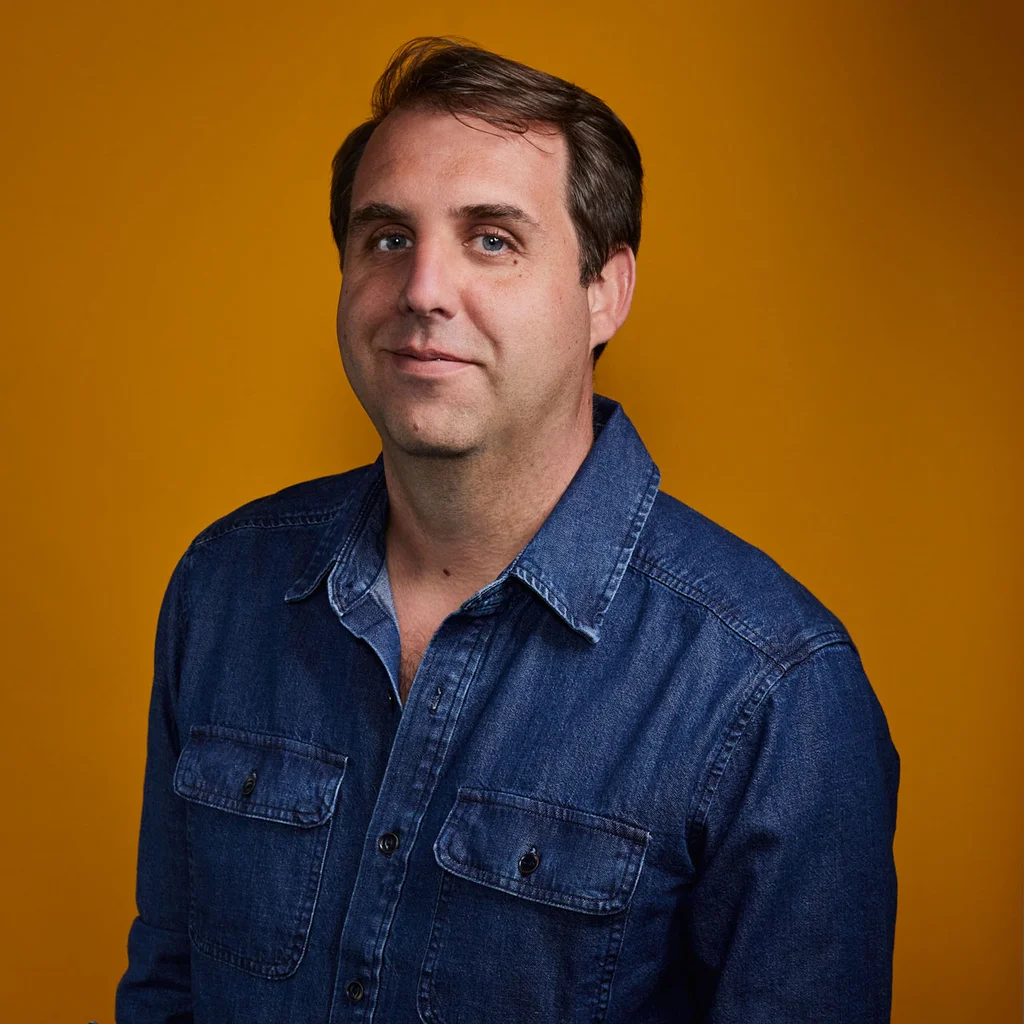
Making fake rocks is all in a day’s work for Sargent. A veteran of Hollywood special effects and TV’s Mythbusters, he’s spent more than 13 years at X’s Design Kitchen (DK for short), a lab whose services are available to every moonshot team. Giving off the vibe of a high-end maker space, it’s decked out with 3D printers and other prototyping tools. Various tantalizing past creations are still hanging around: For instance, the rocks sit near a mechanical salmon with a scrolling “fish treadmill” undersea backdrop, rigged up to test an ocean health project that used cameras to photograph real fish in the Fjords.
Removed from their context, these DK relics may come off as kooky, but they always have a serious purpose. “Here at X, our output is scalable businesses, but it often starts with a person with an idea,” says Sargent. “And we’re there on day one to come around to that person to have that idea tested.”
The DK is so integral to X’s process that in 2023, the company created a spinoff to serve projects in areas relating to life sciences and chemistry, such as A-Life, which is researching ways to use cells to manufacture items such as medicines, vitamins, and cosmetics. The Bio Design Kitchen has its own dedicated 10,000-square-foot space, an organic synthetic chemist on staff, and a lab for working with single-cell bacteria and yeasts. Equipment such as mass spectrometers and liquid chromatographs abounds. So do several types of PCR machines, some of which were originally used for COVID-19 testing and became available for cheap on the second-hand market.
Though the sheer amount of stuff in the Bio DK is a little overwhelming, it’s configured for fast response to whatever needs X’s project teams come up with. “Everything in here is on wheels, and that is because science changes, teams change, projects change, everything always changes,” says Charlie Emrich, its head, gesturing toward carts full of instruments. “All the stuff that you see in there wasn’t there yesterday morning.”

X and Alphabet can be extraordinarily patient with works in progress. For example, Waymo, the very first Google X moonshot, took a decade and a half to go from its origins as a pet project of Google cofounder Larry Page to full commercial deployment. But early on, when ideas are still raw, it wants to move quickly, so it understands their prospects sooner rather than later. The DK and BioDK’s many resources are part of that process.
So is a venerable X team called Rapid Evaluation. The “Evaluation” in its name signifies that it’s charged with judging whether concepts are moonshot-worthy, not necessarily coming up with them. But Teller notes that only lately has the company gotten into a groove where staffers aren’t overly enamored with their own ideas.
Even when Google X was new, he emphasized to team members that “‘I’m happy if it’s your idea, but I’m equally happy if it’s someone’s idea who works at Johns Hopkins. Probably we’re going to have to license the IP, but that’s okay.’” At the time, this call to action didn’t stick. “People heard that, and then they mostly just went right back to trying to make the ideas themselves,” he laments.
Still, there are recent signs that X is growing more receptive to incubating ideas it didn’t invent. They include the September 2025 announcement of a collaboration with TUM Venture Labs, an arm of the Technical University of Munich, to develop moonshots together.
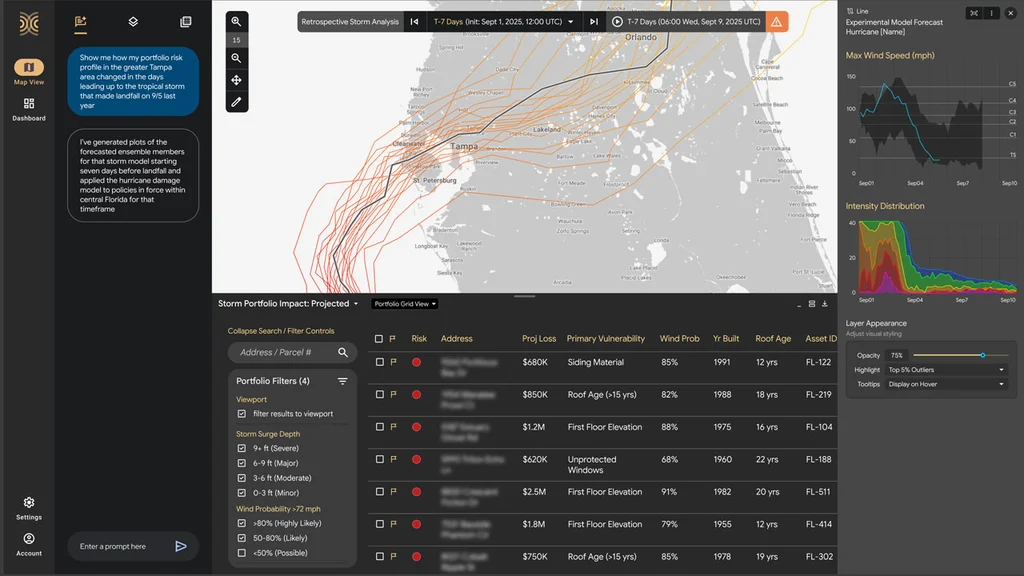
Without a steady stream of high-potential ideas—regardless of where they came from—nothing else about X would matter. One that’s been in development for several years is called Bellwether. Described by Rich Mazzola, its head of commercialization and product, as “a prediction engine for the Earth and everything on it,” it’s designed to help insurers, governments, and others better anticipate natural disasters such as hurricanes and wildfires. Uncertainty around such events, he says, is bad for people and businesses in at-risk areas even before the unthinkable strikes.
Bellwether feeds datasets and imagery into AI models that couldn’t have existed until recently. “For every 100-meter section of the world, we say, ‘What’s the rainfall? What’s the vegetation type? How has that vegetation type changed? Was there a fire? Was there hail?’ All of these different things,” says Mazzola. “Then we go back in time and say, ‘What has the state of those variables been back in time?’ The reason that’s really important is that is the data pipeline that allows you to predict things.”
Although X is no longer Google X, its familial relationship with Google plays a crucial role in the platform Bellwether is building. “We believe Google has the largest geospatial data asset in the world, full stop,” says Mazzola. The project also feasts on other Google creations such as Gemini, the Antigravity coding platform, and a technology called A2UI that lets AI agents vibe-design bespoke user interfaces optimized for the data they’re displaying.
Google and Alphabet’s continuing influence on X go far beyond providing technical and financial wherewithal. There are other examples of large tech companies undertaking ambitious scientific projects whose positive impact on the world could be profound. But if few contemporary candidates for moonshot thinking’s Mount Rushmore come to mind, it’s because most companies don’t have the attention span that has permitted X to pursue so many ideas for so long.
Back in the previous decade, for example, when Google X was working on Loon, Facebook (which had not yet rebranded as Meta) had a team of its own dedicated to developing drones, lasers, and satellites to spread internet connectivity. It disbanded before fulfilling its mission, and the company didn’t replenish its moonshot queue with anything of similarly grandiose ambition. (No, the metaverse doesn’t count.) In a fitting twist, the connectivity project’s leader, Yael Maguire, ended up at Google, where he’s aiding Bellwether as general manager for Google Maps and Google Earth.
Alphabet’s commitment to X is hardly an act of selfless humanitarianism. Teller has always stressed that the goal was to build large, thriving businesses—back in 2015, he told The New York Times’ Conor Dougherty that Google Brain had already created enough value for Google to cover Google X’s costs. That was more than two years before eight Google Brain researchers published the research paper that gave us generative AI. Eventually, their breakthrough led to Gemini, the LLM Google has put at the heart of its future. (In 2023, the company merged Brain with its other AI lab, DeepMind, to form Google DeepMind.)
Meanwhile, Waymo is currently valued at $126 billion. It and drone delivery service Wing, the other X graduates besides Google Brain that Teller names when the subject of its biggest hits comes up, are still in investment mode, available in only limited areas. But both are well into their commercialization phase, with Waymo providing more than 500,000 trips a week and Wing having completed more than one million deliveries. Alphabet has tied CEO Sundar Pichai’s compensation package to their performance, so the company would appear to be prioritizing their further growth.
“Alphabet is continuing to invest in us because of the track record,” says Teller. “But there was a time where it was harder for us to prove that it was working as well as it’s working. I don’t think it’s an accident that this has happened here, and a lot of that credit goes to Alphabet.”
Even as it tunes up its moonshot factory to produce more Google Brains, Waymos, and Wings, X deserves its share of credit as well. Speaking to Gertner for his 2014 Fast Company article, Teller set his personal bar for success: “If one of Google X’s projects were a home run, became everything we wanted, I would be really happy. I would be overjoyed if it happened with two.” Today, he doesn’t have to wonder if that’s achievable—and neither does Alphabet.