
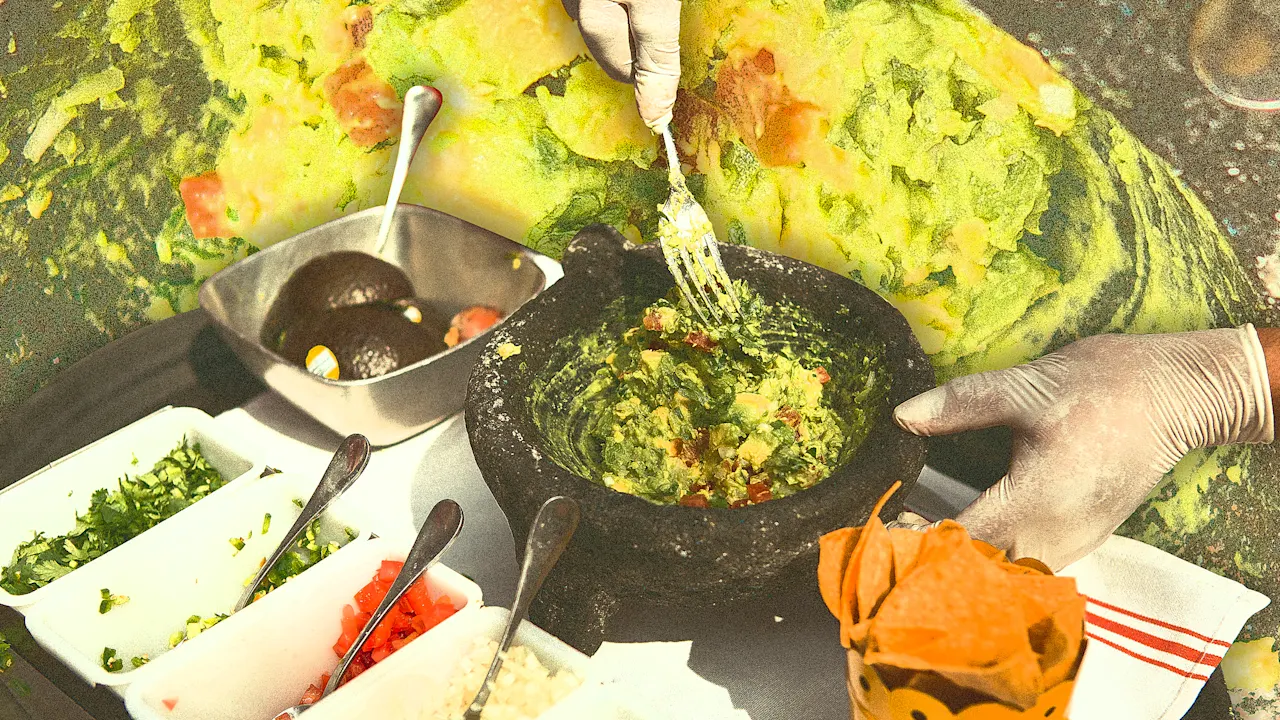
There’s a restaurant in New York City called Rosa Mexicana that positions itself as a fresh take on Mexican cuisine. It’s upscale, well curated, and delicious. However, my favorite part about the dining experience is when you order guacamole, the wait-staff wheels out a little cart, draped in the traditional Mexican cloth, a vibrant sarape, and staked with fresh ingredients—avocados, lime, onion, salt, all the things. And as they arrive at your table, they make the guacamole right there in front of you. It’s quite the show, and it makes the entire dining experience better.
What the restaurant has realized is what some of the best organizations know to be true: when the backstage is optimized, not only does it improve the organization’s front stage performance, but it also becomes a part of the show itself. In a healthy organization, the front stage and the backstage are not separated by a physical wall or partition, but rather by the boundaries of the organization’s cultural conventions—its organizational culture.
Consider the alternative: quick service restaurants. In most QSRs, the backstage is completely opaque. You order at the front, and your request is signaled to the back before it is handed off in a paper bag. You typically can’t see how the food is made; that’s not a part of the performance. In most cases, you don’t want to see it either, in hopes of maintaining an imagination about its preparation that may not coincide with reality.
{“blockType”:”mv-promo-block”,”data”:{“imageDesktopUrl”:”https://images.fastcompany.com/image/upload/f_webp,q_auto,c_fit/wp-cms-2/2026/01/studio_16-9.jpg”,”imageMobileUrl”:”https://images.fastcompany.com/image/upload/f_webp,q_auto,c_fit/wp-cms-2/2026/01/studio_square_thumbnail.jpg”,”eyebrow”:””,”headline”:”FROM THE CULTURE”,”dek”:”FROM THE CULTURE is a podcast that explores the inner workings of organizational culture that enable companies to thrive, teams to win, and brands to succeed. If culture eats strategy for breakfast, then this is the most important conversation in business that you aren’t having.”,”subhed”:””,”description”:””,”ctaText”:”Listen”,”ctaUrl”:”https://www.youtube.com/playlist?list=PLvojPSJ6Iy0T4VojdtGsZ8Q4eAJ6mzr2h”,”theme”:{“bg”:”#2b2d30″,”text”:”#ffffff”,”eyebrow”:”#9aa2aa”,”subhed”:”#ffffff”,”buttonBg”:”#3b3f46″,”buttonHoverBg”:”#3b3f46″,”buttonText”:”#ffffff”},”imageDesktopId”:91470870,”imageMobileId”:91470866,”shareable”:false,”slug”:””,”wpCssClasses”:””}}
In most cases, for most QSRs, the backstage of the organization—its culture—is not optimized. They have policies and processes, detailed steps of what to do, but their cultural conventions stop there. But culture is more than what we do; it’s an operating system that is anchored by shared perspectives. Therefore, a culture that operates on rules and regulations only, falls short of its potential. Will Guidara, the Michelin-star restaurateur of Eleven Madison Park fame, believes in the idea of unreasonable hospitality, which is the grounding conviction that powers the behaviors of the organization. It’s an open kitchen because the backstage and the front stage are connected by a commitment to unreasonable hospitality. That’s the boundary that curates the company culture and, therefore, its practices and policies follow suit.
That holds for non-Michelin restaurants, also. Take Domino’s, for example. The pizza giant found itself in a slump. Sales were down and public perception of the brand had soured. So, what did the company do? It decided to optimize the backstage of the organization and center everything they did on transparency—inviting people in who had lost trust in the company. They installed webcams so people can see their pizza being prepared. They created a tracker, so you knew exactly where your pizza was in the process and when to expect it at your door—long before food delivery services offered this convenience and years before Uber car service came to market. The result of this cultural optimization completely turned the company around and catapulted their dominance as well as their stock price.
This idea of front stage and backstage is not relegated to the food industry only; it applies to organizations more broadly. TED is a good example of this. The non-profit organization, famous for its TED talks, is anchored on the premise of discovering and sharing ideas that drive meaningful change. This belief informs everything the organization does, from the hero event in Vancouver each year to the talks it shares online and the local TEDx events it franchises with people and institutions who share the same belief. Even their partners and sponsors, they, too, are bought into this belief and guarded by this boundary; thus, every touch point of TED feels like…TED. The backstage and the front stage is consistent. After giving three TEDx talks myself, I know this firsthand. Everyone involved is committed to presenting ideas worth sharing.
How does your organization fare against this open kitchen idea? What are the ideological boundaries of the organization that connect the front stage and the backstage? If your organization was an open kitchen; how good would the performance be? This line of thinking offers leaders an opportunity for leaders to not only address their cultural challenges but also drive greater business realities. If we want the front stage to flourish, we should consider optimizing the backstage first.
To explore this further, we welcomed Laura Beyer, the head of partnerships at TED, onto the FROM THE CULTURE podcast in hopes of further understanding the relationship between the front stage and backstage of an organization. Check out the full episode here.
{“blockType”:”mv-promo-block”,”data”:{“imageDesktopUrl”:”https://images.fastcompany.com/image/upload/f_webp,q_auto,c_fit/wp-cms-2/2026/01/studio_16-9.jpg”,”imageMobileUrl”:”https://images.fastcompany.com/image/upload/f_webp,q_auto,c_fit/wp-cms-2/2026/01/studio_square_thumbnail.jpg”,”eyebrow”:””,”headline”:”FROM THE CULTURE”,”dek”:”FROM THE CULTURE is a podcast that explores the inner workings of organizational culture that enable companies to thrive, teams to win, and brands to succeed. If culture eats strategy for breakfast, then this is the most important conversation in business that you aren’t having.”,”subhed”:””,”description”:””,”ctaText”:”Listen”,”ctaUrl”:”https://www.youtube.com/playlist?list=PLvojPSJ6Iy0T4VojdtGsZ8Q4eAJ6mzr2h”,”theme”:{“bg”:”#2b2d30″,”text”:”#ffffff”,”eyebrow”:”#9aa2aa”,”subhed”:”#ffffff”,”buttonBg”:”#3b3f46″,”buttonHoverBg”:”#3b3f46″,”buttonText”:”#ffffff”},”imageDesktopId”:91470870,”imageMobileId”:91470866,”shareable”:false,”slug”:””,”wpCssClasses”:””}}
Source link