
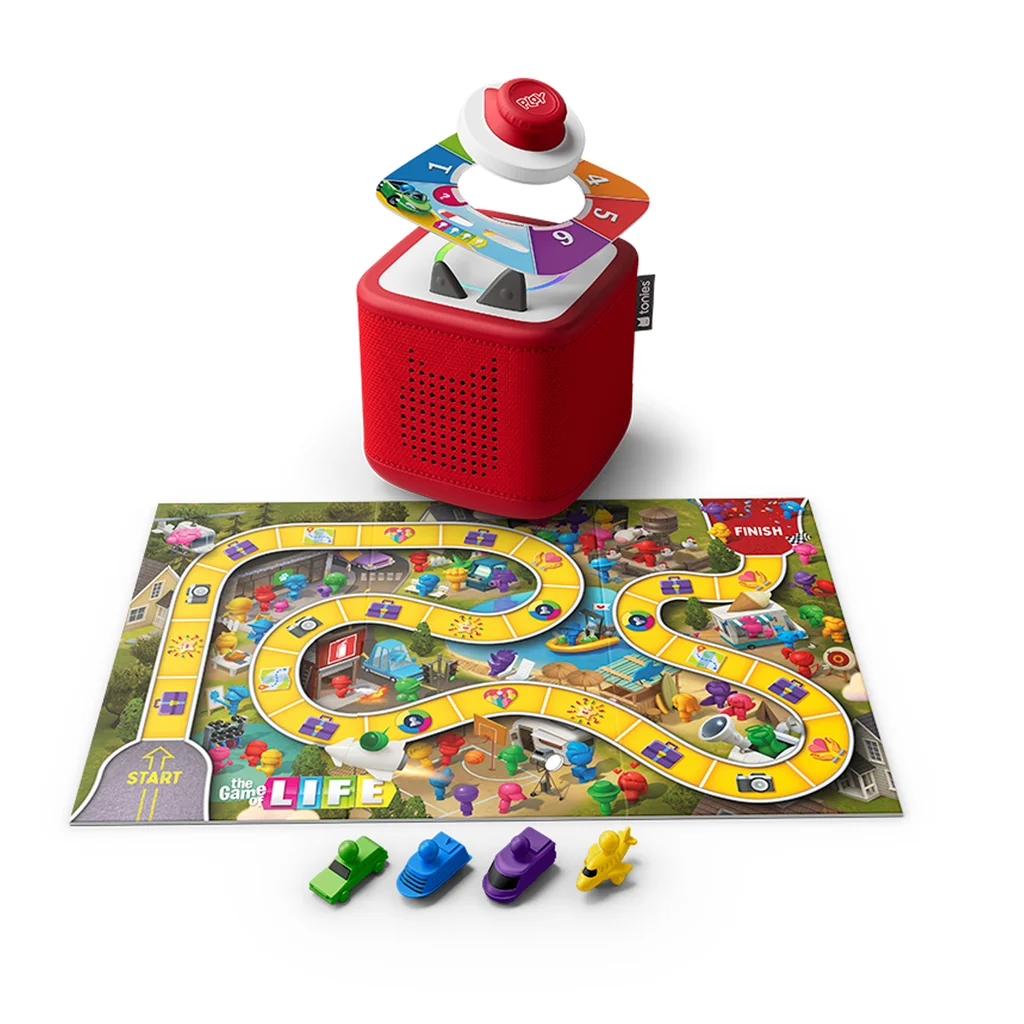
When my 10-year-old got her hands on a Toniebox loaded with Hasbro’s The Game of Life, she didn’t leave her room for an entire afternoon. When I popped in to check on her, she was choosing different life paths—a fashion designer with a passion for gardening, an astronaut with twins. Later, she roped her dad into a round of Monopoly. Neither game required a screen.
That’s precisely the market Tonies, a decade-old toy company, is chasing. Gaming time among kids age 8 and under has surged 65% since 2020 while overall screen time has held steady at around two and a half hours a day. Much of that gaming arrives marketed as educational or harmless. But the volume alone has rattled parents. More than half say they’ve felt their child was addicted to screens.
Tonies thinks it has found a middle path. The company, best known for its screen-free storytelling cubes, has partnered with Hasbro to turn three of the toy giant’s best-known board games—Monopoly, The Game of Life, and Guess Who?—into screen-free adventures that run on its newest device. It’s part of a wider push, among toy and tech companies alike, to build products for kids that are engaging without being engineered to keep them hooked.
“Our goal isn’t to have you never leave Tonies,” says Ginny McCormick, Tonies’ first-ever chief experience officer. “Stories end. They’re appropriately balanced.”
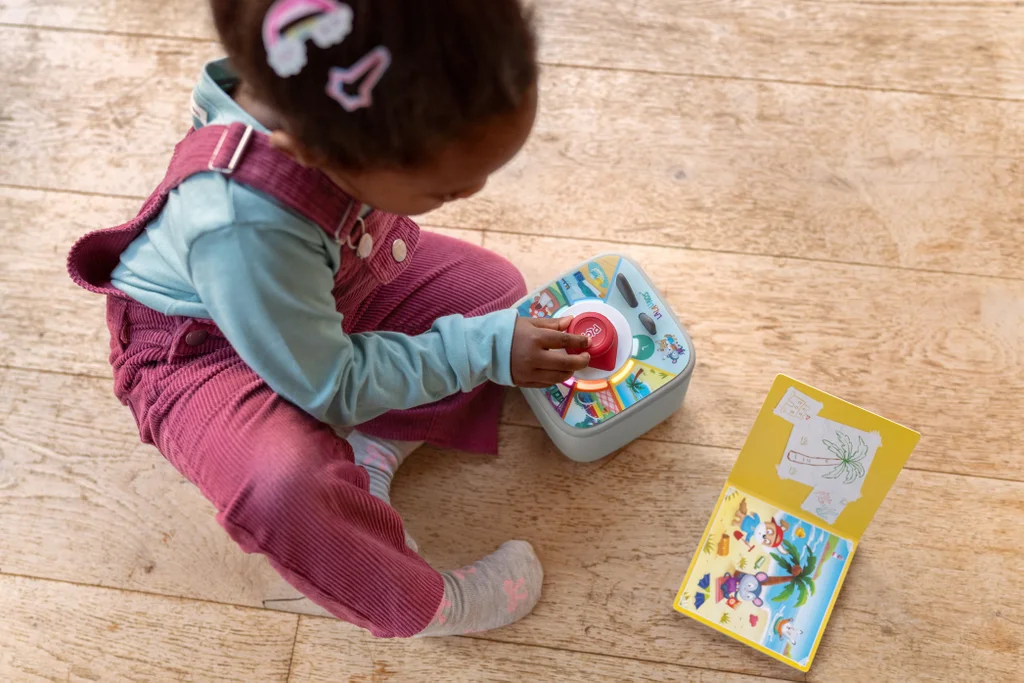
Screen-Free Storytime
Tonies was founded in Germany in 2016 by Patric Faßbender and Marcus Stahl, two fathers who met at their children’s preschool and bonded over a shared frustration of trying to play stories to their kids on scratched CDs. They built an indestructable foam cube speaker that would tell stories when you placed a figurine on top: A little Pinocchio toy would play fairytales, a Little Mermaid toy would play the Disney story with some songs. The system was designed to be intuitive enough for a toddler to use on their own, allowing parents to have their kids entertained without a screen.
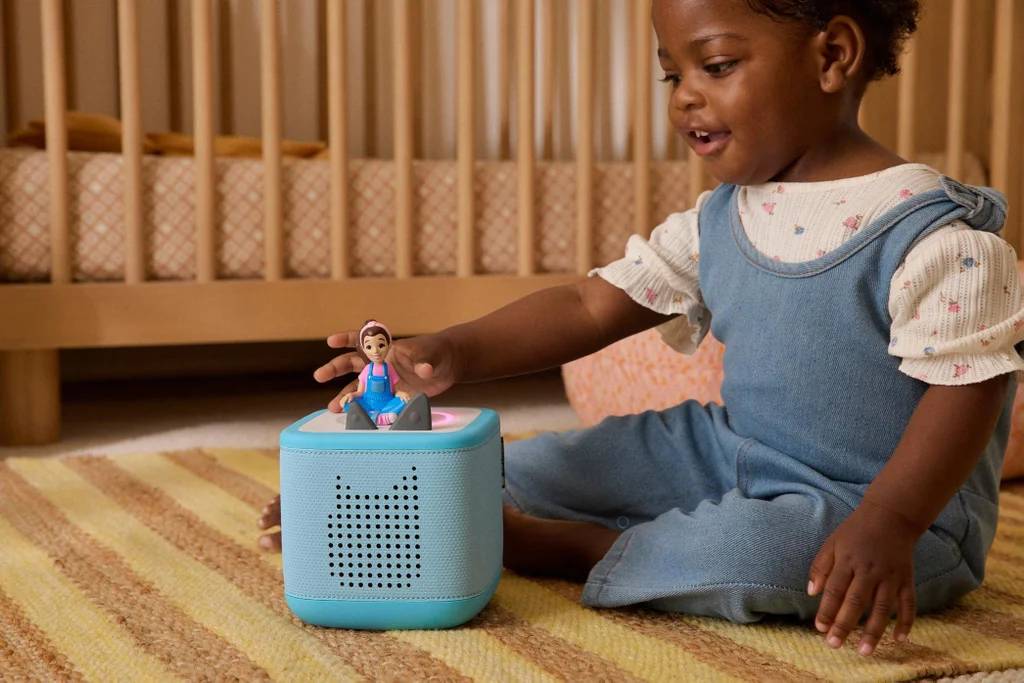
The company arrived in the U.S. in 2020 and has become a fixture in Target and Walmart aisles, growing largely through word of mouth. McCormick says families use the device consistently—an average of 240 minutes a week—for everything from bedtime routines to long car rides, and that the appeal cuts across income levels even though the device is pricey. (The box costs $130, and the Tonie figurines start at $20.) The common thread, she says, is parents who want something their kids can operate independently, but that is not algorithmically driven.
That growth accelerated with Toniebox 2, which launched in the U.S. on October 5, 2025. The new device added a light-up ring, sleep and wake alarms, deeper parental controls in the app, and—for the first time—Tonieplay, a library of screen-free games that you can play with a small companion controller.
Hasbro Games In A New Format
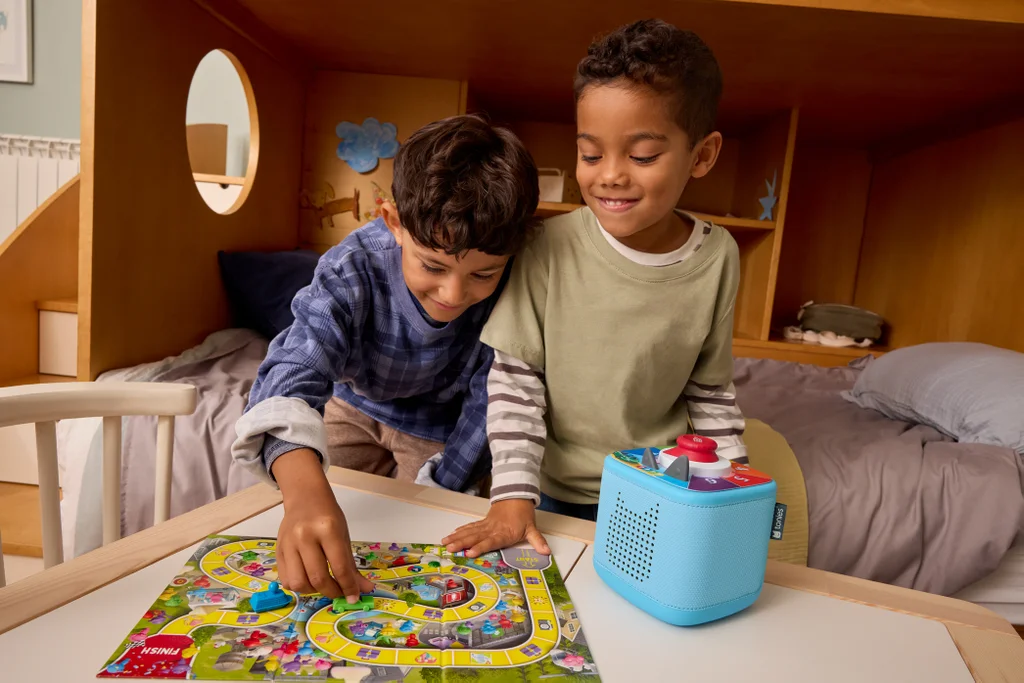
Hasbro just launched three games for the system: Monopoly, Game of Life, and Guess Who? All of them run on the same physical interface: A controller serves as a dial or can be pressed like a button. And each game has its own set of additional pieces.
In Monopoly, you tap your player card to the Toniebox to bid in speed auctions for properties like the railroads and the electric company. You can compete with a partner on little challenges, like seeing who has the quickest reaction time when pressing the button. Mr. Monopoly’s narration keeps a running, spoken tally of everyone’s money.
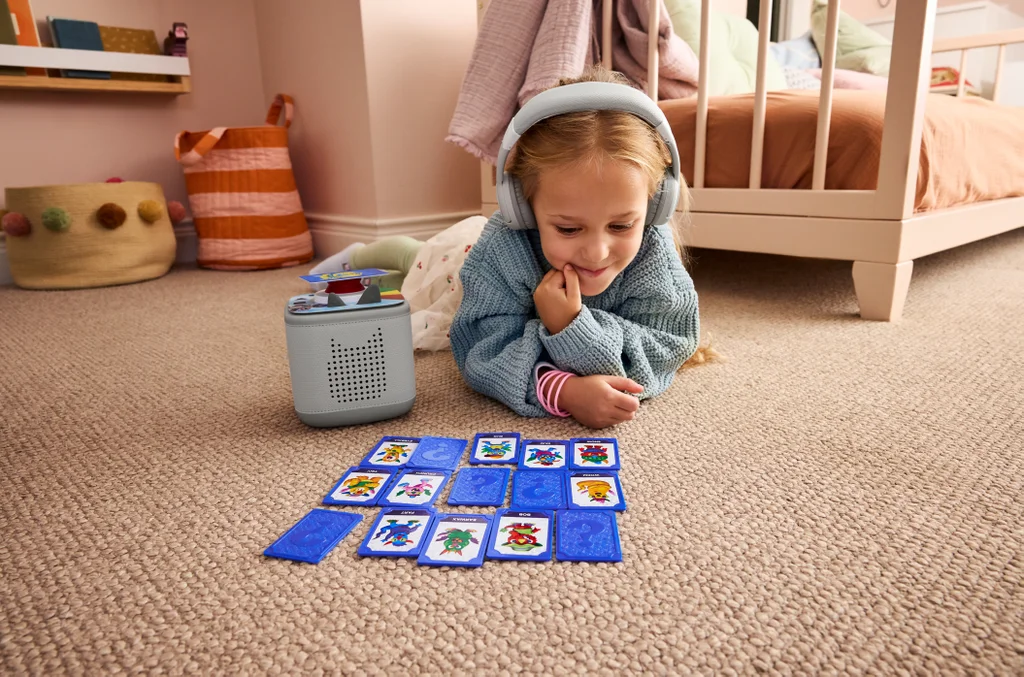
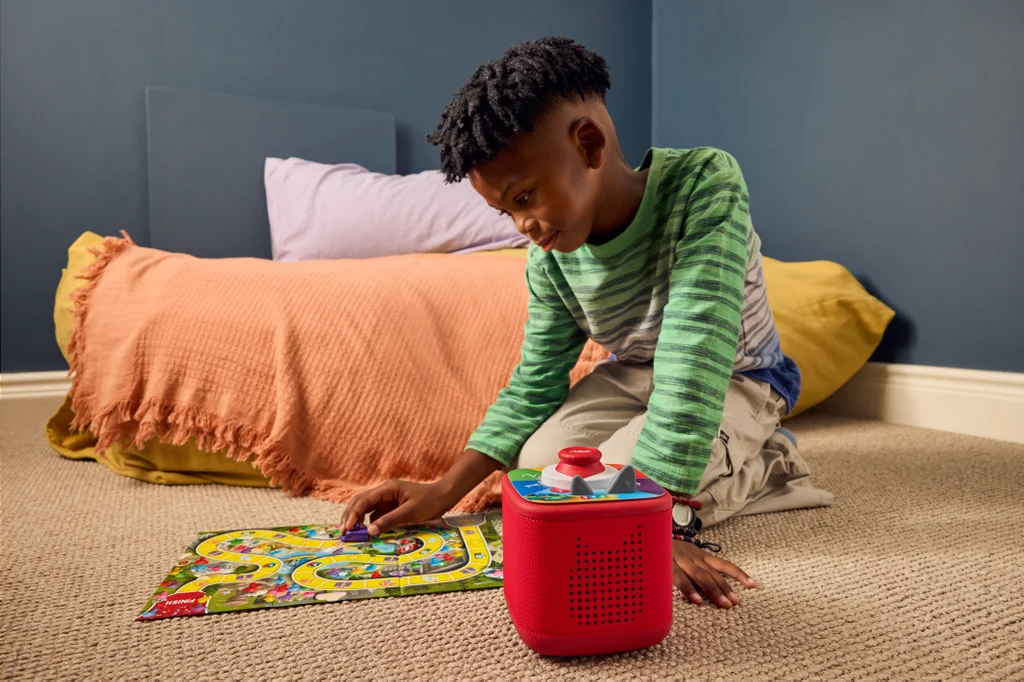
In Guess Who? an inspector walks players through each case while the player lays out 30 plastic monster cards. Kids listen to a spoken clue, physically flip over any monster that doesn’t match, and then turn the controller to lock in their final guess once one monster remains. The Game of Life turns the controller into a spinner, which kids turn to move their piece around the board and press to answer career and life questions.
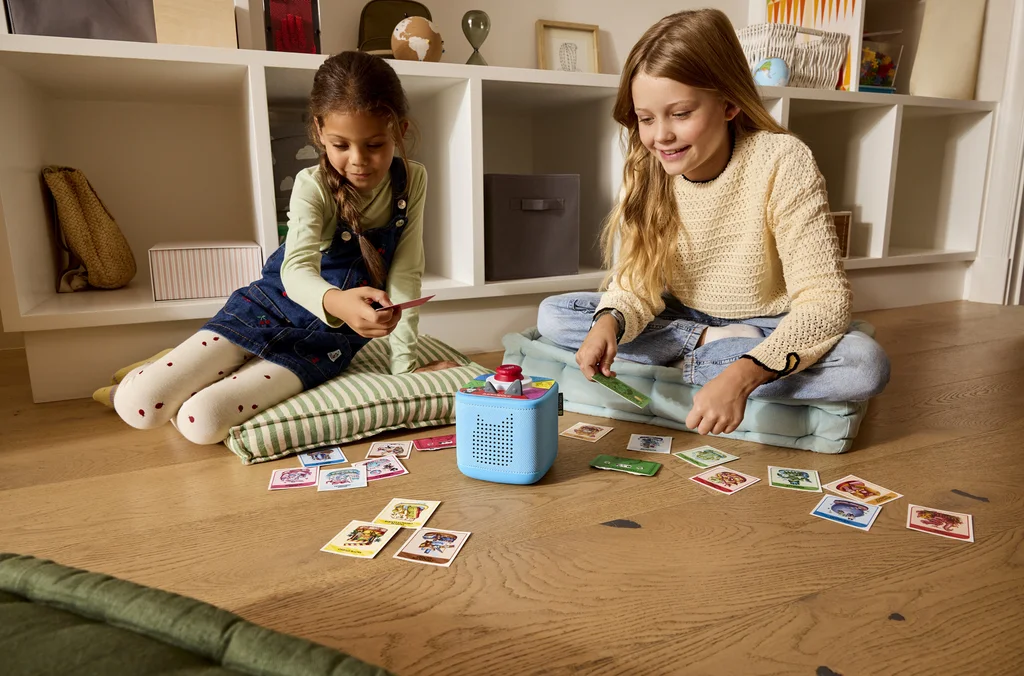
McCormick says the Hasbro and Tonies teams worked closely to find ways to spark kids interest through the storytelling. “If you show everyone a dragon, they know exactly what it looks like,” she says. “If you tell everyone about a dragon, there’s a thousand different ways they can imagine how it looks and feels. That’s what sparks the imagination and lets children drive the narrative.”
The hardest part, McCormick says, was resisting the urge to stick too closely to the board games. Guess Who? is the clearest example. The original is a visual game, built around scanning faces on a board. Toniebox’s version swapped in monsters that a narrator describes. The company also built in solo modes for Guess Who? and The Game of Life, since McCormick says one of the biggest barriers to family game night is simply getting enough people to the table at once. Monopoly still requires at least two players.
What’s Next
Toniebox has worked with Hasbro for years on other licenses, including Peppa Pig, which Hasbro owns. Now, McCormick says the companies are exploring how to bring more of Hasbro’s game catalog into audio form.
Internally, Toniebox’s development studio—a mix of music producers, storytellers, and child-development researchers—is constantly testing new mechanics. “It’s a combination of art and science,” McCormick says. “We do wild ideation and we have a very strong curation process to match that game mechanic to the right stage of development for that child.”
The bet, McCormick says, is that the next generation of kids’ technology won’t be judged by how long it keeps a child’s attention, but by how well it lets that attention go.