
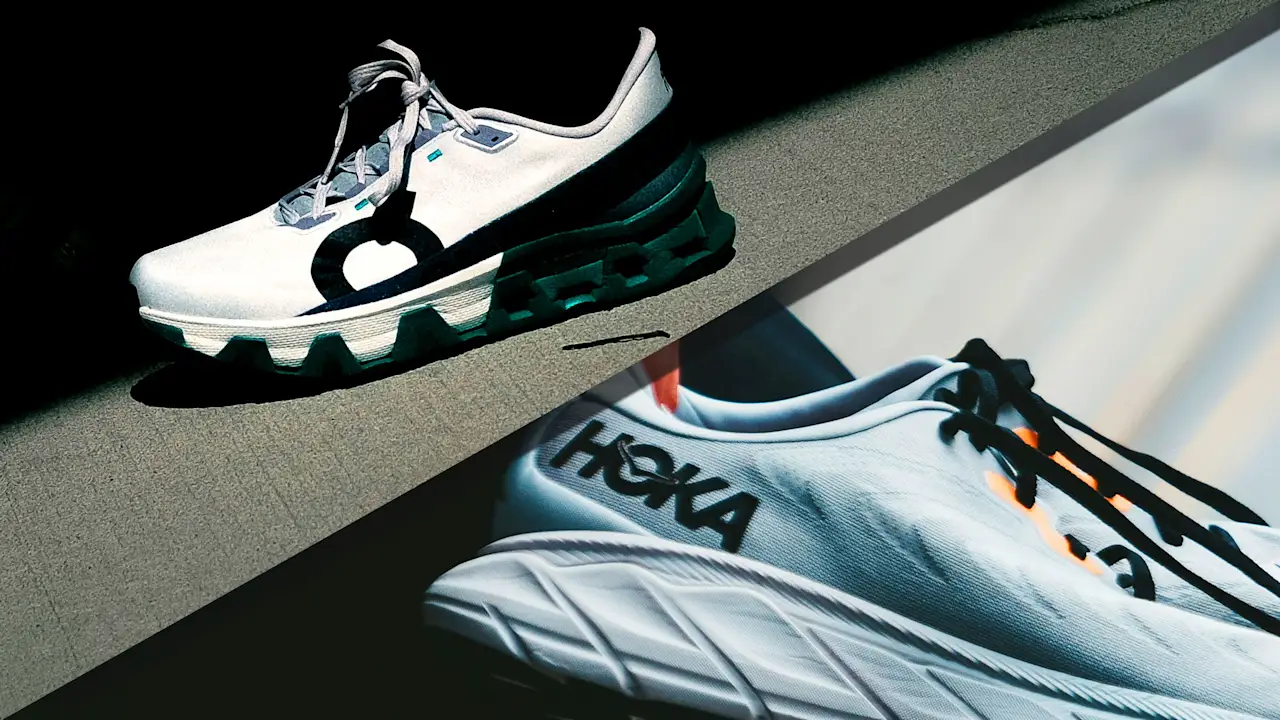
When Iga Światek breezed to victory in this year’s Wimbledon women’s final, little mention was made of the head-to-toe On kit she was wearing. The reaction was testament to the “softly, softly” approach used by On these last few years—but the victory and subsequent exposure cemented its place among the fastest-growing challengers in a category long dominated by household names like Nike, Adidas, and Puma.
Together, these legacy brands still command a significant portion of the global athletic footwear market, but their grip is loosening. Between 2021 and 2023, challenger brands like Hoka and On (sometimes referred to as On Running) grew their revenues by 29%, compared with just 8% for the incumbents. Hoka recently posted record quarterly sales of $653 million, up 20% year-on-year, despite raising prices and expanding globally. On made roughly $2.6 billion in sales in the 2024 fiscal year, tripling its net profit from the previous year.
Sportswear is a difficult category to enter, let alone disrupt. A strong product isn’t enough. To grow in this space, you need a brand strategy that’s clear, consistent, and built for scale. Challenger brands like On and Hoka are showing how it’s done. Here are five lessons for others looking to follow.
It’s more than a look, you need a brand
On launched with a very focussed and modest product range, some proprietary cushioning technology called CloudTec, and a focus on performance. It leveraged its Swiss heritage with a Swiss engineering marque on each pair of shoes. But while its products were technically excellent, it’s also given the brand an emotional feel.
Whereas Nike leans into power, pushing limits, and being the best, On has taken a softer, more inclusive stance. The brand celebrates the pleasure of physical training—together—as well as beating a personal best. Its products look good socially and casually, but they also perform. They were inspired by serious athletes, and despite their mass fashionable appeal, serious athletes still wear them. The company’s mission has been to ignite the human spirit through movement.
A brand that wants to scale needs to understand who they are and what they offer, and build that into everything: design, advertising, and tone. Creating that well-articulated brand from the outset helps guide them as they grow.
Know how and when to broaden appeal
Performance can take a brand only so far. At some point, emotional connection becomes the growth driver. But scaling up and becoming a lifestyle brand—which Nike did decades ago and On has done more recently—is about timing and relevance.
The mistake brands looking to broaden their appeal often make is to try to appeal to everyone too early. Starting small, with a focused core, is what builds credibility. Mass appeal should come when the foundation is strong enough to support it, and methodically.
For those looking to grow, the challenge is to expand without losing what makes them distinctive. Technical credibility builds trust, but identity and feeling shape long-term loyalty. They need to consider how their product makes people feel. Do they inspire confidence? Belonging? Aspiration? And are these perceptions powerful enough to shape purchasing decisions during that crucial time when a customer is in buying mode?
Build a brand beyond the logo
For smaller brands, it’s essential to clarify which brand assets are fixed—logo, symbol, color, tone—and which can evolve. Nike can play with its assets because it’s so recognizable. But for brands still establishing themselves, repetition and consistency are key.
On’s early identity focused solely on the “On” symbol. It became their most visible asset through sheer repetition, despite many customers still reading the symbol as ‘QC’. In its perfectly pitched series of ads with Roger Federer and Elmo, On used this identified confusion to charming comic effect, proving that there’s still room for creativity, but within parameters. Younger brands must also be bold in how they deploy these assets, in fast-moving, crowded markets they have to stand out. Identify which brand elements are fixed, which are flexible, and ensure they’re applied with purpose.
Don’t get lost chasing growth
Rapha revolutionised cycling apparel by capturing the emotion of the best of the sport’s history and matching it with uncompromising quality and design. But in recent years, it has lost its way. In October 2024, the brand reported an operational loss of £21 million ($28 million) over the year, the seventh loss-making year in a row.
The brand had grown quickly but seemingly lost control of its core offering. The Rapha Cycling Club sounded smart but hasn’t added much: Subsidized bike hire at global hubs isn’t relevant to most riders. Over the same period, its club membership dropped by 4,000 to 18,000 members. A flood of newer competitors now mirrors Rapha’s original proposition, often at lower prices.
For scaling brands, it’s important to recognise that the opportunities you turn down are just as important as the ones to take up. When a brand gets distracted by growth, it risks losing sight of what made it special in the first place. Holding your ground and not chasing every trend is a strength, not a weakness. On’s “Soft Wins” is more than a slogan, it’s a signpost to a core brand behavior.
Communities can’t be forced
For smaller brands building their market presence, communities are incredibly valuable. They increase loyalty and create fans who share and showcase the brand, helping wider audiences to grow organically. From the outset, On, for example, developed a really core fanbase by telling stories that people wanted to hear, often about the joy of the activity, with kindness and a positive outlook.
However, as Rapha shows, you can create the conditions for a community, but you can’t dictate it. In the case of bike brand Brompton, brand communities look totally different in different markets. In the U.K., it’s bearded tech-heads commuting across London. In China, it’s color-themed Sunday ride-outs in the park. A brand has to know when to step back, but at the same time it can watch, listen, and learn.
Scaling without losing your edge
It is one thing building a brand and a product that does well, it’s even harder to be that challenger brand looking to scale up in a crowded market. Growth adds pressure to diversify, monetize, and be everywhere at once.
However, brands like On and Hoka prove that it is possible to reach those taller heights. They are succeeding because they’ve built something clear, valuable, and repeatable and then scaled it with focus and a great deal of attention to detail. To be a successful challenger, don’t dilute what makes you distinctive, and resist the urge to say yes to everything. Define your brand early and scale on your own terms.