
Hyundai Motor Group has announced plans to invest $15.5 billion in India through 2032, further demonstrating how the global automobile industry is shifting toward emerging economies. The South Korean manufacturer intends to expand production, strengthen research and development, and transform India into a major manufacturing and export hub. This is occurring as European automobile manufacturers struggle with declining competitiveness, expensive energy, and government mandates that have undermined an industry that once dominated global manufacturing. India, meanwhile, is attracting the very investment that Western governments seem determined to drive away.
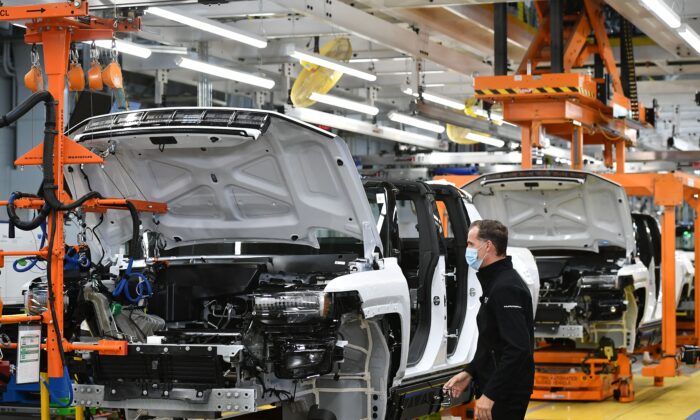
Hyundai already has annual production capacity exceeding 1.4 million vehicles in India through its manufacturing operations, including Kia. The company is expanding its facilities and allocating approximately $700 million toward research and development. Its newly inaugurated Pune plant, built on a former General Motors facility, further shows how production capacity is being redeployed internationally. This is not merely about assembling inexpensive vehicles for the domestic market. Hyundai wants India to become a center for engineering, design, technological development, and exports. The capital is being committed for years into the future because management sees a market capable of supporting long-term growth.
I have written extensively about the decline of the automobile industry, particularly in Germany, where politicians have sacrificed manufacturing competitiveness to satisfy their insane climate objectives. The European Union decided to phase out the internal combustion engine while imposing costly environmental regulations and letting energy prices undermine industrial production. Volkswagen, once a symbol of German industrial strength, has been forced to confront factory closures and restructuring. The automobile industry supports far more than assembly workers. It sustains steel producers, chemical companies, electronics manufacturers, transportation networks, machine-tool producers, and thousands of smaller suppliers. Destroy the automobile industry and you begin dismantling an enormous portion of the industrial economy.
India is moving in the opposite direction. Prime Minister Narendra Modi launched Make in India in 2014 with the objective of expanding domestic manufacturing and attracting foreign capital. The automobile industry is now one of the clearest examples of that strategy. India has become the world’s third-largest passenger vehicle market, with approximately 4.5 million passenger vehicles sold during fiscal 2026. Total automobile production across passenger vehicles, two-wheelers, three-wheelers, and other categories reached approximately 34.7 million units. Those figures represent an enormous industrial ecosystem that continues expanding as incomes rise and more households enter the consumer economy.
Hyundai is hardly alone. Suzuki has continued expanding its Indian production capacity, Toyota is planning another manufacturing facility, and Tata Motors has strengthened its partnership with Stellantis to develop vehicles for more than 50 international markets. That agreement is particularly important because India is moving beyond simply providing inexpensive labor. Indian companies are increasingly participating in engineering, vehicle architecture, research, and product development. The more technical expertise that develops domestically, the greater the economic benefit retained within India rather than being transferred entirely to foreign manufacturers.
I recently wrote that Indians are actually experiencing their economy grow in real time. The Western world has largely forgotten that. When factories open, infrastructure expands, employment opportunities increase, and families begin purchasing their first automobiles, economic growth becomes visible throughout society. An automobile purchase is often one of the most significant financial decisions a household makes after housing. Rising vehicle ownership is therefore an important reflection of expanding purchasing power and the development of a consumer middle class. India has a young population, growing domestic demand, and enormous potential for further motorization compared with mature markets where vehicle ownership is already widespread.
The contrast with Europe could hardly be greater. Brussels is obsessed with its 2030 emissions targets and the 2035 restrictions on new combustion-engine vehicles while European manufacturers face fierce competition from China and increasingly from other Asian producers. Germany is struggling to preserve industrial employment, yet its politicians continue imposing regulations that increase production costs. India is building factories, attracting foreign manufacturers, and encouraging the development of domestic supply chains. European politicians seem to believe prosperity can be legislated into existence through environmental targets while ignoring the capital investment necessary to sustain an industrial economy.
There are obviously challenges. India remains heavily dependent upon imported petroleum, and rising energy costs threaten manufacturers and consumers alike. Infrastructure, logistics, bureaucracy, and the availability of skilled labor remain important obstacles. Foreign investment also does not guarantee that every Indian worker will immediately enjoy higher living standards. Nevertheless, these are the challenges of an economy attempting to expand its productive capacity rather than one deliberately restricting it. India is building the industrial foundation necessary to support a larger middle class over the coming decades.
The international automobile industry is telling us where it sees the future. Manufacturers are not committing billions of dollars to India out of charity or political loyalty. They are investing because they see growing consumer demand, opportunities for exports, and the possibility of producing vehicles competitively for an expanding global market. Capital looks for opportunity, and the automobile industry is particularly sensitive to changes in labor costs, energy prices, taxation, regulation, and consumer confidence.
India does not need Germany, Japan, or China to collapse in order to succeed. There is room for another major automobile manufacturing center, particularly one serving a domestic market of more than 1.4 billion people. Hyundai’s $15.5 billion commitment demonstrates that multinational corporations increasingly recognize India’s potential as both a consumer market and a global production base. While much of the developed world is debating how to preserve industries it has burdened with taxes and regulations, India is attracting the investment required to create new ones. That is how economic power gradually shifts from one region of the world to another.